
Amid the green trees of Con Dao, Hang Keo Cemetery is a historic site that receives relatively few visitors but preserves the memory of thousands of prisoners who died under French colonial rule. Unlike Hang Duong Cemetery, with its many graves marked by named headstones, this site consists mainly of greenery, a memorial stele and structures built to commemorate the deceased.
According to records from the Con Dao National Monuments Conservation Center, this area was once the burial place of more than 10,000 prisoners and patriots, from the early 20th century through the repression following the Southern Uprising of 1940. In 1997, the graves discovered at Hang Keo were exhumed and the remains reinterred in Section D of Hang Duong Cemetery. However, undiscovered human remains may still lie beneath the ground at Hang Keo.
Today, Hang Keo Cemetery has been renovated with additional memorial features and landscaping, while retaining the quiet atmosphere of a historic site. It is a place where residents, visitors and official delegations offer incense, commemorate those who lost their lives and learn about part of the history of the Con Dao prison system.
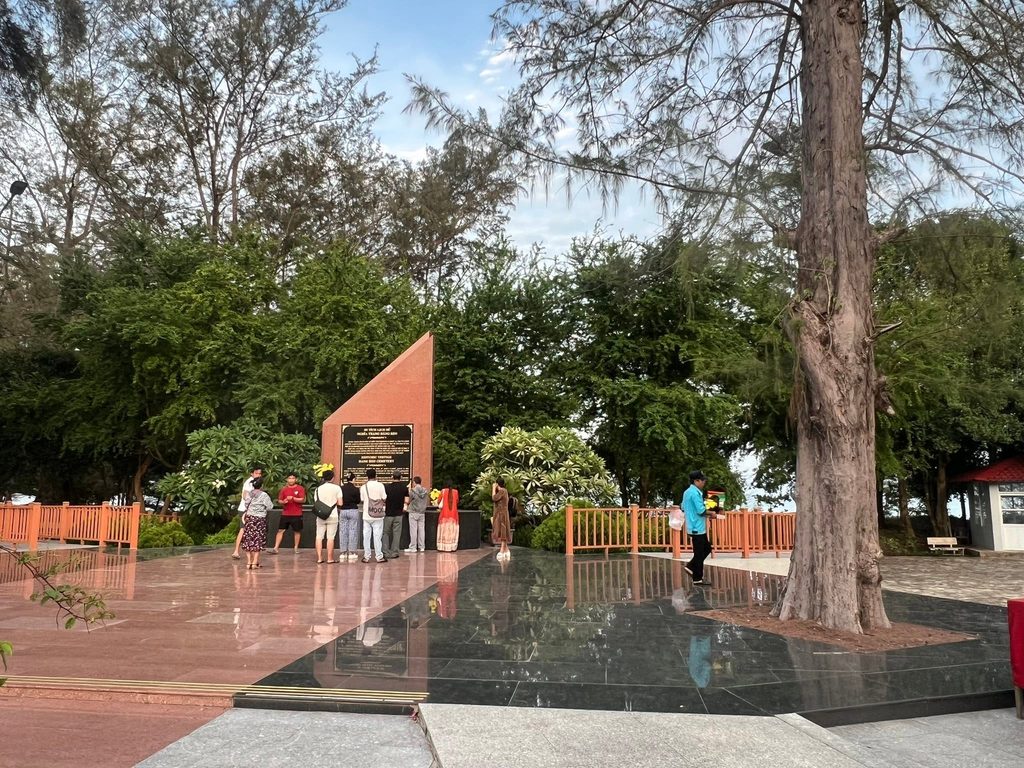
Where is Hang Keo Cemetery in Con Dao?
Hang Keo Cemetery is on Con Son Island, in the Con Dao Special Zone, Ho Chi Minh City.
The site is not far from central Con Son and is easily reached by motorbike, taxi or car.
Unlike prison compounds with numerous cells and buildings, Hang Keo Cemetery is an outdoor memorial space associated with land once used to bury prisoners during French colonial rule.
Historical accounts often mention Hang Keo Cemetery alongside Hang Duong Cemetery. These two sites are directly linked through the history of burying and commemorating those who died at Con Dao Prison.
According to the Con Dao National Monuments Conservation Center, the former cemetery covered approximately 80,000 m². Some other records and publications give an area of nearly 97,700 m², which may reflect differences in the scope of measurement and the boundaries of the historic site.
Following renovation, the memorial area includes a historical stele, a ceremonial courtyard, paths, trees and sculptures commemorating revolutionary fighters and patriotic compatriots.
Visitors mainly come here to learn about history, offer incense or spend time in quiet remembrance.
Why is it called Hang Keo Cemetery?
The name Hang Keo comes from the rows of acacia trees once planted around the cemetery.
According to records from the Con Dao National Monuments Conservation Center, the area formerly had many rows of acacia trees, so prisoners and island residents used the name of the trees to refer to the burial ground.
Over time, Hang Keo became a familiar place name in the lives of those imprisoned on Con Dao.
For prisoners, mentioning Hang Keo meant more than referring to a geographical location. It was also a way of remembering fellow prisoners who had died, those no longer able to endure prison conditions or survive years of hard labor.
One expression passed down among prisoners was “going to Hang Keo.”
The phrase was commonly used to mean that a prisoner had died and been taken away for burial.
Across generations, the name Hang Keo became part of the collective memory of those once imprisoned on Con Dao.
Today, although the vegetation has changed and the site has been renovated, the name Hang Keo Cemetery remains as a historical reminder.
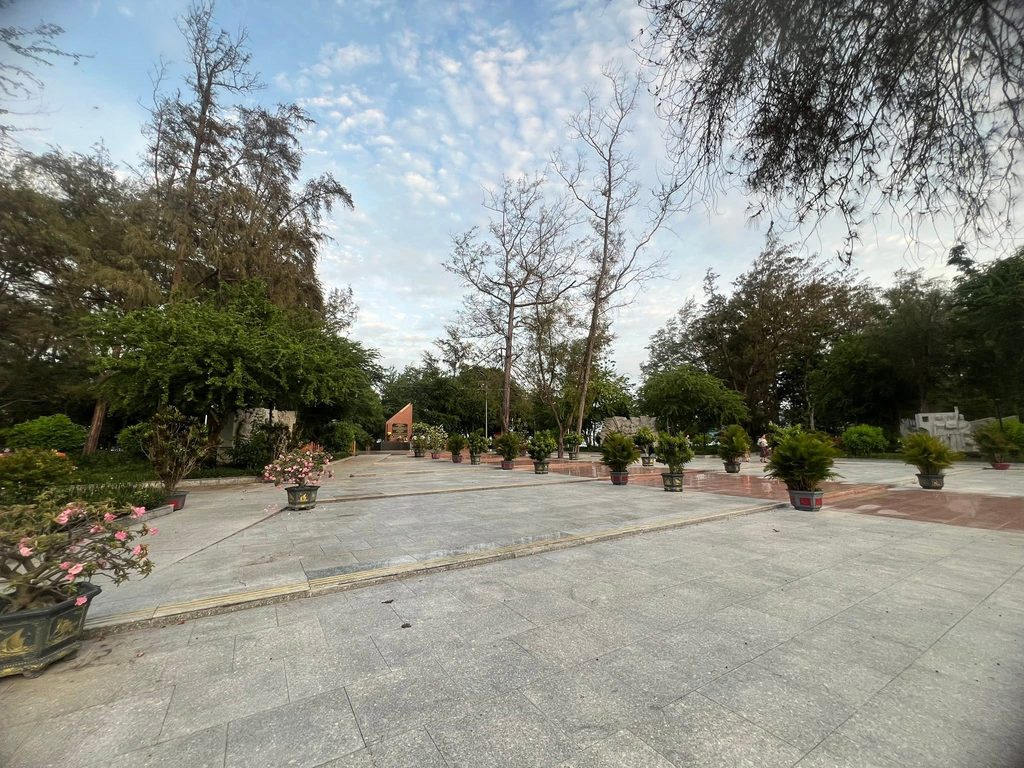
The origins of Hang Keo Cemetery
The first burial grounds in the Con Dao prison system
The Con Dao prison system was established by the French colonial authorities in 1862.
During its early decades, the colonial administration continually expanded prison camps and facilities supporting the island’s administration.
Prisoners faced extremely harsh living conditions. Many performed heavy labor, lived in cramped cells and regularly suffered illness and deprivation.
As deaths in the prison system increased, separate burial areas were established.
According to records from the Hang Duong Cemetery management authority, the earliest recorded prisoner burial site was in the Chuong Bo area, also known as the Bai So Nguoi, or Human Skull Ground, historic site.
Burials subsequently moved to the Hang Keo area.
This was an important step in the development of the system of prisoner burial grounds on Con Dao.
Hang Keo becomes a prisoner burial ground
From the early 20th century, Hang Keo was used to bury people who died in the prison system.
According to historical records, the site is associated with the deaths of many political prisoners and patriots sent to Con Dao.
Some died from illness and harsh prison conditions. Others became exhausted after long periods of forced labor. Still others were victims of campaigns of repression and punishment.
Not every prisoner who died had their name, place of origin or burial location fully recorded.
Under colonial management of the prison system, prisoner burials often lacked the full rites customary in civilian life.
Many graves were not sturdily constructed or lacked clearly inscribed headstones.
Over time, natural conditions, vegetation and land use gradually altered the traces visible on the ground.
This was one reason why precisely locating individual graves at Hang Keo later became so difficult.
Hang Keo in 1930–1941
The late 1930s and early 1940s were an especially tragic period in the history of Con Dao Prison.
World War II broke out, Indochina experienced political upheaval, and the colonial authorities intensified their repression of patriotic and revolutionary movements.
Following the Southern Uprising in November 1940, the French colonial authorities carried out widespread arrests, trials and punishments.
Many revolutionary fighters were sent to Con Dao, while those already imprisoned on the island continued to endure harsh prison conditions.
According to historical records, thousands of prisoners died in the Con Dao prison system during the White Terror of 1940–1941.
Hang Keo Cemetery continued to serve as a burial ground during this period.
The rising number of deaths gradually left the cemetery unable to accommodate new graves.
It was in these circumstances that the colonial authorities had to open an additional burial ground in the Hang Duong area.
From Hang Keo to Hang Duong Cemetery
The history of Hang Keo Cemetery is closely connected with the establishment of Hang Duong Cemetery.
According to records from the heritage management authority, as Hang Keo gradually ran out of space, the French colonial authorities expanded burials into the Hang Duong area.
Hang Duong Cemetery later became the resting place of successive generations of political prisoners and patriots who lost their lives on Con Dao.
While Hang Keo is chiefly associated with burials from the early 20th century to the early 1940s, Hang Duong remained in use through several subsequent historical periods.
The two sites therefore reflect different stages in the existence and development of the Con Dao prison system.
Today, Hang Duong Cemetery is widely known for its planned burial sections, memorial area and graves of historical figures such as Le Hong Phong, Nguyen An Ninh, Vo Thi Sau and Vu Van Hieu.
Hang Keo Cemetery, meanwhile, primarily preserves the traces of the former burial ground, where many graves have been relocated but unidentified remains still lie.
Learning about both cemeteries gives visitors a fuller understanding of the history of those who died on Con Dao, rather than focusing only on the graves of widely known individuals.
Hang Keo in the memories of Con Dao prisoners
The history of Hang Keo Cemetery is recorded not only in documents and statistics.
The place also appears in the spiritual life, poetry and memories of generations of prisoners.
A verse passed down on Con Dao says:
Easy to go to Con Lon, hard to return,
In life, shelter by Nui Chua; in death, return to Hang Keo.
In just two brief lines, the verse captures a harsh reality of prison life.
Those sent to Con Dao might endure years of imprisonment, forced labor and deeply deprived living conditions.
Not everyone had the chance to return to the mainland.
Nui Chua appears in the verse as an image associated with the island’s terrain and life there. Hang Keo names the place where those who did not survive to return home were buried.
Through the prisoners’ own language, Hang Keo became a symbol of loss within the prison system.
When a place name becomes a farewell
In everyday life, a place name may be associated with scenery, occupations or natural features.
On Con Dao, however, the name Hang Keo acquired another meaning.
Prisoners used the expression “going to Hang Keo” when referring to a friend who had died.
Behind this expression were the circumstances of people separated from their families and homelands, living in exceptionally harsh confinement.
When someone died, those left behind might lack the means to perform a full farewell ceremony.
Often, they did not even know exactly where their fellow prisoner’s grave was located.
Hang Keo therefore became a shared place of remembrance for the dead, even when individual names were no longer preserved.
Those without named headstones
Not everyone once buried at Hang Keo has a complete record.
Some people are named in prison documents, but their graves can no longer be located.
Others are mentioned only in memoirs, accounts by comrades or family records.
For some, almost no information about their lives and deaths survives.
The significance of Hang Keo Cemetery therefore extends beyond those whose identities have been established.
It is also a place to remember people who have not yet been fully acknowledged in the historical record.
Around 10,000 prisoners were once buried at Hang Keo
According to the Con Dao National Monuments Conservation Center, Hang Keo Cemetery was once the burial place of more than 10,000 political prisoners and patriots, from the early 20th century through the White Terror of 1940–1941.
This figure is widely used in materials introducing the site.
However, it should be understood as an estimate compiled from historical records, not a complete list establishing every person’s name, grave location and cause of death.
The conditions of administration, burial and recordkeeping on Con Dao during the colonial period make precise statistics difficult to establish.
Over time, many records were lost or no longer contained enough information for cross-checking.
Changes in terrain, vegetation and land use have also made the traces of many graves impossible to recognize above ground.
When presenting Hang Keo Cemetery, the figure of approximately 10,000 people therefore needs to be placed in the context of a large historic burial ground whose victims have not all been identified.
Hang Keo’s value as a memorial does not depend on establishing every number precisely.
What matters is that it preserves the memory of a great many people who died under a harsh prison regime, including many revolutionary fighters and patriotic compatriots.
1997: Reinterring remains from Hang Keo at Hang Duong Cemetery
An important milestone in the conservation history of Hang Keo Cemetery was the exhumation and reinterment of remains carried out in 1997.
According to the Con Dao National Monuments Conservation Center, the graves discovered at Hang Keo were relocated to Section D of Hang Duong Cemetery.
This formed part of the process of gathering, caring for and managing the graves of those who lost their lives on Con Dao.
Why were the graves relocated to Hang Duong?
After 1975, attention was given to conserving the Con Dao prison heritage sites and caring for the resting places of revolutionary fighters and patriots.
Hang Duong Cemetery was gradually planned and restored, becoming a shared place of remembrance.
Moving the graves found at Hang Keo to Section D helped centralize management, care and commemorative activities.
At the same time, relocation helped preserve identified graves as the landscape of the former cemetery had changed considerably.
Section D of Hang Duong Cemetery
Hang Duong Cemetery is now organized into four main sections, designated A, B, C and D.
Section D received graves relocated from Hang Keo Cemetery, Hon Cau and several other places on Con Dao.
These graves are brought together within a cemetery system that is managed, maintained and used for commemorative activities.
Section D therefore has a special connection with the history of Hang Keo Cemetery.
For those interested in the history of burial on Con Dao, this is an important point when studying the postwar recovery and reinterment of remains.
Remains that have not yet been found
Although the relocation took place in 1997, this does not mean that all the remains at Hang Keo were found and moved.
According to records from the Con Dao National Monuments Conservation Center, undiscovered remains still lie beneath the former cemetery.
This is particularly important when considering the site’s significance today.
Hang Keo is not simply a marker of a cemetery that once existed.
There may still be graves whose locations are unknown, and deceased people whose remains have not been recovered for reinterment.
For this reason, safeguarding the historic land, protecting its landscape and limiting activities that disturb the soil are especially important to conservation.
What is at Hang Keo Cemetery today?
Over the decades, Hang Keo Cemetery’s appearance has changed considerably from the period when it was used to bury prisoners.
The old rows of graves are no longer fully visible above ground.
In their place are greenery, memorial structures and areas for offering incense.
In particular, following the renovation completed in 2022, Hang Keo Cemetery gained additional features intended to protect the site, support remembrance and present its historical significance.
The Hang Keo Cemetery memorial stele
The memorial stele is one of the important structures at the site.
It records basic information about Hang Keo’s history, the scale of the former cemetery and the people once buried here.
For visitors, the memorial stele is a starting point for learning about the site.
Its information helps explain the land’s historical significance, especially since many traces of graves can no longer be recognized.
It is also where official delegations, residents and visitors offer incense and flowers in memory of those who lost their lives.
The cemetery’s green spaces
Greenery is a defining feature of Hang Keo Cemetery.
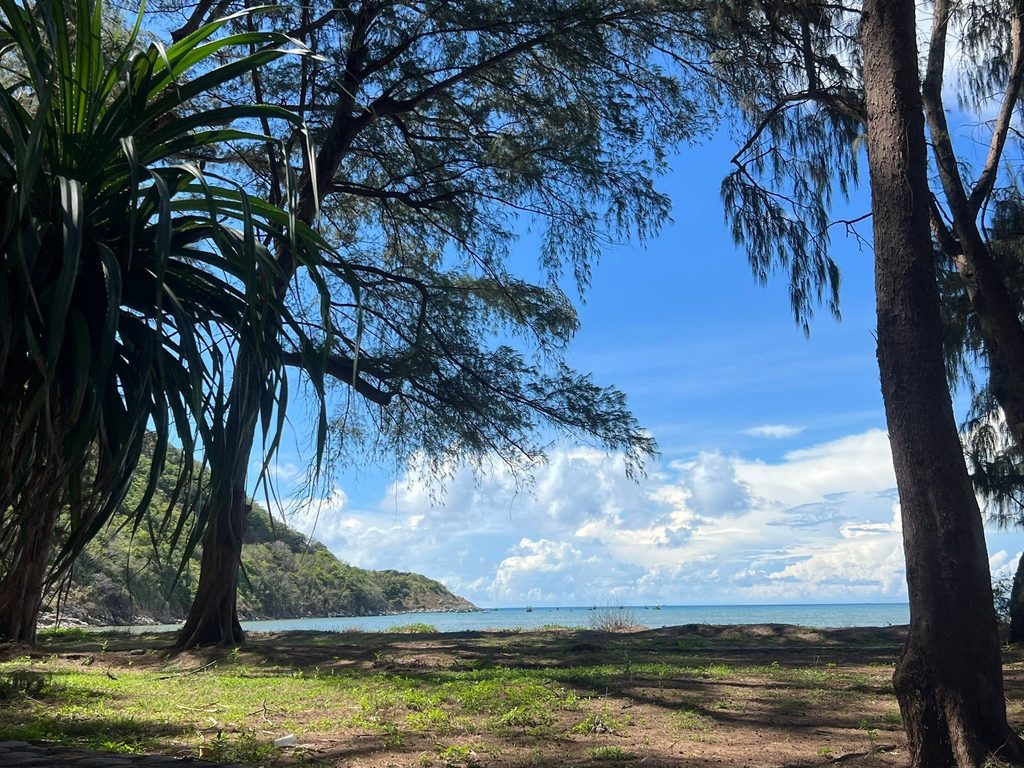
According to earlier descriptions of the site, the area once had many rows of acacia trees, later followed by rows of casuarina trees and natural vegetation growing over the former cemetery.
During renovation, the organizations carrying out the work added more acacias, other trees and grass to create a landscape suited to the character of the site.
Maintaining these green spaces has environmental value and also helps preserve the sense of a memorial associated with the name Hang Keo.
Visitors should approach this place respectfully, as remains not yet recovered for reinterment may still lie beneath the vegetation-covered ground.
The ceremonial area and memorial courtyard
Following renovation, Hang Keo Cemetery has areas for offering incense and holding commemorative ceremonies.
These facilities provide space for delegations, organizations and residents to gather, lay wreaths and perform rites of remembrance.
For individual visitors or small groups, the memorial area also allows incense offerings in accordance with the management authority’s guidance.
However, visits and incense offerings must comply with the site’s regulations, particularly during official commemorative ceremonies.
The 2022 renovation of Hang Keo Cemetery
On May 13, 2022, the renovation of the Hang Keo Cemetery historic site was officially inaugurated.
The project began in September 2020, aiming to conserve the historic cemetery, improve its landscape and facilitate visits and commemorative activities.
According to the Government Information Portal, the renovation prioritized preserving the existing condition of the site and investing only in genuinely necessary features.
The work included constructing and renovating the memorial stele, ceremonial area, assembly courtyard, water supply and drainage systems, and paths throughout the grounds.
The project also added grass, acacia trees and other greenery to create a landscape appropriate for a place of remembrance.
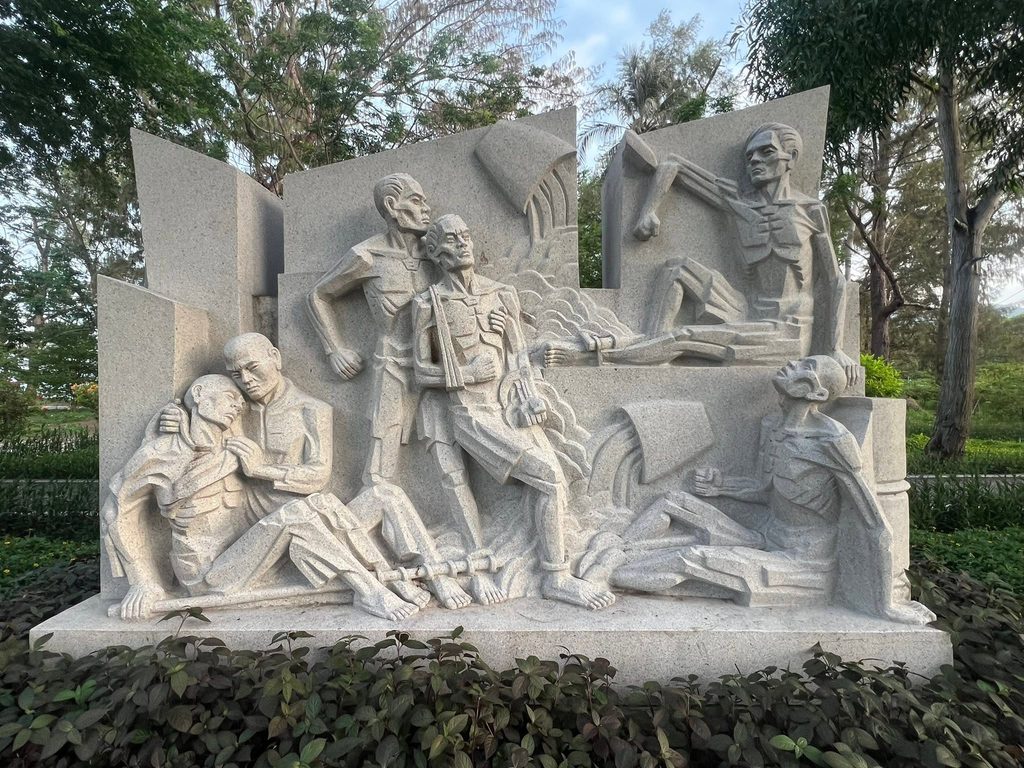
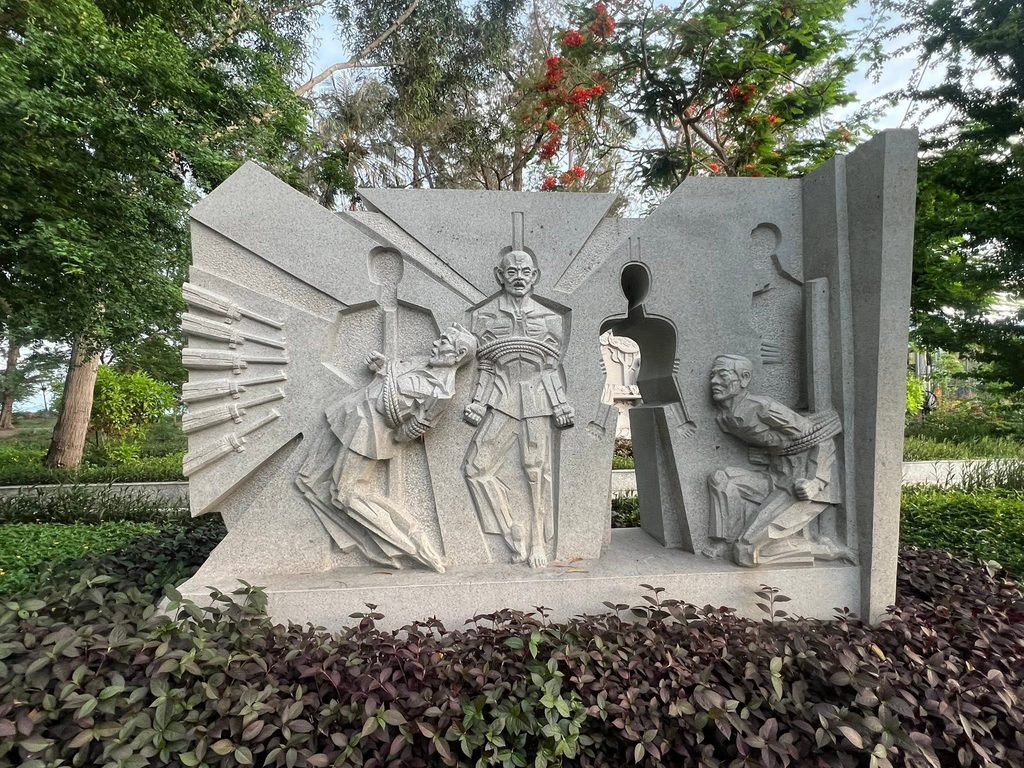
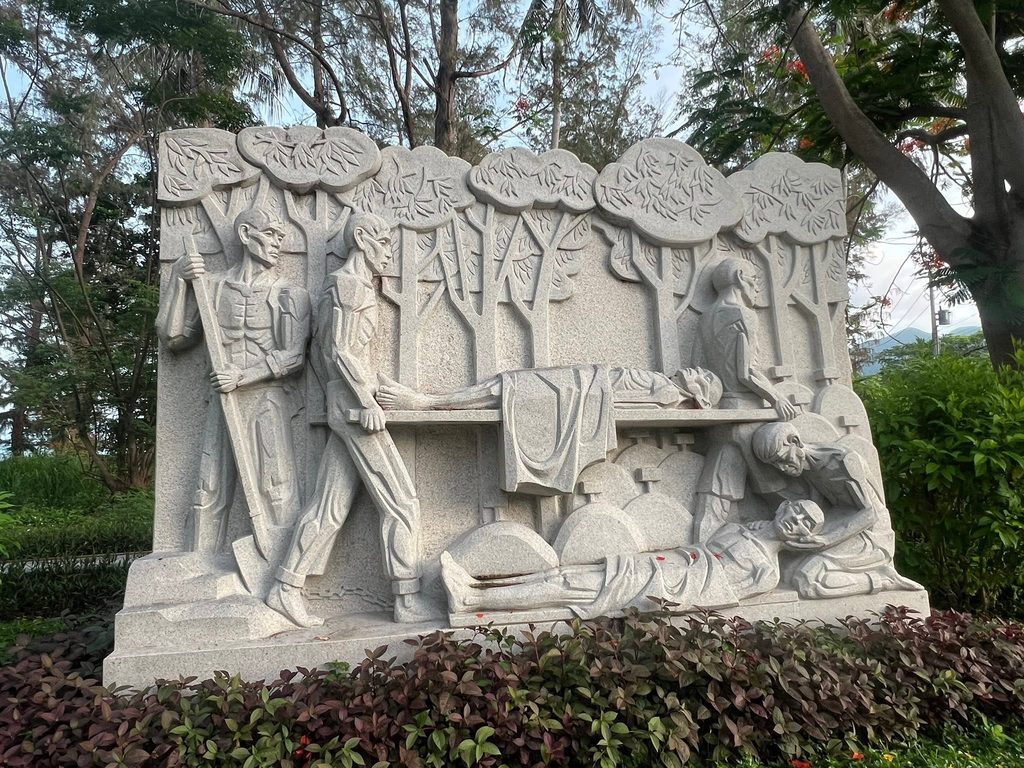
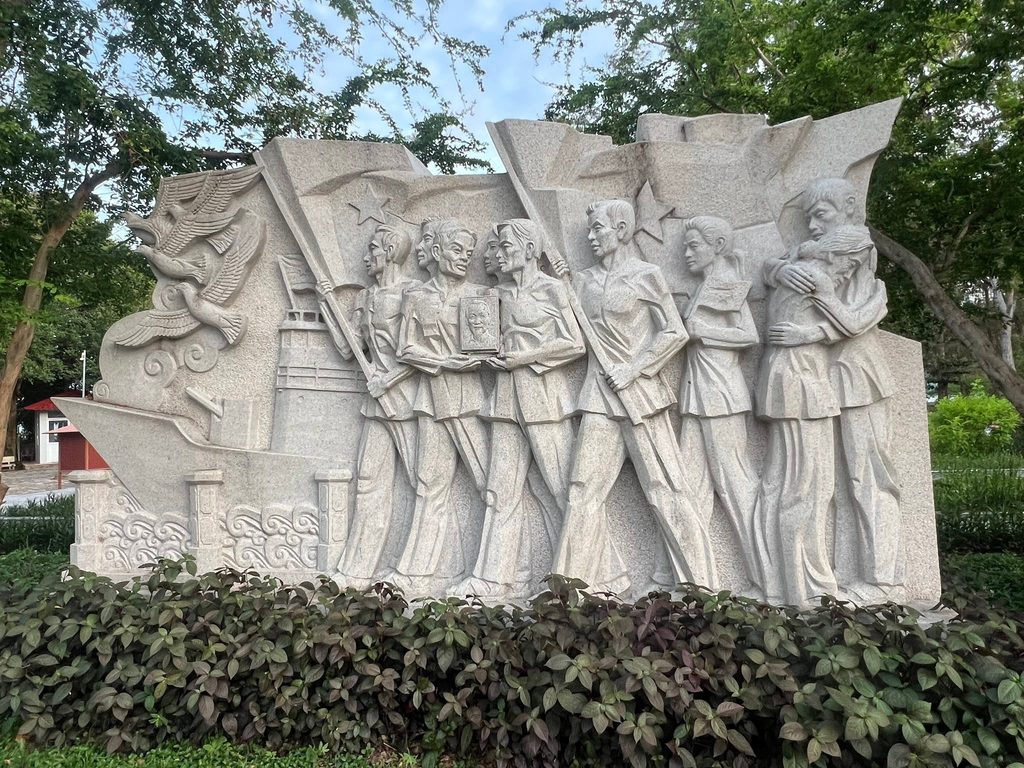
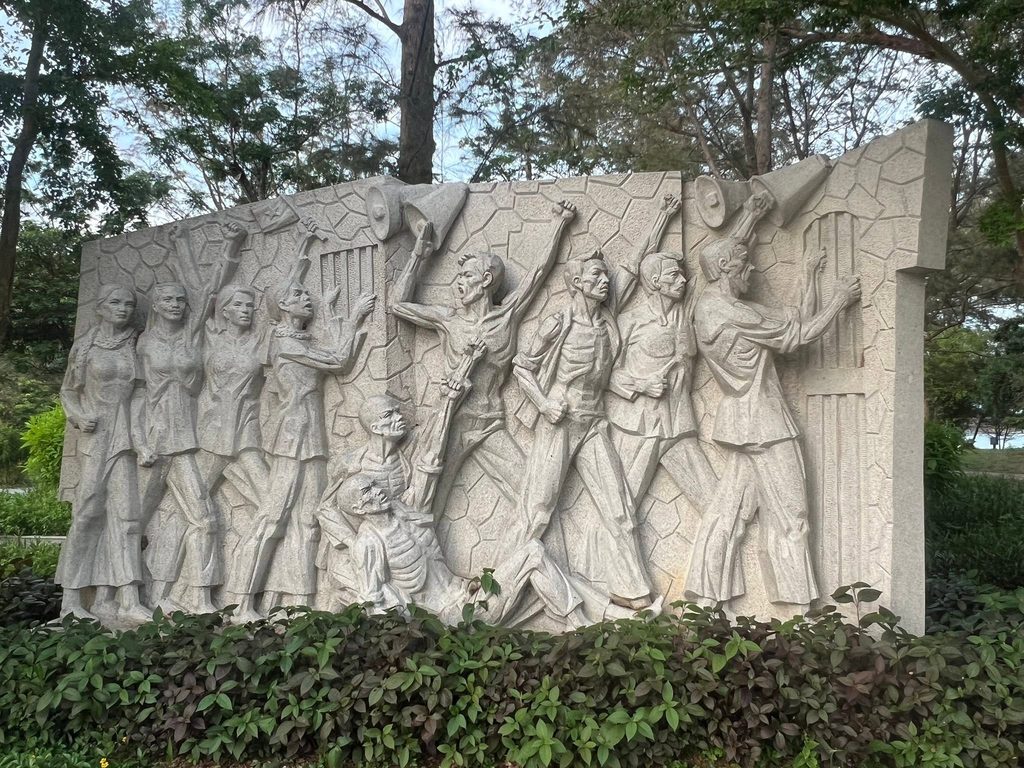
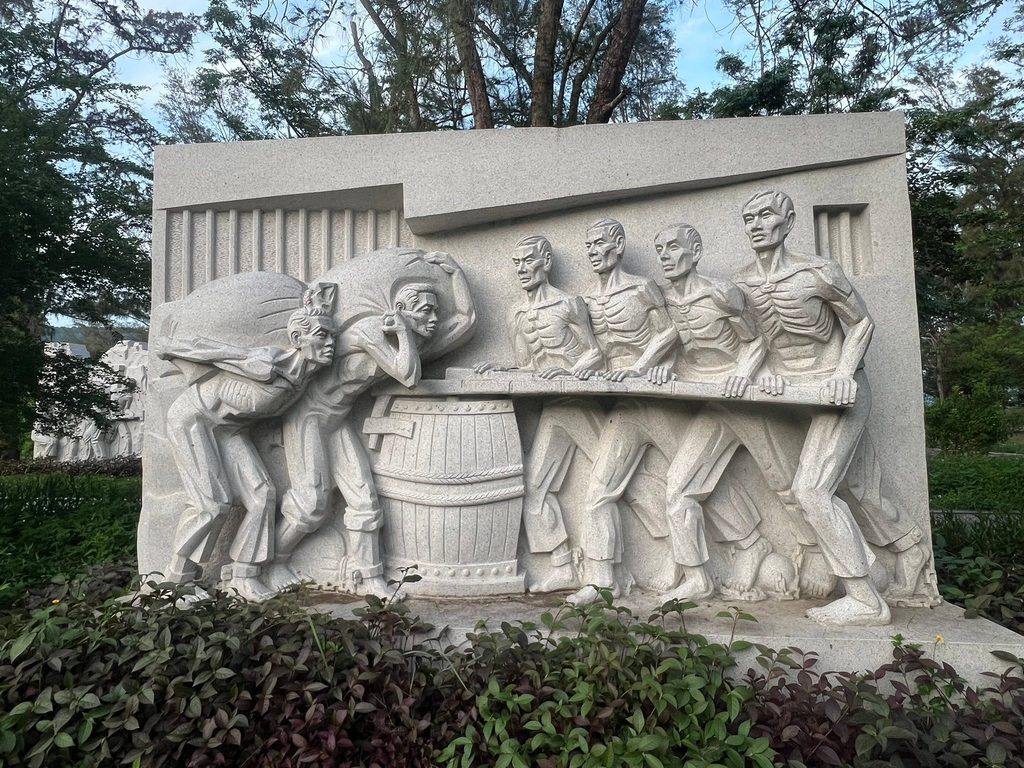
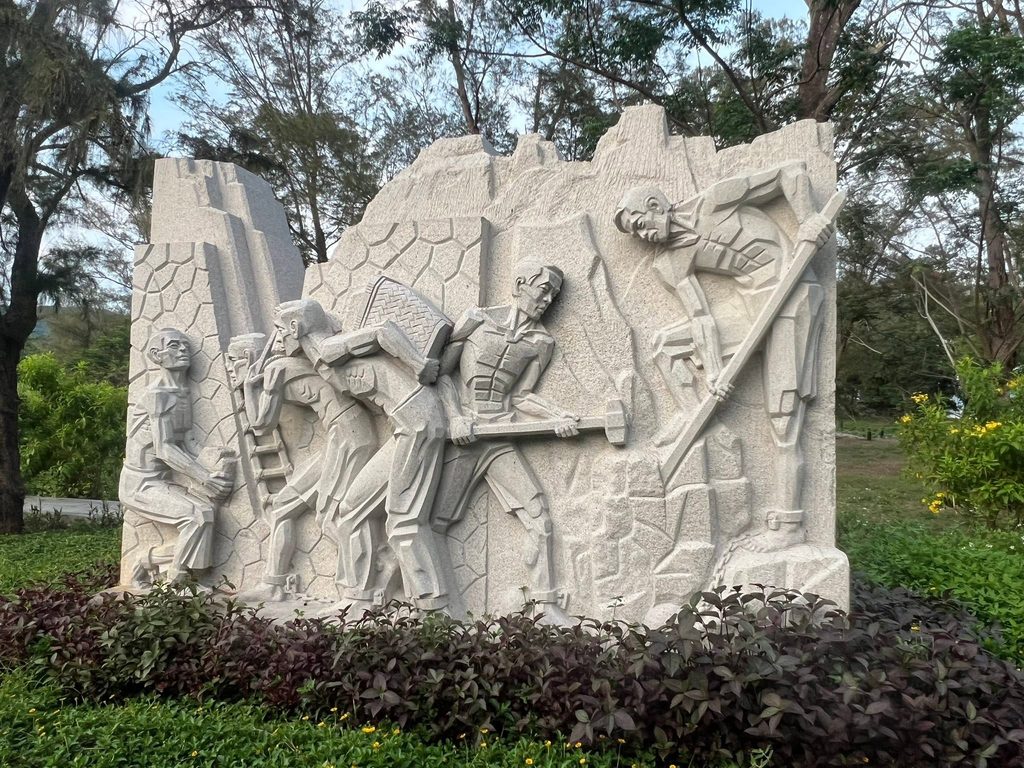
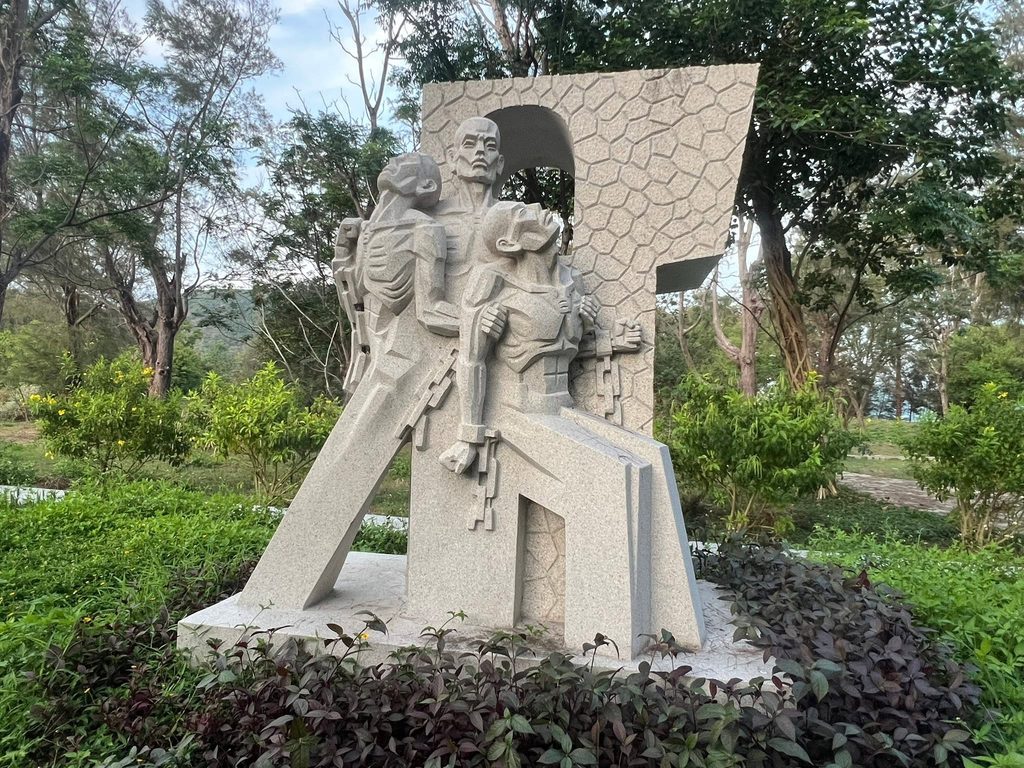
Fourteen sculptures at Hang Keo Cemetery
One notable feature of the renovation is a series of 14 sculptures arranged in four thematic clusters.
The themes are:
- Aspiration for Peace and Freedom.
- Hell on Earth.
- Struggle – Victory – The Day of Return.
- Gratitude – The Sea Sings of the Homeland.
Each cluster conveys an aspect of Con Dao’s history, from years of imprisonment and struggle to aspirations for peace, the day of national reunification and remembrance of earlier generations.
Introducing sculptures into the grounds provides another way to convey history alongside the memorial stele and written records.
Through artistic expression, visitors can engage with historical themes in a more visual way.
Conserving the historic site as a place of remembrance
A notable feature of the Hang Keo renovation project is its priority on preserving historical traces rather than reconstructing the cemetery with new burial sections.
Because many graves have been relocated and unidentified remains still lie here, construction on the land must follow the principle of protecting its existing condition.
Memorial features have been arranged to support incense offerings, present the site’s history and improve facilities for visitors paying their respects.
This approach helps Hang Keo Cemetery retain its role as a historic site rather than becoming a purely decorative project.


How do Hang Keo and Hang Duong cemeteries differ?
The two cemeteries are historically connected but differ in their development and current condition.
Hang Keo Cemetery
Hang Keo is chiefly associated with prisoner burials from the early 20th century to the early 1940s.
According to historical records, around 10,000 people were once buried here.
In 1997, the graves discovered here were exhumed and the remains reinterred in Section D of Hang Duong Cemetery.
Today, Hang Keo is conserved as a historic cemetery with memorial spaces, greenery and works of art.
Hang Duong Cemetery
Hang Duong was opened when Hang Keo Cemetery no longer had enough burial space.
It continued to receive those who died in the prison system through successive periods until 1975.
According to its management authority, Hang Duong Cemetery currently has 1,922 graves, of which 714 have been identified.
The cemetery is divided into Sections A, B, C and D, with a memorial monument, works of art and burial areas that are maintained and managed.
It is also the resting place of well-known historical figures such as Le Hong Phong, Nguyen An Ninh, Vo Thi Sau and Vu Van Hieu.
Why learn about both cemeteries?
Hang Keo and Hang Duong cemeteries reflect successive periods in the history of prisoner burials on Con Dao.
Learning about Hang Keo helps visitors understand the immense losses of the early 20th century and repression under French colonial rule.
Hang Duong, meanwhile, offers access to history through preserved graves, reinterment sections and the stories of specific historical figures.
In particular, Section D of Hang Duong Cemetery is directly connected to the graves relocated from Hang Keo in 1997.
The two sites therefore complement each other in preserving and presenting the history of those who lost their lives on Con Dao.
Commemorative activities at Hang Keo Cemetery
Hang Keo Cemetery now hosts many incense-offering and commemorative activities organized by public bodies, associations, the armed forces and local people.
On major commemorative days, delegations often come to lay wreaths, offer incense and observe a minute’s silence in memory of fallen heroes, revolutionary fighters and patriotic compatriots.
Commemoration on historic anniversaries
Commemorative activities at Hang Keo often take place around Southern Liberation Day on April 30, Con Dao Liberation Day on May 1, National Day on September 2 and many other important events.
Official programs frequently include Hang Keo Cemetery alongside Hang Duong Cemetery and Con Dao Memorial Temple.
Holding commemorations at all three sites expresses respect for the generations who lost their lives and helps sustain the locality’s tradition of historical remembrance.
Recent commemorative activities
On August 26, 2026, to mark the 81st anniversary of the August Revolution and National Day on September 2, a delegation from the Con Dao Special Zone administration held incense-offering ceremonies at Hang Keo Cemetery, Hang Duong Cemetery and Con Dao Memorial Temple.
Later, on September 12, 2026, a Ho Chi Minh City delegation visiting officials, service personnel and residents in the southwestern sea region also held incense-offering commemorations at these sites.
These events show that Hang Keo continues to play an important role in commemorative life on Con Dao today.
The historical and cultural significance of Hang Keo Cemetery
Evidence of the losses within the Con Dao prison system
Hang Keo Cemetery bears witness to the scale of loss associated with the history of Con Dao Prison.
The people who died here are more than numbers in statistical records.
Each had a life, family, homeland and individual circumstances before being sent to the island.
The fact that many can no longer be identified or their graves located further illustrates the difficulties of research, conservation and recovering historical information.
A place to remember those whose names remain unknown
Unlike sites containing the graves of famous individuals, Hang Keo is a shared memorial space for many people whose identities have not been established.
Its value lies in remembering people who may not appear in widely read history books.
Visitors to Hang Keo do not necessarily need to look for a specific grave.
Taking time to read the memorial stele, learn the history and remember the deceased is also a way to show respect for the past.
Value for historical research
Hang Keo Cemetery is significant for studying the origins and development of the Con Dao prison system.
Information about burial history, numbers of deaths, campaigns of repression and the recovery and reinterment of remains contributes to research on the colonial prison regime.
The transformation of the landscape from an old cemetery to today’s memorial area also reflects the process of conserving historical heritage after 1975.
Educational and commemorative value
For school and university groups and others interested in history, Hang Keo offers an opportunity to explore another aspect of Con Dao’s past.
If the prison camps show how prisoners lived, Hang Keo Cemetery recalls the consequences of the harsh prison regime.
Conserving the site gives future generations the chance to learn about history through a real place where stories of loss and sacrifice are embedded in the layers of earth.
Hang Keo Cemetery is part of the Con Dao Prison Special National Historic Site
Hang Keo Cemetery’s historical significance is recognized within the group of heritage sites associated with Con Dao Prison.
On April 29, 1979, the Ministry of Culture and Information issued Decision No. 54-VHTT.QĐ, recognizing the Con Dao Revolutionary Historic Site as a site of exceptional national importance.
On May 10, 2012, the Prime Minister issued Decision No. 548/QĐ-TTg, designating the Con Dao Prison Historic Site as a Special National Historic Site.
Hang Keo Cemetery is one of the component sites within the designated complex.
Protecting Hang Keo within this special national heritage framework helps provide a legal basis for managing and conserving the historic land and promoting its commemorative value.
Tips for visiting Hang Keo Cemetery in Con Dao
Hang Keo Cemetery is a historic place of remembrance, so a visit differs from experiences at natural attractions or entertainment venues.
Visitors mainly come to offer incense, learn about history and view the memorial structures.
When should you visit Hang Keo Cemetery?
Morning or early afternoon is usually a convenient time to explore the memorial structures, read the historic stele and view the sculptures.
Daylight also makes it easier to move along the paths within the grounds.
On major commemorative days, delegations may hold incense-offering ceremonies here.
Visitors should follow the instructions of ceremonial staff and avoid entering areas where official programs are taking place.
How much time should you allow?
Individual visitors or small groups can plan approximately 20–40 minutes to learn about the history, offer incense and view the memorial features.
A visit may take longer with a guided group or when attending an official commemorative activity.
This is only a suggested duration for planning an itinerary, not a fixed rule imposed by the management authority.
Do you need to bring offerings?
Visitors may bring fresh flowers or incense in accordance with the memorial area’s rules.
There is no need to bring many offerings. What matters is maintaining a solemn attitude and respecting the historic setting.
When offering incense, use the designated places and follow fire-safety guidance.
Do not burn votive paper without permission, place offerings in display areas or carry out activities that could affect the landscape or structures.
Things to keep in mind when visiting
Hang Keo Cemetery occupies land once used to bury prisoners, where some remains have not yet been discovered.
Visitors should therefore take particular care to preserve the landscape and avoid disturbing the ground of the historic site.
Do not dig, move stones or disturb objects that could be historical remains without authorization.
Do not walk on areas marked as restricted, climb on sculptures or use the memorial area for inappropriate activities.
When taking photographs, remain respectful, especially if families, delegations or residents are offering incense.
Frequently asked questions about Hang Keo Cemetery
Where is Hang Keo Cemetery in Con Dao?
Hang Keo Cemetery is on Con Son Island, in the Con Dao Special Zone, Ho Chi Minh City, near the island’s central area.
Why is it called Hang Keo Cemetery?
The name comes from the rows of acacia trees once planted around the cemetery. Over time, Hang Keo became a place name associated with prisoner burials during French colonial rule.
How many people were buried at Hang Keo Cemetery?
According to historical records, an estimated more than 10,000 prisoners and patriots were once buried here. This is an estimate, not a complete list of people whose identities and grave locations have been established.
When was Hang Keo Cemetery in use?
The cemetery was used to bury prisoners from the early 20th century through the White Terror of 1940–1941, before burials gradually shifted to the Hang Duong area.
Why are there so few graves at Hang Keo today?
In 1997, the graves discovered at Hang Keo were exhumed and the remains reinterred in Section D of Hang Duong Cemetery. However, undiscovered remains still lie beneath the former cemetery.
How does Hang Keo Cemetery differ from Hang Duong?
Hang Keo was a prisoner burial ground during an earlier historical period and is now conserved as a memorial area. Hang Duong remained in use through several periods and now has maintained and managed burial sections, including Section D, which received graves relocated from Hang Keo.
When was Hang Keo Cemetery renovated?
Renovation began in September 2020 and was inaugurated on May 13, 2022, adding a ceremonial area, paths, landscaping and commemorative sculptures.
What sculptures are at Hang Keo Cemetery?
The site has 14 sculptures divided into four thematic clusters, reflecting aspirations for peace, prison life, struggle and remembrance of those who lost their lives.
Is Hang Keo Cemetery part of a Special National Historic Site?
Yes. Hang Keo Cemetery is a component of the Con Dao Prison Historic Site, designated a Special National Historic Site under Decision No. 548/QĐ-TTg of May 10, 2012.
Hang Keo Cemetery: A quiet place of remembrance
Without long rows of graves bearing names on headstones, Hang Keo Cemetery today is recognized mainly by its memorial stele, sculptures and greenery.
Yet this very land was where thousands of prisoners were brought for burial during the years when Con Dao Prison operated.
Over the decades, most above-ground traces of graves have changed. Graves that were discovered have been relocated, while unidentified remains still lie beneath the ground.
Hang Keo’s quietness therefore does not mean that its history has come to an end.
The cemetery remains a place to remember the dead, learn about part of Con Dao’s deeply painful past and reflect on the value of peace.
For visitors, a trip to Hang Keo Cemetery need not be long. Sometimes, simply taking time to read the memorial stele, observe the land beneath the trees and learn its history is enough to understand why this place needs to be preserved.
Hang Keo no longer receives prisoners who have died, but it remains a place that preserves memory and commemorates people who may never have been known by their individual names.
This is what makes Hang Keo Cemetery a distinctive place of remembrance within Con Dao’s network of historic sites.
Con Dao Express introduces historic sites, places of remembrance and scenic attractions on Con Dao, while providing information on high-speed ferry routes, schedules and indicative ticket prices to help visitors prepare for their journey to the island.
Reference sources
- Con Dao National Monuments Conservation Center – Hang Keo Cemetery.
- Con Dao Tourism Information Portal – Visiting the Hang Keo Cemetery Historic Site.
- Government Information Portal – Inauguration of the Hang Keo Cemetery Renovation Project, May 13, 2022.
- Hang Duong Cemetery Information Portal – History and Burial Sections.
- Prime Minister’s Decision No. 548/QĐ-TTg of May 10, 2012.
Google Maps: Nghĩa trang Hàng Keo
The map shows the site’s location. Confirm the entrance and visiting hours with the site management before you go.