
Within the Côn Đảo Prison system, Phú Thọ Prison is one of the sites associated with the lives and revolutionary activities of many Vietnamese patriots. Built from 1928 under French colonial rule, the prison was used to isolate newly arrived prisoners, detain those considered dangerous and punish inmates who resolutely resisted the prison regime.
Despite repeated changes to its name, organization and purpose, Phú Thọ Prison retains important traces of the history of Côn Đảo Prison. It is associated with the lives of revolutionaries Lê Duẩn, Dương Bạch Mai, Vũ Văn Hiếu and many others. In particular, the story of comrade Vũ Văn Hiếu giving his shirt to fellow prisoner Lê Duẩn before his death has become a moving symbol of comradeship during the years of imprisonment.
Today, Phú Thọ Prison is a component of the Côn Đảo Prison Special National Heritage Site, helping preserve the memory of a period marked by loss, sacrifice and steadfast resistance.
What is Phú Thọ Prison in Côn Đảo?
Phú Thọ Prison, also known as Banh III (Bagne III), Lao III, Bác Ái Camp or Camp 1, was one of the detention facilities built by the French colonial authorities as they expanded the Côn Đảo Prison system in the early twentieth century.
These different names reflect changes in the prison’s organization and administration over time. Banh III frequently appears in historical documents from the French colonial period, while Camp 1 and Phú Thọ Prison were names used in later periods.
Unlike an ordinary detention facility, Phú Thọ Prison served several special functions. It received, classified and isolated new prisoners brought from the mainland to Côn Đảo, while also holding people whom the prison authorities considered capable of organizing, mobilizing or leading resistance activities.
Besides its role in controlling prisoners, Phú Thọ Prison was the setting for many important events in the resistance movement of revolutionaries imprisoned on Côn Đảo.
The history of Phú Thọ Prison from 1928
The background to the construction of Banh III
After the Côn Đảo Prison system was established in 1862, the French colonial authorities continually expanded detention facilities on the island. As patriotic and revolutionary movements grew in Vietnam, increasing numbers of people were arrested, convicted and sent into exile.
The older detention facilities gradually became insufficient for the colonial authorities’ needs. Against this background, the French built Banh III in 1928, adding a relatively large detention compound to the prison system.
According to introductory materials from the Côn Đảo National Heritage Conservation Center, the compound covers a total area of 13,603 m².
Banh III was built for more than simply increasing the number of cells. The colonial authorities also wanted an area where newly arrived prisoners could be isolated, communications controlled and the influence of political activists on the existing prison population restricted.
The original architecture and layout
When first built, Phú Thọ Prison had three main cell blocks, two for communal detention and one for isolation.
In addition to the cell blocks, the prison had a kitchen, an infirmary and buildings supporting prison administration and daily life.
The communal cells held many people in the same space. By contrast, the isolation block was reserved for those to be separated from others or subjected to stricter disciplinary measures.
The infirmary was also used to isolate prisoners suffering from illness, including dysentery, a dangerous disease for people living with limited sanitation and medical care.
The layout shows that Phú Thọ Prison was organized as a relatively self-contained detention facility, able to receive and control different groups of prisoners.
Changes after the August Revolution of 1945
After the August Revolution of 1945, the layout of Phú Thọ Prison was reorganized.
The original three cell blocks were rearranged into two main blocks, each containing four rooms. The rooms were numbered consecutively from 1 to 8.
In later periods, the prison authorities added rooms 9 and 10 behind the infirmary.
Notably, room 10 was later converted into an isolation section with 15 small cells, becoming one of Phú Thọ Prison’s distinctive surviving features.
These changes reflect the compound’s continuous use through several historical periods, from French colonial rule to the government of the Republic of Vietnam.
Banh III and the policy of isolating new arrivals to Côn Đảo
During the French colonial period, one of Banh III’s important functions was to receive prisoners newly brought to the island from the mainland.
Instead of immediately transferring them to other prison compounds, the authorities usually held them separately for a certain period.
This isolation was intended to limit contact between newcomers and those who had already spent many years imprisoned on Côn Đảo.
For the colonial authorities, this was a way of controlling information. New arrivals could bring news of political developments, resistance movements and revolutionary activities on the mainland. If allowed immediate contact with existing inmates, they could pass on information, exchange experiences and strengthen ties between groups of prisoners.
Isolating new prisoners therefore served not only to regulate daily life but also to prevent communication and the organization of political activities within the prison.
Banh III was later also used to hold political prisoners classified by the colonial authorities as dangerous or unruly.
These could include influential revolutionaries, people who resolutely opposed the prison regime or inmates who had repeatedly attempted to escape.
Accusations such as sabotage, plotting to disturb public order and opposing the authorities were often used to impose harsh detention and punishment measures.
In this setting, Phú Thọ Prison became one of the places associated with the sustained resistance of political prisoners on Côn Đảo.
Phú Thọ Prison in 1939–1945
The years from 1939 to 1945 were among the harshest periods for political prisoners held on Côn Đảo.
The Second World War broke out, the political situation in Indochina changed dramatically, and the French colonial authorities intensified repression against organizations and individuals involved in the revolutionary movement.
In particular, after the Southern Uprising of November 1940, the French colonial authorities carried out widespread arrests and repression.
Many revolutionaries were convicted, sent to Côn Đảo and held in harsh conditions.
A place of imprisonment for many revolutionaries
During this period, Phú Thọ Prison held many people arrested before and after the Southern Uprising, including prominent revolutionaries such as:
- Lê Duẩn: A revolutionary activist who later served as the Party’s highest-ranking leader for many years.
- Dương Bạch Mai: A political and revolutionary activist who participated in the struggle against colonial rule.
- Vũ Văn Hiếu: The first secretary of the Hòn Gai Mining Special Zone Party Committee, whose life and sacrifice are associated with the well-known story of giving his shirt to a fellow prisoner on Côn Đảo.
Alongside the figures recorded in historical documents, many other revolutionaries, Party members and patriots endured years of imprisonment here.
The presence of political prisoners experienced in organization and revolutionary activity made Banh III a place the prison authorities kept under particularly tight control.
Years of severe repression
During the repression that followed the Southern Uprising, prisoners on Côn Đảo faced many forms of punishment and extremely difficult living conditions.
Food shortages, disease, prolonged imprisonment, forced labor and torture left many people exhausted or unable to survive.
According to materials from the Côn Đảo National Heritage Conservation Center, Banh III was one of the particularly harsh detention sites of this period, associated with the suffering and deaths of many political prisoners.
Yet amid these conditions, the revolutionaries maintained solidarity, helped one another and sought ways to preserve their organizational activities within the prison.
Stories passed down from Phú Thọ Prison show that prisoners’ lives involved not only confrontation with the detention regime, but also comradeship, sharing and a determination to continue struggling for a common goal.
The prison’s use in 1952
By 1952, Banh III continued to receive and hold new groups of prisoners of war brought to Côn Đảo.
As the resistance war against French colonial rule entered an intense phase, the island’s detention facilities retained an important role in the colonial authorities’ system of control and repression.
This shows that Phú Thọ Prison’s detention role was not confined to a brief period, but continued through many major upheavals in twentieth-century Vietnamese history.
The story of Vũ Văn Hiếu giving his shirt to Lê Duẩn
Among the events associated with Phú Thọ Prison, the story of comrade Vũ Văn Hiếu giving his shirt to fellow prisoner Lê Duẩn before his death holds particular significance.
It is a story of comradeship, sacrifice and faith in the future of the revolution amid the harshest conditions of prison life.
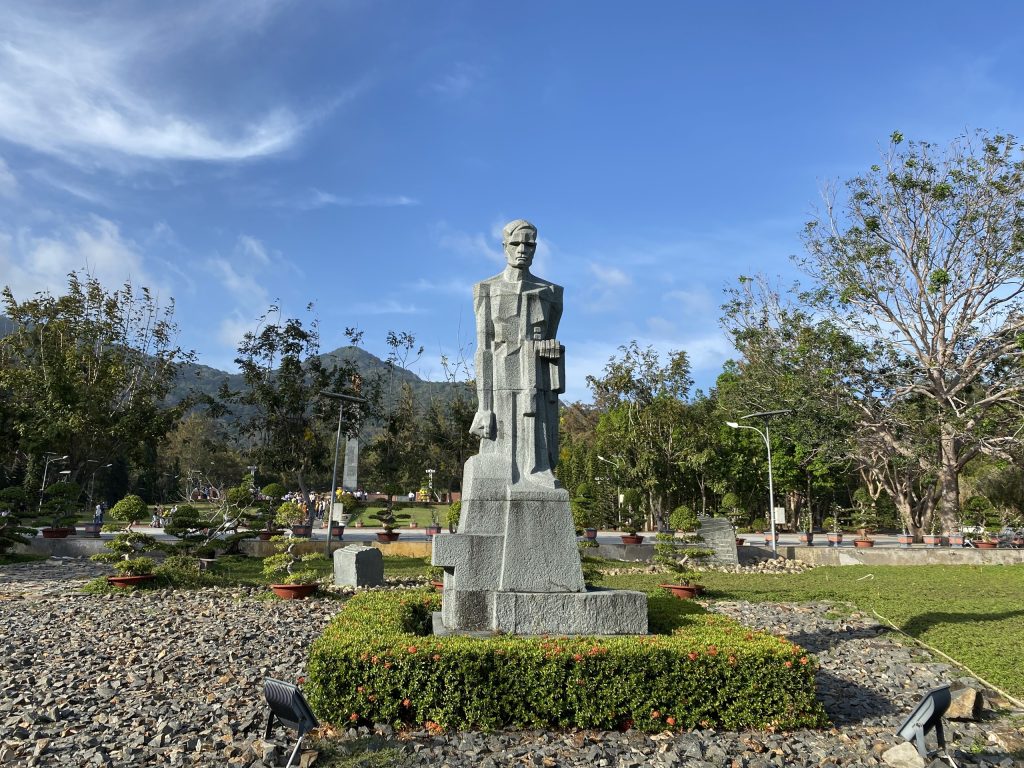
Vũ Văn Hiếu and his final years on Côn Đảo
Comrade Vũ Văn Hiếu was the first secretary of the Hòn Gai Mining Special Zone Party Committee and one of the cadres who made important contributions to the labor and revolutionary movements in the Quảng Ninh mining region.
During his activities, he was arrested by the French colonial authorities and sent to prison on Côn Đảo.
Years of deprivation, illness and strict confinement severely weakened his health.
According to historical materials at Côn Đảo, comrade Vũ Văn Hiếu died in a solitary confinement cell in the prison.
The shirt given away before his death
Realizing that he was unlikely to survive, comrade Vũ Văn Hiếu gave the shirt he was wearing to fellow prisoner Lê Duẩn.
In circumstances where prisoners had almost no possessions, even a shirt to wear and keep warm was extremely valuable.
The meaning of the gesture, however, went far beyond its material value.
It expressed his faith in a comrade who could live on, continue his work and contribute to the revolutionary cause.
Comrade Vũ Văn Hiếu’s dying words are preserved in historical materials:
“Try to stay alive to serve the revolution.”
That brief request conveyed his concern for his comrade and the ideal he pursued until the final moments of his life.
For later generations, the story of the shirt recalls the deprivation of prison life while also showing the generosity, mutual care and sense of responsibility among people who shared an ideal.
The Giving the Shirt monument and its commemorative significance
The story of Vũ Văn Hiếu giving his shirt to Lê Duẩn has inspired literary and artistic works as well as memorials.
The image of a prisoner giving away his shirt is depicted in a sculpture at Hàng Dương Cemetery, which commemorates revolutionaries and patriots who died on Côn Đảo.
That image is also associated with these lines of poetry:
“Even in death, they take off their shirts for one another;
A bowl of rice, a piece of clothing warms the hearts of those who come after…”
From a true story recorded in historical materials, the shirt became a symbol of sharing and continuity between generations of revolutionaries.
For those exploring the history of Phú Thọ Prison, this is one of the stories that helps illuminate the inner lives of political prisoners on Côn Đảo.
Room 10 and the “Chicken Coop” isolation section
Besides the stories of revolutionaries, Phú Thọ Prison is also known for the distinctive isolation section created from room 10.
During the Republic of Vietnam government’s administration of Côn Đảo Prison, rooms 9 and 10 were added behind the infirmary.
Room 10 was specifically converted for solitary confinement and the disciplining of prisoners.
Why was it called the “Chicken Coop Isolation Section”?
Room 10 was divided into 15 small cells to isolate prisoners subjected to strict disciplinary measures.
This area also supplemented the solitary confinement facilities of Côn Đảo Prison.
Prisoners held here called it “Biệt lập Chuồng Gà,” or the “Chicken Coop Isolation Section.”
The name reflected the prisoners’ irony as well as the cramped and harsh nature of the solitary confinement spaces.
Despite the similar names, the “Chicken Coop Isolation Section” at Phú Thọ Prison must be distinguished from the French Tiger Cages, a different solitary confinement facility within the Côn Đảo Prison complex.
A means of controlling and punishing prisoners
Solitary confinement is a measure used to separate an individual from communal life.
Within a prison system, prolonged isolation can have serious effects on a detainee’s physical and mental health.
For political prisoners, solitary confinement also aimed to restrict communications, prevent organization and weaken their will to resist.
The subdivision of room 10 into 15 small cells shows the increasing specialization of detention facilities and reflects changes in prisoner management over time.
Today, this isolation section is an important subject in research into the history and structure of Phú Thọ Prison.
The founding of the Lê Hồng Phong Party cell on May 1, 1963
Another historical milestone associated with Phú Thọ Prison took place on May 1, 1963.
According to materials preserved at Côn Đảo, a Party cell named Lê Hồng Phong was established that day on the veranda of room 4.
The name Lê Hồng Phong was chosen to commemorate the earlier revolutionary who had worked and struggled steadfastly and died on Côn Đảo.
The significance of establishing a Party cell in prison
Under strict control and surveillance, maintaining a Party organization inside the prison involved many difficulties and risks.
Political prisoners had to find ways to exchange information, stay in contact and organize activities as far as possible despite the prison administration’s controls.
The founding of the Lê Hồng Phong Party cell on the veranda of room 4 demonstrates the imprisoned Party members’ efforts to maintain their organization and spirit of resistance.
It also illustrates the role of political organizations in the lives of revolutionary prisoners on Côn Đảo.
Identifying the place and date of the Party cell’s establishment adds to Phú Thọ Prison’s value for historical research, alongside its architectural remains and the personal stories associated with the compound.
Phú Thọ Prison after 1975
After Vietnam’s reunification in 1975, the Côn Đảo Prison system ceased holding prisoners.
Buildings once used for prison operations were gradually repurposed for conservation, research and historical education.
Phú Thọ Prison’s significance lies not only in its surviving cell blocks and structures, but also in the events, people and memories associated with the site.
Preserving Phú Thọ Prison helps convey part of the prison system that existed on Côn Đảo for more than a century, from 1862 to 1975.
Through surviving documents, objects and buildings, later generations can learn about detention conditions, prisoners’ lives, forms of repression and the resistance that took place within the prison.
Phú Thọ Prison as part of the Côn Đảo Prison Special National Heritage Site
Phú Thọ Prison’s historical significance is recognized within the broader Côn Đảo Prison historical site.
On April 29, 1979, the Ministry of Culture and Information issued Decision No. 54/VHTT.QĐ, recognizing the Côn Đảo Historical Revolutionary Site as one of the country’s especially important heritage sites.
Then, on May 10, 2012, the Prime Minister issued Decision No. 548/QĐ-TTg, designating the Côn Đảo Prison Historical Site as a Special National Heritage Site.
The 2012 designation applies to the entire Côn Đảo Prison historical site, of which Phú Thọ Prison is a component. It is not a separate designation specifically for Phú Thọ Prison.
Protection within the system of Special National Heritage Sites provides an important basis for preserving the buildings, documents and historical significance associated with the prison.
Phú Thọ Prison’s historical significance today
Phú Thọ Prison is important in several respects, from historical research and architectural conservation to teaching later generations about their heritage.
Its significance for prison history and the revolutionary movement
Phú Thọ Prison reflects the expansion and transformation of the Côn Đảo Prison system through different periods.
From a reception facility for new prisoners, it became a place for detaining political activists, people classified as requiring special control and inmates subjected to disciplinary measures.
Events associated with the revolutionary movement, the Southern Uprising, political prisoners’ activities and the establishment of the Lê Hồng Phong Party cell underpin the site’s outstanding historical significance.
Its significance for architecture and the organization of detention
The layout of the cell blocks, isolation section and infirmary, together with changes to the arrangement of rooms over time, provides useful evidence for studying the prison regime.
In particular, the conversion of room 10 into 15 solitary confinement cells illustrates the development of methods for managing and controlling prisoners.
Its human significance and historical memory
The stories associated with Lê Duẩn, Vũ Văn Hiếu, Dương Bạch Mai and many other revolutionaries ensure that Phú Thọ Prison’s history is remembered through more than names, numbers and buildings.
The story of a prisoner giving away his shirt, the solidarity among comrades and organizational activities under imprisonment give the site a profound human dimension.
These accounts also help visitors, especially younger generations, better understand the sacrifices and choices people made in exceptional historical circumstances.
Learning about and visiting Phú Thọ Prison in Côn Đảo
Phú Thọ Prison lies within the Côn Đảo Prison heritage complex on Côn Sơn Island.
For visitors interested in history, learning about Phú Thọ Prison forms part of exploring the prison system that once existed on the island.
Before visiting, contact the site’s management or check its information to confirm accessible areas, visiting hours and current regulations. Not every building in the heritage complex is necessarily open independently to visitors.
Subjects worth exploring
When learning about Phú Thọ Prison, visitors can focus on the construction of Banh III in 1928, the arrangement of the cell blocks and its function of isolating new arrivals to the island.
Other important subjects include the detention of political prisoners after the Southern Uprising, the story of Vũ Văn Hiếu giving his shirt to Lê Duẩn, isolation room 10 and the founding of the Lê Hồng Phong Party cell on the veranda of room 4.
Listening to historical explanations and comparing documentary sources can help clarify how the compound changed over time.
Guidance for visiting a historical site
Phú Thọ Prison is associated with painful memories for generations of prisoners and revolutionaries. Visitors should therefore approach the site respectfully.
Follow the management’s guidance, do not enter restricted areas without permission, do not disturb historic structures and take photographs only where permitted.
When visiting with children or students, introducing some information about Côn Đảo Prison and Phú Thọ Prison’s history beforehand can make the visit more meaningful.
Frequently asked questions about Phú Thọ Prison in Côn Đảo
When was Phú Thọ Prison built?
The French colonial authorities began building Phú Thọ Prison in 1928 as part of the expansion of the Côn Đảo Prison system.
Are Banh III and Phú Thọ Prison the same place?
Yes. Banh III is one of the historical names of the compound later known as Camp 1 or Phú Thọ Prison.
Phú Thọ Prison should be distinguished from Phú Tường Prison, often called Camp 4 or the Banh III Annex in materials introducing the prison system.
Which historical figures were held at Phú Thọ Prison?
The prison held many revolutionaries, including Lê Duẩn, Dương Bạch Mai and Vũ Văn Hiếu.
What is the “Chicken Coop Isolation Section”?
This was the prisoners’ name for the solitary confinement area converted from room 10 at Phú Thọ Prison. The room was divided into 15 small cells for isolating and disciplining prisoners.
Where is the story of Vũ Văn Hiếu giving his shirt to Lê Duẩn associated with?
The story is associated with their years of imprisonment on Côn Đảo and is recorded in materials introducing Phú Thọ Prison’s history. The image of giving away a shirt was later depicted in a sculpture at Hàng Dương Cemetery.
Is Phú Thọ Prison a Special National Heritage Site?
Phú Thọ Prison is a component of the Côn Đảo Prison Special National Heritage Site, designated under Decision No. 548/QĐ-TTg of May 10, 2012.
Phú Thọ Prison: preserving memories that must not be forgotten
Almost a century has passed since Banh III was built. Phú Thọ Prison no longer holds prisoners, but its historical stories remain meaningful to many generations.
From the cell blocks and isolation room 10 to the story of comrade Vũ Văn Hiếu giving his shirt to Lê Duẩn, each surviving trace and event helps illuminate a challenging period in the nation’s history.
Learning about Phú Thọ Prison also offers a fuller understanding of Côn Đảo, a place known not only for its natural scenery but also for heritage sites preserving the memories of tens of thousands of people once imprisoned there.
For visitors to Côn Đảo, exploring these historical sites is an opportunity to better understand the past and appreciate today’s peaceful life.
Con Dao Express introduces Côn Đảo’s destinations, heritage sites and historical stories, while also providing information on high-speed ferry routes, timetables, reference fares and ticket booking services for journeys to the island.
To plan a trip, visitors can consult transport information and destination guides on condaoexpress.com.
References: Côn Đảo National Heritage Conservation Center; Department of Cultural Heritage; Prime Minister’s Decision No. 548/QĐ-TTg of May 10, 2012.