
Võ Thị Sáu (1933–1952) was a female revolutionary fighter from Đất Đỏ who served in the Volunteer Public Security Unit during the resistance against French colonial rule. She is known for her work as a courier, reconnaissance activities and participation in armed resistance in her hometown at a very young age. After being arrested in 1950 and sentenced to death, she was taken to Côn Đảo, where she was executed on the morning of 23 January 1952.
Võ Thị Sáu’s life is closely associated with two places: Đất Đỏ, where she was born and joined the revolutionary movement; and Côn Đảo, where she spent her final hours and was buried at Hàng Dương Cemetery.
Today, Võ Thị Sáu is remembered through numerous memorials, schools, streets and works of literature and music. For the people of Côn Đảo, she is also affectionately known as Cô Sáu, a name expressing respect and affection for the female fighter who died before reaching the age of 20.
Behind this familiar image lies a life marked by historical events worth exploring: her first courier assignments in Đất Đỏ, her arrest and imprisonment, and her final days in a cell at Sở Cò.
This article introduces Võ Thị Sáu’s biography, the major events in her life and the places on Côn Đảo that continue to preserve the memory of this national heroine.
Who Was Võ Thị Sáu?
Võ Thị Sáu was a female member of the Đất Đỏ Volunteer Public Security Unit during the resistance against French colonial rule. She joined the revolutionary movement as a teenager, undertaking courier work, delivering supplies and gathering information before participating in local armed operations.
She was arrested in early 1950 and imprisoned in Bà Rịa and Saigon before being taken to Côn Đảo for execution.
She was executed on Côn Đảo on 23 January 1952. Following Vietnam’s reunification, Võ Thị Sáu’s life and sacrifice continued to be studied, commemorated and presented in history education programs.
In 1993, the Vietnamese state posthumously awarded her the title Hero of the People’s Armed Forces.
Võ Thị Sáu: Biographical Information
| Field | Details |
|---|---|
| Commonly known name | Võ Thị Sáu |
| Birth name according to some sources | Nguyễn Thị Sáu |
| Year of birth | 1933; some sources give 1935 |
| Hometown | The Đất Đỏ area of former Bà Rịa Province, now part of Đất Đỏ Commune, Ho Chi Minh City |
| Father | Võ Văn Hợi |
| Mother | Nguyễn Thị Đậu |
| Organization | Đất Đỏ Volunteer Public Security Unit |
| Year she joined the unit | 1947 |
| Year of arrest | 1950 |
| Date of death | 23 January 1952 |
| Place of death | Côn Đảo |
| Resting place | Section B, Hàng Dương Cemetery |
| Honorary title | Hero of the People’s Armed Forces |
The year 1933 is used in the Vietnam News Agency’s biographical profile, lists of people who died on Côn Đảo and many official documents. Some other sources, however, give 1935.
Since there is no complete agreement on her birth year, an appropriate approach is to acknowledge both versions while using 1933 as the main reference, in line with widely published records.
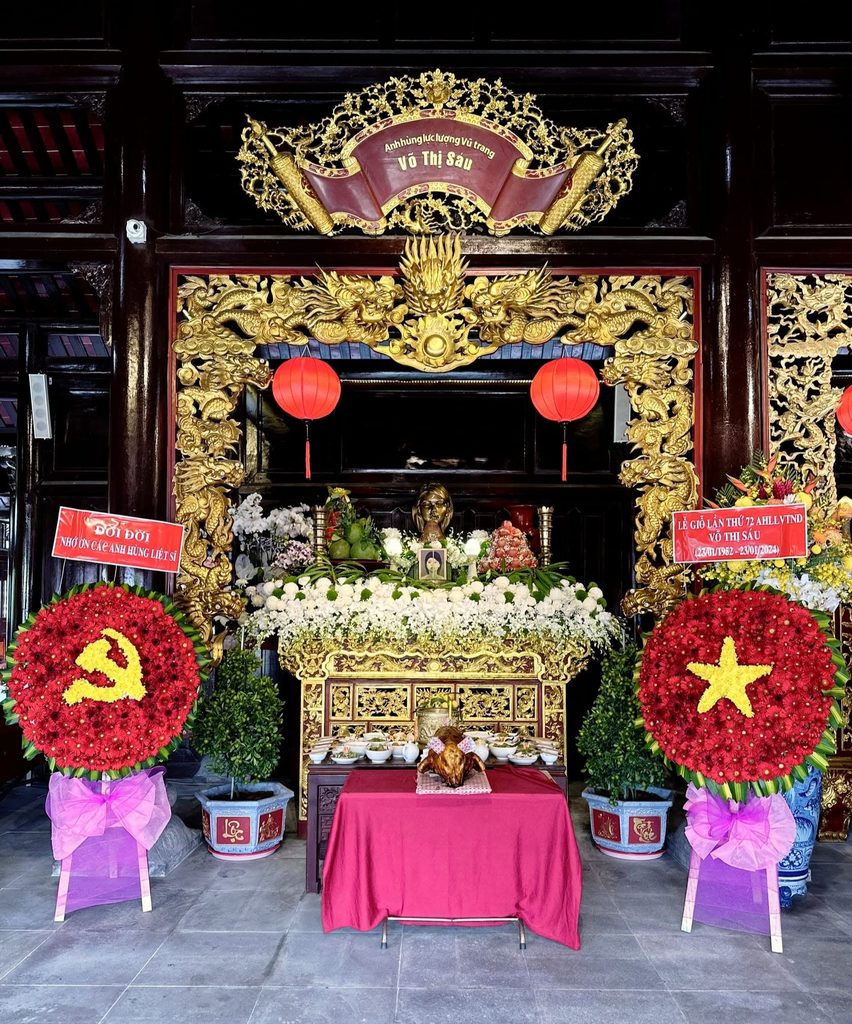
Her Hometown of Đất Đỏ and Her Childhood
Võ Thị Sáu was born in the Đất Đỏ area, then part of Bà Rịa Province, near the coastal areas of Long Hải and Phước Hải.
In the early twentieth century, local livelihoods mainly involved farming, fishing, trade and small service businesses.
Võ Thị Sáu came from a family of modest means. According to the Vietnam National Museum of History, her father, Võ Văn Hợi, worked as a horse-cart driver, while her mother, Nguyễn Thị Đậu, traded at Đất Đỏ Market.
Her childhood unfolded amid social upheaval as the patriotic movement and resistance to French colonial rule grew in southeastern Vietnam.
After the August Revolution of 1945, resistance against the French broke out. Đất Đỏ became one of the areas where resistance forces operated.
Many local young people joined national salvation organizations, armed units and courier networks.
In this setting, Võ Thị Sáu came into contact with resistance participants at an early age. Biographical accounts record the influence of her older brothers and local revolutionary networks, which guided her involvement.
From a Young Girl in Đất Đỏ to a Revolutionary Participant
Initially, Võ Thị Sáu’s main responsibilities involved carrying messages, delivering supplies and helping to gather information.
These were important tasks for the resistance, as communication between its local bases had to be maintained under frequent scrutiny by colonial troops and authorities.
Couriers needed to remember routes, understand local conditions, convey information accurately and keep operational bases secret.
Although still very young, Võ Thị Sáu was assigned numerous tasks connected with the work of the Đất Đỏ Volunteer Public Security Unit.
This marked an important transition in her life, from a young girl living with her family in the area to an active participant in the resistance movement.
1947: Võ Thị Sáu Joins the Đất Đỏ Volunteer Public Security Unit
According to the Vietnam News Agency and the Vietnam National Museum of History, Võ Thị Sáu joined the Đất Đỏ District Volunteer Public Security Unit in 1947, when she was about 14 if the 1933 birth year is used.
This was an important milestone in her biography.
The Volunteer Public Security Unit helped protect revolutionary bases, gather information, identify informers and carry out operations against colonial forces in the area.
In the early period, Võ Thị Sáu mainly undertook reconnaissance and courier assignments.
She traveled through areas such as Đất Đỏ, Phước Lợi, Long Mỹ and Phước Hải to observe local conditions and report information to the organization.
This work required agility, powers of observation and knowledge of the area.
According to the Vietnam News Agency’s biographical profile, she was also sent to study at the provincial military cadet school in late 1947.
Reconnaissance Activities in 1948
One notable assignment recorded in historical accounts took place in early 1948.
According to the Vietnam National Museum of History, Võ Thị Sáu uncovered information concerning people acting as informers for French forces, including Sáu Thoại and a person known as Sớm.
The information she relayed helped resistance forces recognize the threat of an attack on their base.
This incident is cited as an example of her ability to assess local conditions and carry out reconnaissance in the early stages of her involvement.
From these courier assignments, Võ Thị Sáu went on to take part in more dangerous activities in the years that followed.
1948–1950: Activities in Đất Đỏ
Accounts of Võ Thị Sáu’s life often associate the period from 1948 to 1950 with armed missions carried out by the Volunteer Public Security Unit.
According to the Vietnam News Agency’s profile, in July 1948 she took part in an operation intended to disrupt a gathering in Đất Đỏ marking France’s national day.
Vietnamese historical sources also record her participation in operations against people whom the resistance identified as informers or supporters of the colonial authorities.
The Incident Involving Tổng Tòng
A local official known as cai Tổng Tòng appears in many accounts of Võ Thị Sáu’s life.
According to Vietnamese historical sources, he was a local official who cooperated with the colonial authorities and whom the resistance regarded as a target for action.
In November 1949, Võ Thị Sáu was assigned to a mission targeting this man.
Sources differ over the details and outcome of the incident. Some say the target was seriously wounded, while others describe the result differently.
A biography should therefore acknowledge this as an armed operation mentioned in historical records, without asserting a specific outcome unless the original sources have been fully compared.
February 1950: The Incident Leading to Võ Thị Sáu’s Arrest
According to the Vietnam News Agency’s biographical profile, in February 1950 Võ Thị Sáu was assigned to take part in a grenade attack on two people identified as informers for colonial forces, known as Cả Suốt and Cả Đay.
She was arrested during the mission.
This was a major turning point in Võ Thị Sáu’s life.
From a participant in the resistance network in Đất Đỏ, she became a prisoner of the French colonial authorities.
Accounts of her life differ on the date of her arrest, its precise location and the course of the attacks. Most official sources nevertheless agree that she was arrested in early 1950 after a period of revolutionary activity in her hometown.
Where Was Võ Thị Sáu Held after Her Arrest?
After her arrest, Võ Thị Sáu was held in prisons in Bà Rịa and Saigon.
According to the Vietnam National Museum of History, she was taken to Bà Rịa Prison before being transferred to Saigon.
During her imprisonment, the colonial authorities questioned her about her activities and the revolutionary networks connected with them.
Historical accounts record that Võ Thị Sáu was subjected to various forms of torture during interrogation but did not reveal the information demanded by the prison authorities.
Imprisonment in Bà Rịa
Bà Rịa Prison was one of the first places where Võ Thị Sáu was held after her arrest.
During this period, she faced interrogation and strict control by the colonial authorities.
Her imprisonment also separated her from her family and the networks through which she had worked in Đất Đỏ.
Historical accounts often refer to this period as evidence of her steadfastness under pressure.
Imprisonment at Chí Hòa Prison and in Saigon
After her time in Bà Rịa, Võ Thị Sáu was transferred to detention facilities in Saigon, including Chí Hòa Prison.
According to some accounts published by the Vietnam National Museum of History, she continued trying to help political prisoners communicate with one another while imprisoned.
Maintaining contact in prison was extremely difficult, as cells were closely monitored and letters and other exchanges of information risked discovery.
In these circumstances, political prisoners often used everyday tasks and opportunities for contact to pass on information and encourage one another.
Accounts of Võ Thị Sáu’s imprisonment in Saigon are important to understanding her life before she was taken to Côn Đảo.
The Death Sentence and the Decision to Send Võ Thị Sáu to Côn Đảo
Following her detention and trial, Võ Thị Sáu was sentenced to death by the French colonial authorities.
According to some accounts published by the Vietnam National Museum of History, the sentencing took place in 1951.
The death sentence imposed on such a young woman became a subject discussed in many historical accounts.
Some sources state that her status as a minor was a point of debate during the trial and the implementation of the sentence.
However, widely published records differ on her birth year and certain legal details. Caution is therefore needed when stating her exact age at the time of sentencing.
The sources agree that she was sentenced to death and taken to Côn Đảo in January 1952 for execution.
Why Was Võ Thị Sáu Sent to Côn Đảo?
At the time, Côn Đảo was a major prison complex of the French colonial authorities, isolated offshore.
For decades, it served as a place of imprisonment and exile for convicted prisoners, including political activists and resistance fighters.
Võ Thị Sáu’s transfer to Côn Đảo was directly connected with the decision to carry out her death sentence.
Unlike many prisoners who spent long periods in the island’s prison camps, she remained on Côn Đảo only briefly before her death.
That short period is associated with the events remembered at Sở Cò Historic Site and Hàng Dương Cemetery.
22 January 1952: Võ Thị Sáu Arrives on Côn Đảo
According to the Côn Đảo National Heritage Conservation Center, a naval transport vessel brought Võ Thị Sáu to the waters off Côn Đảo in the early hours of 22 January 1952.
She was transferred from the larger vessel to a smaller craft to be taken ashore.
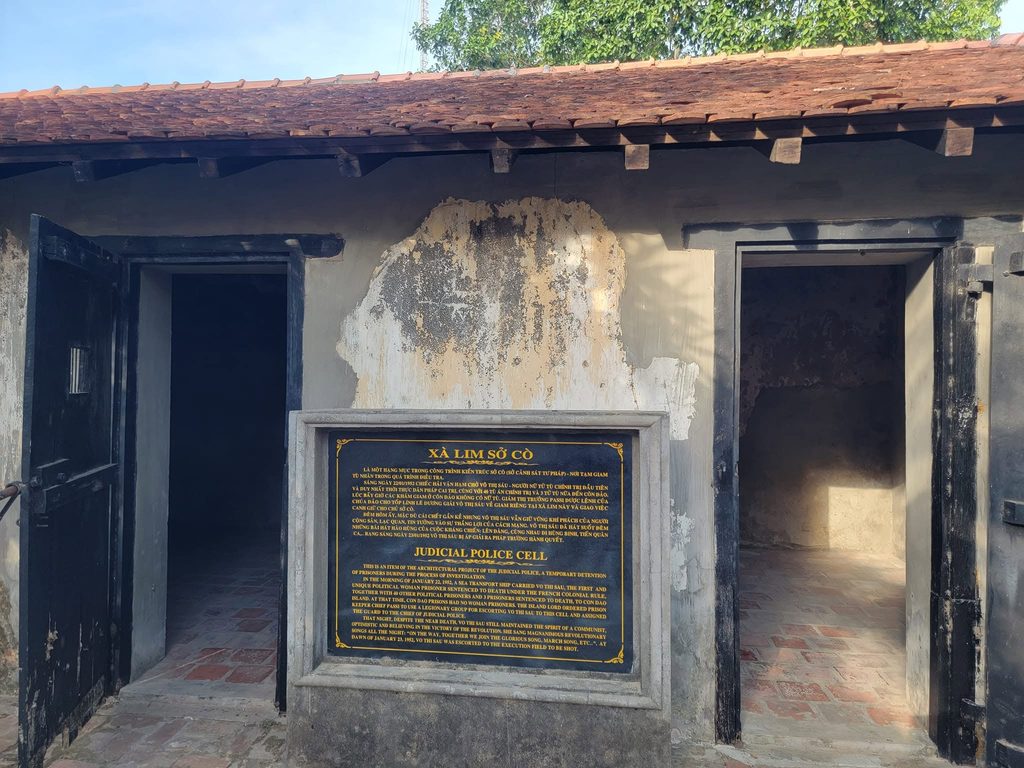
After her arrival, the prison authorities placed her in solitary detention at Sở Cò, the judicial police facility within the French colonial prison administration.
Sở Cò and Võ Thị Sáu’s Final Hours
Sở Cò was built in 1929 in central Côn Sơn.
The complex included a main building, an outbuilding, garden grounds and two cells used for solitary confinement.
On 22 January 1952, Võ Thị Sáu was confined in one of Sở Cò’s cells.
This is where she spent her final hours before being taken to the execution ground the following morning.
According to records preserved on Côn Đảo, when political prisoners learned that Võ Thị Sáu had been brought to the island for execution, they tried to contact and encourage her.
Some prisoners assigned to service work in the prison’s administrative facilities sought opportunities to speak with her.
These accounts describe Võ Thị Sáu as remaining calm, sending greetings to other prisoners and expressing faith in the path she had chosen.
Her Final Night in a Cell at Sở Cò
One story frequently recounted in material about the historic site describes Võ Thị Sáu singing from her cell on the night of 22 January 1952.
According to the recollections of a prisoner who had worked at Sở Cò, she sang familiar revolutionary songs such as Lên Đàng, Tiến quân ca, Cùng nhau đi Hồng binh and Tiểu đoàn 307.
These songs became part of the memory of her last night before execution.
This detail survives through oral recollections and locally published accounts. When studying it, a distinction should be made between events supported by administrative records and material drawn from witnesses’ memories.
Regardless of the perspective taken, the story of singing from a prison cell remains one of the images recalled by generations when speaking of Võ Thị Sáu on Côn Đảo.
Võ Thị Sáu’s Admission to the Party before Her Death
According to the Vietnam News Agency’s biographical profile, on 22 January 1952 Võ Thị Sáu was admitted to the Vietnam Workers’ Party and recognized as a full member.
This took place the day before her execution.
It is one of the important political milestones in her biography, recorded in many accounts of the revolutionary movement on Côn Đảo.
23 January 1952: Võ Thị Sáu’s Death on Côn Đảo
According to the Côn Đảo National Heritage Conservation Center, at around 4 a.m. on 23 January 1952 Võ Thị Sáu was taken from her cell at Sở Cò to the chief warden’s office for the procedures preceding her execution.
She was then escorted to the execution ground in the Hàng Dương area.
At around 7 a.m. on 23 January 1952, the French colonial authorities carried out her death sentence.
This date became an important occasion for commemorating Võ Thị Sáu on Côn Đảo.
Accounts of Her Final Moments at the Execution Ground
Historical accounts and memoirs published in Vietnam describe Võ Thị Sáu as remaining calm and resolute when facing her sentence.
One frequently retold detail is that she refused to be blindfolded before her execution.
Other sources also mention her shouting words of opposition to French colonial rule and affirming her belief in national independence.
The precise wording of the statements attributed to her may vary between sources.
When presenting these events, it is therefore necessary to distinguish historical details recorded by multiple sources from dialogue that may have been retold, edited or passed down through generations.
The Story of a Flower on the Way to the Execution Ground
Alongside historical accounts, the image of Võ Thị Sáu picking a flower on her way to the execution ground appears in poetry, literary works and stories about her.
This image is often used to convey the young fighter’s optimism and composure in the face of death.
However, it is a detail closely associated with literary memory and oral tradition, and should not be presented as an event fully verified by original records.
Most important are the date and place of her death and the related historical events preserved in accounts of Côn Đảo Prison.
How Old Was Võ Thị Sáu When She Died?
Using the birth year of 1933 found in many records, Võ Thị Sáu was not yet 20 when she died on 23 January 1952.
Some sources give her birth year as 1935, which would make her younger.
Since there is no agreed date of birth, it is best not to assert that she was exactly 17, 18 or 19 on the day of her death.
An appropriate way to phrase it is that Võ Thị Sáu died at a very young age, before reaching 20.
Where Is Võ Thị Sáu’s Grave on Côn Đảo?
After her execution, Võ Thị Sáu was buried on Côn Đảo.
Today, her grave is in Section B of Hàng Dương Cemetery, in the central area of Côn Sơn Island, Côn Đảo Special Zone, Ho Chi Minh City.
Hàng Dương Cemetery is the resting place of many revolutionary fighters, patriots and prisoners who died during the years when the prison system operated.
It contains the graves of historical figures including Lê Hồng Phong, Nguyễn An Ninh, Vũ Văn Hiếu, Hồ Văn Năm and Võ Thị Sáu.
Among these graves, Võ Thị Sáu’s attracts large numbers of local residents and visitors paying their respects.
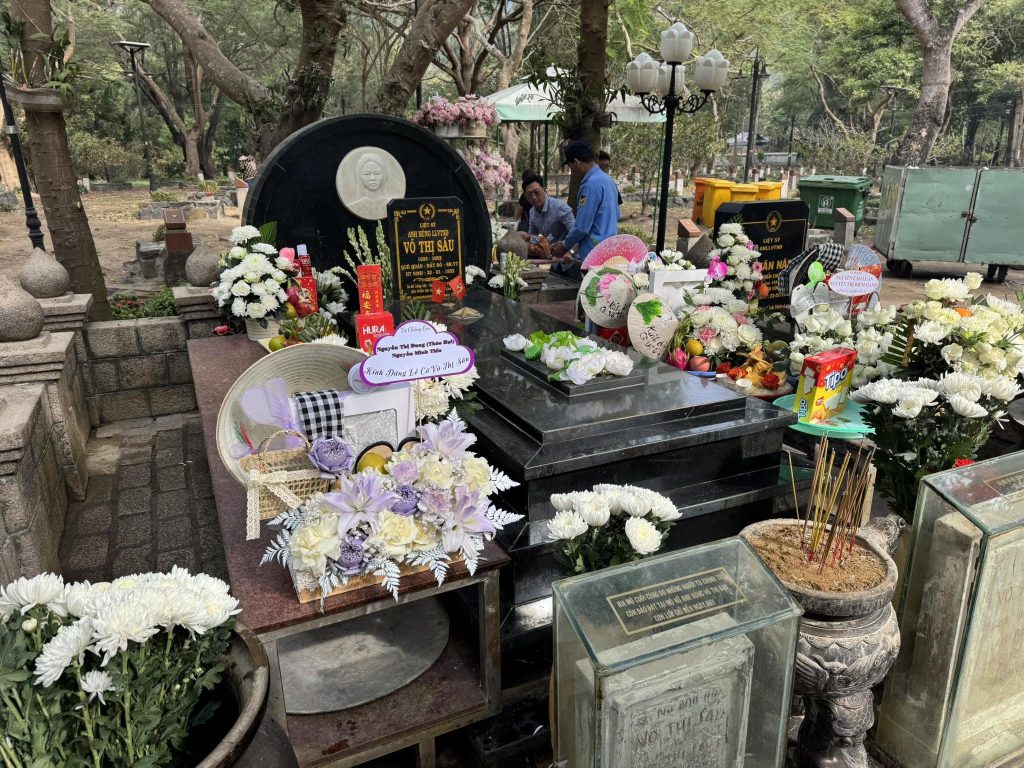
Why Do So Many People Visit Cô Sáu’s Grave?
For many people, visiting Võ Thị Sáu’s grave is first and foremost an act of remembrance for a female fighter who died during the resistance against French colonial rule.
Alongside its historical significance, folk stories about Cô Sáu have circulated over time among the people of Côn Đảo and other communities.
As a result, her grave is both a historical place of remembrance and a site connected with the spiritual beliefs of some visitors.
Stories about spiritual powers, however, belong to the realm of belief and folklore. They are not historical events that can be verified using the same methods as records of dates, people and places.
Visitors may explore both aspects while respecting different approaches to the historic site.
Must You Visit Cô Sáu’s Grave at Night?
No.
Hàng Dương Cemetery welcomes people paying their respects during the hours announced by its management.
Many choose to visit in the evening, but there is no rule requiring arrival at exactly midnight.
Visitors may come during the day or evening within the cemetery’s visiting hours, according to their circumstances.
At the cemetery, dress respectfully, keep noise to a minimum, follow designated paths and offer incense only in permitted areas.
For more details, see the article on Hàng Dương Cemetery, Côn Đảo.
Why Do the People of Côn Đảo Call Võ Thị Sáu “Cô Sáu”?
The name “Cô Sáu” is widely used by residents and visitors to Côn Đảo.
In southern Vietnamese forms of address, “cô” can express both warmth and respect toward a woman.
For Võ Thị Sáu, this form of address is also associated with her very young age at death.
Over time, Cô Sáu became a familiar way of referring to the heroine, particularly during commemorations at Hàng Dương Cemetery.
Historical documents continue to use Võ Thị Sáu, or Hero of the People’s Armed Forces Võ Thị Sáu, to identify her.
In everyday speech, phrases such as “paying respects to Cô Sáu,” “Cô Sáu’s grave” and “Cô Sáu’s death anniversary” have become familiar.
Both names refer to the same historical figure.
Võ Thị Sáu in Literature, Music and Collective Memory
Võ Thị Sáu’s life and sacrifice have inspired many works of literature, music and art.
One of the best-known songs associated with her is Biết ơn chị Võ Thị Sáu (Gratitude to Võ Thị Sáu) by composer Nguyễn Đức Toàn.
The song uses the image of canistel blossoms in Đất Đỏ to remember the female fighter.
For generations, it has been performed at cultural programs, historical education activities and commemorative events.
The canistel blossom has consequently become a familiar literary and musical symbol associated with Võ Thị Sáu.
Alongside music, poetry, literary nonfiction and stories about her have introduced Võ Thị Sáu to successive generations of readers.
Monuments, memorial houses, streets and schools bearing her name continue to be built and preserved in many places.
These forms of remembrance have value in cultural life and history education.
Places Associated with Võ Thị Sáu on Côn Đảo
Visitors wishing to learn more about Võ Thị Sáu’s life can explore places directly connected with the events of January 1952 and institutions preserving material about her memory.
Sở Cò Historic Site: Where Võ Thị Sáu Was Held before Her Death
Sở Cò stands on Lê Duẩn Street in central Côn Sơn.
Built in 1929, it once served as a judicial police facility within the Côn Đảo Prison administration.
On 22 January 1952, Võ Thị Sáu was confined in one of its two cells.
Here she spent her final hours before being taken for execution on the morning of 23 January 1952.
Today, Sở Cò is preserved as a historic site connected with her life and sacrifice.
Visitors should check whether the site is open before going, as access may change according to maintenance and conservation work.
Hàng Dương Cemetery: Võ Thị Sáu’s Resting Place
Võ Thị Sáu’s grave is in Section B of Hàng Dương Cemetery.
This is the principal destination for those wishing to offer incense and commemorate her on Côn Đảo.
While visiting the cemetery, travelers can also learn about the graves of other historical figures and the broader memorial grounds.
In particular, the cemetery has rules on protecting the environment, reducing waste and not burning votive paper offerings.
Côn Đảo Memorial Temple: A Place to Honor Fallen Heroes
Côn Đảo Memorial Temple stands beside Hàng Dương Cemetery.
It is a shared memorial to the fallen heroes, revolutionary fighters and patriotic compatriots who died on Côn Đảo.
During Võ Thị Sáu’s death-anniversary commemorations, some official ceremonies take place at the temple, alongside incense-offering rites at her grave.
Visitors can read the article on Côn Đảo Memorial Temple for further information.
Côn Đảo Museum: Understanding the Historical Context
Côn Đảo Museum preserves extensive documents, photographs and artifacts relating to the prison system and the historical figures once imprisoned on the island.
For first-time visitors, it is a useful place to gain an overview of the island’s history before visiting individual sites.
A museum visit helps connect Võ Thị Sáu’s story with the wider history of Côn Đảo Prison from 1862 to 1975.
The Võ Thị Sáu Memorial House in Her Hometown of Đất Đỏ
Alongside the sites on Côn Đảo, the Võ Thị Sáu Memorial House in Đất Đỏ is an important place for preserving and presenting her life story.
The house is associated with Võ Thị Sáu’s youth and her family.
According to the Vietnam News Agency’s profile, restoration began in 1980, and the building was recognized as a national historical and cultural site in 1986.
A monument and memorial complex dedicated to Võ Thị Sáu stand near the house.
Residents, students and visiting delegations come here to learn about her childhood, hometown and involvement in revolutionary activities.
It is important to distinguish the two locations: the Võ Thị Sáu Memorial House is in Đất Đỏ on the mainland, while her grave is at Hàng Dương Cemetery on Côn Đảo.
These places have different historical significance and complement one another in presenting the heroine’s life.
Võ Thị Sáu’s Death Anniversary: Why 23 January and the 27th Day of the Twelfth Lunar Month?
23 January 1952 is the date of Võ Thị Sáu’s death in the Gregorian calendar.
In the Vietnamese lunar calendar, this corresponds to the 27th day of the twelfth month of the Tân Mão year.
On Côn Đảo, the annual commemoration follows the Gregorian date of 23 January.
In her hometown of Đất Đỏ, the commemoration follows the 27th day of the twelfth lunar month.
These different calendars mean the two places may hold their ceremonies on different Gregorian dates in the same year.
For example, in 2026, the 74th anniversary ceremony on Côn Đảo took place on 23 January 2026. In Đất Đỏ, it was held on 14 February 2026, the 27th day of the twelfth lunar month of the Ất Tỵ year.
Anyone wishing to attend an official commemoration should first decide which location to visit and check that year’s event schedule.
Do not confuse 23 January in the Gregorian calendar with the 23rd day of the first lunar month.
For details, see Võ Thị Sáu’s Death Anniversary in the Lunar and Gregorian Calendars.
Key Milestones in Võ Thị Sáu’s Life
| Date | Event |
|---|---|
| 1933 | Birth year used in many official records |
| 1947 | Joins the Đất Đỏ Volunteer Public Security Unit |
| 1948 | Carries out reconnaissance assignments and participates in local armed operations |
| 1949 | Continues working in the resistance movement in Đất Đỏ |
| Early 1950 | Arrested while carrying out a mission |
| 1950–1951 | Imprisoned, interrogated and tried in Bà Rịa and Saigon |
| 22 January 1952 | Taken to Côn Đảo and held separately at Sở Cò; admitted to the Party according to Vietnam News Agency records |
| 23 January 1952 | Executed on Côn Đảo |
| 1993 | Posthumously awarded the title Hero of the People’s Armed Forces |
Sources differ on some details of Võ Thị Sáu’s armed activities, the timing of her trial and her age. This table prioritizes the main milestones used in many Vietnamese historical accounts.
Frequently Asked Questions about Võ Thị Sáu
Who was Võ Thị Sáu?
Võ Thị Sáu was a female revolutionary fighter from Đất Đỏ who served in the Volunteer Public Security Unit during the resistance against French colonial rule. She was arrested in 1950 and executed on Côn Đảo on 23 January 1952.
What was Võ Thị Sáu’s birth name?
According to the Vietnam National Museum of History and some biographical accounts, her birth name was Nguyễn Thị Sáu. The name Võ Thị Sáu is widely used in commemorative records and historical documents.
When was Võ Thị Sáu born?
Many official records, including the Vietnam News Agency’s biographical profile, give 1933. Some other sources give 1935. There is no complete agreement across all sources.
Where was Võ Thị Sáu from?
She came from Đất Đỏ, formerly part of Bà Rịa Province and now within Ho Chi Minh City.
Who were Võ Thị Sáu’s parents?
According to the Vietnam National Museum of History, her father was Võ Văn Hợi and her mother was Nguyễn Thị Đậu.
When did Võ Thị Sáu join the revolutionary movement?
According to the Vietnam News Agency’s profile, Võ Thị Sáu joined the Đất Đỏ Volunteer Public Security Unit in 1947.
When was Võ Thị Sáu arrested?
She was arrested in early 1950 while taking part in armed activities in Đất Đỏ.
Where was Võ Thị Sáu imprisoned?
After her arrest, she was held in Bà Rịa and Saigon, including at Chí Hòa Prison. In January 1952, she was taken to Côn Đảo and confined in a cell at Sở Cò before her execution.
On what date did Võ Thị Sáu die?
She died on 23 January 1952 on Côn Đảo. The corresponding lunar date is the 27th day of the twelfth month of the Tân Mão year.
How old was Võ Thị Sáu when she died?
If the birth year 1933 is used, she died before reaching 20. Some sources give 1935 as her birth year, so her precise age is presented differently across sources.
Why is Võ Thị Sáu called Cô Sáu?
Cô Sáu is a familiar, respectful form of address used for Võ Thị Sáu, especially during commemorations on Côn Đảo.
Where is Võ Thị Sáu’s grave?
Her grave is in Section B of Hàng Dương Cemetery, Côn Đảo Special Zone, Ho Chi Minh City.
Must you visit Cô Sáu’s grave at midnight?
No. Visitors may pay their respects during the cemetery’s opening hours. Visiting at midnight is a matter of custom or personal preference, not a requirement.
Where can you visit the Võ Thị Sáu Memorial House?
The memorial house is in her hometown of Đất Đỏ on the mainland, not on Côn Đảo. To visit her grave, travelers need to go to Hàng Dương Cemetery on Côn Sơn Island.
Võ Thị Sáu and the Memories Preserved on Côn Đảo
Võ Thị Sáu’s life unfolded during a turbulent period of Vietnamese history, as resistance against French colonial rule developed in many parts of the country.
Beginning with courier work in Đất Đỏ, she joined the Volunteer Public Security Unit at a very young age, was later arrested and spent time in prison before being taken to Côn Đảo.
Her final days involved only a short stay on the island, yet they became an important part of its historical memory.
Sở Cò preserves the place where she was held. Hàng Dương Cemetery is her resting place. Annual commemorations continue to recall the female fighter’s life and sacrifice.
Alongside recorded historical milestones, Võ Thị Sáu also appears in literature, music and popular spiritual beliefs.
Understanding her biography therefore requires drawing on historical sources while recognizing stories passed down through generations.
For visitors to Côn Đảo, learning about Võ Thị Sáu is more than learning about a famous grave. It is a way to understand a real person’s life, choices made in wartime and a period of history that left a lasting mark on the island.
From Đất Đỏ to Côn Đảo, Võ Thị Sáu continues to be remembered as part of the history of resistance and the commemorative memory of generations of Vietnamese people.
Learn More about Côn Đảo and Visiting Cô Sáu’s Grave
Visitors wishing to explore Côn Đảo’s sites associated with Võ Thị Sáu can read the guides to Hàng Dương Cemetery, Sở Cò, Côn Đảo Memorial Temple and Côn Đảo Museum.
If traveling by sea, check high-speed ferry schedules, departure and arrival ports, and return tickets before deciding on your accommodation dates.
Con Dao Express provides information on high-speed ferry routes to Côn Đảo, schedules, indicative ticket prices and guides to the island’s history and destinations.
See the guide to visiting Cô Sáu’s grave on Côn Đảo by ferry and the Côn Đảo Express ferry schedule to plan a suitable trip.
Reference Materials
- Vietnam News Agency: Biographical profile of Võ Thị Sáu.
- Vietnam National Museum of History: Võ Thị Sáu: Her Song Echoes On.
- Côn Đảo Tourism Portal: Hero of the People’s Armed Forces Võ Thị Sáu.
- Côn Đảo National Heritage Conservation Center: Sở Cò Historic Site.
- Hàng Dương Cemetery: Historical information and burial sections.
- Côn Đảo Tourism Portal: The 74th death anniversary of Võ Thị Sáu in 2026.
This article was checked against sources available as of 8 November 2026. Details that differ between sources have been noted to help readers distinguish the principal historical milestones from points that require further research.