
In the center of Côn Đảo, where Tôn Đức Thắng Street follows the shoreline and opens onto views of Côn Sơn Bay, Historic Pier 914 is one of the oldest structures associated with the history of Côn Đảo Prison. From the outside, the pier looks modest, with low stone walls and a walkway extending out to sea. Behind its weathered stones, however, lies a history of forced labor, prison ships and people who never returned to the mainland.
Construction of Pier 914 began under French colonial rule in 1873. It once served as an important maritime gateway to Côn Đảo. For decades, ships carrying prisoners, goods and materials arrived here, and the pier also supported the work of the prison administration.
The number 914 is neither a technical designation nor a harbor identification number. According to historical records, it is an approximate figure remembered by prisoners to commemorate those who died quarrying and transporting stone and building the pier and the coastal stone embankments.
Within the 113-year history of Côn Đảo Prison, from 1862 to 1975, the pier witnessed moments with very different meanings. The same place that received people sent into island imprisonment also saw thousands of political prisoners return to the mainland as free people after the historic events of 1945 and 1975.
Today, Pier 914 is preserved as a component of the Côn Đảo Prison Special National Heritage Site. It retains the remains of an old landing place and serves as a memorial to those who lost their lives during its construction and the years of imprisonment.
Where Is Pier 914 in Côn Đảo?
Pier 914 stands on Tôn Đức Thắng Street in central Côn Sơn Island, in the Côn Đảo Special Administrative Zone of Ho Chi Minh City.
The structure is directly in front of the Island Governor’s Residence, facing Côn Sơn Bay. Its location was an important part of the layout of central Côn Đảo during French colonial rule.
The pier gave arriving ships access to the administrative area and facilities serving the prison system. Inland stands the Island Governor’s Residence, where the heads of the prison administration lived and worked through different periods.
The pier is also near Nhà Công Quán, a historic building associated with the French composer Camille Saint-Saëns’s stay in 1895.
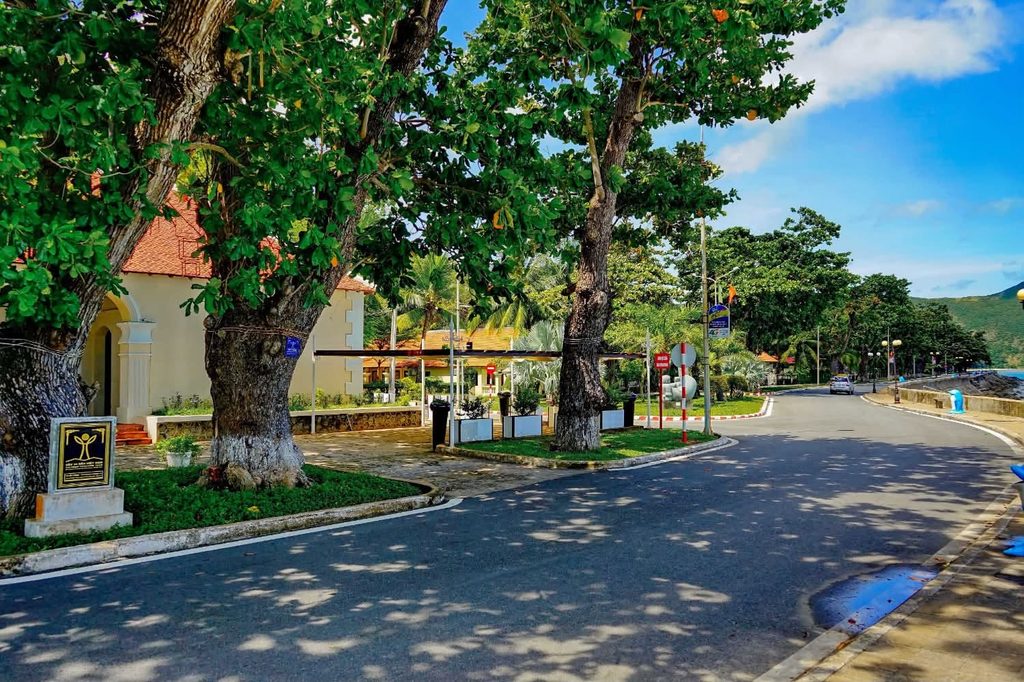
Today, this area forms part of a leafy coastal road lined with historic buildings and views across Côn Sơn Bay.
Visitors staying in the town center can reach Pier 914 on foot, by motorbike or by taxi.
Pier 914 at a Glance
- Historic site: Historic Pier 914.
- Other names: Côn Đảo Pier, Pier 914.
- Location: Tôn Đức Thắng Street, Côn Đảo Special Administrative Zone, Ho Chi Minh City.
- Construction began: 1873.
- Original planned length: Approximately 107 m.
- Length after extensions: More than 300 m, according to historical records.
- Width: Approximately 5 m, reaching nearly 8 m in places at the outer end.
- Construction and expansion: Continued over several decades, with a major phase substantially completed around 1930.
- Historical function: A landing place for ships transporting prisoners, goods and supplies for the prison system.
- Meaning of 914: An approximate number commemorating prisoners who died during forced labor building the pier and stone embankments.
- Present-day significance: A historic site, visitor destination and place of remembrance.
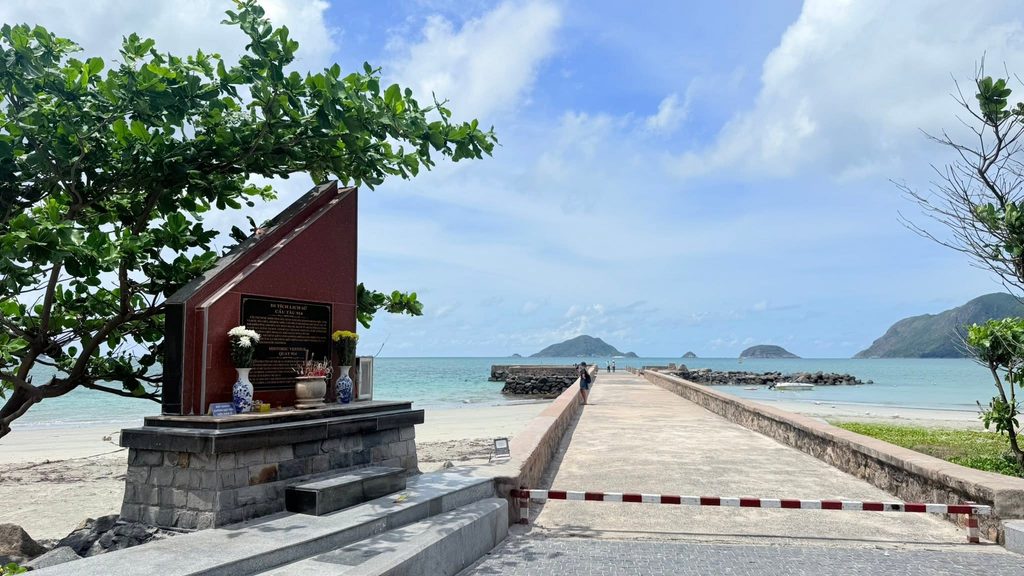
The History of Pier 914, Beginning in 1873
Why Did the French Colonial Authorities Build a Pier in Côn Đảo?
On February 1, 1862, the French colonial authorities issued a decision establishing a prison on Côn Đảo.
Far from the mainland, Côn Đảo was chosen as a place of imprisonment and exile for convicted people, including many who had participated in patriotic and revolutionary movements.
Maintaining a prison system on an island, however, required infrastructure for transportation and supplies.
At the time, ships were the main means of moving people, food, building materials, mail and essential equipment between Côn Đảo and the mainland.
In the early years, facilities for receiving vessels were limited. Bringing people and goods ashore depended heavily on the weather, tides and small boats.
A solidly built pier would make transportation easier while supporting plans to expand the prison system.
Against this background, the French colonial authorities began building a pier in front of the Island Governor’s Residence in 1873.
1873: Construction Begins on a Pier Extending into Côn Sơn Bay
According to the Vietnam National Museum of History and the Côn Đảo Tourism Portal, construction began in 1873, with an initial planned length of approximately 107 m.
The structure began at the edge of the road in front of the Island Governor’s Residence and extended into Côn Sơn Bay.
This was a convenient location for connecting maritime transport with the administrative area and prison camps.
Building a pier on an island far from the mainland, however, was no simple undertaking.
Large quantities of stone and other materials were needed to form the foundations, build the embankments and ensure that the structure could withstand the sea’s waves.
Rather than hiring workers under suitable working conditions, the colonial authorities used prisoners as forced labor.
Prisoners were made to take part in every stage, from quarrying stone and transporting materials to construction along the shore.
A Construction Process Lasting Decades
The pier was not completed quickly.
According to the Côn Đảo National Heritage Conservation Center, construction, repairs and extensions continued for several decades, with a major phase not substantially completed until around 1930.
During that time, the pier’s dimensions were adjusted to meet growing transportation needs.
From its initial planned length of approximately 107 m, the pier continued to be extended farther out to sea.
Figures published by the Vietnam National Museum of History indicate that, after repeated repairs and extensions, the structure measured more than 300 m long, approximately 5 m wide along most of its length and nearly 8 m wide at the outer end.
These figures reflect the structure’s development through several phases. They should not be taken to mean that its entire present length and fabric were built in 1873.
The large stones forming the pier’s foundations and coastal embankments are notable traces of this prolonged construction process.
Why Is It Called Pier 914?
The name Pier 914 comes from the loss of life during construction.
According to the Côn Đảo National Heritage Conservation Center, prisoners were forced to quarry stone at the foot of Núi Chúa, then carry it to the shore to build the pier and wave-protection embankments.
The work demanded immense physical effort under extremely harsh conditions.
Many were crushed by rocks or falling trees, became exhausted, or died from disease and punishment.
Prisoners remembered those who died during the work and used the number 914 to commemorate them.
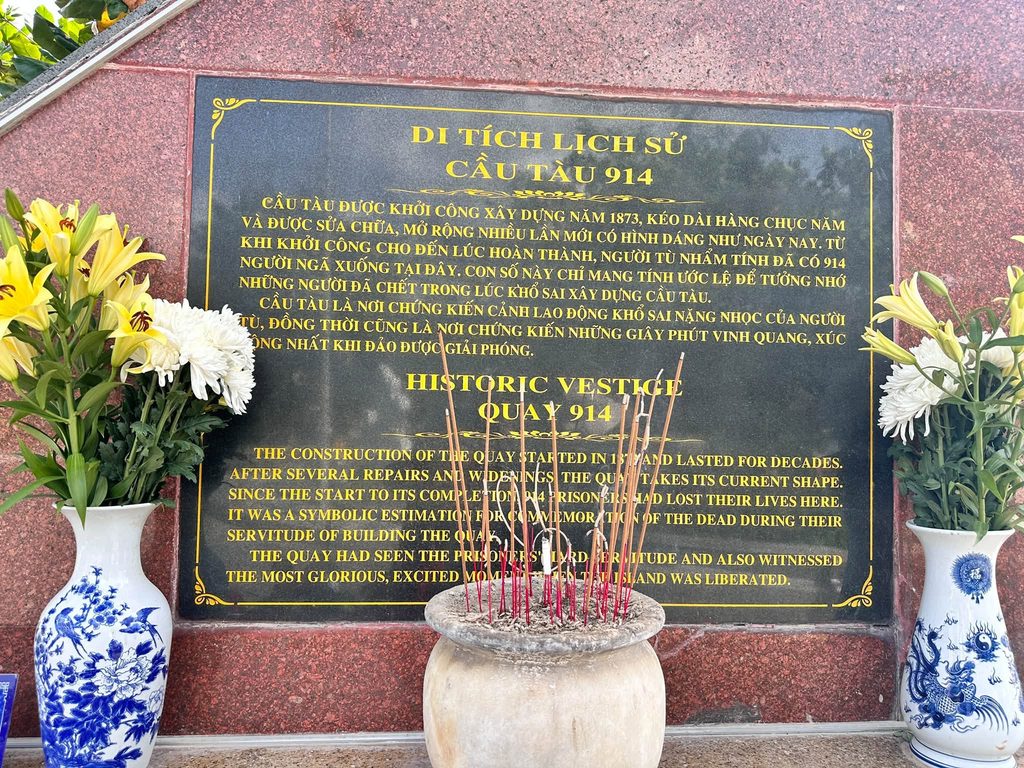
Is 914 an Exact Count?
It is important to note that 914 is not a death toll fully verified by a list identifying each individual.
According to the Côn Đảo National Heritage Conservation Center, it is an approximate commemorative figure preserved in the memories of successive generations of prisoners.
Some historical documents have recorded other figures, including 871, 915 and 917.
However, 914 became the most widely used figure and gradually became the site’s official name.
Clearly identifying the approximate nature of the figure is necessary for an accurate account of the history.
The name’s significance lies in commemorating those who died during forced labor, rather than establishing an exact record of every death.
The Number 914 Refers to Both the Pier and the Stone Embankments
Another detail often overlooked is that those commemorated were not only involved in placing stones to build the pier itself.
According to the site’s historical records, many prisoners also had to quarry and transport materials for wave-protection embankments along the coastal road of Côn Lôn.
These tasks were directly connected, serving to create and protect the infrastructure along the shoreline.
The name 914 should therefore be understood in the context of the full process of quarrying, transportation and construction of the pier and its associated stone embankments.
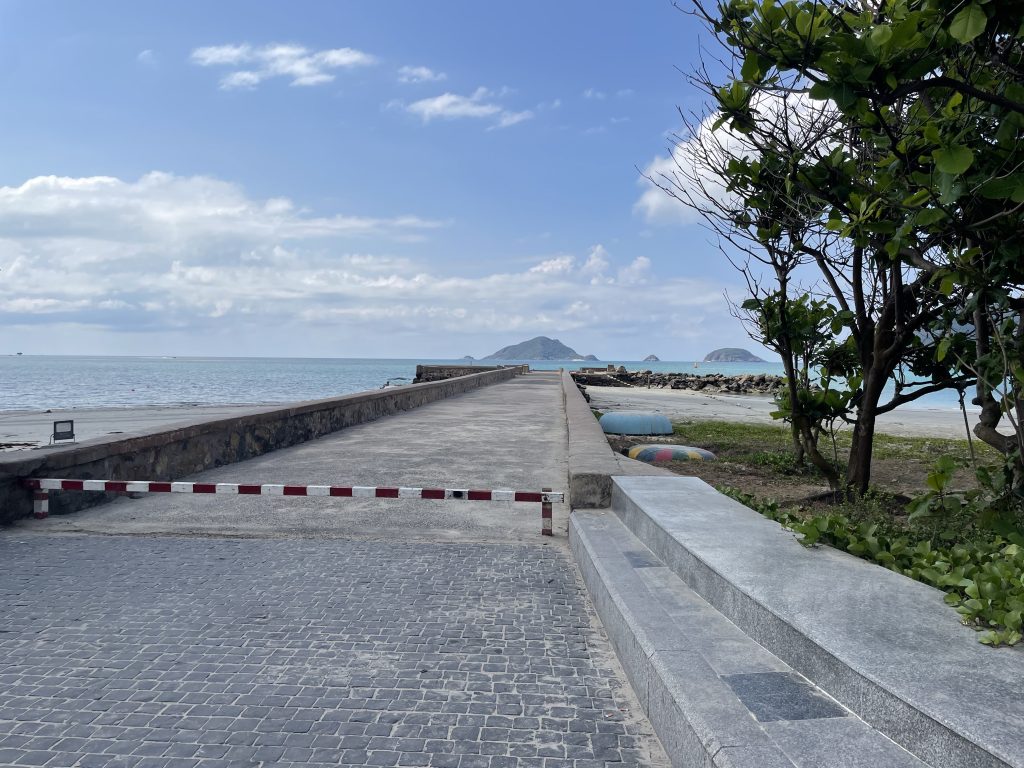
Forced Labor in the Construction of Pier 914
The history of Pier 914 is inseparable from the forced-labor regime within the Côn Đảo prison system.
Prisoners not only lived in prison camps but were also taken to numerous locations to extract resources and build infrastructure.
The pier is a prominent example of a structure created through this form of labor.
Quarrying Stone at the Foot of Núi Chúa
To build the pier, the colonial authorities used stone quarried from the foot of Núi Chúa.
Prisoners had to split, chisel and work large blocks of stone.
Without modern machinery, many stages depended largely on human strength and simple tools.
Quarrying was dangerous, particularly when handling large rocks on uneven ground.
If rocks suddenly slipped, rolled or fell, workers could suffer severe injuries or lose their lives.
Such accidents are recorded in historical accounts of the construction of Pier 914.
Transporting Heavy Stone Blocks to the Shore
After quarrying, the stone had to be moved to the construction site.
Some blocks were enormous, weighing several tonnes.
To move them, prisoners had to work together to pull and push, or use rudimentary tools to lift and shift the stone.
Transporting the stone from the quarrying area to the coast involved many hours of heavy labor.
Large blocks could slip out of control, causing accidents among those moving them.
According to accounts preserved in historical records, many prisoners were crushed by rocks, became severely weakened or did not survive prolonged periods of labor.
Building the Pier’s Foundations and Coastal Stone Embankments
Once the stone arrived, prisoners had to position it and construct the foundations, the body of the pier and the embankments.
Waves, wind, tides and weather added to the difficulties of working by the sea.
Large stones had to be arranged to form a load-bearing structure capable of supporting the pier’s use as a landing place for vessels.
For a structure extending out to sea, the positioning of materials and the stability of the structure were particularly important.
Yet the prisoners worked under compulsion, without adequate protective equipment and under strict supervision.
The danger came not only from the weight of the materials but also from work pressure and punishments imposed by prison guards.
Punishment During Forced Labor
According to the Côn Đảo National Heritage Conservation Center, prisoners were subjected to beatings and coercion while working.
Those without the strength to carry out a task, or who failed to meet demands, could be punished by the guards.
With inadequate food, declining health and repeated heavy labor, the risks of accidents and illness increased.
Some were injured while transporting stone; others became exhausted after extended periods of work.
These losses explain why Pier 914 is remembered as both a transport structure and evidence of the forced-labor regime on Côn Đảo.
Pier 914: Where Many Prisoners First Set Foot on Côn Đảo
Throughout the operation of the prison system, Pier 914 was one of the gateways receiving ships that brought prisoners from the mainland to the island.
For people sent to Côn Đảo for the first time, the pier marked the beginning of imprisonment far from their families and homes.
After a long sea journey, they stepped onto the pier before being taken to administrative and detention facilities.
Ships Carrying Prisoners to the Island
During French colonial rule, prisoners were brought to Côn Đảo mainly by sea.
The ships carried convicted people or those sentenced to exile from many regions to Côn Sơn.
Among them were people convicted for taking part in patriotic movements, political activities or struggles against colonial rule.
For the prison authorities, the pier was part of the transport and administrative system.
For those brought to the island, however, it was where they confronted an entirely different life.
After landing, prisoners underwent reception, inspection and classification procedures before being transferred to places of detention.
Beatings on Arrival
According to records from the Côn Đảo National Heritage Conservation Center, many prisoners suffered beatings from guards and prison orderlies as soon as they set foot on the pier.
Beatings, threats and humiliation were used to intimidate new arrivals.
These acts made the pier a place associated with painful memories from prisoners’ very first moments on the island.
Reception conditions could vary by period and group of prisoners, but historical records consistently describe the harsh treatment at this gateway to the prison system.
Those Who Passed Through the Pier Only Once
One of the recurring images in accounts of Pier 914 is that of people who passed through it only once.
They were brought to Côn Đảo, endured years of imprisonment or forced labor, and died on the island.
Not everyone had the chance to return to the mainland.
Many were buried in places such as Hàng Keo Cemetery or Hàng Dương Cemetery.
For those exploring its history, Pier 914 is therefore more than the starting point of a journey into exile.
It is also a place associated with separation, interrupted lives and the memory of those who died.
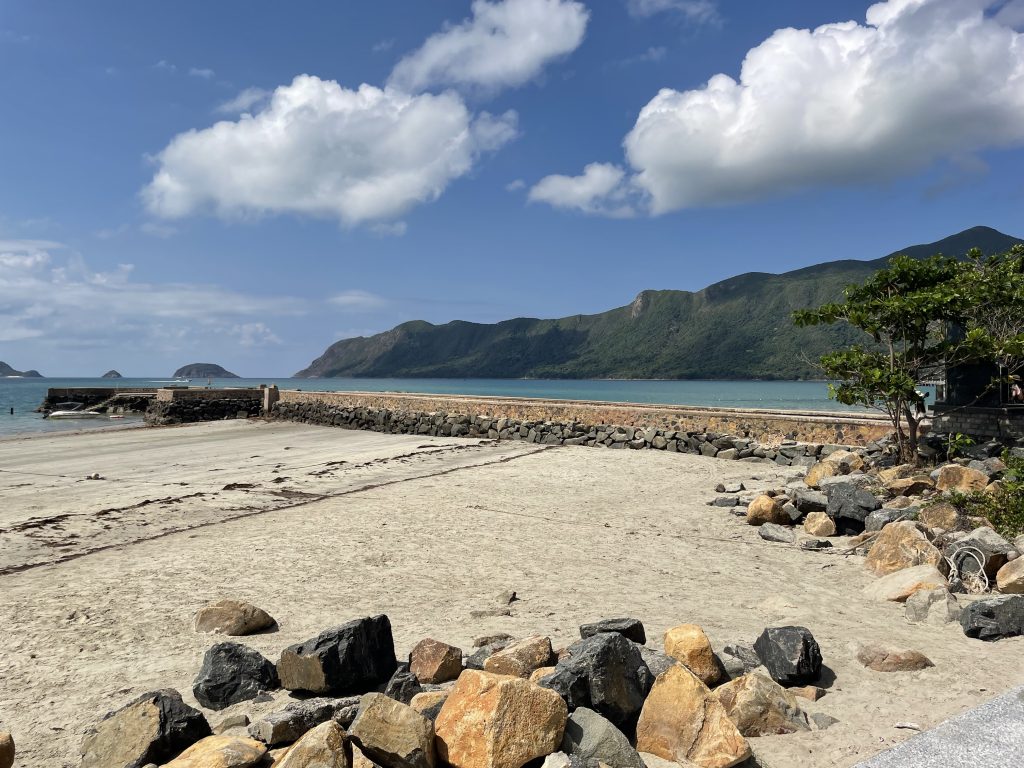
Pier 914 in the Prison’s Transport and Administrative System
The pier played an important role in the operation of Côn Đảo Prison because, in the early period, almost all contact with the mainland depended on sea transport.
Besides ships carrying prisoners, the structure handled goods, building materials, food and equipment.
Receiving Food and Supplies
Although some goods were produced locally, Côn Đảo still relied on ships from the mainland for many supplies.
Food, equipment and materials needed for daily life and prison administration arrived by sea.
The pier made unloading and onward transport into the town center easier.
Transporting Construction Materials
As Côn Đảo Prison developed, new buildings were constructed and older facilities repaired.
Materials therefore had to be transported regularly.
Some were quarried or produced on the island, while others had to be brought from the mainland.
The pier connected maritime transport with the island’s network of facilities.
The Connection with the Island Governor’s Residence
Pier 914’s position directly in front of the Island Governor’s Residence was no coincidence in the layout of the town center.
The residence was the home and workplace of the head of the prison administration.
The pier was the transport gateway, receiving people and goods.
The two structures had different functions but both served to organize and maintain the island’s administrative system.
Today, looking toward the residence from the pier helps visitors understand the relationship between administrative space and transport infrastructure during the colonial period.
1945: The Pier Witnesses Prisoners Regaining Their Freedom
Pier 914’s history is not confined to ships carrying people into exile.
September 1945 was a pivotal moment, when the pier witnessed a complete change in the lives of many political prisoners.
Following the success of the August Revolution, circumstances on Côn Đảo changed significantly.
Political prisoners took part in organizing activities, assuming control and establishing a revolutionary administration on the island.
According to the Côn Đảo National Heritage Conservation Center, more than 2,000 political prisoners were freed and returned to the mainland in September 1945.
The pier where they had arrived as prisoners now became the place where they boarded ships home as free people.
This event held particular significance.
A gateway to a system of exile became a place that witnessed homecomings after years of separation.
However, political upheaval after 1945 meant that Côn Đảo continued to be used as a place of imprisonment in the decades that followed.
The events of 1945 were therefore an important milestone, but did not mark the final end of the prison system.
May 1, 1975: Pier 914 at the Liberation of Côn Đảo
After April 30, 1975, circumstances on Côn Đảo changed rapidly.
Political prisoners on the island organized an uprising, took control and brought the prison system’s operations to an end.
May 1, 1975 is recognized as the date of Côn Đảo’s complete liberation, ending 113 years of the Côn Đảo prison system.
This is one of the most important milestones in the island’s history.
From a Landing Place for Prisoners to a Departure Point for Home
According to the Côn Đảo National Heritage Conservation Center, more than 4,000 political prisoners were freed and returned to the mainland in successive departures during May 1975.
The pier continued to serve as an important transport gateway at that time.
The place that had received people brought to the island for imprisonment now witnessed ships taking them home.
Here too, the flags and scenes of arrivals and departures at liberation formed a striking contrast with memories of the earlier prison regime.
The Significance of 1975
For Pier 914, 1975 marked a decisive turning point.
The structure no longer served to bring people into an operating prison system.
Its historical function within the detention regime ended, giving way to peacetime use, preservation and research.
The surviving traces in the pier’s foundations, stone embankments and shoreline came to be regarded as historical heritage to protect.
Pier 914 thus holds two layers of memory: prisoners’ painful years of confinement and the moments when they were free to return home.
The Architecture and Surviving Features of Pier 914
Pier 914 has a relatively simple design compared with colonial administrative buildings and grand residences.
Its outstanding significance lies in its stone embankments, the pier extending into the sea and its direct connection with the history of forced labor.
Large Stones Forming the Pier’s Structure
One of its most recognizable features is the large stonework forming the body of the pier and sections of embankment.
The stones are arranged in layers to create a structure able to withstand seawater and support maritime transport.
These blocks recall the quarrying, transportation and construction carried out by prisoners.
Not every stone visible at the pier today can be identified with certainty as original material from 1873, because the structure has undergone repeated repairs and extensions.
Nevertheless, the stone structure remains one of the site’s most important characteristics.
A Walkway Extending into Côn Sơn Bay
From Tôn Đức Thắng Street, the pier extends out into the waters of Côn Sơn Bay.
Low stone walls and embankments run along either side of the walkway.
From here, visitors can see the sea, small islands in the distance and the forested mountains surrounding the bay.
The location creates an open setting, very different from the prison camps farther inland in the town center.
Yet this beautiful landscape was once the setting for the transport of prisoners and grueling forced labor.
The contrast between today’s seascape and the structure’s history is what encourages many visitors to spend time learning about Pier 914.
The Memorial at the Pier
Near the approach to the pier stands a memorial marking the structure’s history and commemorating those who died during its construction.
Delegations, residents and visitors may offer flowers and incense here in accordance with the site’s rules.
The memorial helps explain the meaning of the number 914, making clear that the structure is more than an old landing place.
For visitors unfamiliar with Côn Đảo’s history, reading the memorial inscription before exploring the pier is a useful starting point.
Are Pier 914 and Today’s Côn Đảo Passenger Port the Same Place?
Visitors researching high-speed ferry journeys to Côn Đảo should distinguish between the two.
Historic Pier 914 is not the same as the modern Côn Đảo Passenger Port.
Construction of Pier 914 began in 1873, and today it is preserved primarily as a historic site and place of remembrance.
By contrast, Côn Đảo Passenger Port serves modern maritime passenger transport and began operating in 2023.
The two structures are close to each other on the central Côn Sơn waterfront, but differ in their history, design and purpose.
Côn Đảo Passenger Port
Côn Đảo Passenger Port was built to handle passenger arrivals and departures on sea transport routes.
It includes facilities for vessel operations, passenger reception and port management.
Its proximity to the center makes it easier for passengers to reach accommodation and island services.
Ferry operators may change boarding and arrival locations depending on the weather, operating plans and notices from the port management.
Bến Đầm Port
Bến Đầm Port is another important maritime hub in Côn Đảo, located in the south of Côn Sơn Island.
Many high-speed ferry routes and vessels carrying passengers and goods use this port.
Because Bến Đầm is some distance from central Côn Sơn, arriving passengers need to arrange onward transport to their hotels or sightseeing destinations.
What Should High-Speed Ferry Passengers Check?
When booking a ferry to Côn Đảo, check the exact departure and arrival ports shown on the electronic ticket.
Do not assume that all high-speed ferries arrive at Pier 914 simply because it stands in the center.
Depending on the operator, route, weather and daily operating plan, the arrival point may be Bến Đầm Port or Côn Đảo Passenger Port.
Before departure, passengers should reconfirm the port details and check-in instructions with the ferry company or an official ticket agent.
Pier 914 after 1975 and Its Conservation
After the Côn Đảo prison system ceased operating, structures associated with imprisonment and forced labor were gradually researched, protected and incorporated into the heritage site network.
Pier 914 is one of the structures recognized as having significant historical value.
National Heritage Recognition in 1979
On April 29, 1979, the Ministry of Culture and Information issued Decision No. 54-VHTT.QĐ, recognizing the Côn Đảo historic site complex at the national level.
Pier 914 forms part of the historically significant structures protected within this complex.
This recognition provided an important basis for research, conservation and presenting the site to the public.
Special National Heritage Designation in 2012
On May 10, 2012, the Prime Minister issued Decision No. 548/QĐ-TTg, designating the Côn Đảo Prison Historic Site as a Special National Heritage Site.
Pier 914 is one of the component sites within the designated complex.
Note that the 2012 decision applies to the Côn Đảo Prison Historic Site as a whole, rather than being a separate designation exclusively for Pier 914.
Preserving the Structure in a Marine Environment
Pier 914 stands directly on the coast, where its building materials are continually exposed to sun, rain, seawater and salt spray.
For a structure used and repaired through several periods, conservation must pay attention to structural stability, the stonework and features retaining original heritage value.
Conservation also needs to balance protection of the site, visitor safety and the wider coastal landscape.
Even small actions such as climbing on embankments, moving stones or carving into surfaces can harm the site’s heritage value.
Responsible visiting is therefore an important part of preserving Pier 914.
The Historical Significance of Pier 914 in Côn Đảo
Evidence of Forced Labor
Pier 914’s first outstanding significance is its connection with the use of prisoners as forced labor.
Its large stones, embankments and foundations recall a construction process that continued for decades under harsh conditions.
The number 914 became a way of remembering those who died during that process.
A Gateway to the Côn Đảo Prison System
Historically, the pier received many people brought to the island for imprisonment.
It connected ships arriving from the mainland with prison facilities on Côn Sơn.
From the pier, prisoners were transferred onward to different camps and administrative areas.
The site therefore holds a particular place in the life histories of many people once sent to Côn Đảo.
A Place That Witnessed Homecomings
Alongside memories of prison ships, Pier 914 is associated with the release of political prisoners in 1945 and 1975.
Those moments add another dimension to its historical significance.
A place that marked the loss of freedom for many became the setting for their return to the mainland after years of imprisonment.
Learning about History and Human Lives
Pier 914 allows visitors to approach history through a specific piece of transport infrastructure.
Memories of the prison regime are not confined to prison rooms and cells.
A landing place, a stone embankment or a coastal path can also preserve stories of forced labor, separation and historical upheaval.
Preserving the pier helps later generations understand those losses and appreciate the value of peaceful life today.
Visiting Pier 914 in Côn Đảo
When Is a Good Time to Visit Pier 914?
Morning and late afternoon are convenient times to observe the pier’s architecture and the scenery of Côn Sơn Bay.
Morning usually provides natural light that makes the stone surfaces, embankments and walkway easier to see.
The waterfront may be cooler in the late afternoon, making it suitable for walking and learning about the site.
Visitors should still pay attention to the weather, especially on days with rough seas or strong winds.
Is There an Admission Fee for Pier 914?
According to visitor information published by the Côn Đảo Tourism Portal in December 2025, Pier 914 is free to visit.
Access to some areas may nevertheless change during maintenance, safety alerts or organized events.
Visitors should follow signs at the site and announcements from its management.
How Much Time Should You Allow?
Allow approximately 20–30 minutes to read the memorial, observe the architecture and walk around the pier area.
A guided visit or a combined exploration of the nearby historic buildings may take longer.
This is a suggested duration, not a mandatory requirement.
Can Visitors Offer Incense at Pier 914?
Pier 914 has a memorial to prisoners who lost their lives during its construction.
Residents and visitors may offer incense and flowers in accordance with the heritage management’s rules.
Keep offerings simple and appropriate for a place of remembrance, and limit the use of products that pollute the environment.
Do not burn votive paper without permission or engage in activities that create fire or explosion risks along the waterfront.
Safety and Respectful Visiting
Avoid climbing on stone embankments or entering slippery areas.
When waves are high, winds strong or thunderstorms present, keep away from sections of the pier close to the water’s edge.
Do not move stones, carve into the structure or throw rubbish into the sea.
Adults accompanying children should supervise them on the pier, particularly where the walls are low.
Above all, this is a place associated with the deaths of many prisoners, so visitors should behave respectfully when taking photographs or organizing group activities.
Exploring Pier 914 with the Island Governor’s Residence and Nhà Công Quán
Pier 914 stands in an area with many historic buildings dating from French colonial rule.
The Island Governor’s Residence and Nhà Công Quán are directly connected with it through their location and the history of the town center.
The Island Governor’s Residence
The Island Governor’s Residence stands opposite the pier and was once the home and workplace of the heads of the Côn Đảo prison system.
The building reflects the prison administration and its operations over different periods.
Exploring the residence together with Pier 914 reveals two different functions within the same system: the administrative headquarters and the transport gateway.
Nhà Công Quán
Nhà Công Quán is a French colonial-era building near the pier.
It once provided accommodation for people arriving in Côn Đảo on official business or to visit the island.
In particular, it is associated with the French composer Camille Saint-Saëns’s visit in 1895.
The story of Nhà Công Quán offers another perspective on cultural life and the buildings serving Côn Đảo’s administration in the late nineteenth century.
Why Explore These Nearby Buildings Together?
The Island Governor’s Residence, Nhà Công Quán and Pier 914 were built for different purposes.
All three, however, belong to the historic landscape of central Côn Đảo in the colonial period.
Looking at their connections helps visitors understand how an island prison system was organized, from transport and administration to the daily lives of its officials.
This is also a useful way to explore history through an area as a whole, rather than remembering only individual sites.
Frequently Asked Questions about Pier 914 in Côn Đảo
When Was Pier 914 Built?
Construction began under the French colonial authorities in 1873, followed by further building, repairs and extensions over several decades.
Why Is It Called Pier 914?
The name comes from an approximate figure remembered by prisoners to commemorate those who died quarrying stone, transporting materials and building the pier and coastal stone embankments.
Did Exactly 914 Prisoners Die Building the Pier?
914 is a widely passed-down, approximate commemorative figure. No complete, verified list has established the exact number of people who died throughout the entire construction process.
How Long Is Pier 914?
According to the Vietnam National Museum of History, the pier was originally planned to be approximately 107 m long. After several extensions, it measured more than 300 m long, nearly 5 m wide, with the outer end reaching nearly 8 m in width.
Where Is Pier 914?
The pier is on Tôn Đức Thắng Street, directly in front of the Island Governor’s Residence and facing Côn Sơn Bay, in the center of the Côn Đảo Special Administrative Zone, Ho Chi Minh City.
What Was Pier 914 Used For?
Historically, the pier received ships, brought prisoners from the mainland to Côn Đảo and handled goods and materials for prison operations.
Was Pier 914 Connected with the Events of 1945?
Yes. According to the Côn Đảo National Heritage Conservation Center, the pier witnessed more than 2,000 political prisoners being freed and returning to the mainland in September 1945.
Was Pier 914 Connected with Côn Đảo’s Liberation?
Yes. After Côn Đảo was liberated on May 1, 1975, the pier witnessed more than 4,000 political prisoners returning to the mainland in successive departures during May 1975.
Is Pier 914 the High-Speed Ferry Port Used Today?
No. Pier 914 is a historic site. The modern Côn Đảo Passenger Port and Bến Đầm Port serve today’s passenger transport. Visitors should check the arrival port printed on their ferry tickets.
Is Pier 914 Part of a Special National Heritage Site?
Yes. It is a component of the Côn Đảo Prison Historic Site, designated a Special National Heritage Site by the Prime Minister under Decision No. 548/QĐ-TTg dated May 10, 2012.
Pier 914: From a Landing Place of Exile to a Place of Historical Remembrance
More than 150 years have passed since the first work to build Pier 914 began in 1873.
From a transport structure serving the prison administration, the pier became a witness to many important changes in Côn Đảo’s history.
Its large stones, walkway into the sea and surviving embankments recall construction through forced labor, those who died and the years of imprisonment.
Yet the pier’s memories are not only of loss.
The place that received people in exile also witnessed ships taking them back to the mainland after their release in 1945 and 1975.
That contrast gives Pier 914 a special place within Côn Đảo’s heritage network.
Today, modern passenger vessels have transformed sea transport to the island. New ports have been built, tourism services have developed and coastal roads have become everyday spaces for residents and visitors.
Amid these changes, Pier 914 remains as evidence of the past.
Visitors can come here to learn about history, observe the surviving architectural features and take time to remember those who lost their lives.
Pier 914 is more than a landing place for journeys in Côn Đảo’s history. It also preserves memories of separation, homecomings and the value of freedom.
Con Dao Express introduces Côn Đảo’s historic sites, cultural buildings and natural destinations, while providing information on high-speed ferry routes, timetables, departure and arrival ports, and indicative fares to help visitors plan their island journey.
Reference Sources
- Côn Đảo National Heritage Conservation Center: Pier 914 Historic Site.
- Vietnam National Museum of History: An Overview of the Côn Đảo Prison System.
- Côn Đảo Tourism Portal: Historic Pier 914 in Côn Đảo.
- Côn Đảo Tourism Portal: Pier 914, a Witness to Côn Đảo’s History.
- Côn Đảo Tourism Portal: Pier 914, a Distinctive Historical Landmark within Côn Đảo’s Heritage Network.
- Prime Minister’s Decision No. 548/QĐ-TTg dated May 10, 2012, on the Designation of Special National Heritage Sites.
Google Maps: Cầu tàu 914
The map shows the site’s location. Confirm the entrance and visiting hours with the site management before you go.