
Among the buildings bearing the marks of French architecture along the Tôn Đức Thắng coastal road, Nhà Công Quán in Côn Đảo has a particularly distinctive history. This small house, with its red-tiled roof, green windows and old trees out front, once welcomed guests of the colonial administration. In 1895, it received a famous visitor from France: the composer Camille Saint-Saëns.
During his stay of about a month on the island, Saint-Saëns continued composing the opera he was working to complete. His days in Côn Đảo also brought him close to a reality very different from the everyday life of a European artist: behind the beautiful seascapes and quiet roads lay a prison system where thousands of people were held and forced to perform hard labor in harsh conditions.
This contrast has made Nhà Công Quán a notable place in Côn Đảo’s history. Associated with a work of late nineteenth-century European music, it also preserves stories of natural beauty, prison life and an artist’s reflections on what he witnessed.
Today, Nhà Công Quán is a component of the Côn Đảo Prison Special National Historic Site and a place preserving material on the life and career of Camille Saint-Saëns.
Where is Nhà Công Quán in Côn Đảo?
Nhà Công Quán stands on Tôn Đức Thắng Street in the central area of Côn Sơn Island, Côn Đảo Special Zone, Ho Chi Minh City.
The house is near the historic Pier 914, in front of the Island Governor’s Residence grounds, within the architectural complex originally developed to serve the Côn Đảo prison administration.
This is one of the central area’s locations of particular scenic and historical value. From the coastal road, visitors can recognize the old French-style building beneath the shade of large tropical almond trees.
Unlike the prison camps and isolation areas located deeper within the prison system, Nhà Công Quán faces Côn Sơn Bay.
These differences in location, function and architecture reflect the organization of central Côn Đảo during the colonial period. Alongside the prisons and forced-labor stations stood buildings for the administration’s daily life, operations and reception of official guests.
Essential information:
- Historic site name: Nhà Công Quán, Côn Đảo.
- Former name: Visiting Guesthouse.
- Address: Tôn Đức Thắng Street, Côn Đảo Special Zone, Ho Chi Minh City.
- Construction period: Late nineteenth century.
- Original purpose: A guesthouse for official visitors and people traveling to the island on government business.
- Associated historical figure: Composer Charles-Camille Saint-Saëns.
- Notable event: Saint-Saëns stayed and worked here during his 1895 visit to Côn Đảo.
- Present-day significance: An architectural and historical site and a space commemorating music.
The history of Nhà Công Quán in Côn Đảo
A building in the French colonial administrative quarter
After establishing the Côn Đảo prison system in 1862, the French colonial authorities gradually built prison camps, government offices, residences and other facilities to administer the island.
An architectural complex gradually took shape in central Côn Sơn, comprising the Island Governor’s Residence, administrative offices, communications facilities, officials’ homes and places for receiving visitors from the mainland.
Among them was Nhà Công Quán, a guesthouse built in the late nineteenth century.
Some historical sources date the building to the 1870s, when the colonial administration was expanding its facilities and constructing Pier 914.
The need for a guesthouse in Côn Đảo arose from the requirement to accommodate people visiting the island for administrative, military or other official duties.
In the late nineteenth century, travel between Côn Đảo and the mainland was mainly by ship. Journeys depended on the weather, sailing conditions and shipping schedules, so visitors often had to remain on the island for some time.
The Visiting Guesthouse thus became part of the facilities supporting the prison administration.
Why is it called Nhà Công Quán?
During the French colonial period, the building was initially known as a visiting guesthouse for people permitted to come to the island who needed accommodation.
When Côn Đảo came under the administration of the Republic of Vietnam, the house served as an official guesthouse or clubhouse.
According to material from the Bà Rịa–Vũng Tàu Museum, a projecting front section was added during this period, and the building was named Công Quán.
This name continued to appear in documentation about the historic site and remains its familiar name today.
Nhà Công Quán is therefore the name of a building used over several historical periods, rather than a name given to it when it was first constructed.
A setting that contrasted with the prison camps
One striking aspect of Nhà Công Quán is how it differed from the nearby prison camps.
While Nhà Công Quán offered an airy setting, a tiled roof, windows and a seaside location, camps such as Phú Hải and Phú Sơn, along with the isolation areas, were designed to control and confine prisoners.
The difference went beyond architecture.
Those allowed to stay at Nhà Công Quán enjoyed relatively comfortable living conditions, while Côn Đảo’s prisoners faced forced labor, confinement and various forms of punishment.
According to Bà Rịa–Vũng Tàu Museum documentation, the buildings serving the governing administration in the central area were constructed at a time when prisoners’ forced labor was exploited to develop the island’s infrastructure.
This contrast forms an important part of Nhà Công Quán’s historical story.
The architecture of Nhà Công Quán: An old French-style house beside Côn Sơn Bay
Rather than the imposing scale of large administrative residences, Nhà Công Quán is distinguished by its simple architecture and seaside location.
The house was built in the style of French colonial civilian buildings, with a pitched tiled roof, masonry walls and spacious verandas.
A red-tiled roof and green windows
One of Nhà Công Quán’s most recognizable features is its red-tiled roof, which stands out against pale yellow walls.
The roof’s slope suits the tropical climate, allowing rainwater to drain and sheltering the interior.
Windows and doors are arranged along the walls to ventilate the building.
Green windows paired with yellow walls are a familiar feature of many French-style buildings in Vietnam.
Viewed from the front, the house has a welcoming, unpretentious appearance without elaborate ornamentation.
The veranda and its arches
The front veranda is another distinctive feature of Nhà Công Quán’s architecture.
Its arches create a transitional space between the exterior and interior.
This architectural solution is common in colonial buildings in hot, humid climates, reducing direct sunlight and providing a place to rest before entering.
Through successive periods of use and restoration, the building’s architecture has changed from its original form.
Nhà Công Quán’s present appearance should therefore be understood as the result of several phases of construction, alteration and conservation. Not every detail survives unchanged from the nineteenth century.
The old tropical almond trees in front of the house
The setting of Nhà Công Quán is also closely associated with the large tropical almond trees along Tôn Đức Thắng Street.
Their broad canopies shade the area in front, helping shape the distinctive landscape of Côn Sơn’s coastal road.
Tropical almond trees have long been part of Côn Đảo’s life and history.
In the recollections of former prisoners, these trees feature in many accounts of daily life, food and sharing among inmates.
At Nhà Công Quán, the trees and old architecture create a setting marked by time, making the building easy to recognize in the central area.
Who was Camille Saint-Saëns?
The story that gives Nhà Công Quán its special place in musical history begins with composer Charles-Camille Saint-Saëns’s visit to Côn Đảo.
He was born on October 9, 1835, in Paris, France, and died on December 16, 1921, in Algiers, Algeria.
Saint-Saëns was a celebrated composer, pianist and organist of nineteenth-century French music.
He showed musical talent from an early age and began professional training while still young.
During his career, Saint-Saëns produced works in many genres, from symphonies, concertos and chamber music to opera.
Famous works by Camille Saint-Saëns
Classical music lovers may know Saint-Saëns through works such as Samson et Dalila (Samson and Delilah), Danse macabre (Dance of Death) and Le Carnaval des animaux (The Carnival of the Animals).
His compositions are highly regarded for their technique, musical structure and ability to combine formal mastery with evocative melodies.
Alongside performing, composing and teaching, Saint-Saëns devoted considerable time to travel.
He visited many countries in Europe, North Africa and Asia.
These journeys satisfied his curiosity and offered fresh experiences of nature, culture and music.
His visit to Indochina in 1895 was part of those travels.
Camille Saint-Saëns’s 1895 journey to Côn Đảo
From France to Indochina
According to the Camille Saint-Saëns Society in France, the composer traveled by sea to Indochina in early 1895.
He arrived in Saigon on February 13, 1895, after passing through the Suez Canal and the Strait of Malacca.
Among his acquaintances was Armand Rousseau, who had been appointed Governor-General of Indochina.
Saint-Saëns also knew Louis Jacquet, who held a position managing the prison on Côn Đảo.
These connections helped make possible his visit to Côn Đảo, then known to the French as Poulo-Condore.
During the trip, he was accommodated at the Visiting Guesthouse, the building now known as Nhà Công Quán.
A month at Nhà Công Quán
According to Vietnamese accounts of the historic site, Saint-Saëns stayed at Nhà Công Quán from March 20 to April 19, 1895.
The chronology published by the Camille Saint-Saëns Society, however, records his arrival on the island as March 18, 1895.
Despite this small discrepancy in the visit’s starting date, the sources agree that he spent about a month in Côn Đảo.
For a composer from Europe, Côn Đảo offered unfamiliar scenery and natural conditions.
The island had forest-covered mountains, beaches, blue-water bays and abundant tropical vegetation.
According to records and stories preserved at the site, Saint-Saëns spent time walking along coastal roads and exploring the island’s natural surroundings.
Yet Côn Đảo’s scenery was only part of what he witnessed.
The island’s beauty and the reality behind its buildings
During his stay in Côn Đảo, Saint-Saëns had opportunities to observe prisoners at work on the island.
Those imprisoned had to perform strenuous tasks such as extracting coral for lime production, cutting through rock to build roads, hauling timber and constructing facilities for the prison administration.
Much of this work took place outdoors, with little protective equipment and under strict supervision by prison guards.
According to accounts introducing Nhà Công Quán, these scenes led the composer to reflect deeply on the lives of those in captivity.
On one side were natural beauty and places of relaxation for official guests.
On the other were prisoners working in harsh conditions.
This contrast became a central theme in the stories passed down about Saint-Saëns’s visit to Côn Đảo.
A distinctive musical story at Nhà Công Quán
Nhà Công Quán’s particular significance extends beyond the fact that a famous musician once stayed there.
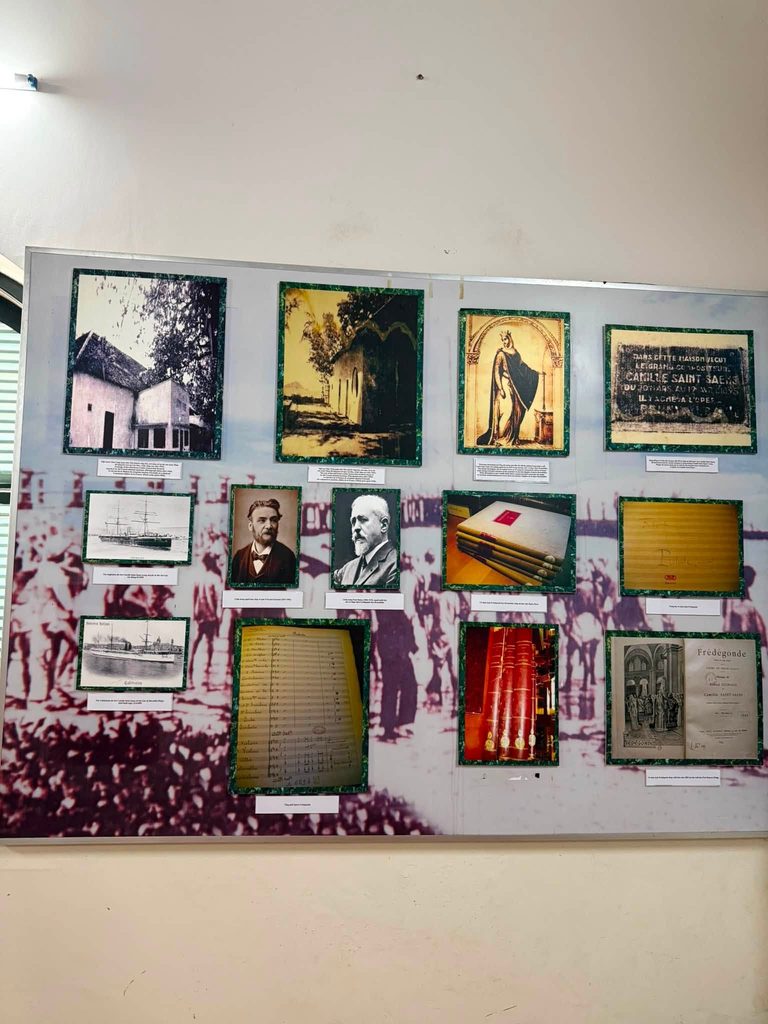
More notably, during his stay Saint-Saëns continued work on an unfinished opera originating in a manuscript by his friend and colleague Ernest Guiraud.
Côn Đảo sources refer to the work as Brunehilda, which was later performed under the title Frédégonde.
Ernest Guiraud and the unfinished score
Ernest Guiraud (1837–1892) was a French composer who shared a professional relationship and friendship with Saint-Saëns.
During his career, Guiraud worked on an opera based on stories from French history during the Merovingian period.
He died in 1892, however, before completing the composition.
After Guiraud’s death, Saint-Saëns took part in completing the work.
This task required a deep understanding of musical structure, compositional style and the ideas Guiraud had left behind.
For Saint-Saëns, continuing his late friend’s work meant more than filling gaps in an unfinished score.
It also represented a professional responsibility and continuity between the two composers.
Brunehilda: A work associated with Côn Đảo
Many accounts of Nhà Công Quán call the work Brunehilda or Brunechilda.
According to the exhibition and local historical material, Saint-Saëns concentrated on composing important sections of the work during his time in Côn Đảo.
Local accounts often state that he completed the final three sections of the opera in this house.
However, according to the music catalog of the National Library of France, the work performed as Frédégonde consists of five acts. Saint-Saëns composed Acts IV and V and the ballet in Act III, while Paul Dukas orchestrated Acts I–III.
The Camille Saint-Saëns Society’s chronology also records that he continued orchestration after leaving Côn Đảo, with portions of the work completed in the summer of 1895.
It is therefore fair to say that Côn Đảo was an important location in Saint-Saëns’s composition and completion of the work, but this should not be taken to mean that every stage of the entire opera was completed here.
Frédégonde: An opera about struggles for power
The opera Frédégonde draws on early medieval French history, focusing on royal figures and struggles for power at court.
Frédégonde was a historical figure who lived in the sixth century and became queen of the kingdom of Neustria.
Historical and literary accounts often associate her with political conflict, court intrigue and her rivalry with Brunhilda.
This historical material provides a dramatic setting for an opera in which music expresses conflicts involving power, emotion and human destiny.
The opera Frédégonde premiered at the Paris Opéra on December 18, 1895.
This was an important milestone in the completion of a work involving Ernest Guiraud, Camille Saint-Saëns and Paul Dukas.
The sound of the đàn nhị from Banh I: A story passed down in Côn Đảo
One of the most memorable stories about Saint-Saëns in Côn Đảo concerns a prisoner’s đàn nhị, a traditional bowed string instrument.
According to introductory material from the Côn Đảo National Historic Site Conservation Center, on his final night before leaving the island, the composer followed the path toward Banh I.
Banh I, later known as Phú Hải Prison Camp, was one of the oldest detention areas in the Côn Đảo prison system.
There, according to the story passed down, Saint-Saëns heard the sound of a đàn nhị being tuned from inside the prison cells.
The đàn nhị is a traditional Vietnamese string instrument used in many forms of folk music and traditional performing arts.
Its tone can convey expressive melodies suited to a wide range of emotions.
For a European composer, the sound of an instrument emerging from a prison at night may have been an unfamiliar listening experience.
Local accounts say Saint-Saëns was moved by the prisoners’ efforts to maintain a musical life despite their confinement.
On returning to Nhà Công Quán, he continued work on his composition.
The đàn nhị story has value as part of the historical memory presented at the site. However, the specific details of that final night and the instrument’s direct influence on particular musical passages should be understood as a local account, since there is insufficient musicological evidence to identify a particular melody in Frédégonde as having been drawn from that performance.
Even so, this story gives Nhà Công Quán a special place in explorations of Côn Đảo’s cultural history.
Here, music belonged not only to the life of an artist invited to the island, but also to the inner lives of those held in captivity.
Camille Saint-Saëns’s letter to the island governor
Alongside the music, accounts of the Côn Đảo visit also mention a letter Saint-Saëns sent to Louis Jacquet before leaving the island.
In the account presented at the site, he expressed his affection for Côn Đảo’s scenery while reflecting on the relationship between beauty, people and behavior in society.
A sentence frequently quoted from this material begins:
“Where beauty is respected…”
According to the translation displayed at the site, Saint-Saëns believed that respect for beauty played a role in resisting evil and cruelty.
The quotation has become a familiar part of presentations about Nhà Công Quán, helping shape interpretations of a French artist’s encounter with the realities of a colonial prison.
It is important, however, to distinguish between the translation, the excerpts presented in the exhibition and the original letter. The words passed down in Côn Đảo should be identified as coming from the site’s interpretive material, rather than automatically treated as an original text that has been fully verified.
Whatever the perspective, the story of the letter contributes to the human depth of Nhà Công Quán’s history.
Nhà Công Quán through different historical periods
The French colonial period: A guesthouse serving the administration
Nhà Công Quán’s original purpose was to accommodate official guests, officials and people visiting Côn Đảo on government business.
During this period, the building formed part of the central administrative complex.
Saint-Saëns’s 1895 visit is the most prominent event preserved in the history of the house.
The Republic of Vietnam period: Official guesthouse and clubhouse
After 1954, the building remained in use and underwent architectural changes.
An additional front section was built, while its functions as a guesthouse and a place for club activities continued.
The name Nhà Công Quán is associated with this period and became widely used in later accounts.
After 1975: Conservation and new uses
After the prison system ceased operating, many buildings in Côn Đảo were repurposed.
Nhà Công Quán was also used for activities serving everyday life and tourism.
A study of the history of tourism development in Côn Đảo records that the former French guesthouse was used as the Phi Yến accommodation establishment from 1980, when tourism on the island was beginning to develop.
Subsequently, the building’s historical value and its connection with Camille Saint-Saëns became central to its conservation.
The restoration of Nhà Công Quán in 2005–2006
According to the Bà Rịa–Vũng Tàu Museum, restoration and rehabilitation work began in 2005 and was completed in late 2006.
The restoration aimed to recover the architecture of the French colonial Visiting Guesthouse while creating an exhibition space introducing composer Camille Saint-Saëns.
This was an important step in transforming Nhà Công Quán from a building used for everyday activities into a place preserving historical, architectural and musical heritage.
Collecting material on Camille Saint-Saëns
While preparing the exhibition, the Côn Đảo Revolutionary Historic Site Management Board sought and collected images and documents on Saint-Saëns’s life and career.
A notable event took place on June 25, 2005, when Dominique Foulon, a collector of material about the composer, and Thiều Thị Tân, a former political prisoner of Côn Đảo, donated numerous documents and images to the site’s management body.
These materials helped establish the content of the commemorative exhibition.
The collection of international material for a historic site in Côn Đảo demonstrates that Nhà Công Quán’s significance extends beyond local history.
The story of the house also connects with European musical history and the life of an influential figure in French culture.
The Camille Saint-Saëns commemorative exhibition
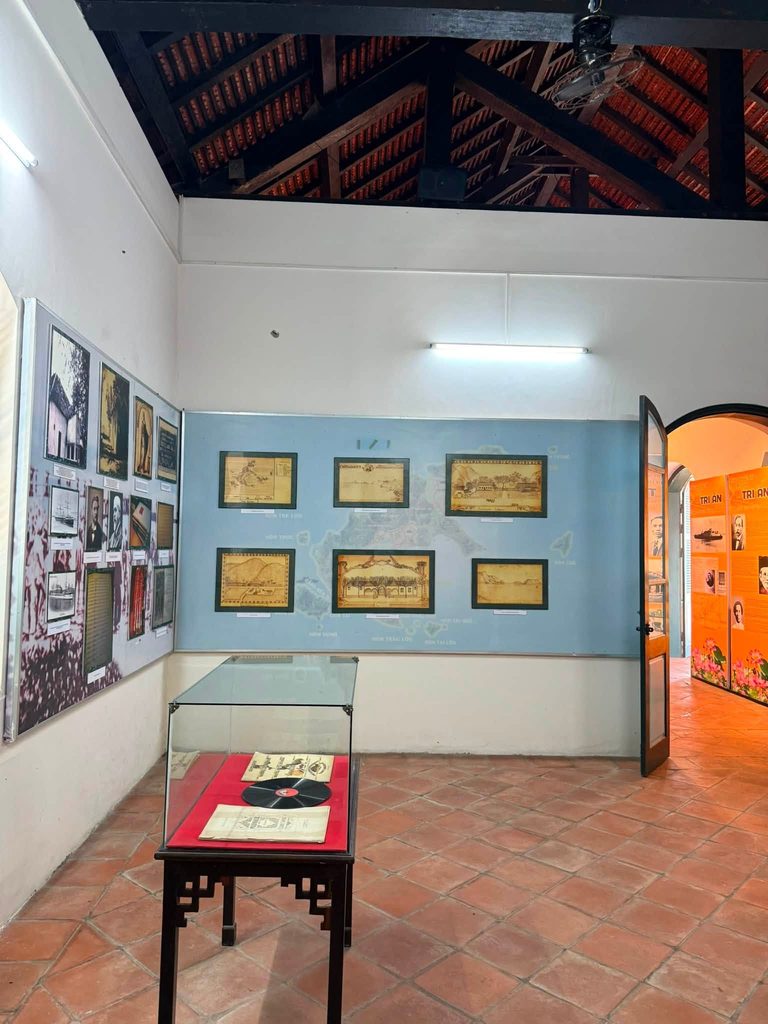
According to exhibition documentation published by the Bà Rịa–Vũng Tàu Museum in 2020, Nhà Công Quán has a space commemorating Camille Saint-Saëns.
The exhibition occupies two small rooms with a combined area of approximately 36.9 m² and contains more than 50 images and documents.
Its content is organized around two themes: the composer’s life and career, and the legacy of his visit to Côn Đảo.
The bust of Camille Saint-Saëns
One of the notable exhibits is a bust of the composer.
According to the exhibition records, the bust is made of composite material with a bronze-colored coating.
It stands in the commemorative space alongside images of his life and musical career.
It is a focal point that helps visitors identify the historical figure associated with Nhà Công Quán.
Images of his life and career
The exhibition presents stages in Saint-Saëns’s life, from his childhood and musical studies in Paris to his achievements as a composer and performer.
These materials help visitors understand why he was one of the leading figures in nineteenth-century French music.
They also cover his travels abroad, including his visit to Indochina and Côn Đảo in 1895 as an important milestone.
The Côn Đảo Legacy exhibition section
The Côn Đảo Legacy theme focuses on images, stories and historical context associated with Saint-Saëns’s stay on the island.
According to the Bà Rịa–Vũng Tàu Museum’s records, it includes images of Banh I, forced labor, the pier, the Sở Lưới fishing-net labor station and buildings in the central area in the late nineteenth century.
It also includes sketches by Lelorgne depicting Côn Đảo’s landscape and architecture during that period.
These materials help clarify the surroundings Saint-Saëns may have observed during his visit.
They allow visitors to learn about the composer while also exploring Côn Đảo’s history through images recorded from the late nineteenth century.
The current exhibition arrangements, number of exhibits and areas open to visitors may change according to conservation plans, so visitors should confirm details before arriving.
The historical and cultural significance of Nhà Công Quán
A surviving example of colonial architecture
Nhà Công Quán is one of the surviving buildings of Côn Đảo Prison’s central administrative area from the French colonial period.
Its tiled roof, arched veranda, windows and seaside location reflect a type of civilian building distinct from the prison camps and cells.
Through the house, visitors can learn more about how living spaces for officials and guests were arranged within the prison administration system.
A place associated with a famous musical figure
Camille Saint-Saëns’s stay here in 1895 gave the building a distinctive significance.
He was one of French music’s influential composers, and his visit to Côn Đảo is recorded in both local historical sources and studies of his life.
This gives Nhà Công Quán significance beyond that of an old architectural structure.
Where Vietnamese history and European music meet
The story of Brunehilda and Frédégonde is a distinctive example of cultural exchange.
A European composer continued work on an opera set in French history while visiting a colonial island in Southeast Asia.
At the same time, he encountered the natural landscape and the realities of the prison system operating on the island.
The convergence of these elements offers a valuable story for the study of cultural history, art and colonial memory.
Educational value in understanding history and people
Nhà Công Quán gives visitors a different perspective on Côn Đảo’s history.
While Phú Hải Prison Camp, the French Tiger Cages and the Lime Kiln labor station primarily illustrate imprisonment and forced labor, Nhà Công Quán shows how buildings serving the governing administration existed alongside those places.
Through Saint-Saëns’s story, visitors can also explore the relationship between art, emotion and people’s awareness of social issues.
Nhà Công Quán within the Côn Đảo Prison Special National Historic Site
Nhà Công Quán is one of the component sites of the Côn Đảo Prison historic complex.
On April 29, 1979, the Ministry of Culture and Information issued Decision No. 54-VHTT.QĐ, recognizing the Côn Đảo Revolutionary Historic Site as a site of special national importance.
On May 10, 2012, the Prime Minister signed Decision No. 548/QĐ-TTg, designating the Côn Đảo Prison Historic Site as a Special National Historic Site.
This designation applies to the entire complex, of which Nhà Công Quán is one component. The house was not separately designated as a Special National Historic Site.
Conserving Nhà Công Quán helps preserve part of central Côn Đảo’s historical architectural character while retaining the memory of a distinctive cultural event from the late nineteenth century.
What is worth exploring at Nhà Công Quán in Côn Đảo?
For visitors interested in architecture, history and music, Nhà Công Quán offers much to explore.
Observing the old house’s architecture
From outside, visitors can observe the tiled roof, veranda arches, wall colors and doorway arrangement.
These details help identify French colonial civilian architecture in Côn Đảo.
Since the building has undergone several repairs and restorations, visitors should not assume that every detail visible today dates from its original construction.
Learning about Camille Saint-Saëns
This is Nhà Công Quán’s most distinctive subject.
Materials about the composer’s life, his 1895 journey and the completion of the opera Frédégonde introduce visitors to the island’s place in musical history.
If the exhibition space is open, visitors should take time to explore its images, exhibits and explanatory texts.
Enjoying the coastal setting
Nhà Công Quán stands near Côn Sơn Bay in a setting characteristic of the island’s central area.
The large tropical almond trees, coastal road and surrounding historic buildings form a setting of both architectural and scenic value.
Understanding its connections with the Island Governor’s Residence and Pier 914
Two sites near Nhà Công Quán are the Island Governor’s Residence and the historic Pier 914.
The Island Governor’s Residence once served as the workplace and home of the officials who headed the prison administration.
Pier 914 is associated with the ships that brought prisoners to Côn Đảo and with the forced labor used in its construction.
Exploring these neighboring buildings helps visitors better understand the contrast between spaces serving the administration and places connected with prisoners’ lives.
Tips for exploring the Nhà Công Quán historic site
When is the best time to visit Nhà Công Quán?
Morning or late afternoon are good times to observe the architecture and coastal scenery.
Natural light makes the wall colors, roof tiles and details of the house’s facade easier to see.
However, access to the interior depends on the management body’s opening schedule or the building’s use at the time of your visit.
Do not assume that Nhà Công Quán is open continuously throughout the day.
How much time should you allow for a visit?
Visitors interested in the architecture and basic information can allow around 20–30 minutes.
If the commemorative exhibition is open and guided interpretation is available, a visit may take longer.
This is only a suggested duration for planning, not a required length of visit.
Photography guidelines
Nhà Công Quán is a conserved building within a historic site.
Visitors should follow photography rules, especially in areas displaying documents or artifacts.
Do not move exhibits without permission, interfere with historic architectural features or enter restricted areas.
When viewing the building from outside, choose a safe position that does not obstruct traffic on Tôn Đức Thắng Street.
Frequently asked questions about Nhà Công Quán in Côn Đảo
When was Nhà Công Quán in Côn Đảo built?
Nhà Công Quán was built in the late nineteenth century under French colonial rule. Some sources date its establishment to the 1870s.
Where is Nhà Công Quán?
The site stands on Tôn Đức Thắng Street, near the historic Pier 914 and the Island Governor’s Residence, in central Côn Sơn Island.
What was Nhà Công Quán originally used for?
The building was originally a visiting guesthouse, providing accommodation for people traveling to Côn Đảo on official business and for guests of the colonial administration.
Which musician stayed at Nhà Công Quán?
Charles-Camille Saint-Saëns, the renowned French composer, stayed here during his visit to Côn Đảo in 1895.
How long did Camille Saint-Saëns stay in Côn Đảo?
According to Vietnamese heritage sources, he stayed from March 20 to April 19, 1895, approximately one month. The Camille Saint-Saëns Society’s chronology records his arrival on the island as March 18, 1895.
What did Camille Saint-Saëns compose in Côn Đảo?
He continued working on the opera project Brunehilda, later performed as Frédégonde. The work was begun by Ernest Guiraud and completed with contributions from Saint-Saëns and Paul Dukas.
When was Frédégonde first performed?
The work premiered at the Paris Opéra on December 18, 1895.
Was Nhà Công Quán a prison?
No. Nhà Công Quán was originally a guesthouse for people permitted to visit the island. It belonged to the architectural complex serving the Côn Đảo prison administration, but was not itself a prison camp.
Is Nhà Công Quán now a Special National Historic Site?
Nhà Công Quán is a component of the Côn Đảo Prison Historic Site, which the Prime Minister designated a Special National Historic Site on May 10, 2012.
Does Nhà Công Quán have an exhibition about Camille Saint-Saëns?
According to conservation records, the building has been fitted out with a commemorative exhibition featuring images and documents about the composer’s life and visit to Côn Đảo. Visitors should confirm current opening arrangements with the management body before arriving.
Nhà Công Quán in Côn Đảo: A small house with a far-reaching story
Without long rows of prison cells, isolated confinement rooms or direct traces of forced labor, Nhà Công Quán nevertheless holds a distinctive place in Côn Đảo’s history.
The small house on Tôn Đức Thắng Street once welcomed guests of the colonial administration, witnessed Côn Đảo’s changes across several periods and became particularly associated with composer Camille Saint-Saëns’s visit in 1895.
From accommodation for a French artist, Nhà Công Quán became a place associated with the creation of an opera, accounts of the đàn nhị heard from the prison and reflections on the contrast between beautiful natural surroundings and prisoners’ harsh lives.
Today, passing the house with its red-tiled roof, green windows and shade from old trees, visitors can discover a Côn Đảo different from the image most often encountered in stories about the prisons.
It is a Côn Đảo of architecture, music, cultural encounters and layers of memory coexisting within a small space.
Nhà Công Quán in Côn Đảo is therefore both an old building worth preserving and a place that tells a distinctive musical story in the island’s history.
Con Dao Express introduces Côn Đảo’s historic sites, architectural landmarks, cultural destinations and scenic attractions, while also providing information on high-speed ferry routes, schedules and indicative fares to help visitors plan their exploration of the island.
Reference sources
- Côn Đảo National Historic Site Conservation Center: Nhà Công Quán Historic Site.
- Bà Rịa–Vũng Tàu Museum: The Camille Saint-Saëns Commemorative Exhibition at Nhà Công Quán.
- Côn Đảo Tourism Information Portal: Visiting the Nhà Công Quán Historic Site.
- Camille Saint-Saëns Society: Chronology, 1894–1900.
- National Library of France: Catalog record for Frédégonde.
- Nhân Dân newspaper: Part III: Music and Imprisonment.
Google Maps: Nhà Công Quán
The map shows the site’s location. Confirm the entrance and visiting hours with the site management before you go.