
Located on Nguyễn An Ninh Street, beside Hàng Dương Cemetery, Côn Đảo Memorial Temple is a cultural, historical and spiritual landmark built to commemorate earlier generations, fallen heroes, revolutionary fighters and patriotic citizens who died on Côn Đảo during the prison system’s 113 years of operation, from 1862 to 1975.
Set amid Côn Đảo’s green mountains and forests, the temple stands out for its traditional Vietnamese architecture, curved tiled roofs, intricately carved stone columns and, above all, its 9.4-tonne bronze Great Bell. Since its inauguration in 2011, Côn Đảo Memorial Temple has hosted numerous incense-offering ceremonies, commemorations and historical education activities.
More than a place of worship, Côn Đảo Memorial Temple is an important part of the memorial landscape surrounding Hàng Dương Cemetery. It preserves the memory of those who endured harsh imprisonment, fought and gave their lives for the nation’s independence and freedom.
Where is Côn Đảo Memorial Temple?
Côn Đảo Memorial Temple stands on Nguyễn An Ninh Street in the central area of Côn Sơn Island, Côn Đảo Special Administrative Zone, Ho Chi Minh City.
The temple is beside Hàng Dương Cemetery, a well-known historical site associated with the lives of many Vietnamese revolutionary fighters and patriots.
This location has particular significance. While Hàng Dương Cemetery is the resting place of people who died on Côn Đảo, Côn Đảo Memorial Temple provides a shared place of worship where earlier generations are remembered and honoured, including those whose graves can no longer be identified.
The two sites are closely connected through commemorative activities. Many delegations, organisations, families and visitors combine a visit to Hàng Dương Cemetery with an incense offering at Côn Đảo Memorial Temple.
The temple is relatively easy to reach from central Côn Sơn. Visitors can travel by car, taxi or motorbike and pay their respects in accordance with the heritage site management’s guidance.
The history of Côn Đảo Memorial Temple
From the Côn Đảo prison system to the need for a memorial
Côn Đảo’s history is closely tied to the prison system established under French colonial rule in 1862.
For more than a century, Côn Đảo held generations of Vietnamese people involved in patriotic and revolutionary movements. Names such as Banh I, Banh II, Banh III, the French Tiger Cages and the American Tiger Cages, along with other prison camps, have become historical reminders of imprisonment on the island.
Prisoners lived in harsh conditions, enduring confinement, forced labour, disease and various forms of punishment. Many never returned to their hometowns.
After Côn Đảo’s liberation in 1975, preserving its historical sites, finding information about those who had died, restoring the cemetery and organising commemorative activities became important responsibilities.
Restoration and improvements at Hàng Dương Cemetery began in 1992. Alongside the need to visit individual graves, however, there was also a need for a shared place of worship where residents and visitors from across the country could offer incense in memory of everyone who had died on Côn Đảo.
Côn Đảo Memorial Temple was built in this context, becoming a memorial of profound historical and human significance.
Construction and inauguration
On 23 September 2008, the People’s Committee of Bà Rịa–Vũng Tàu Province issued Decision No. 3265/QĐ-UBND, approving the investment project to build and develop Côn Đảo Memorial Temple.
Construction began in 2009, with support from government agencies, organisations, businesses and people with a heartfelt connection to Côn Đảo.
On 20 November 2011, Côn Đảo Memorial Temple was officially inaugurated and opened for worship and commemorative activities.
Its completion added an important cultural landmark to Côn Đảo’s memorial sites and provided a setting for formal ceremonies honouring the fallen.
Unlike the prison camps built during French colonial rule or under the Republic of Vietnam government, Côn Đảo Memorial Temple was constructed in peacetime. Its particular value therefore lies in its commemorative purpose, cultural architecture and role in connecting historical memory with life today.
The scale and architecture of Côn Đảo Memorial Temple
Côn Đảo Memorial Temple occupies a site of 30,040 m², with a total built area of approximately 3,760 m².
The grounds follow traditional Vietnamese architectural principles, combining places of worship, a ceremonial courtyard, a bell pavilion, ponds and planted landscaping.
The complex comprises 10 main elements: the Four Pillars, Temple Gate, Bell Pavilion, Left Side Hall, Right Side Hall, Front Hall, Inner Sanctuary, Votive Paper Burning House, Ngũ Nhạc Pond and Temple Pond.
These elements form a connected spatial arrangement, creating a dignified approach from the entrance to the main worship area.
The Four Pillars and temple gate
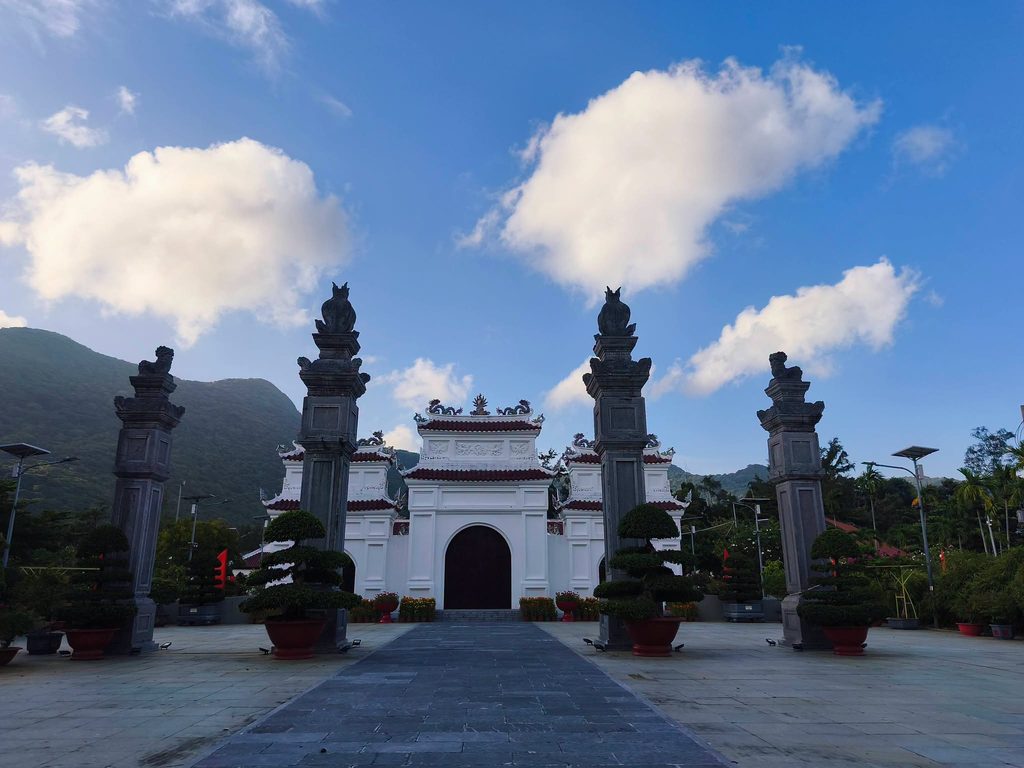
Even from outside, visitors can recognise Côn Đảo Memorial Temple’s traditional architecture in its four entrance pillars and temple gate.
The Four Pillars are large pillars positioned at the entrance, helping define the complex’s main axis and providing an architectural focal point.
Their carvings reflect traditional decorative arts. Together with the gate’s curved tiled roof, they give the complex a solemn character firmly rooted in Vietnamese architectural culture.
The temple gate marks the boundary between the outside world and the memorial grounds. Beyond it, visitors enter a spacious courtyard leading towards the bell pavilion and main sanctuary.
The bell pavilion
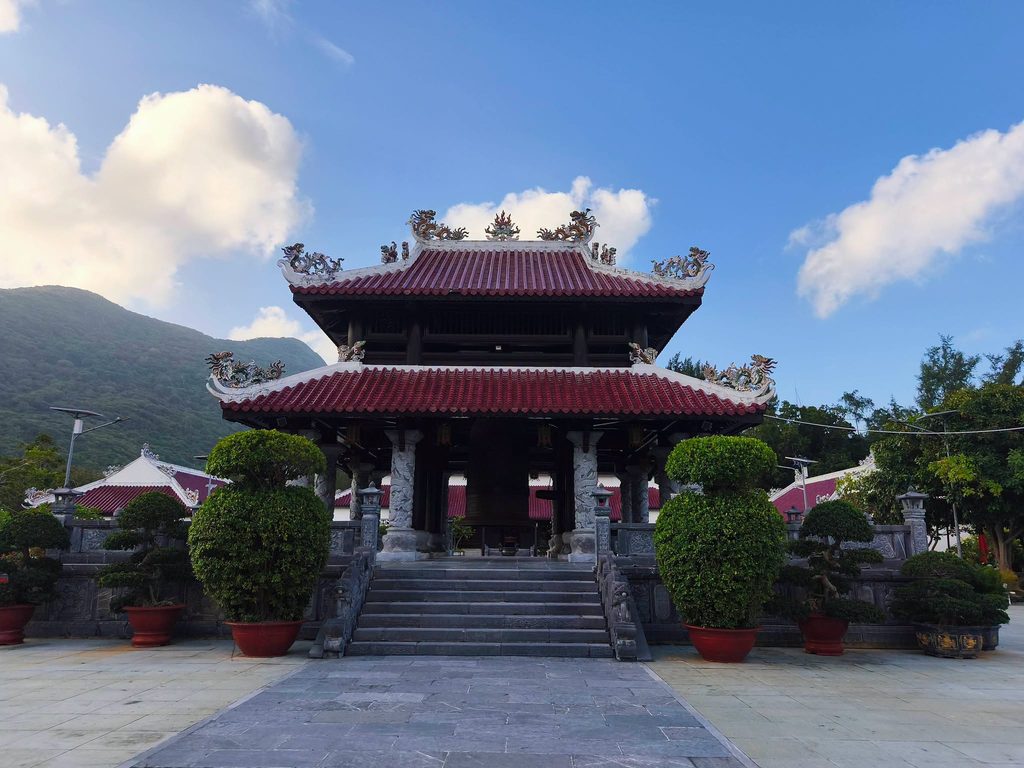
The bell pavilion is one of Côn Đảo Memorial Temple’s most distinctive structures.
It follows traditional architectural design, with tiled roofs, columns and decorative motifs that strongly reflect Vietnamese culture.
It houses the Great Bell, a large bronze bell with an important role in commemorative rituals.
In addition to its architectural value, the bell pavilion is the starting point for many delegations’ incense-offering programmes at Côn Đảo Memorial Temple.
The front hall and inner sanctuary
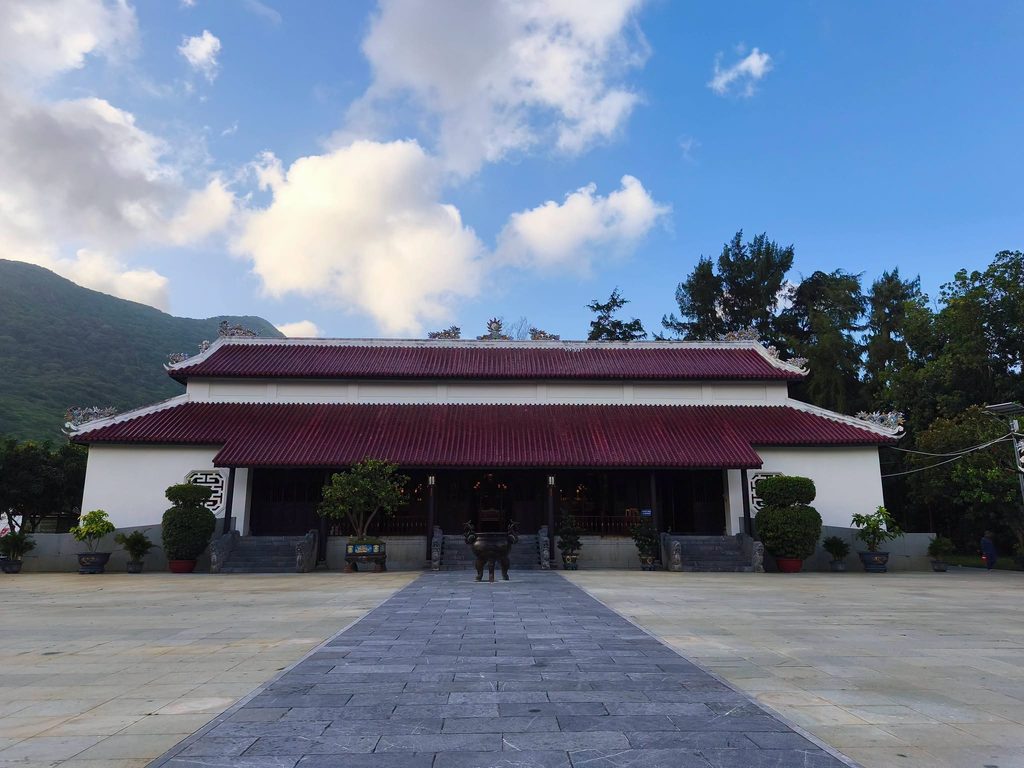
The main temple follows the style of southern Vietnamese temples, with an inner courtyard and interconnected spaces.
According to the Côn Đảo National Heritage Conservation Centre, the front hall and inner sanctuary have a two-tiered architectural design with eight upturned roof sections. The main temple’s built area is approximately 1,253 m².
The curved roofs, columns and decorative details are arranged symmetrically, creating a solemn setting suited to worship.
The front hall is the space at the front where incense offerings and commemorations take place. The inner sanctuary is the worship area further inside and plays an important role in the temple’s overall design.
The interior follows Vietnamese cultural traditions while incorporating the worship customs of southern Vietnam.
The worship areas are laid out in the form of the character Nhị (二), with parallel front and rear spaces.
The left and right side halls
The Left Side Hall and Right Side Hall form part of Côn Đảo Memorial Temple’s overall design, balancing the main space.
In traditional Vietnamese temple architecture, these halls are generally auxiliary buildings or spaces on either side of the central worship area.
At Côn Đảo Memorial Temple, they complete the architectural layout, strengthen the connections between buildings and contribute to the complex’s dignified appearance.
Ngũ Nhạc Pond and Temple Pond
Alongside its buildings, Côn Đảo Memorial Temple has two landscape features: Ngũ Nhạc Pond and Temple Pond.
The water, stone-paved courtyards and greenery combine to create a harmonious landscape.
The ponds soften the appearance of the built structures and provide a quiet atmosphere appropriate to a place of remembrance.
Côn Đảo’s Great Bell: a 9.4-tonne bronze bell
One of the most remarkable features of Côn Đảo Memorial Temple is the Great Bell, housed in the bell pavilion within the grounds.
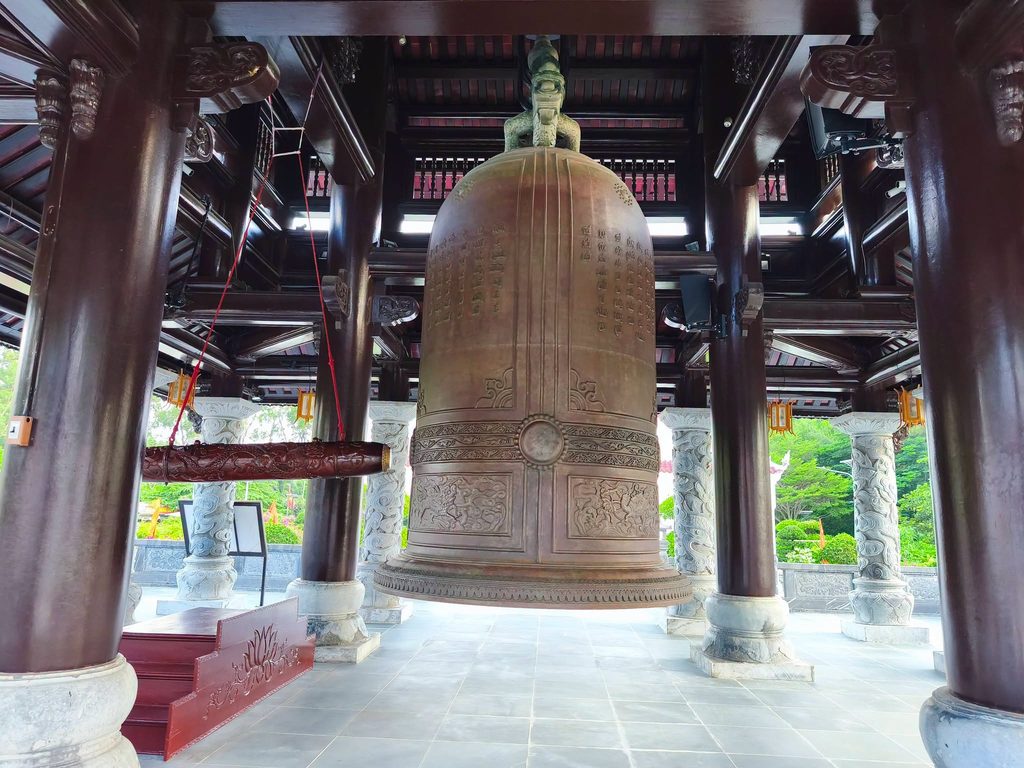
Cast in bronze, the Great Bell weighs 9,400 kg, stands 3.97 m tall and has a base diameter of 1.93 m.
The bell was made at the bronze foundry of artisan Nguyễn Văn Sính in Huế, a city renowned for its traditional bronze-casting craft.
The decorative motifs on the bell
The Great Bell is decorated with numerous motifs symbolic of Vietnamese culture.
These include waves, bodhi leaves and the four sacred creatures: the dragon, qilin, tortoise and phoenix.
The decoration across the bell’s surface demonstrates traditional bronze-casting techniques and ornamental artistry.
In Côn Đảo’s memorial setting, these motifs also connect architectural art, spiritual beliefs and historical memory.
Professor Vũ Khiêu’s inscription on the Great Bell
Another notable feature is the inscription cast on the bell in Quốc ngữ, the Vietnamese Latin-based script.
Written by Professor Vũ Khiêu, a recipient of the Hero of Labour title, it expresses remembrance and gratitude towards those who died on Côn Đảo.
The inscription recalls the years of struggle, the resilience of revolutionary prisoners and the value of independence and freedom.
It closes with a message linking the past and the future, so that the sound of Côn Đảo’s bell reminds successive generations of the sacrifices that helped make peaceful life possible.
The inscription makes the Great Bell more than an architectural object or ceremonial instrument: it is also a work of literary and historical value.
The Great Bell ringing ceremony
According to the Côn Đảo National Heritage Conservation Centre’s guidance, formal delegation visits to the temple usually begin at the bell pavilion.
After an introduction to the temple’s history and significance, the delegation leader performs the bell-ringing ritual, usually a sequence of nine strokes.
The delegation then moves to the temple courtyard to offer incense before entering the worship areas inside.
The ritual is conducted under the management’s guidance and coordination. Visitors should not ring the bell on their own without permission.
Who is commemorated at Côn Đảo Memorial Temple?
Côn Đảo Memorial Temple is a shared memorial to earlier generations, fallen heroes, revolutionary fighters and patriotic citizens who gave their lives for the nation’s independence and freedom, particularly those imprisoned on Côn Đảo.
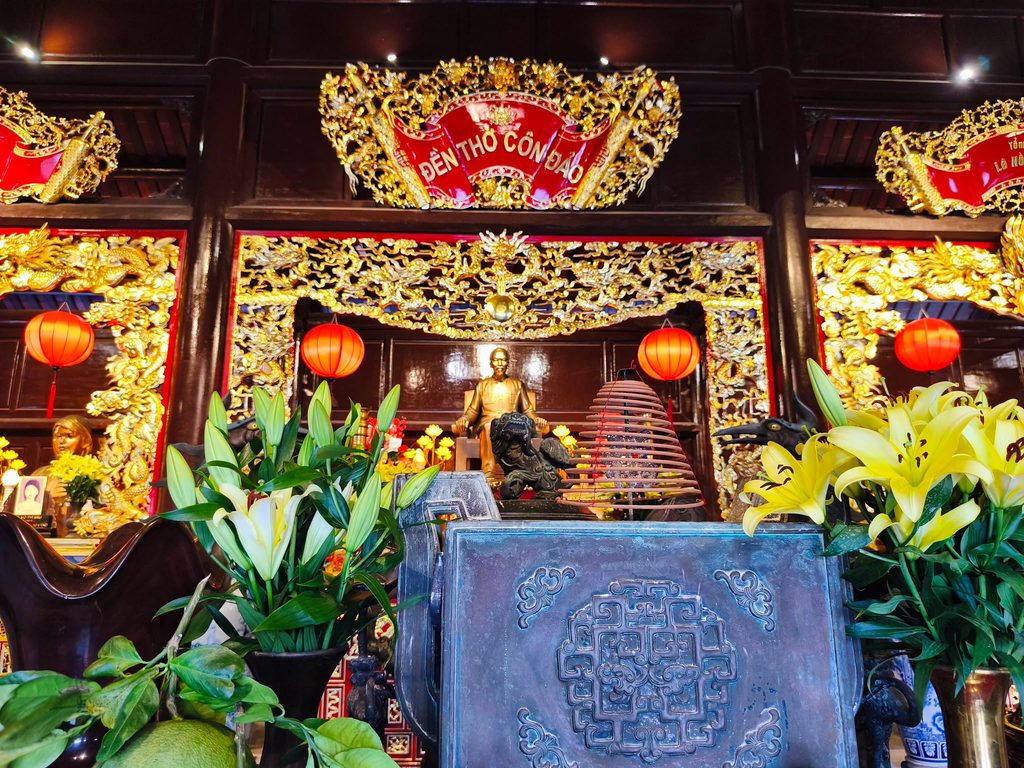
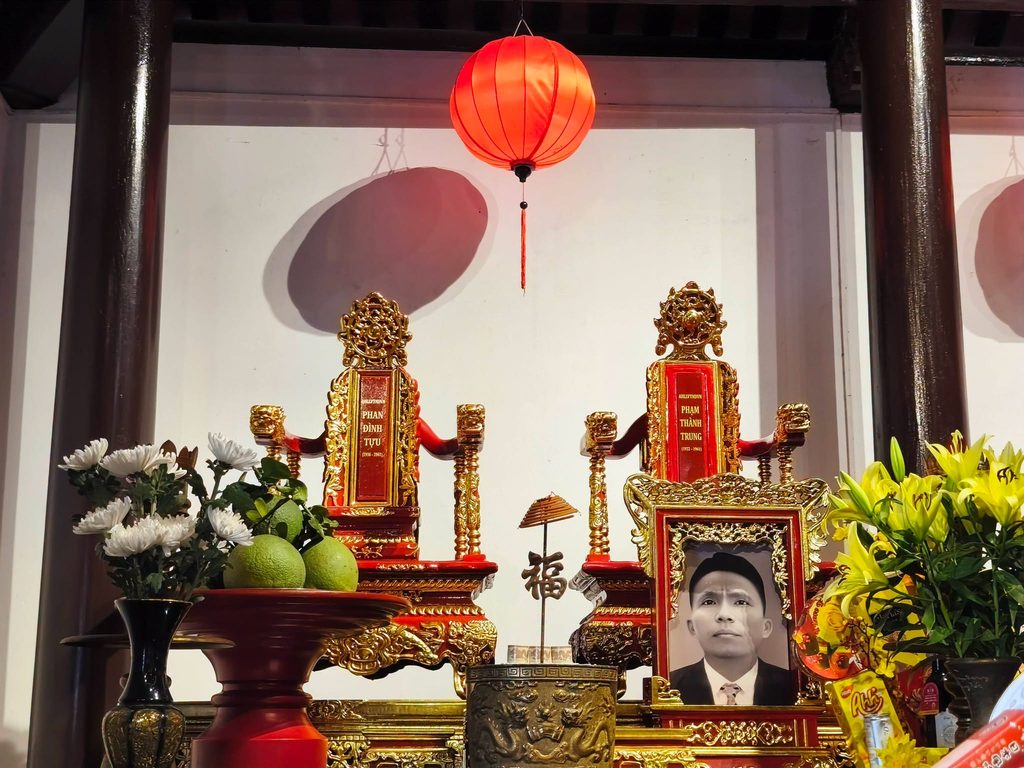
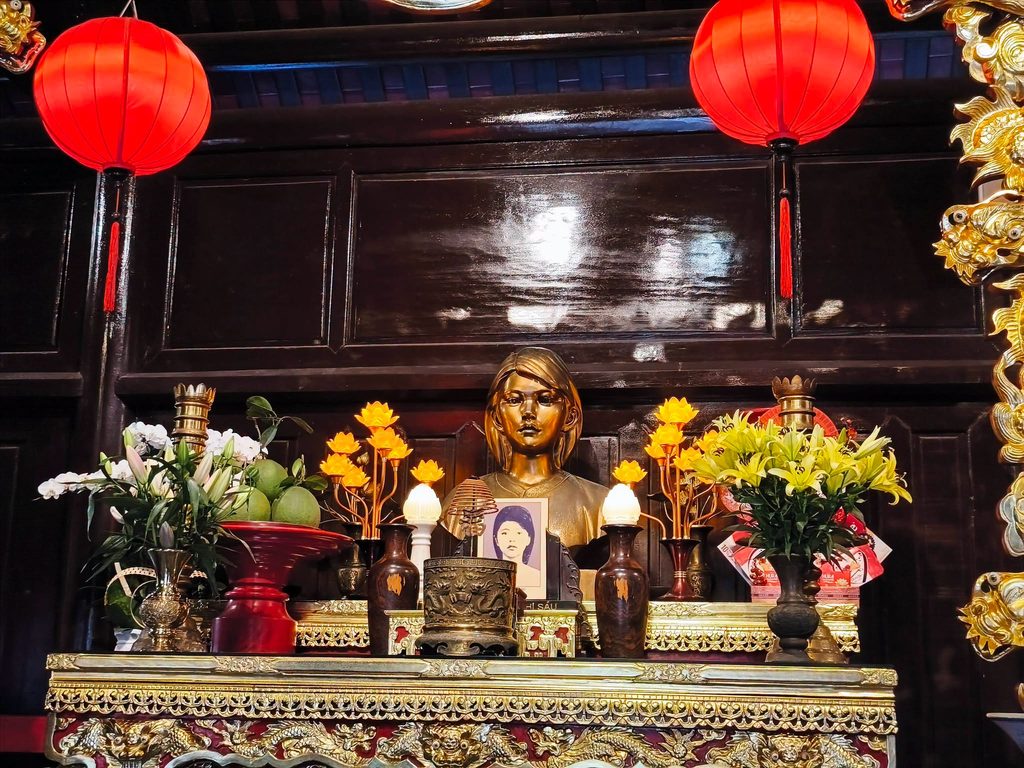
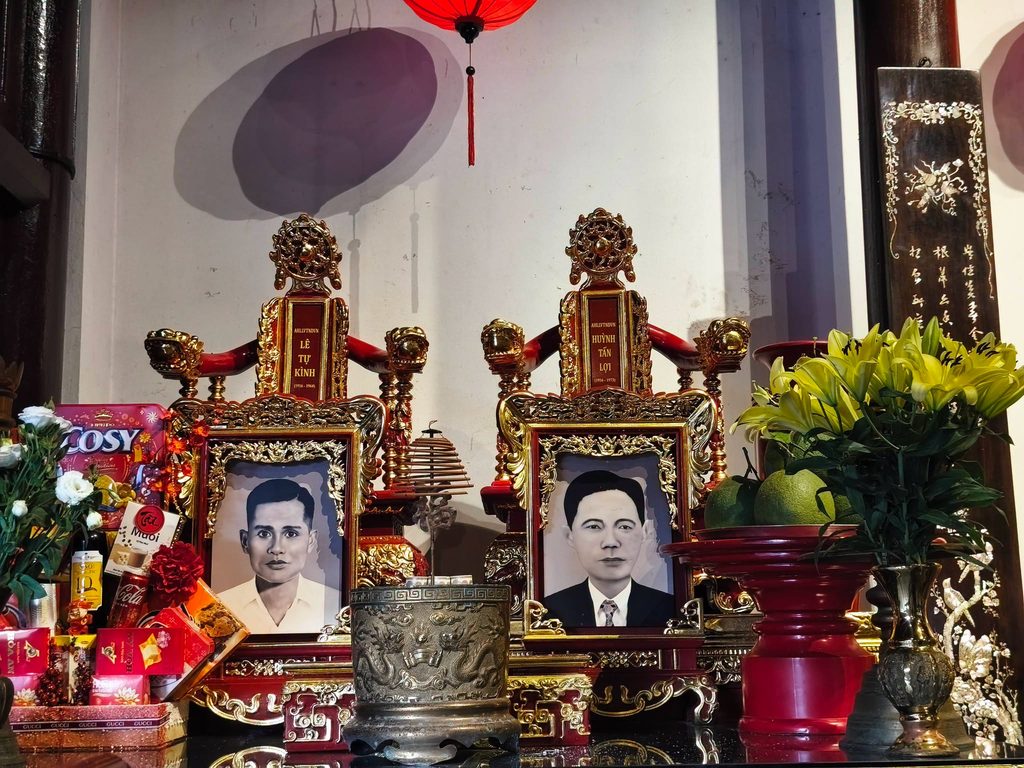
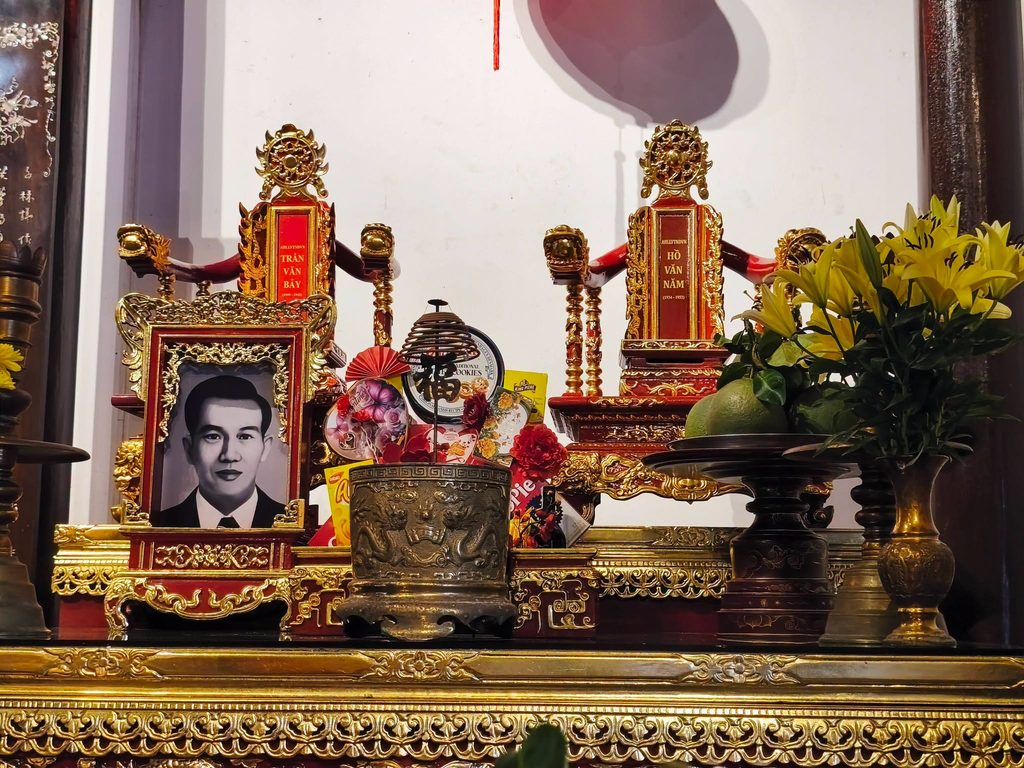
According to the Côn Đảo National Heritage Conservation Centre’s ceremonial guidance, the front hall and inner sanctuary contain an altar to President Hồ Chí Minh, an altar to the late General Secretary Lê Hồng Phong and Heroes of the Vietnamese People’s Armed Forces, and a shared altar commemorating the fallen and patriotic citizens who died in the prison system.
The memorial space for President Hồ Chí Minh
The altar to President Hồ Chí Minh forms part of the worship space at Côn Đảo Memorial Temple.
Commemorating President Hồ Chí Minh here expresses gratitude towards the national leader and reflects the temple’s wider purpose of honouring those who fought for the country’s independence and reunification.
Commemorating General Secretary Lê Hồng Phong
Lê Hồng Phong was a prominent leader of the Vietnamese revolutionary movement before the August Revolution.
During his revolutionary activities, he was arrested by the French colonial authorities and imprisoned on Côn Đảo. Years of imprisonment in harsh conditions severely weakened his health.
On 6 September 1942, Comrade Lê Hồng Phong died on Côn Đảo.
His grave is now in Section A of Hàng Dương Cemetery.
Commemorating Lê Hồng Phong at Côn Đảo Memorial Temple helps preserve the memory of his life and contributions to Vietnam’s revolutionary movement.
Commemorating fallen heroes and patriotic citizens
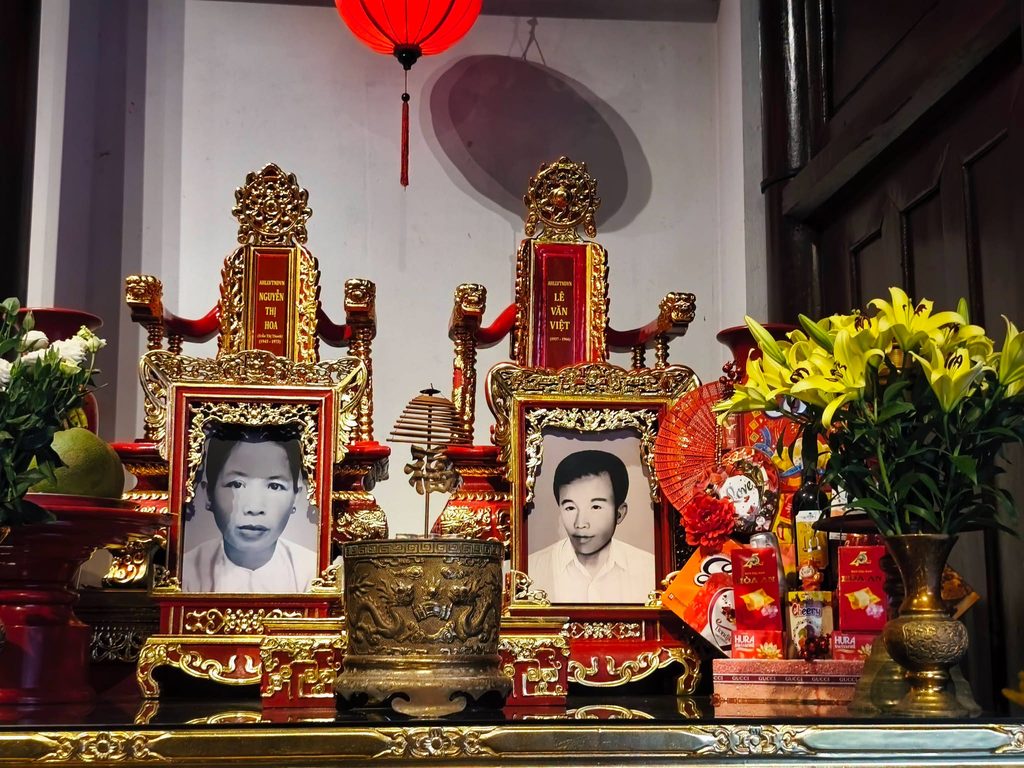
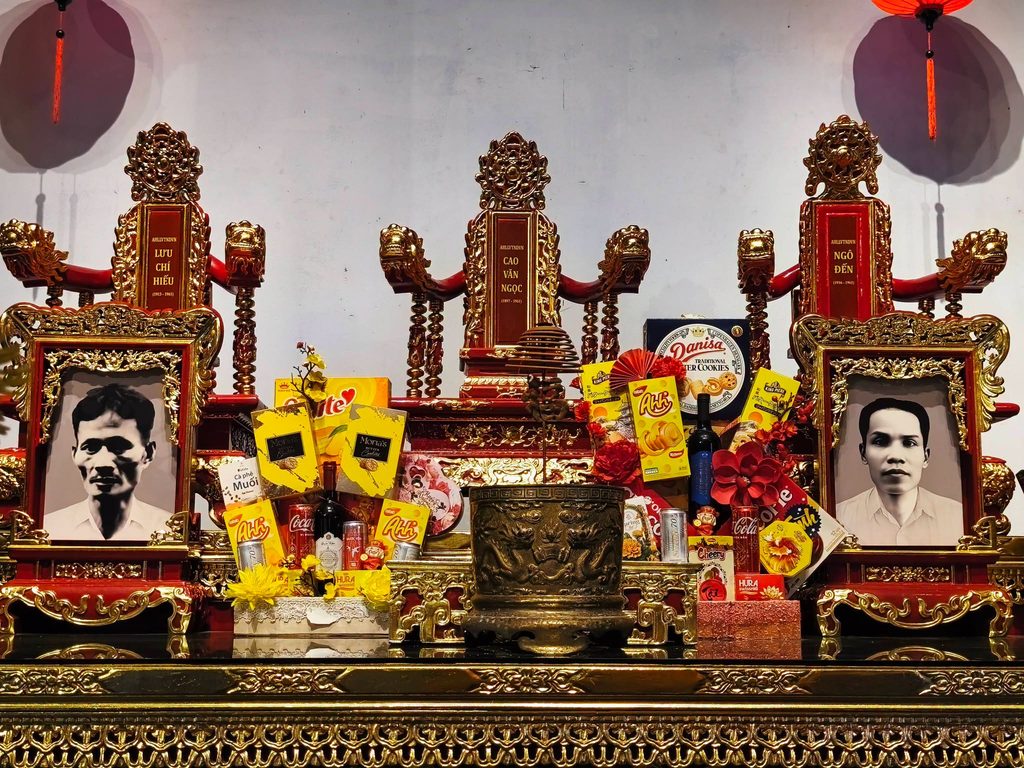
Côn Đảo Memorial Temple’s role as a shared place of remembrance gives it particular significance.
Not everyone who died on Côn Đảo has an individual grave or has been fully identified.
During the prison system’s 113 years of operation, many people died as a result of detention conditions, disease, hard labour and repression.
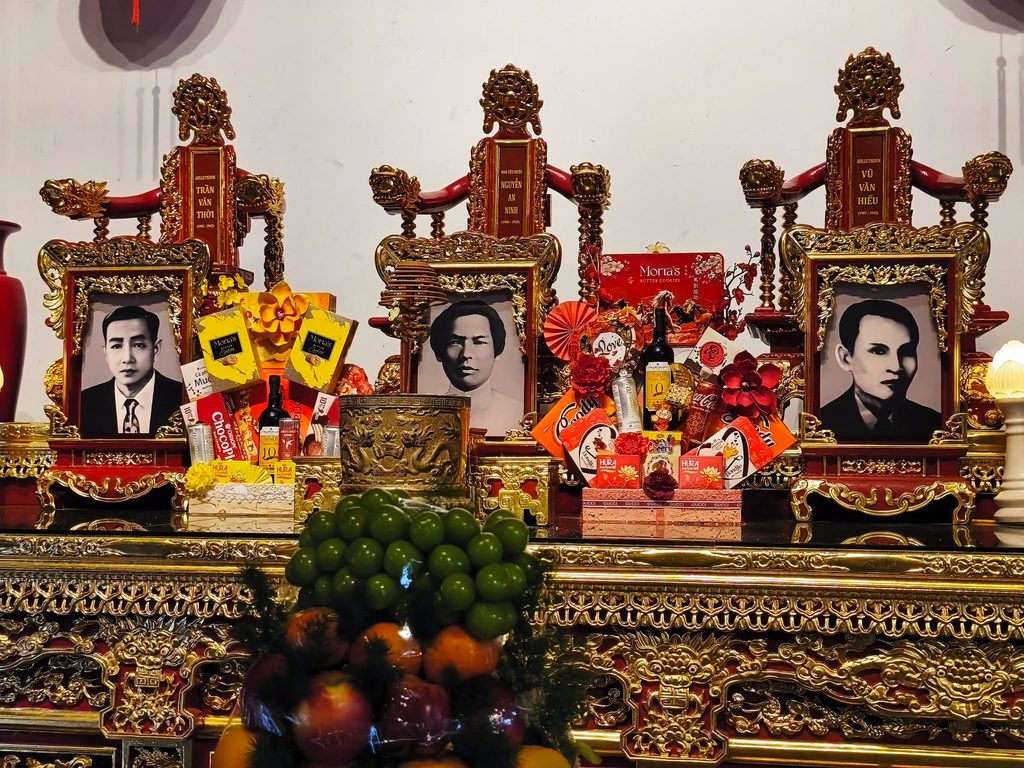
Alongside widely known historical figures such as Võ Thị Sáu, Nguyễn An Ninh, Lê Hồng Phong, Vũ Văn Hiếu and many other fighters, there are numerous people whose lives, names and resting places remain uncertain.
This gives the shared worship space at Côn Đảo Memorial Temple profound meaning.
Here, anyone can offer incense in memory of all those who died, whether or not they have a named grave.
The relationship between Côn Đảo Memorial Temple and Hàng Dương Cemetery
Côn Đảo Memorial Temple and Hàng Dương Cemetery are separate sites within Côn Đảo’s historical memorial landscape.
Hàng Dương Cemetery is the resting place of revolutionary fighters, patriots and prisoners who died on Côn Đảo.
According to figures from the Côn Đảo National Heritage Conservation Centre, the cemetery currently contains 1,922 graves, including 25 collective graves and 714 identified graves.
The graves are arranged across four sections, A, B, C and D, reflecting different historical periods.
Côn Đảo Memorial Temple, meanwhile, was built after the prison system ceased operating, to host ceremonies and provide a shared place of remembrance.
Activities at Hàng Dương Cemetery focus on offering incense at the monument and individual graves, while ceremonies at Côn Đảo Memorial Temple take place in the bell pavilion, courtyard, front hall and inner sanctuary.
The two sites complement each other in teaching history and honouring those who died.
For visitors, combining visits and incense offerings at both Côn Đảo Memorial Temple and Hàng Dương Cemetery provides a fuller understanding of the heritage site’s significance.
Commemorative activities at Côn Đảo Memorial Temple
Since its inauguration, Côn Đảo Memorial Temple has hosted many ceremonies of remembrance organised by public agencies, associations, the armed forces, social organisations and members of the public.
Incense-offering ceremonies on major anniversaries
On important occasions such as War Invalids and Martyrs Day on 27 July, National Day on 2 September and other major anniversaries, delegations often hold incense-offering ceremonies at Côn Đảo Memorial Temple.
These ceremonies express gratitude towards those who gave their lives for the country’s independence, freedom and reunification.
They also give different generations an opportunity to look back on history, learn about patriotic traditions and remember those who came before them.
Commemorating historical figures
The temple is also associated with commemorations of revolutionary fighters and historical figures once imprisoned on Côn Đảo.
Among them, the ceremony commemorating the late General Secretary Lê Hồng Phong has particular significance and marks the anniversary of his death on Côn Đảo.
Côn Đảo Memorial Temple also hosts ceremonies honouring Võ Thị Sáu, a heroine of the People’s Armed Forces.
Every year, 23 January is an occasion to remember the heroine who died on Côn Đảo in 1952. Depending on each year’s programme, commemorative activities are held at Hàng Dương Cemetery and Côn Đảo Memorial Temple.
Learning about revolutionary history
In addition to worship activities, Côn Đảo Memorial Temple plays a role in historical education programmes.
School and university groups, youth organisations and groups visiting sites of revolutionary history can learn about the prison system, the memorial and the lives of those who died on Côn Đảo.
Through guided explanations, incense offerings and visits, historical stories are shared in a setting connected to the events themselves.
This is an important educational contribution of Côn Đảo Memorial Temple today.
Côn Đảo Memorial Temple’s garden: greenery from Vietnam’s three regions
Beyond its traditional architecture and worship areas, the landscaped grounds are another notable feature of Côn Đảo Memorial Temple.
According to the Côn Đảo National Heritage Conservation Centre, the temple garden covers more than 21,000 m².
It contains many plants characteristic of northern, central and southern Vietnam.
Choosing plants from different regions helps create a harmonious landscape while symbolising the affection and connection that people across the country feel towards Côn Đảo.
Courtyards, paths, ponds and greenery are integrated into the overall design, balancing the memorial’s buildings with nature.
For visitors, the garden offers a quiet setting for reflection before or after offering incense.
A guide to offering incense at Côn Đảo Memorial Temple
Côn Đảo Memorial Temple is a historical memorial, so incense-offering activities are conducted with the dignity appropriate to a place of worship.
Ceremonies for visiting groups
Under the Côn Đảo National Heritage Conservation Centre’s guidance, a formal visit to the temple usually follows this sequence:
- Gather at the Great Bell pavilion and listen to an introduction to Côn Đảo Memorial Temple.
- A representative of the delegation performs the bell-ringing ritual as instructed.
- Offer incense at the incense burner in the temple courtyard.
- Proceed to the front hall and inner sanctuary to perform commemorative rituals at the altars.
- Conclude the ceremony and leave the worship area as directed.
A ceremony at Côn Đảo Memorial Temple usually lasts around 30 minutes, depending on the size of the group and the programme.
Groups wishing to arrange a formal ceremony are asked by the management to register during office hours at least one morning or afternoon session in advance, so that guidance and suitable arrangements can be provided.
Can individual visitors offer incense?
Côn Đảo Memorial Temple serves the commemorative needs of organisations and individuals from Vietnam and overseas, as well as local residents.
Solo visitors, families and small groups can explore the temple and offer incense in accordance with the management’s rules.
A large ceremony is not necessary. Showing reverence, respecting the worship space and learning its history are themselves ways of expressing gratitude.
What offerings should visitors prepare?
Visitors to Côn Đảo Memorial Temple should choose simple, dignified and environmentally friendly offerings.
Fresh flowers, fruit and incense used in accordance with the management’s guidance are suitable choices.
Côn Đảo has introduced the “Green Offering Basket” programme, encouraging residents and visitors to reduce single-use plastics, avoid votive paper offerings and adopt respectful commemorative practices.
Visitors should follow the heritage site’s current rules. Do not burn votive paper without authorisation, leave offerings in prohibited areas or use items that pose a fire risk.
Tips for visiting Côn Đảo Memorial Temple
When is a good time to visit?
Mornings and early afternoons are generally convenient for exploring Côn Đảo Memorial Temple’s architecture and grounds and taking part in commemorative activities.
Daylight is also suitable for observing architectural details on the temple gate, bell pavilion and main sanctuary.
Major holidays and official commemorations may draw more visitors, and some areas may be set aside for ceremonies.
Visitors should check the management’s activity schedule and notices before arriving.
Note that Côn Đảo Memorial Temple’s visiting hours may differ from those of Hàng Dương Cemetery. Do not assume that the temple stays open late at night simply because the cemetery allows evening visits.
Dress and behaviour
As this is a memorial, visitors should wear respectful, modest clothing appropriate to a place of worship.
Keep noise down during your visit, avoid speaking loudly, do not touch worship objects without permission and follow staff instructions.
Photography of the architecture, courtyard and landscape is permitted only in designated areas. During official ceremonies or when groups are paying their respects, avoid using cameras or phones in ways that disturb others.
Combining a visit with Hàng Dương Cemetery
Because the two sites are next to each other, many visitors choose to offer incense at both Côn Đảo Memorial Temple and Hàng Dương Cemetery during the same morning or afternoon.
At the cemetery, visitors can learn the history of its burial sections, offer incense at the monument and visit the graves of historical figures such as Võ Thị Sáu, Lê Hồng Phong, Nguyễn An Ninh and Vũ Văn Hiếu.
Visiting both sites connects the shared place of worship with the resting places of those who died, giving continuity to the historical visit.
The Côn Đảo National Heritage Conservation Centre provides ceremonial guidance for groups, with suggested durations of approximately 45 minutes at Hàng Dương Cemetery and 30 minutes at Côn Đảo Memorial Temple.
The historical, cultural and spiritual value of Côn Đảo Memorial Temple
A place to remember those who died
Côn Đảo Memorial Temple’s greatest value lies in its commemorative meaning.
Tens of thousands of people endured imprisonment on Côn Đảo. Many were unable to return to their families and hometowns.
The temple was built as a shared place of remembrance so that later generations would continue to recognise their contributions and sacrifices.
A landmark of traditional architecture
From the temple gate, Four Pillars and bell pavilion to the front hall and inner sanctuary, the complex applies traditional Vietnamese temple architecture to a cultural setting built in modern times.
The 9.4-tonne Great Bell and Professor Vũ Khiêu’s inscription are particularly notable artistic features.
The combination of architecture, sculpture, landscape and commemorative meaning gives Côn Đảo Memorial Temple its distinctive character.
Connecting generations
For former political prisoners of Côn Đảo and the families of fallen fighters, the temple is a place to remember comrades, loved ones and years of history that must not be forgotten.
For younger generations, it makes learning history more tangible through specific stories, buildings and documents.
For international visitors, Côn Đảo Memorial Temple also offers an introduction to a period of Vietnamese history, the losses caused by war and the human desire for peace.
Frequently asked questions about Côn Đảo Memorial Temple
When was Côn Đảo Memorial Temple built?
Construction of Côn Đảo Memorial Temple began in 2009, and it was officially inaugurated on 20 November 2011.
Where is Côn Đảo Memorial Temple?
The temple is on Nguyễn An Ninh Street, beside Hàng Dương Cemetery, in central Côn Sơn Island, Côn Đảo Special Administrative Zone, Ho Chi Minh City.
Who is commemorated at Côn Đảo Memorial Temple?
The temple commemorates President Hồ Chí Minh, the late General Secretary Lê Hồng Phong, Heroes of the People’s Armed Forces, fallen heroes, revolutionary fighters and patriotic citizens who gave their lives for the nation’s independence and freedom.
How much does the Great Bell at Côn Đảo Memorial Temple weigh?
The Great Bell weighs 9,400 kg, stands 3.97 m tall and has a base diameter of 1.93 m. It was cast in bronze in Huế.
Is Côn Đảo Memorial Temple the same as Hàng Dương Cemetery?
No. They are two separate sites next to each other. The temple is a shared place of worship and remembrance, while Hàng Dương Cemetery is the resting place of revolutionary fighters and patriotic citizens who died on Côn Đảo.
Can visitors ring the bell at Côn Đảo Memorial Temple on their own?
Visitors should not ring the Great Bell without permission. Bell-ringing ceremonies for visiting groups are conducted under the heritage site management’s guidance.
How can a group register for a formal memorial visit?
Groups wishing to hold commemorative ceremonies at Côn Đảo Memorial Temple and Hàng Dương Cemetery can contact the Côn Đảo National Heritage Conservation Centre on 0254 3830 517 during office hours for guidance.
Côn Đảo Memorial Temple: preserving the past in the present
Côn Đảo today is known for its beautiful beaches, rich forest and marine ecosystems, and opportunities to explore nature. Yet history remains inseparable from this place.
Côn Đảo Memorial Temple is one of the landmarks connecting the past with the present. From its solemn architecture and Great Bell to its memorial altars, every element helps preserve the memory of those who fought and died during a turbulent period of Vietnamese history.
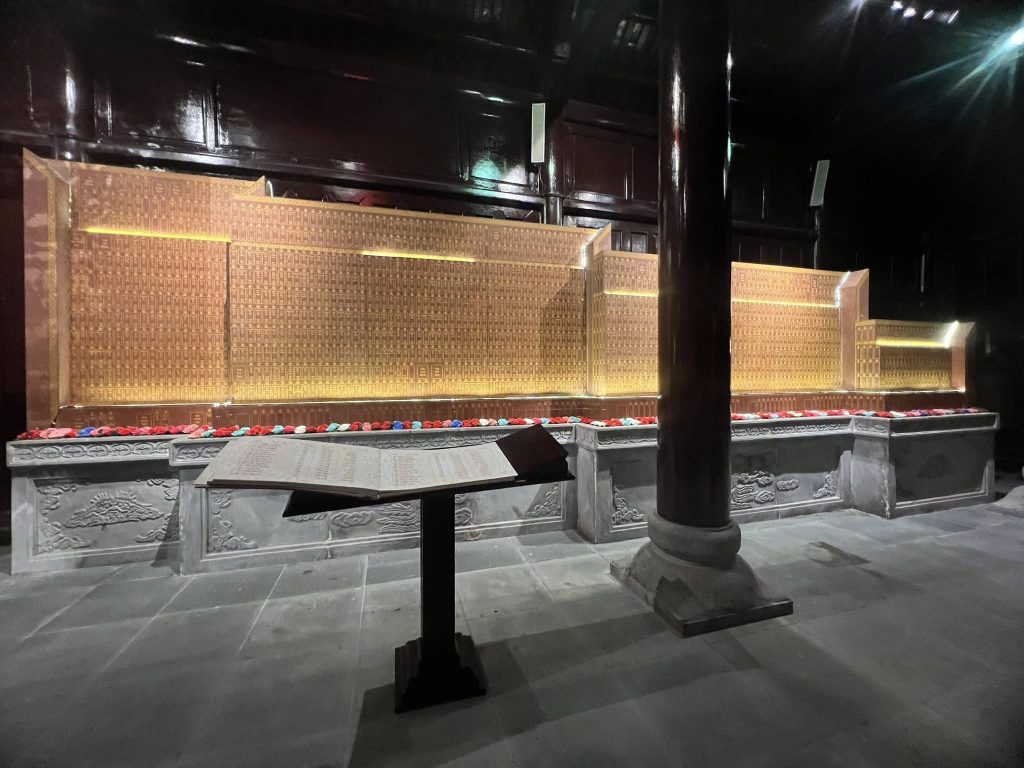
A visit to Côn Đảo Memorial Temple offers more than the opportunity to explore traditional architecture. It also introduces historical stories connected to the prison system that operated on the island for 113 years.
With its historical and cultural value and profound commemorative meaning, Côn Đảo Memorial Temple is a worthwhile stop on a journey through Côn Đảo’s heritage.
Con Dao Express introduces Côn Đảo’s historical sites, scenic attractions and cultural destinations, while also providing information about high-speed ferry routes, sailing schedules and indicative fares to help visitors plan their island journey.
Reference sources
- Côn Đảo National Heritage Conservation Centre: Introduction to Côn Đảo Memorial Temple.
- Côn Đảo National Heritage Conservation Centre: Guidance on visiting Hàng Dương Cemetery and Côn Đảo Memorial Temple.
- Côn Đảo Tourism Portal: Introduction to Côn Đảo Memorial Temple.
- Côn Đảo Tourism Portal: Commemorative activities and the Green Offering Basket programme.
Google Maps: Đền thờ Côn Đảo
The map shows the site’s location. Confirm the entrance and visiting hours with the site management before you go.