
Within the Côn Đảo Prison system, Phú Bình Camp, also known as the American Tiger Cages, was one of the particularly harsh isolation compounds built during the final years of the Vietnam War. Completed in 1971, it comprised 384 small isolation cells, arranged in eight rows across four separate compounds, with high walls, iron doors and low roofs.
Unlike the French Tiger Cages, built in 1940, Phú Bình Camp was designed to intensify prisoners’ isolation and control. The cells measured only about 5 m², had no sleeping platforms, and were covered by iron grilles and low fibre-cement roofing. During the day, sunlight heating the roofs raised temperatures inside; at night, the cold, damp cement floors made living conditions even harsher.
But Phú Bình Camp is remembered for more than its isolation regime. Here, on the night of 30 April and in the early hours of 1 May 1975, political prisoners seized the opportunity to organize and help launch the uprising that liberated Côn Đảo.
Built to confine and isolate people the prison authorities considered dangerous, Phú Bình Camp became associated with the events that ended the Côn Đảo Prison system’s 113-year existence.
Today, the preserved rows of isolation cells, iron doors and corridors help visitors explore a distinctive period in the island’s history, from imprisonment in the final years of the war to Côn Đảo’s liberation in 1975.
Where Is Phú Bình Camp on Côn Đảo?
Phú Bình Camp stands on Nguyễn Văn Cừ Street in the central area of Côn Sơn Island, Côn Đảo Special Zone, Ho Chi Minh City.
It forms part of the Côn Đảo Prison historic complex, alongside sites such as Phú Hải Camp, Phú Sơn Camp, Phú Thọ Camp, the French Tiger Cages and related structures.
Visitors can reach the site from central Côn Sơn by motorbike, car or taxi.
Phú Bình Camp is relatively extensive, with multiple isolation compounds organized around walls, fences, passageways and rows of similarly structured cells.
Unlike some buildings with French colonial architectural features, its architecture is simple and primarily serves the purposes of confinement and prisoner control.
Phú Bình Camp at a Glance
- Site name: Phú Bình Camp.
- Other names: Camp 7, Camp VII, American Tiger Cages, American-style Tiger Cages.
- Location: Nguyễn Văn Cừ Street, Côn Đảo Special Zone, Ho Chi Minh City.
- Completed: 1971.
- The name Phú Bình Camp: Came into use after the 1973 Paris Peace Accords; one historical account gives 17 November 1974 as the date of the name change.
- Area: Approximately 25,768 m², according to several historical sources.
- Number of isolation cells: 384.
- Layout: Four compounds, AB, CD, EF and GH, each containing two rows of 48 cells.
- Cell area: Approximately 5 m², according to site information materials.
- Notable historical event: The starting point of the uprising that liberated Côn Đảo on 1 May 1975.
- Present-day significance: A component site of the Côn Đảo Prison Special National Historic Site.
Why Is Phú Bình Camp Called the American Tiger Cages?
The name American Tiger Cages arose from the way prisoners described the structure and detention regime at Phú Bình Camp.
The camp was built while the Republic of Vietnam government administered Côn Đảo Prison, with American contractors and specialists involved in its design and construction.
According to historical sources, the new isolation compound was built to take over the function of the French Tiger Cages after conditions there were exposed to international public scrutiny in 1970.
Related records and documents also referred to the new detention compound as the New Tiger Cages.
Prisoners called it the American Tiger Cages to distinguish it from the French Tiger Cages, which had existed since 1940.
Although their architecture differed, both used separate cells to maintain tight control over detainees.
The most notable differences lay in the roofing, observation walkways and arrangement of cells.
At the French Tiger Cages, iron grilles and walkways for guards were positioned above the cells.
The American Tiger Cages, by contrast, had low roofs above the cells and no overhead observation walkways like those in the French-era compound.
Heat, damp and poor ventilation inside the isolation cells made this one of the harshest detention compounds in the final period of Côn Đảo Prison’s operation.
The Construction of Phú Bình Camp in 1971
The Aftermath of the 1970 French Tiger Cages Exposure
To understand why Phú Bình Camp was built, it is necessary to look back at events on Côn Đảo in 1970.
In July 1970, an American delegation that included members of Congress and others investigating prison conditions gained access to the French Tiger Cages.
The group included American social activist Don Luce and Tom Harkin, then a US congressional aide.
Photographs of detention conditions in the Côn Sơn Tiger Cages taken by Tom Harkin were published in LIFE magazine on 17 July 1970.
The report drew international attention and raised numerous questions about the treatment of prisoners and the use of isolation on Côn Đảo.
The prison authorities consequently faced pressure from the press, civil society organizations and people concerned about human rights during the war.
The island’s isolation system did not, however, cease operating.
Instead, construction continued on a new detention compound with a different design from the French Tiger Cages.
This was Camp 7, later named Phú Bình Camp.
Building Camp 7
According to the Côn Đảo National Heritage Conservation Center, Phú Bình Camp was built and completed in 1971.
American specialists designed the complex, and the contractor RMK participated in its construction.
Studies of the history of Côn Đảo Prison also record American involvement in funding and supervising the construction of new camps on the island from the late 1960s.
Camp 7 was organized as a large isolation compound, with many small cells, dividing walls and perimeter fencing.
Alongside the isolation cells were supporting facilities, including kitchens, storerooms, an infirmary and offices for the camp administration.
Unlike the communal detention blocks built during the French colonial period, Camp 7 focused on providing large numbers of separate cells with relatively uniform layouts.
This design was intended to increase the authorities’ ability to classify, isolate and control detainees.
From Camp 7 to Phú Bình Camp
When it first opened, the complex was known as Camp 7 or Camp VII.
After the 1973 Paris Peace Accords, the names and administrative organization of the camps on Côn Đảo continued to change.
According to the book Huyền thoại Côn Đảo, Camp 7 was renamed Phú Bình Camp on 17 November 1974.
This name remained in use until the prison system ceased operating in 1975.
Despite the change in its official name, former prisoners continued to refer to the compound as the American Tiger Cages.
Today, both Phú Bình Camp and American Tiger Cages appear in publications, maps and site interpretation programs.
Phú Bình Camp’s Architecture: 384 Isolation Cells
One of Phú Bình Camp’s most distinctive features is the number and arrangement of its isolation cells.
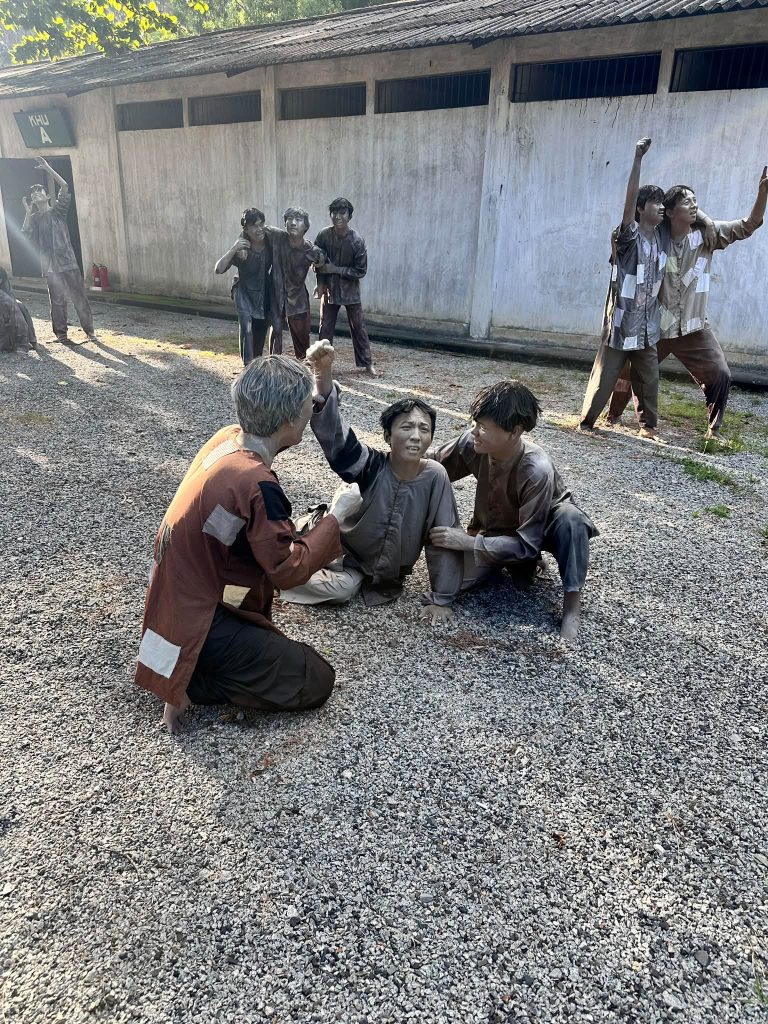
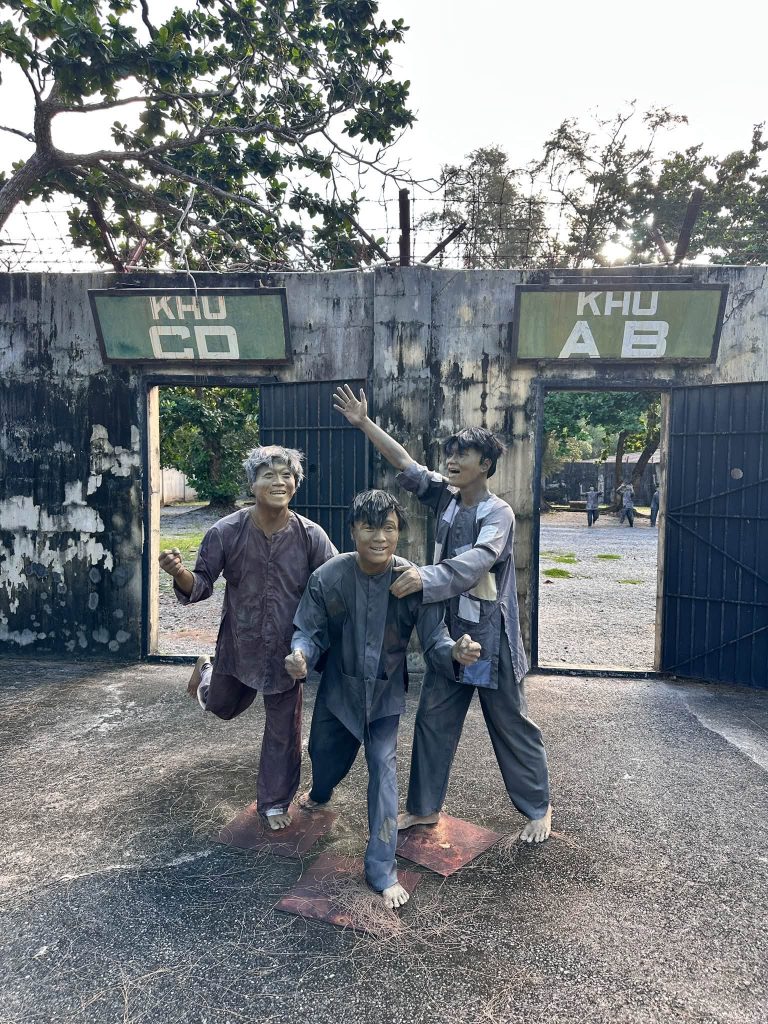
The camp contained 384 small cells, divided into eight rows within four main compounds.
This differed from communal detention camps, where many prisoners were held in large rooms.
The Four Compounds: AB, CD, EF and GH
Phú Bình Camp was divided into four main compounds designated AB, CD, EF and GH.
Each compound had two rows of cells. Each row contained 48 isolation cells, giving eight rows and a total of 384 cells.
High walls separated the rows and controlled movement between them.
Historical sources also describe external barbed-wire fences and facilities used for administration and security.
Dividing the camp into several compounds allowed the prison to hold different groups of inmates separately and restrict communication between areas.
Visitors today can observe the long rows of cells, narrow passageways and arrangement of the iron doors.
The repetition of hundreds of similarly sized cells is one of Phú Bình Camp’s most recognizable architectural features.
Isolation Cells Measuring Only About 5 m²
According to information published by the Côn Đảo Tourism Portal, each isolation cell measured approximately 5 m².
This was a very small space for daily life, especially when several people were confined together.
Historical sources record that at times eight to ten prisoners were held in a single cell.
Under such conditions, each person had very little space.
Lying down, sitting, resting or changing position was difficult.
Unlike communal cells with sleeping platforms, the isolation cells at Phú Bình Camp had no raised sleeping areas.
Prisoners had to lie directly on the cement floor.
This arrangement not only deprived them of basic comfort but also exposed them directly to the floor’s temperature and dampness.
Iron Doors and Grilles
Strong iron doors separated the isolation cells from the corridors.
Some cells had doors and grilles designed to let staff inspect conditions inside.
Iron grilles were also fixed into the walls above the cells.
Unlike the French Tiger Cages, however, Phú Bình Camp had no overhead walkways from which guards could look directly down into the cells.
This is one of the most important architectural differences between the two Tiger Cages systems.
Control at Phú Bình Camp was exercised through corridors, iron doors, separated compounds and the camp administration.
Low Fibre-Cement Roofs
The isolation cells were covered with fibre-cement sheets, sometimes called cement roofing, positioned relatively low above the rooms.
This feature directly affected temperatures inside.
On sunny days, the roofs absorbed heat and made the cells intensely hot.
The small rooms and limited ventilation made it difficult for heat to escape.
When several people were confined in one cell, the heat and stifling air became even more serious problems.
At night, by contrast, moisture in the cement floors left those lying directly on them exposed to cold and damp.
The contrast between daytime heat and cold, damp nights is one of the harsh conditions noted in many accounts of the American Tiger Cages.
Prisoners’ Living Conditions in the American Tiger Cages
Phú Bình Camp’s architecture was organized to isolate and control prisoners, while also creating extremely difficult living conditions.
According to historical documents and former political prisoners’ accounts, the hardship came not only from confinement in small cells but also from sanitation, temperature, noise and disciplinary measures.
Prolonged Heat Inside the Cells
During the day, sunlight fell directly on the fibre-cement roofs.
Because the roofs were low, heat from above radiated into the detention areas.
Prisoners could not move around freely or find a place to escape the heat.
When many people shared a confined space, the stifling conditions became even worse.
Over time, such conditions could cause exhaustion, disrupt sleep and undermine health.
Lying Directly on Cold, Damp Cement Floors
Another characteristic was the absence of sleeping platforms.
Prisoners had to rest on cement floors, regularly exposed to moisture rising from the ground.
At night, as temperatures fell, the floors became colder.
For people whose health had already deteriorated during imprisonment, these conditions added further hardship.
The lack of beds or sleeping platforms also made it difficult to keep personal belongings dry and left prisoners without a suitable place to rest.
Inadequate Sanitation
According to materials from the Côn Đảo National Heritage Conservation Center, prisoners had to use wooden buckets as toilets inside their cells.
During protests or resistance to the detention regime, some prisoners were punished by being prevented from emptying their toilet buckets for many days or even longer.
In such a small space, the failure to remove waste made living conditions particularly unsanitary.
Foul odors, dampness and the risk of disease increased.
This is one of the forms of treatment recorded in historical accounts of the isolation regime at Phú Bình Camp.
Iron Doors and Punishment Through Noise
The iron doors are another significant feature of the American Tiger Cages.
According to accounts preserved in site documentation, guards and prison staff would open and slam the iron doors to make loud noises.
When doors were slammed in succession along a row of cells, the sound reverberated through the confined space.
With eight rows and 384 cells in total, such inspections generated prolonged noise and caused stress for the prisoners.
This illustrates how the organization of the cells, combined with methods of control, could affect prisoners psychologically as well as physically.
Why Was the Isolation Regime at Phú Bình Camp Particularly Harsh?
Phú Bình Camp was built at a time when the Côn Đảo Prison system had accumulated extensive experience in confinement and prisoner control.
Compared with earlier communal detention camps, it used large numbers of small rooms to intensify isolation.
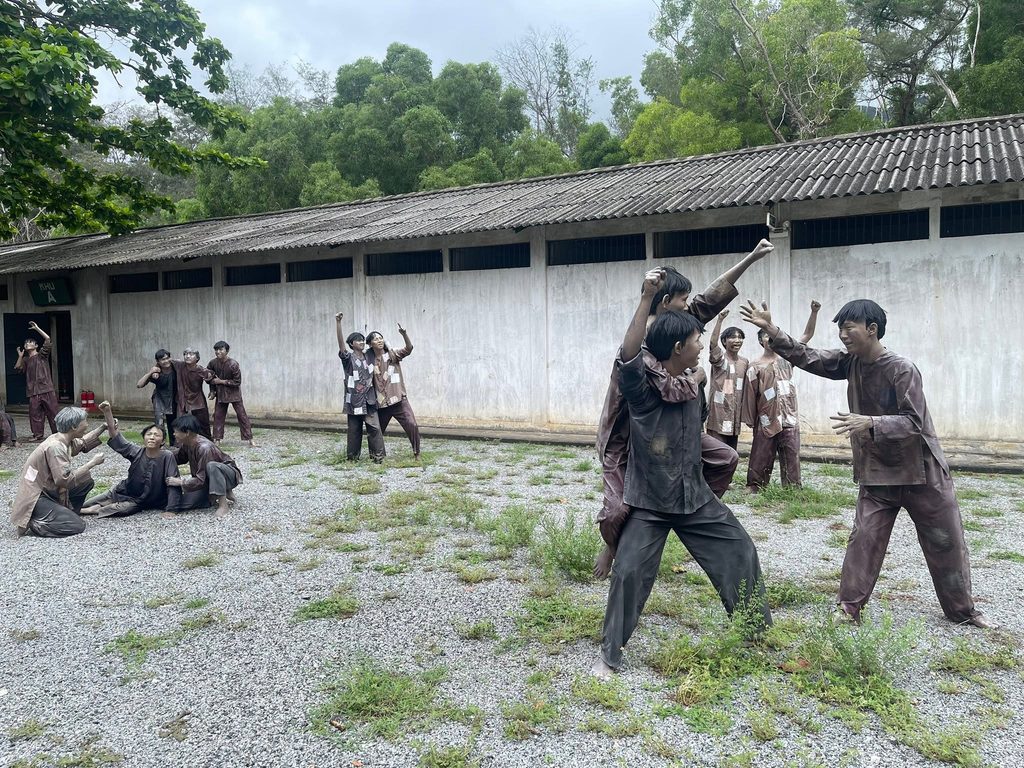
Prisoners had very little personal space for daily life, yet were separated from collective activities and kept under constant surveillance.
Architectural conditions combined with disciplinary measures to make the detention regime more severe.
Separating Groups of Prisoners
Dividing the camp into multiple compounds and rows of cells made communication between detainees difficult.
For political prisoners experienced in organizing and resistance, isolation also aimed to restrict information sharing and coordinated action.
The isolation compounds therefore served not only to control prisoners physically but also to limit organized activity within the prison.
Effects on Health
High temperatures, cold and damp floors, inadequate sanitation and prolonged confinement could seriously affect health.
Detainees frequently faced exhaustion, illness and a lack of appropriate medical care.
Alongside the physical effects, extended isolation also affected their mental well-being.
For people who had already spent years in captivity, these factors further compounded the difficulties of daily life.
Harsh Conditions Reflected in the Architecture
Unlike places where evidence of punishment can only be understood through testimony or records, Phú Bình Camp allows visitors to observe many features of isolation-cell architecture directly.
From roof height and cell size to cement floors and the position of iron doors, each element is connected to prisoners’ living conditions.
Studying these details helps visitors understand how an isolation compound was organized, rather than seeing the site only through descriptions of its harshness.
Political Prisoners’ Resistance at Phú Bình Camp
Although designed to intensify isolation, Phú Bình Camp remained a place where political prisoners resisted and maintained contact with one another.
During their confinement, many sought ways to exchange information, help one another and oppose punitive measures.
Maintaining Contact in Isolation
The system of small cells and dividing walls made communication difficult.
Nevertheless, memoirs and historical accounts of Côn Đảo Prison describe how political prisoners in the camps found various ways to stay in touch.
Sharing information helped them follow developments within the prison, encourage one another and sustain their spirit of resistance.
These activities had to take place under constant surveillance and at the risk of punishment.
Opposing the Detention Regime
In the final years of the war, political prisoners’ protests at Côn Đảo Prison addressed issues including harsh treatment, demands for improved living conditions and opposition to political coercion.
Those taking part could be transferred to isolation compounds or subjected to stricter disciplinary regimes.
Phú Bình Camp’s use for prisoners considered to require particularly close control made it an important site in the history of political prisoners’ resistance.
Sustaining Solidarity
Solidarity among detainees is a recurring theme in the history of Côn Đảo Prison.
Amid deprivation, caring for the sick, sharing information and offering encouragement were especially meaningful.
These connections helped sustain organized activity within the prison and enabled political prisoners to coordinate when major changes unfolded in late April 1975.
The Night of 30 April 1975: Phú Bình Camp on the Eve of a Historic Turning Point
On 30 April 1975, the Republic of Vietnam government announced its surrender, and the war ended in Saigon.
The news quickly affected the situation on Côn Đảo, where thousands of prisoners remained incarcerated.
Many members of the prison administration were alarmed, and some tried to leave the island. Security became more complicated as some military offenders and common-law prisoners took advantage of the disorder.
For political prisoners, this was a particularly important moment.
After years in captivity, they needed to verify reports from the mainland and find a way to organize while their cells were still locked.
News from Saigon Reaches Camp 7
According to historical accounts, on the night of 30 April 1975, members of the administration and several intermediaries came to Camp 7 to report on the situation in Saigon.
In Block H, political prisoners were told that the Saigon government had surrendered and that events on Côn Đảo were changing rapidly.
After years of imprisonment and exposure to various methods of control, however, the prisoners did not immediately trust outside announcements.
They asked to verify the news by listening to the radio.
According to memoirs and historical records, a radio was brought into the detention area so prisoners could hear reports of Saigon’s liberation for themselves.
This was one of the key events leading to the decision to act at Camp 7.
The Cell Doors Are Opened
Once the news had been confirmed, the political prisoners demanded that the authorities unlock the cells.
Memoir accounts differ in some details about how individual cells were freed. They nevertheless agree on the role of political prisoners in Block H and the successive opening of cell doors throughout Camp 7 during the night.
The news quickly spread to other blocks.
Prisoners leaving their cells began contacting one another, assembling groups and preparing for the next steps.
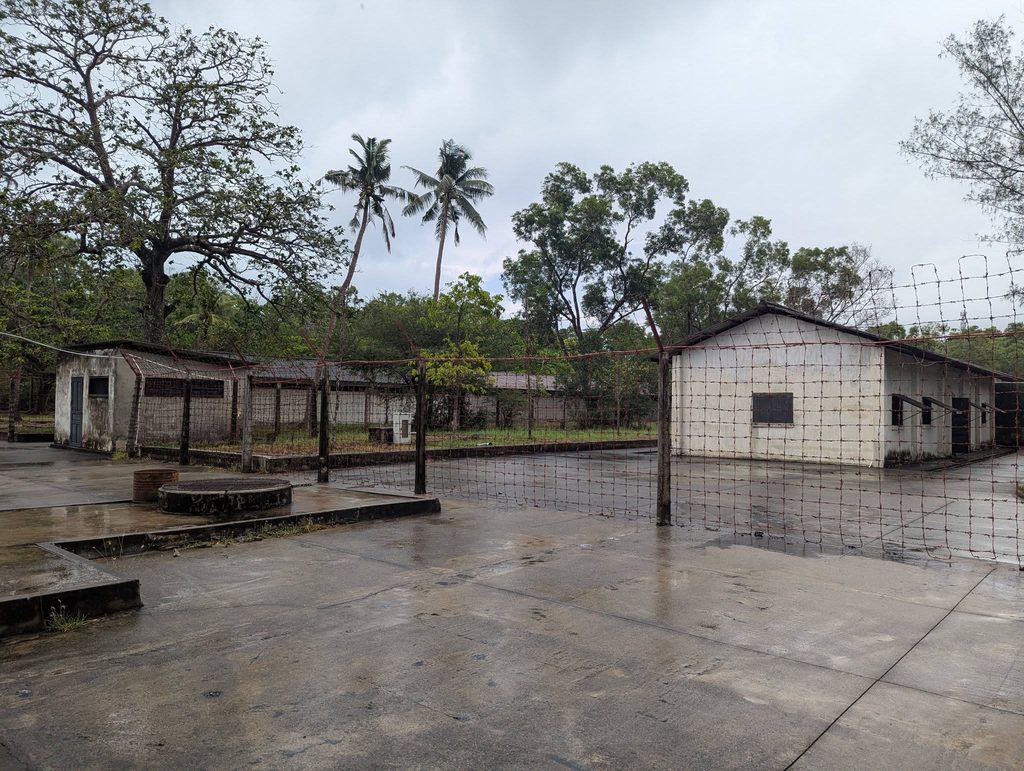
By around 3 a.m. on 1 May 1975, all eight blocks of Camp 7 had been liberated.
This marked the transition from confinement to prisoners’ direct involvement in organizing and managing activities on the island.
1 May 1975: The Uprising to Liberate Côn Đảo Begins at Phú Bình Camp
Phú Bình Camp is recognized as the starting point and one of the organizing centers of the uprising that liberated Côn Đảo.
After the cells in Camp 7 were opened, political prisoners with organizational experience quickly assembled, discussed the situation and identified the work that needed to be done.
Their immediate goal was not only to free those still imprisoned, but also to maintain security and stabilize the island.
Establishing the Provisional Island Party Committee
In the early hours of 1 May 1975, cadres and political prisoners with leadership responsibilities in Camp 7 met to establish a provisional island Party committee.
According to historical documents, Trịnh Văn Tư was appointed secretary, while Phan Huy Vân, also known as Hai Tân, became deputy secretary.
The provisional committee set out urgent tasks for liberating the camps and managing the situation on the island.
Forming a leadership organization amid rapidly changing circumstances was an important step.
It provided a basis for coordinating newly freed prisoners and organizing groups to take over essential positions.
Organizing the Liberation of Other Camps
From Camp 7, groups of political prisoners were assigned to visit other camps, explain the situation and help unlock the cells.
This was especially important because many prisoners elsewhere did not yet have a full picture of events in Saigon.
Meanwhile, prison staff leaving their posts or no longer maintaining their previous control created gaps in security.
The groups were organized to ensure prisoners could leave their places of confinement and avoid dangers arising from the disorder.
Organizing Security and Administration on the Island
In addition to freeing prisoners, the provisional island Party committee organized forces to secure important locations on Côn Đảo.
Historical accounts describe groups being assigned to military barracks, warehouses and administrative offices.
Organizing security forces helped prevent disorder and protect residents and newly released prisoners.
At the same time, these takeovers helped establish an administration in the initial period after the prison regime ended.
The Morning of 1 May 1975: Côn Đảo Is Fully Liberated
According to the Côn Đảo National Heritage Conservation Center, political prisoners had taken control of Côn Đảo by around 8 a.m. on 1 May 1975.
Some local tourism authority materials give the time as approximately 8:30 a.m.
Despite this slight difference in the recorded time, the sources all identify the morning of 1 May 1975 as the time of Côn Đảo’s liberation.
The event brought to an end the prison system’s 113-year existence, which had begun in 1862.
For Phú Bình Camp, this was an especially significant milestone.
A complex built to imprison and isolate political prisoners became the starting point for organizing the liberation of the prison system.
The events of 1 May 1975 therefore belong not only to Phú Bình Camp’s history but also rank among the most important milestones in modern Côn Đảo history.
Why Is Phú Bình Camp Especially Significant in Côn Đảo’s Liberation?
It is no coincidence that Phú Bình Camp is frequently mentioned in accounts of Côn Đảo Prison’s final hours.
Before 1975, it held many political prisoners with experience in activism and organization.
Although isolated within the cell system, they maintained connections and the ability to coordinate when an opportunity arose.
Once reports of the changes in Saigon were confirmed, the prisoners at Camp 7 quickly organized action.
The establishment of the provisional island Party committee, the expansion of activity to other camps and the organization of security forces demonstrate Phú Bình Camp’s important role in the events of 1 May 1975.
From a historical perspective, the significance extends beyond the opening of cell doors.
It also lies in the transition from being controlled to organizing, coordinating and assuming responsibility for managing the island.
This makes Phú Bình Camp one of the sites most closely associated with the end of the Côn Đảo Prison system.
How Do the American and French Tiger Cages Differ?
Côn Đảo has two well-known isolation complexes commonly called the French Tiger Cages and the American Tiger Cages.
They differ in their construction dates, architecture and some methods of prisoner control.
The French Tiger Cages
The French Tiger Cages were built in 1940 under French colonial rule.
The isolation compound comprised 120 cells divided into two sections of 60 cells each.
Above the cells were iron grilles and walkways from which guards could move around and observe the prisoners below.
There were also 60 roofless cells, known as the sun-exposure cells.
The French Tiger Cages are associated with many political prisoners’ struggles, particularly resistance to enforced renunciation of political allegiance, and with the exposure of the isolation compound to international scrutiny in 1970.
The American Tiger Cages
The American Tiger Cages, or Phú Bình Camp, were completed in 1971.
The detention compound comprised 384 separate cells, arranged in eight rows within four main compounds.
The cells had low fibre-cement roofs, no sleeping platforms and no overhead observation walkways like those in the French Tiger Cages.
Phú Bình Camp is also associated with political prisoners’ organization of the uprising that liberated Côn Đảo on 1 May 1975.
Comparison of the French and American Tiger Cages
| Feature | French Tiger Cages | American Tiger Cages |
|---|---|---|
| Construction date | 1940 | Completed in 1971 |
| Location | Isolation compound associated with Phú Tường Camp | Phú Bình Camp, Camp 7 |
| Number of isolation cells | 120 | 384 |
| Distinctive additional facilities | 60 roofless cells | Supporting facilities for the isolation compound |
| Above the cells | Iron grilles and observation walkways | Iron grilles and low roofs; no overhead observation walkways like those in the French Tiger Cages |
| Notable features | Surveillance from above and sun-exposure cells | Small cells, low roofs and damp cement floors |
| Major historical event | Exposed in the international press in 1970 | Starting point of the uprising that liberated Côn Đảo in 1975 |
Exploring both isolation compounds helps visitors understand how the organization and management of prisoners on Côn Đảo changed over time.
Both sites also retain many architectural remains that allow the history of the prison system to be studied across different periods.
Phú Bình Camp After 1 May 1975
After Côn Đảo’s liberation, Phú Bình Camp ceased functioning as a place of imprisonment.
Together with the other camps, it entered a new phase of research, conservation and interpretation as part of the historic site complex.
The rows of cells, iron doors and roof structures were retained to show the conditions of isolation that once existed here.
The place where prisoners had endured captivity also became a site for historical education and the transmission of collective memory.
Recognition as a Historic Site in 1979
On 29 April 1979, the Ministry of Culture and Information issued Decision No. 54-VHTT.QĐ, designating the Côn Đảo historic complex as a national historic site.
Phú Bình Camp is one of the historically significant structures within that system.
The designation provided a basis for managing and preserving the remains associated with the isolation regime.
Designation as a Special National Historic Site in 2012
On 10 May 2012, the Prime Minister issued Decision No. 548/QĐ-TTg, designating the Côn Đảo Prison Historic Site as a Special National Historic Site.
Phú Bình Camp is a component of the designated complex.
The decision applies to the entire Côn Đảo Prison Historic Site; it is not a separate special national designation exclusively for Phú Bình Camp.
Protecting the camp within this special national historic complex helps preserve evidence valuable for research and historical visits.
Features to Explore When Visiting Phú Bình Camp
At Phú Bình Camp, many elements of the detention architecture remain clearly visible.
Visitors should take time to look at the details rather than simply walking quickly past the cell blocks.
The System of 384 Isolation Cells
The first striking feature is the large number of small cells arranged consecutively.
The iron doors, dividing walls and passageways form a highly repetitive system.
Observing the layout helps explain how the prison organized isolation on a large scale, in contrast to the communal cells at older camps.
Roof Height and Interior Space
The low roofs are among the most important features of the American Tiger Cages.
Visitors should consider the relationship between the roofs, iron grilles and cell size.
These details help explain why heat and ventilation had such a serious effect on detainees’ lives.
Cement Floors and Living Conditions
The cells had no sleeping platforms, forcing prisoners to conduct daily life directly on the cement floors.
This is valuable physical evidence for understanding detention conditions.
Studying the structure of the cells makes the everyday hardships recorded in historical sources easier to understand.
Block H and the Liberation of 1975
Block H is especially significant because it is associated with the first developments on the night of 30 April and in the early hours of 1 May 1975.
According to historical sources, political prisoners here verified the news from Saigon and demanded that their cells be opened.
Subsequent events led to the establishment of the provisional island Party committee and the organization of the liberation of other camps.
When visiting Phú Bình Camp, it is therefore worth learning specifically about Block H’s role in this historic moment.
The Historical Significance of Phú Bình Camp on Côn Đảo
Evidence of a Large-Scale Isolation System
Phú Bình Camp is a representative example of how isolation was organized on Côn Đảo during the prison regime’s final years.
Its 384 cells, dividing walls and low roofs show that it was designed to intensify isolation and control.
The surviving physical remains provide evidence of prison architecture, detention conditions and methods of prisoner management in the twentieth century.
A Site of Political Prisoners’ Resistance
Despite confinement, many political prisoners continued to organize, maintain solidarity and resist.
These activities show that the history of Côn Đảo Prison encompasses not only forms of confinement but also detainees’ efforts to protect their dignity and morale.
A Place Associated with Côn Đảo’s Liberation
Phú Bình Camp’s most outstanding significance lies in its role in the uprising that liberated Côn Đảo on 1 May 1975.
From here, political prisoners helped organize groups, coordinate the liberation of the camps and establish an administration during the transition.
This was one of the most important events in modern Côn Đảo history.
Educational and Conservation Value
For school pupils, students and research groups, Phú Bình Camp offers a way to approach history through a surviving physical site.
Observing the cells and learning about the events of 1975 helps clarify the connection between detention conditions, resistance and major political changes in the country.
Preserving Phú Bình Camp therefore means more than retaining old walls, doors and cell blocks.
It also means safeguarding part of the historical memory so future generations can continue to research, compare accounts and learn about the people once confined here.
Practical Advice for Visiting Phú Bình Camp on Côn Đảo
Getting to Phú Bình Camp
Phú Bình Camp is on Nguyễn Văn Cừ Street in central Côn Sơn.
Visitors can travel from their hotel or other accommodation by motorbike, taxi or car.
On tours exploring the Côn Đảo Prison system, Phú Bình Camp is often included alongside other camps and historic structures.
A guided program helps visitors understand the historical context and the function of each area.
Visiting Hours
According to the visit-registration schedule published by the Côn Đảo National Heritage Conservation Center, tours of the historic complex are arranged within two time slots:
- Morning: 7:30 a.m. to 11:30 a.m.
- Afternoon: 2 p.m. to 5 p.m.
Groups may be allocated different visiting sessions according to the Center’s arrangements.
These are the published time slots for heritage tours, not confirmation that every area within Phú Bình Camp is continuously open.
Visitors should check the latest notices before arriving.
Admission Fees for Phú Bình Camp in 2026
Under Ho Chi Minh City People’s Council Resolution No. 29/2026/NQ-HĐND of 27 August 2026, effective from 1 October 2026, admission to the Côn Đảo Prison Special National Historic Site, including Côn Đảo Museum, costs VND 60,000 per person per visit for visitors required to pay the fee.
Phú Bình Camp is part of the historic complex visited under the managing authority’s regulations.
The VND 60,000 fee applies to the historic complex under those regulations; it is not a separate ticket price solely for Phú Bình Camp.
Exempt categories include children, school pupils, students, people with exceptionally severe disabilities, and members of poor or near-poor households.
Certain groups, such as older people, people with severe disabilities and people recognized for meritorious service to the revolution, qualify for reduced fees subject to the applicable conditions.
Visitors should bring appropriate documents when applying for an exemption or reduction.
How Much Time Should You Allow?
Visitors wishing to look at the cell blocks, understand the layout and hear an introduction to the historical events can allow approximately 30–45 minutes.
An in-depth guided program on the American Tiger Cages and the 1975 uprising may take longer.
This is only a suggested duration for itinerary planning.
Things to Keep in Mind
Phú Bình Camp is a historic site with structures that have stood for more than half a century.
Visitors must follow the managing authority’s rules and should not touch exhibits or interfere with architectural elements without permission.
Do not climb walls, iron grilles or other potentially unsafe structures.
If particular cells are inaccessible, view them from the designated visitor areas.
Take photographs respectfully, as this is a place associated with years of captivity and the sacrifices of many people.
For groups with children, introducing the historical context beforehand can help them understand the purpose of the visit.
Frequently Asked Questions About Phú Bình Camp on Côn Đảo
When Was Phú Bình Camp Built?
Phú Bình Camp was built and completed in 1971. It was originally called Camp 7 or Camp VII and later took the name Phú Bình Camp in the period after the 1973 Paris Peace Accords.
Is Phú Bình Camp the Same as the American Tiger Cages?
Yes. Phú Bình Camp is the detention compound’s official name, while American Tiger Cages or American-style Tiger Cages are common names for this isolation system.
How Many Cells Did the American Tiger Cages Have?
Phú Bình Camp comprised 384 isolation cells, divided into eight rows within the four main compounds AB, CD, EF and GH.
Why Are the American Tiger Cages Considered a Harsh Isolation Compound?
The cells were small, with low roofs, no sleeping platforms and limited ventilation. Prisoners also faced disciplinary measures, inadequate sanitation and prolonged isolation.
Are the American and French Tiger Cages the Same Place?
No. The French Tiger Cages were built in 1940, while the American Tiger Cages were completed in 1971 at Phú Bình Camp. The two compounds differ in location, construction date and architectural layout.
How Is Phú Bình Camp Connected with 1 May 1975?
It was the starting point of the uprising that liberated Côn Đảo. After confirming news of Saigon’s liberation, political prisoners at Camp 7 organized the opening of cell doors, established a provisional island Party committee and coordinated the liberation of other camps.
What Time Did the Uprising at Phú Bình Camp Begin?
According to historical accounts, events began on the night of 30 April and around 1 a.m. on 1 May 1975. By approximately 3 a.m., all eight blocks of Camp 7 had been liberated.
When Was Côn Đảo Liberated?
Côn Đảo was liberated on 1 May 1975, ending the prison system’s 113-year existence from 1862 to 1975.
Where Is Phú Bình Camp?
The site is on Nguyễn Văn Cừ Street in the central area of Côn Sơn Island, Côn Đảo Special Zone, Ho Chi Minh City.
How Much Does It Cost to Visit Phú Bình Camp in 2026?
From 1 October 2026, admission to the Côn Đảo Prison Special National Historic Site is VND 60,000 per person per visit for visitors required to pay, under the historic complex’s general regulations.
Is Phú Bình Camp a Special National Historic Site?
Phú Bình Camp is a component of the Côn Đảo Prison Historic Site, designated a Special National Historic Site under the Prime Minister’s Decision No. 548/QĐ-TTg of 10 May 2012.
Phú Bình Camp: From Harsh Isolation Compound to the Starting Point of Liberation
More than half a century after its construction, Phú Bình Camp retains a distinctive place within the Côn Đảo Prison historic complex.
The preserved rows of small cells, iron doors, cement floors and low roofs help visitors imagine detention conditions in the American Tiger Cages during the final years of the war.
But Phú Bình Camp’s history goes beyond documenting a large-scale isolation system.
Here, on the night of 30 April and in the early hours of 1 May 1975, political prisoners received news of changes in the country, verified the situation and rapidly organized liberation activities.
From Camp 7, groups of political prisoners gathered, coordinated with people in other compounds and helped establish an administration for Côn Đảo during the transition.
This was a particularly meaningful change in the site’s history.
A detention compound built to isolate and control people became the starting point for events that ended a prison regime lasting 113 years.
Today, walking between Phú Bình Camp’s cell blocks allows visitors to learn not only about isolation architecture and the harsh conditions prisoners endured.
It also offers insight into solidarity, organizational ability and important decisions made by people at a moment of historical change.
Phú Bình Camp is therefore an important site for understanding Côn Đảo’s history, both for what happened inside its isolation cells and because the events of 1 May 1975 began here.
Con Dao Express introduces Côn Đảo’s historic sites, cultural destinations and natural landscapes, while providing information on high-speed ferry routes, schedules and indicative fares to help visitors plan their journey around the island.
Reference Sources
- Côn Đảo National Heritage Conservation Center: Phú Bình Camp Historic Site (Camp 7).
- Côn Đảo Tourism Portal: Phú Bình Camp Historic Site (American Tiger Cages).
- Côn Đảo Tourism Portal: Visiting the American Tiger Cages Historic Site.
- Vietnam National Museum of History: An Overview of the Côn Đảo Prison System.
- Huyền thoại Côn Đảo, Vietnam News Agency Publishing House, 2013, sections introducing Camp 7 and the events of 1 May 1975.
- Nhân Dân newspaper: Côn Đảo in April 1975.
- Ho Chi Minh City People’s Council Resolution No. 29/2026/NQ-HĐND of 27 August 2026, effective from 1 October 2026.
- Prime Minister’s Decision No. 548/QĐ-TTg of 10 May 2012.
Google Maps: Trại Phú Bình (Chuồng Cọp Kiểu Mỹ)
The map shows the site’s location. Confirm the entrance and visiting hours with the site management before you go.