
An Sơn Miếu, also known locally as Lady Phi Yến Shrine (Miếu Bà Phi Yến), is one of Côn Đảo’s notable cultural and spiritual sites. Located near the island’s center, the shrine is associated with the folk story of Lady Phi Yến and religious practices that local residents have preserved for generations.
As well as a place where people offer incense and pray for peace, An Sơn Miếu preserves distinctive aspects of Côn Đảo’s culture. Lady Phi Yến’s annual death-anniversary festival is held here, drawing many residents and visitors.
For those who want to discover Côn Đảo beyond its beaches, natural scenery and historical sites, An Sơn Miếu is a worthwhile stop.
Where is An Sơn Miếu?
An Sơn Miếu is located in Residential Area No. 3, Hoàng Phi Yến Street, Côn Đảo Special Zone, Ho Chi Minh City, about 2 km from central Côn Đảo.
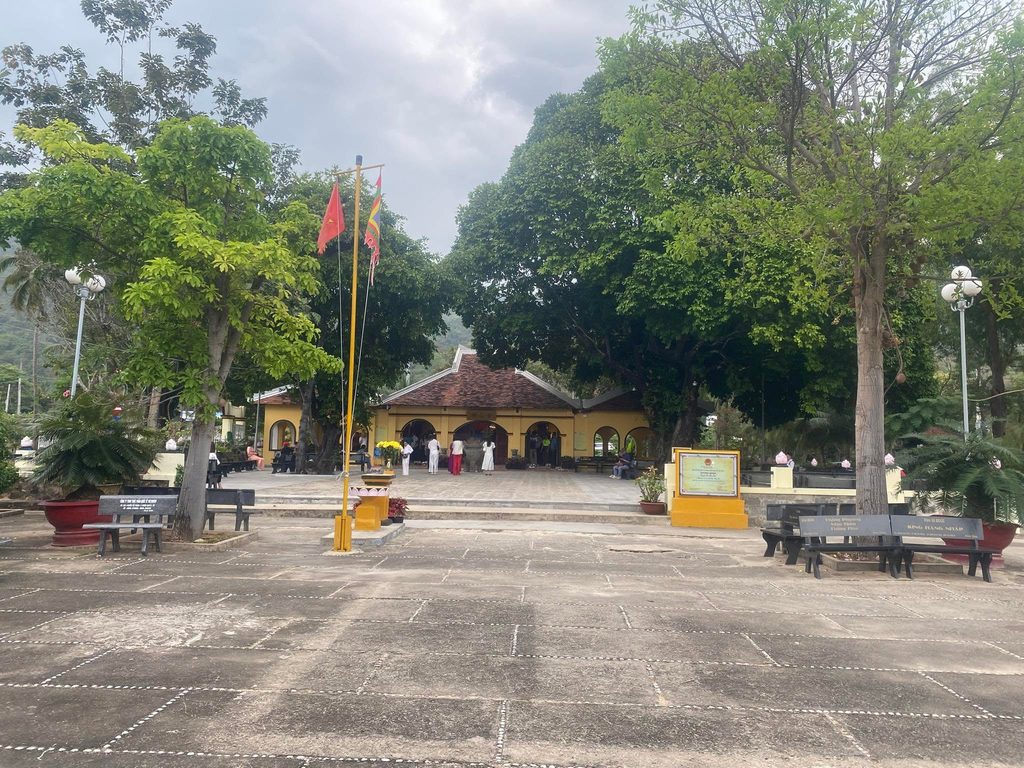
The shrine stands in a long-established residential area, with relatively peaceful surroundings, plenty of trees and architecture characteristic of a traditional place of worship.
Visitors can reach An Sơn Miếu by motorbike, taxi or tourist transport on the island. Its location close to the center makes it easy to include in a Côn Đảo sightseeing itinerary.
Visitor information:
- Site name: An Sơn Miếu.
- Common name: Lady Phi Yến Shrine (Miếu Bà Phi Yến).
- Address: Hoàng Phi Yến Street, Residential Area No. 3, Côn Đảo Special Zone, Ho Chi Minh City.
- Distance: About 2 km from central Côn Đảo.
- Indicative opening hours: 7:00 a.m. to 7:00 p.m. daily.
- Main activities: Sightseeing, learning about local culture, offering incense and paying respects.
Opening hours may change during festivals or special activities at the site.
Who is worshipped at An Sơn Miếu?
The principal figure worshipped at An Sơn Miếu is Lady Phi Yến, also known as Hoàng Phi Yến, a woman associated with folk legends about Lord Nguyễn Ánh in the late 18th century.
According to the story passed down on Côn Đảo, Lady Phi Yến’s name was Lê Thị Răm, and she is said to have been a consort of Nguyễn Ánh, who later became Emperor Gia Long.
In local religious belief, Lady Phi Yến represents fidelity, virtue and steadfastness. Residents established a place of worship to remember her and express their hopes for a peaceful, harmonious life.
Alongside the area devoted to Lady Phi Yến, the shrine is associated with other figures from the same body of legends, including Prince Hội An (Prince Cải) and Admiral Ngọc Lân.
The presence of these figures shows that An Sơn Miếu preserves a whole body of folk stories within the spiritual life of Côn Đảo’s residents, rather than honoring only one individual.
The legend of Lady Phi Yến and stories passed down on Côn Đảo
The legend of Lady Phi Yến and Lord Nguyễn Ánh
According to local legend, in the late 18th century, Lord Nguyễn Ánh fled to offshore islands with some relatives and attendants while being pursued by Tây Sơn forces.
The story relates that when Nguyễn Ánh intended to seek help from foreign forces to regain power, Lady Phi Yến advised against it. She believed that domestic disputes should be resolved by the people of the country rather than through outside intervention.
Her advice angered Nguyễn Ánh. In the folk account, Lady Phi Yến was then imprisoned on a small island that many people today associate with Hòn Bà in the Côn Đảo archipelago.
The following episodes describe Lady Phi Yến’s separation from her son, known as Prince Cải, and the tragic fates of mother and child.
Prince Cải and the story of Cỏ Ống village
In the legend, Prince Cải, also known as Prince Hội An, is Lady Phi Yến’s son.
After being separated from his mother, Prince Cải met his death at sea. The people of Cỏ Ống village later found his body and established a shrine in his memory.
This story is associated with Miếu Cậu, also called Thiếu Gia Miếu, in the Cỏ Ống area of Côn Sơn Island.
Today, the stories of Lady Phi Yến and Prince Cải are still often recounted together in Côn Đảo’s religious life, especially during traditional festivals.
The story of Lady Phi Yến’s fidelity
According to one local version of the legend, after leaving the place where she had been imprisoned, Lady Phi Yến was brought to an inhabited part of the island.
During a festival in An Hải village, the residents invited her to attend and welcomed her with respect. However, an incident occurred that led to her tragic death.
The people mourned her and maintained the tradition of worshipping and commemorating her on the 18th day of the 10th lunar month each year.
Lady Phi Yến’s story is also associated with a familiar folk verse:
The wind carries the mustard plant to heaven,
Vietnamese coriander remains, enduring life’s bitterness.
In the folk interpretation, the mustard plant (cải) and Vietnamese coriander (rau răm) are associated with Prince Cải and Lady Phi Yến, expressing the pain of separation between mother and child.
The verse has become part of local cultural memory, helping the legend of Lady Phi Yến pass from one generation to the next.
Distinguishing legend from history
Although the story of Lady Phi Yến appears widely in tourism materials about Côn Đảo, some details remain subjects of research and debate.
Historians have raised questions in particular about whether Nguyễn Ánh actually visited Côn Đảo in 1783, Lady Phi Yến’s identity and background, and the relationship between the figures in the legend and the Nguyễn royal family.
Lady Phi Yến’s story should therefore be approached primarily as a folk legend and part of the religious heritage of Côn Đảo’s community, rather than treating every detail as an established historical event.
This does not diminish An Sơn Miếu’s cultural value. Exploring the different layers of legend, custom and history helps visitors understand more fully how spiritual life on the island developed.
The origins and development of An Sơn Miếu
According to materials introducing the site, Côn Đảo’s residents have maintained the worship of Lady Phi Yến for many generations.
Local legend holds that people established a shrine in her memory in the late 18th century. However, the story of how the worship tradition began should be distinguished from the construction history of the present building.
Heritage conservation materials describe several periods of change at An Sơn Miếu. When French colonial authorities occupied Côn Đảo, established the prison system and relocated residents, maintaining the place of worship became difficult.
In 1958, the shrine was rebuilt to meet residents’ spiritual needs. It has since been preserved, repaired and restored through successive periods.
On April 18, 2007, the People’s Committee of Bà Rịa–Vũng Tàu Province issued Decision No. 1442/QĐ-UBND, designating An Sơn Miếu a provincial historical and cultural heritage site, at a time when Côn Đảo was still part of Bà Rịa–Vũng Tàu Province.
The designation recognizes the shrine’s value to local cultural life and provides a basis for conserving and promoting its heritage.
Architecture and worship spaces at An Sơn Miếu
An Sơn Miếu has the appearance of a traditional shrine. Although modest in scale, it features architectural details familiar within Vietnamese religious culture.
The grounds include an entrance gate, courtyard, main sanctuary and buildings used for community activities. Trees provide shade and help create a peaceful worship space, set apart from the pace of everyday life.
The shrine gate and grounds
From outside, visitors can recognize the An Sơn Miếu gate by the clearly displayed name of the site.
Beyond the gate are paths, a courtyard and structures used for worship. The space is arranged so that residents and visitors can move around, offer incense and pay their respects.
On ordinary days, the grounds are relatively quiet. During Lady Phi Yến’s death-anniversary festival, they become busier as offerings are prepared, rituals organized and participants welcomed.
The main sanctuary and altars
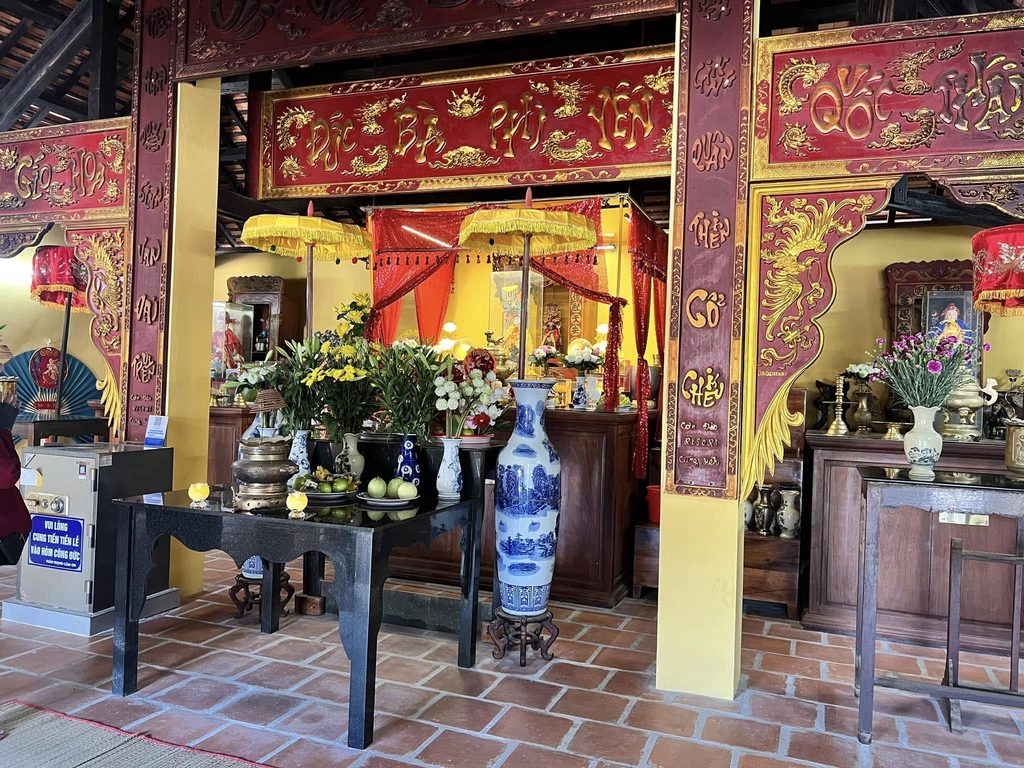
The main sanctuary is the most important area of An Sơn Miếu.
Its interior features traditional decorative elements such as inscribed horizontal plaques, paired calligraphic inscriptions, devotional statues, incense burners and ritual objects.
According to studies of the site’s architecture and arrangement, the main sanctuary contains places of worship associated with Lady Phi Yến, the Bodhisattva Avalokiteśvara (Quan Thế Âm), Prince Cải and Admiral Ngọc Lân.
The arrangement reflects the interaction of folk beliefs, mother-goddess worship traditions and the cultural life of coastal communities.
The architectural details, ritual objects and their arrangement are also worth observing for visitors interested in local culture.
Lady Phi Yến’s death-anniversary festival on Côn Đảo
One of the most important cultural events associated with An Sơn Miếu is the traditional Lady Phi Yến death-anniversary festival, held annually in the 10th lunar month.
It is an occasion for Côn Đảo residents to commemorate the figure honored at the shrine while maintaining community customs, rituals and cultural activities.
When is Lady Phi Yến’s death-anniversary festival?
The main commemoration falls on the 18th day of the 10th lunar month each year.
Festival activities generally take place from the 16th to the 18th day of the 10th lunar month, depending on each year’s program.
During these days, An Sơn Miếu welcomes many residents and visitors who come to offer incense and take part in traditional rituals.
Activities during Lady Phi Yến’s death-anniversary festival
The festival generally includes both ceremonial observances and community celebrations.
The ceremonial observances take place in a solemn atmosphere and include incense offerings, the presentation of offerings, commemoration and traditional rituals.
One distinctive festival activity is the procession of Prince Hội An’s spirit tablet, reflecting the connection between the worship of Lady Phi Yến and Prince Cải in local religious life.
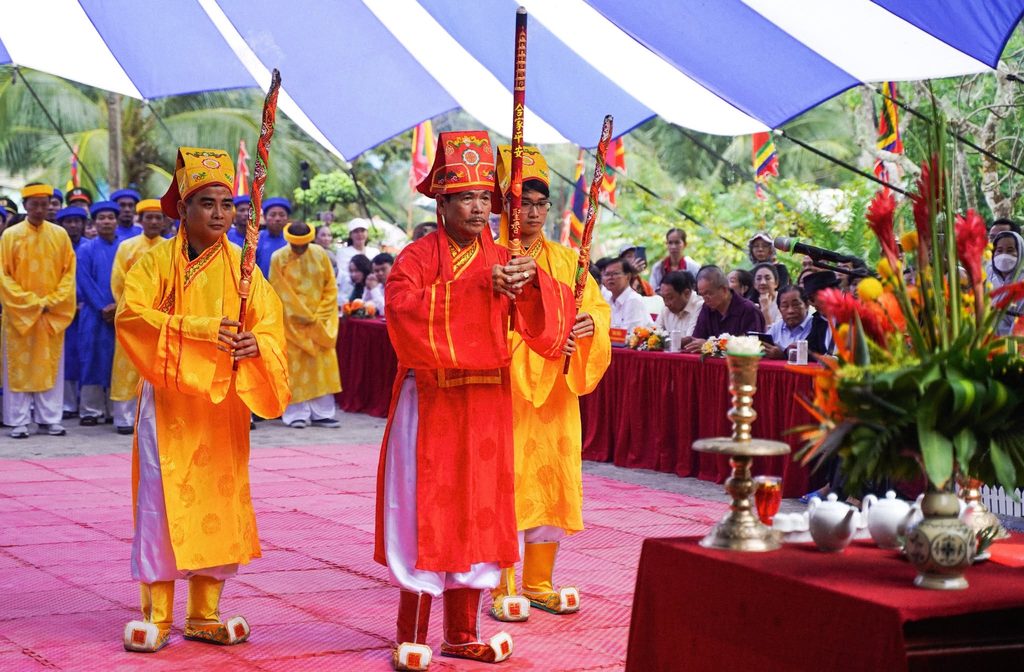
The community celebrations may include cultural programs, community activities and exchanges that introduce and preserve Côn Đảo’s traditions.
The scale and program may vary from year to year.
Lady Phi Yến’s festival is national intangible cultural heritage
On October 28, 2022, the Ministry of Culture, Sports and Tourism issued Decision No. 2705/QĐ-BVHTTDL, adding the traditional Lady Phi Yến death-anniversary festival to the National List of Intangible Cultural Heritage.
This was an important milestone in conserving and promoting traditional cultural practices on Côn Đảo.
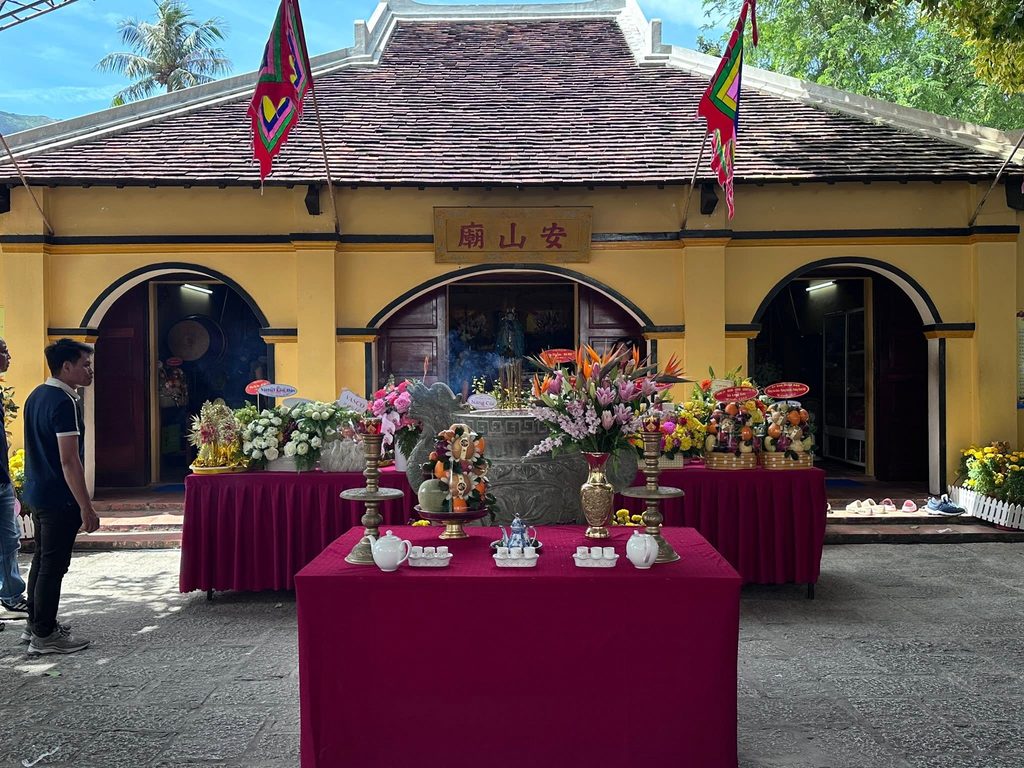
The two designations should be distinguished: An Sơn Miếu was classified as a provincial historical and cultural heritage site in 2007, while Lady Phi Yến’s death-anniversary festival was inscribed as national intangible cultural heritage in 2022.
The festival’s inscription recognizes a community cultural practice. It does not confirm that every detail of the folk legend is historical fact.
The cultural and spiritual significance of An Sơn Miếu
For Côn Đảo residents, An Sơn Miếu is a place of worship with an important role in spiritual life.
Generations of residents have come here to offer incense, attend the annual commemoration and maintain customs passed down by their predecessors.
The worship of Lady Phi Yến also reflects values held in esteem by the community, including fidelity, affection, self-sacrifice and the bond between people and their homeland.
The shrine also illustrates the richness of Côn Đảo’s cultural life. Alongside prison history, traces of revolutionary struggles and natural scenery, the islands have religious traditions associated with settlement, development and everyday life.
Preserving An Sơn Miếu therefore means safeguarding not only an architectural structure, but also the stories, customs and collective memories passed down through generations.
Tips for visiting Lady Phi Yến Shrine
When should you visit An Sơn Miếu?
Visitors can explore An Sơn Miếu throughout the year.
Mornings or late afternoons are often suitable for walking around the grounds, appreciating the architecture and offering incense in relatively peaceful surroundings.
To learn more about Côn Đảo’s traditional festivities, visitors can plan their trip around Lady Phi Yến’s death-anniversary festival in the 10th lunar month.
However, this is also a busy occasion, so arrange transport and visiting times in advance.
How should you prepare for a visit to Lady Phi Yến Shrine?
An Sơn Miếu is a place of worship, so visitors should observe a few guidelines:
- Clothing: Wear respectful, modest clothing appropriate for a religious site.
- Quiet: Avoid speaking loudly, making noise or disturbing people taking part in rituals.
- Incense offerings: Follow the site managers’ guidance and use only the designated places for incense and offerings.
- Photography: Check posted guidance and ask permission before taking photographs in worship areas.
- Protecting the site: Do not touch, move or otherwise interfere with artifacts or ritual objects.
- Cleanliness: Do not litter, and limit single-use plastics within the shrine grounds.
Côn Đảo is encouraging the use of environmentally friendly offering baskets and the practice of not offering or burning votive paper at heritage sites.
Choose simple offerings that comply with the rules of the place of worship. The value of offering incense lies in sincerity and respect for local culture, rather than the quantity or cost of the items presented.
Is An Sơn Miếu worth visiting on a trip to Côn Đảo?
If you are interested in local history, folklore or the beliefs of coastal communities, An Sơn Miếu is a worthwhile place to explore.
The shrine offers a different experience from natural attractions or sites within the Côn Đảo Prison complex.
Here, visitors can take time to observe traditional architecture, learn about forms of worship and listen to the story of Lady Phi Yến as it has been passed down in the community.
A visit also helps reveal how Côn Đảo has been shaped not only by well-known historical events, but also by the everyday lives, customs and beliefs of generations of island residents.
Frequently asked questions about An Sơn Miếu
Are An Sơn Miếu and Miếu Bà Phi Yến the same place?
Yes. An Sơn Miếu is the site’s name, while Miếu Bà Phi Yến is the familiar name used by residents and visitors. Both refer to the shrine on Hoàng Phi Yến Street, Côn Đảo.
Who is worshipped at Lady Phi Yến Shrine?
The shrine is primarily devoted to Lady Phi Yến, a figure revered by Côn Đảo residents within local legends and religious traditions. There are also altars associated with other figures in the folk story.
Was Lady Phi Yến a historical person?
Researchers hold differing views about Lady Phi Yến’s identity and background and her connection with Nguyễn Ánh. The stories told on Côn Đảo should be understood as folk legends, rather than assumed to be fully verified historical events.
When is Lady Phi Yến’s death-anniversary festival?
The main commemoration is on the 18th day of the 10th lunar month each year. Festival activities usually extend over several days around this date.
Is An Sơn Miếu a national heritage site?
An Sơn Miếu was classified as a provincial historical and cultural heritage site under a 2007 decision. Separately, the traditional Lady Phi Yến death-anniversary festival was added to the National List of Intangible Cultural Heritage in 2022.
Do you need to prepare a large tray of offerings for Lady Phi Yến Shrine?
No. Visitors can explore the site, learn about its culture and offer incense with simple offerings that meet the site’s rules. Reduce waste, do not burn votive paper and follow the guidance given on site.
Discovering Côn Đảo’s cultural values across generations
An Sơn Miếu is part of Côn Đảo’s diverse cultural landscape. The stories of Lady Phi Yến, worship traditions and annual commemoration have spiritual meaning and also reflect how local people preserve their community’s memories, traditions and values.
For visitors, a trip to An Sơn Miếu offers another perspective on Côn Đảo: a place where folk stories are passed down, customs are still practiced and cultural spaces remain part of life today.
If you are planning to travel to Côn Đảo by sea, you can find high-speed ferry schedules, route information and booking guidance on ConDaoExpress.com, and set aside time to visit An Sơn Miếu during your island itinerary.
Which other places can you visit on the same trip?
Depending on your itinerary, you can combine An Sơn Miếu with Núi Một Pagoda (Vân Sơn Tự) or cultural sites near the residential areas. If traveling with older people, allow time for rest and avoid visiting too many places in one morning or afternoon.
When preparing your trip, you can browse Côn Đảo’s attractions and ferry schedules to Côn Đảo. Recheck the opening schedules of attractions before your visit.
Google Maps: An Sơn Miếu – Miếu Bà Phi Yến
The map shows the site’s location. Confirm the entrance and visiting hours with the site management before you go.