
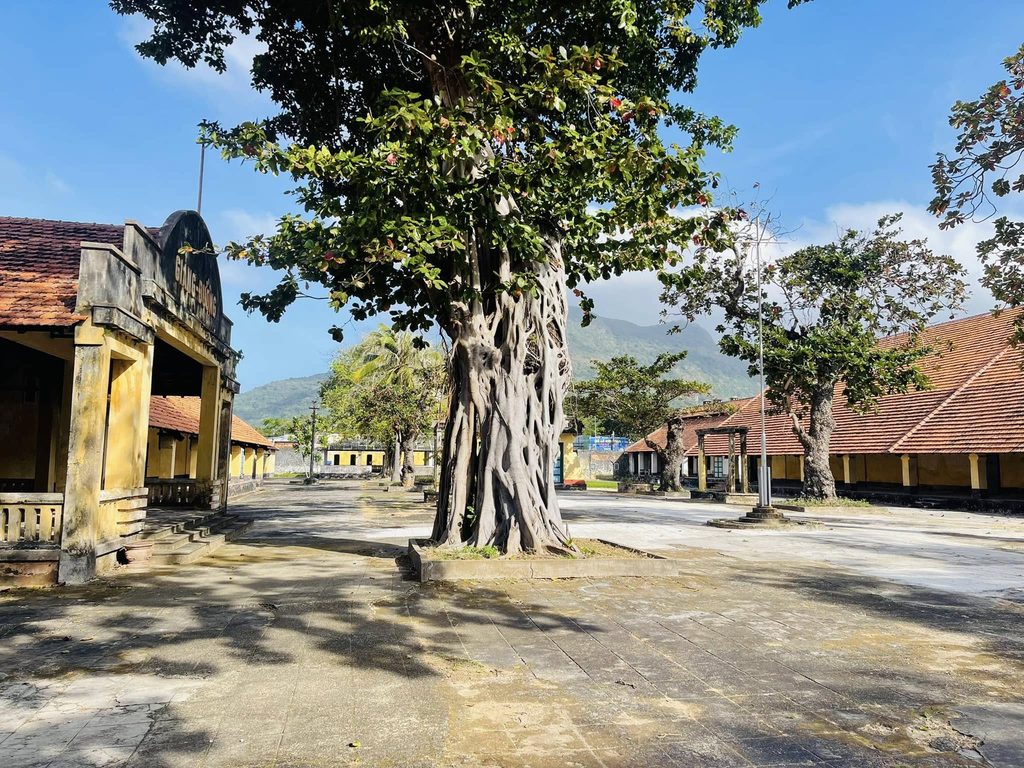
In the heart of Côn Đảo, Phú Hải Prison is one of the oldest and most important buildings in the Côn Đảo Prison system. Rows of red-tiled roofs, weathered yellow walls and large tropical almond trees create a rather peaceful setting. Behind the cell doors, however, lie traces of more than a century of imprisonment, forced labour and resistance by generations of Vietnamese people.
Phú Hải Prison, also known as Banh I (Bagne I), originated in 1862 and was rebuilt in permanent masonry in the late nineteenth century. The complex includes 10 communal cells, 20 solitary-confinement cells, one special cell, a rice-milling chamber and a stone-breaking labour area. Many patriots and revolutionaries were imprisoned here, including Phan Châu Trinh, Tôn Đức Thắng, Phạm Văn Đồng, Phạm Hùng and Lê Duẩn.
As well as recording prisoners’ harsh living conditions, Phú Hải is associated with the establishment of the first communist cell in Côn Đảo Prison in late 1932. The educational, organisational and resistance activities here became an important part of the island’s revolutionary history.
Today, Phú Hải is preserved within the Côn Đảo Prison Special National Heritage Site. A visit offers insight into the organisation of a colonial prison, the lives of those held there and the historical events that took place on Côn Đảo between 1862 and 1975.
Where is Phú Hải Prison on Côn Đảo?
Phú Hải Prison is on Lê Văn Việt Street, in the centre of Côn Sơn Island, Côn Đảo Special Administrative Zone, Ho Chi Minh City.
The site is near Phú Sơn Prison, another long-established prison in the Côn Đảo system.
From hotels and guesthouses in central Côn Sơn, visitors can reach Phú Hải by taxi, motorbike or other suitable transport.
From the outside, the prison is enclosed by masonry walls. Inside are facing rows of cells, a spacious courtyard and several ancillary buildings.
Mature tropical almond trees shade the grounds, giving the site its distinctive appearance. Its open, airy atmosphere today is very different from prisoners’ living conditions when the prison was in operation.
Phú Hải Prison at a glance
| Item | Information |
|---|---|
| Site name | Phú Hải Prison |
| Other names | Banh I, Bagne I, Lao I, Cộng Hòa Prison, Prison No. 2 |
| Address | Lê Văn Việt Street, Côn Đảo |
| Origins | 1862 |
| Permanent masonry construction | 1889–1896 |
| Area | Approximately 1.2–1.3 hectares |
| Communal cells | 10 cells |
| Special cell | 1 cell |
| Solitary-confinement cells | 20 cells |
| Notable features | Rice-milling chamber, stone-breaking area, chapel and courtyard |
| Key historical event | Establishment of the prison’s first communist cell in 1932 |
| Heritage status | A component of the Côn Đảo Prison Special National Heritage Site |
The history of Phú Hải Prison, 1862–1975
1862: The first detention facilities on Côn Đảo
On 1 February 1862, the French colonial authorities issued a decision establishing a prison on Côn Đảo.
Its isolated offshore location, distance from the mainland and mountainous, forested terrain led the colonial authorities to choose Côn Đảo as a place of imprisonment and exile for convicted people.
The earliest facilities were rudimentary. Detention areas were built from available materials before gradually being replaced with more permanent structures.
Banh I emerged in this context and is regarded as the oldest prison in the Côn Đảo Prison system.
Initially, the compound received and held prisoners brought from the mainland. As the number of exiles increased, its cells and supporting facilities were repeatedly expanded.
People sent to Côn Đảo during this period came from various backgrounds, including participants in anti-colonial movements and people convicted under the colonial legal system.
The late nineteenth century: Permanent construction at Banh I
From its early facilities, the colonial authorities gradually developed Banh I into a large detention complex.
According to the Vietnam National Museum of History, the prison’s rebuilding in permanent materials was completed in 1896.
The Côn Đảo tourism portal dates the construction and completion of the complex to 1889–1896.
Banh I then had a relatively complete layout of communal cells, solitary cells, a courtyard and ancillary buildings.
The prison’s architecture was designed to control large numbers of prisoners while allowing them to be classified and subjected to different detention regimes.
The communal cell blocks faced one another, with isolation areas and administrative facilities behind them.
These two milestones should therefore be distinguished: 1862 marks the establishment of the first detention compound, whereas most permanent buildings were constructed and altered in later periods.
Banh I and the patriotic movement of the early twentieth century
In the early twentieth century, as movements against French colonial rule developed in Vietnam, many patriots were arrested and exiled to Côn Đảo.
Those who spent years imprisoned at Banh I included Phan Châu Trinh, Ngô Đức Kế, Đặng Nguyên Cẩn and Lã Xuân Oai.
They belonged to a generation of patriotic intellectuals and scholars engaged in political and social struggles before Vietnam’s revolutionary movement entered new phases.
Their presence links Phú Hải Prison to the history of the early twentieth-century patriotic movement.
Their imprisonment illustrates both the colonial authorities’ repressive policies and the ways contemporary activists shared views, knowledge and experience while incarcerated.
1930–1945: Political prisoners’ activities and the establishment of a communist cell
From the late 1920s and early 1930s, many participants in the revolutionary movement were arrested by the colonial authorities and sent to Côn Đảo.
Among them were people experienced in organisation, political activity and mass mobilisation.
Despite strict surveillance, political prisoners found ways to stay in contact, exchange information, organise study and support one another.
In late 1932, the first communist cell in Côn Đảo Prison was established at Banh I.
This important milestone laid the foundations for further organisation among political prisoners and subsequent resistance within the prison.
Banh I also became a place for general education, political and theoretical classes, and exchanges of knowledge.
These activities took place amid shortages, without normal learning facilities and under the constant threat of discovery and punishment.
1954–1975: The prison remains in use
After French colonial rule, Banh I continued to operate under the Republic of Vietnam authorities.
During this period, the prison’s name changed several times, as did the functions of some of its facilities.
Those detained included various groups of prisoners, among them political prisoners and participants in urban protest movements.
In 1957, Banh I became one of the starting points of political prisoners’ resistance to forced renunciation of their political affiliations.
According to the Côn Đảo National Heritage Conservation Centre, 41 female political prisoners were also transferred from mainland prisons to Côn Đảo that year.
Resistance within the prison took various forms, opposing detention conditions and coercive measures imposed on prisoners.
In November 1974, the prison officially took the name Phú Hải.
Côn Đảo was liberated on 1 May 1975, bringing the prison system’s 113-year history to an end. Phú Hải ceased to function as a detention facility.
Phú Hải’s architecture: What remains
A notable aspect of Phú Hải is the combination of detention spaces, labour areas and buildings serving the prison administration.
The Côn Đảo National Heritage Conservation Centre gives the prison’s area as 12,863 m². The Vietnam National Museum of History uses a figure of 12,015 m².
Although the documents differ on area, they agree on the principal architectural components: 10 communal cells, one special cell, 20 solitary cells, a rice-milling chamber and a stone-breaking area.
Ten communal cells
The main detention area consists of two facing blocks, each containing five cells.
The cells have substantial brick walls, tiled roofs and doors designed to control entry and exit.
Inside are sleeping platforms, shackles and other traces of communal confinement.
When prisoner numbers were high, many people shared a single cell, leaving very little space for each person.
Prisoners could not move freely or decide their own living conditions.
Eating, resting, sanitation and other activities were all controlled by the prison administration.
Today, some cells display artefacts and reconstructions illustrating detention conditions.
During a visit, distinguish reconstructed displays from architectural elements or artefacts surviving from the prison’s operational years.
Sleeping platforms and leg irons
The sleeping platforms and leg irons inside the cells help visitors understand how prisoners were controlled in earlier periods.
Leg irons restricted movement, preventing prisoners from standing up or changing position freely.
Prolonged shackling could cause pain, exhaustion and numerous health problems.
This is one of the forms of confinement documented in Côn Đảo Prison’s history.
The shackles and arrangement of sleeping platforms are therefore important evidence for studying the prison regime, rather than merely display objects.
Twenty solitary cells, also known as stone dungeons
Behind the communal cell blocks are 20 solitary-confinement cells.
They were used to hold prisoners separately and in isolation.
Unlike the communal cells, these smaller spaces had limited light and ventilation.
Solitary confinement made contact with other prisoners difficult and could have serious physical and psychological effects.
During various periods, these cells were used as a disciplinary measure against people considered defiant or in breach of prison rules.
When visiting this area, look at the cells’ dimensions, the positions of their doors and their partition walls.
These architectural details make the distinction between communal and solitary confinement clearer.
The special cell
In addition to communal and solitary cells, Phú Hải has one special cell.
This facility was used for particular cases requiring separate supervision or detention under prison regulations.
The precise functions of rooms could change over time, so identification should follow the site’s information panels and guided explanations.
The special cell should not be confused with the full group of 20 solitary cells.
The courtyard and old tropical almond trees
The courtyard between the cell blocks is one of Phú Hải’s familiar views.
Today, the grounds contain many trees, including large tropical almond trees shading the stone paving and surrounding buildings.
In the past, however, the courtyard formed part of the prison’s system of control, assembly and regulated daily life.
Tropical almond trees also feature in many accounts of prisoners’ lives on Côn Đảo.
Their leaves, fruit and kernels were used in times of deprivation. The trees later became part of the collective memory of prison life on the island.
The rice-milling chamber: Evidence of forced labour at Phú Hải
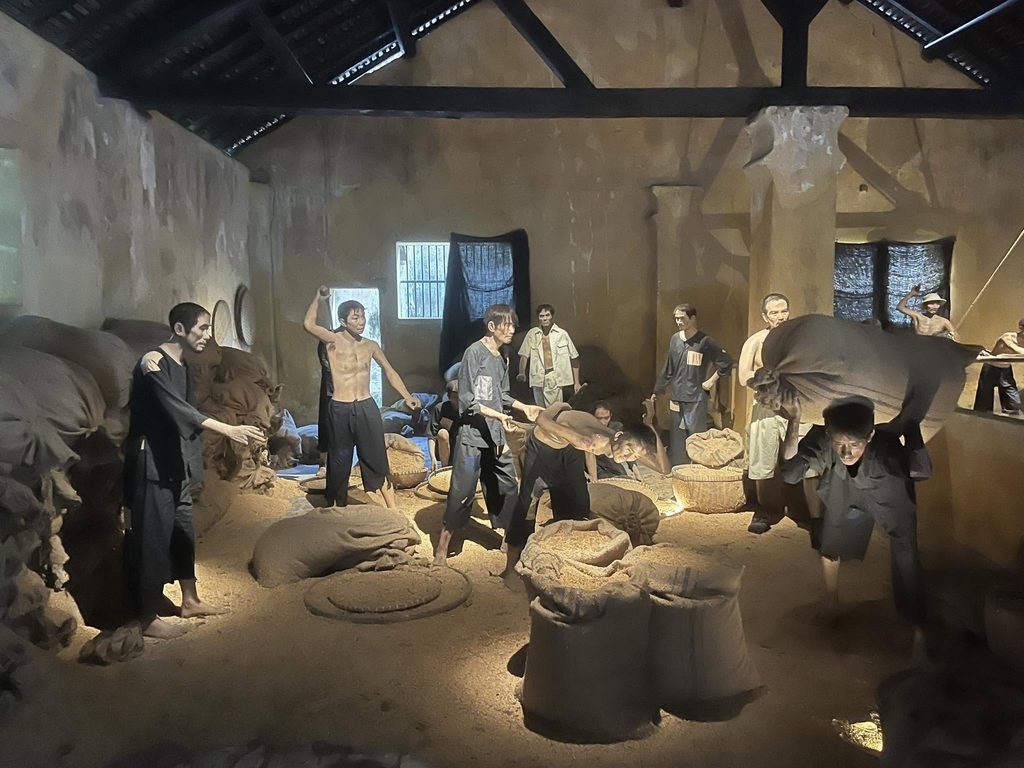
The rice-milling chamber is one of Phú Hải’s most important features.
Prisoners in the system were not only confined but also compelled to perform many kinds of forced labour.
Rice milling was one of the tasks organised at Banh I to process food supplies.
It was carried out under a hard-labour regime in extremely difficult working conditions.
Rice milling in the prison
Prisoners had to use their physical strength to operate milling equipment as required by the prison authorities.
Repetitive work over long periods could leave them exhausted, particularly when food and rest were inadequate.
Rice-husk dust, bran and poor ventilation made conditions still harsher.
Many historical accounts describe the rice-milling chamber as a place of hard labour and punishment.
Why is the rice-milling chamber particularly significant?
The chamber shows visitors that the prison regime extended beyond cells and shackles.
Prisoners’ labour was also used to support daily operations and keep the prison administration functioning.
Milling rice is ordinarily a productive task, but under coercion, malnutrition and surveillance it became a harsh form of labour.
This gives the rice-milling chamber at Banh I its particular historical significance.
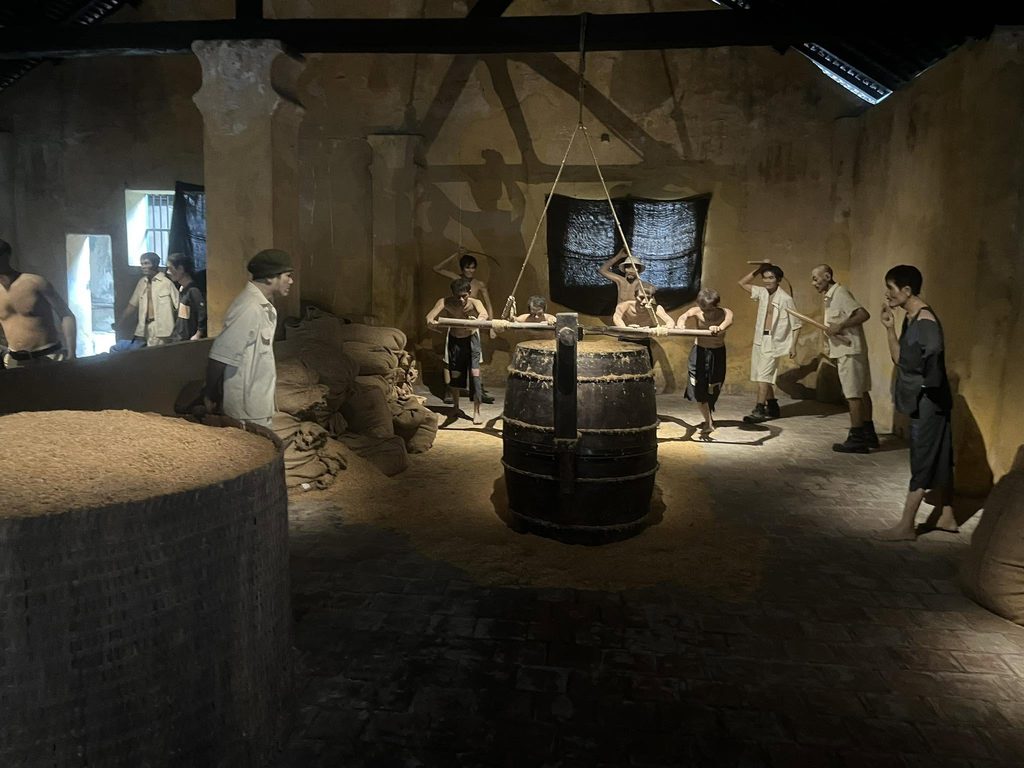
Conversion of the rice-milling chamber into an infirmary
During the Republic of Vietnam’s administration of Côn Đảo, the rice-milling chamber was converted into an infirmary.
This change of function reflects adaptations to facilities within the prison system.
When exploring the site today, distinguish its original use for forced labour from its later role as an infirmary.
The stone-breaking area and Phan Châu Trinh’s story
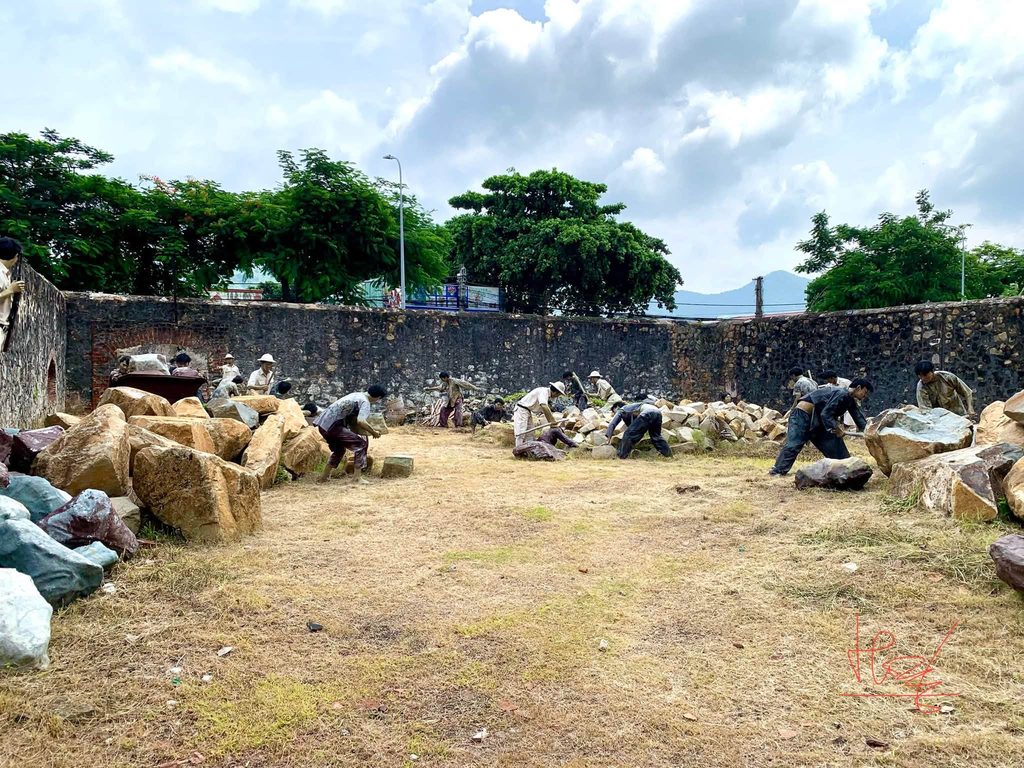
Alongside the rice-milling chamber, the stone-breaking area is another important location in Phú Hải’s history.
It is associated with the strenuous labour prisoners had to perform under the guards’ supervision.
In particular, the stone-breaking area is linked to the patriot Phan Châu Trinh and his well-known literary work Đập đá ở Côn Lôn (Breaking Stones on Côn Lôn).
Phan Châu Trinh’s exile on Côn Đảo
Phan Châu Trinh was a leading patriot of the early twentieth century who made important contributions to the Duy Tân reform movement and ideas for social reform in Vietnam.
In 1908, following events connected with the anti-tax movement in central Vietnam, the French colonial authorities arrested him and sent him into exile on Côn Đảo.
During his imprisonment, he endured prison conditions and forced labour.
According to the Côn Đảo National Heritage Conservation Centre, he was made to break stones at Banh I.
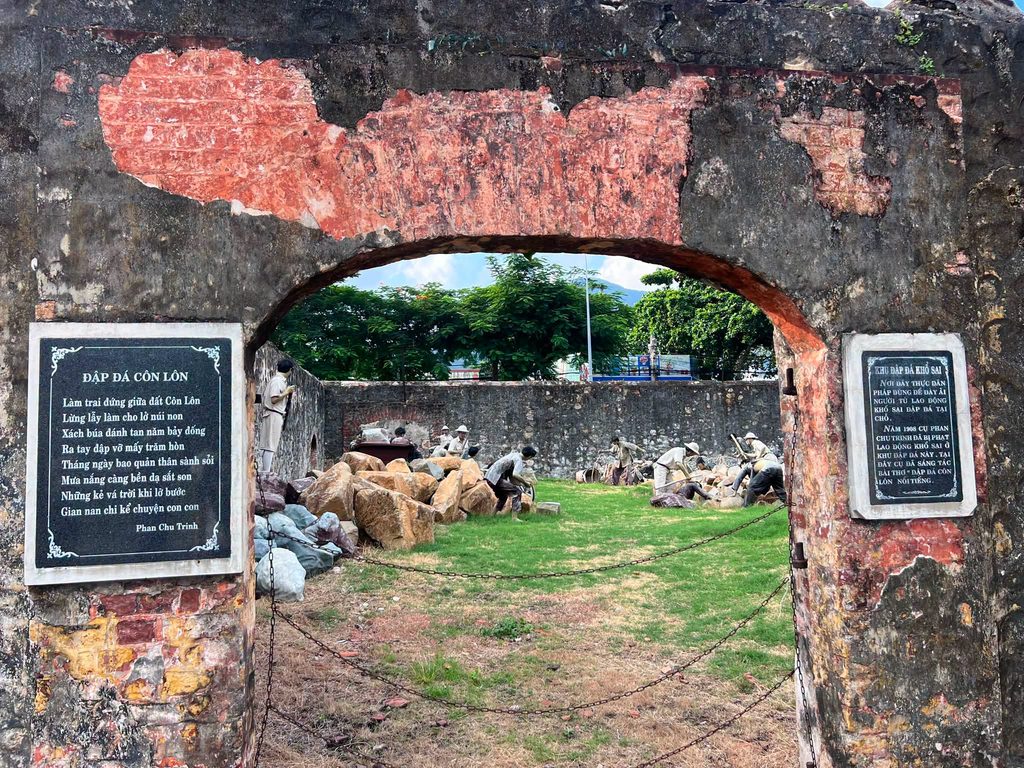
The poem Đập đá ở Côn Lôn
The circumstances of labour on Côn Đảo are associated with the creation of the poem Đập đá ở Côn Lôn (Breaking Stones on Côn Lôn).
The poem uses the image of a prisoner breaking stones to express a patriot’s dignity, determination and resilience in confinement.
Beyond describing the difficulty of the work, the poem carries a symbolic message about overcoming adversity.
Visitors to the stone-breaking area can explore the connection between a real form of forced labour and a literary work familiar to generations of Vietnamese schoolchildren.
This also illustrates Phú Hải’s value for literature and education as well as historical research.
Historical figures imprisoned at Phú Hải
Across successive periods, Phú Hải held generations of Vietnamese people involved in patriotic and revolutionary movements.
Phan Châu Trinh, Ngô Đức Kế and a generation of patriotic scholars
In the early twentieth century, many patriotic Confucian scholars and intellectuals involved in movements against French colonial rule were sent to Côn Đảo.
They included Phan Châu Trinh, Ngô Đức Kế, Đặng Nguyên Cẩn and Lã Xuân Oai.
Their circumstances and political approaches differed, but all experienced imprisonment within the colonial prison system.
Their presence links Banh I to the history of patriotic movements before modern revolutionary organisations developed more widely.
Tôn Đức Thắng
President Tôn Đức Thắng was among the historical figures imprisoned on Côn Đảo for many years.
He was arrested in 1929 and freed after the August Revolution of 1945.
While on the island, he took part in solidarity activities, support for fellow prisoners and resistance within the prison.
Tôn Đức Thắng’s name is associated with many accounts of political prisoners’ lives and organisational spirit on Côn Đảo.
Phạm Văn Đồng and Phạm Hùng
Phạm Văn Đồng and Phạm Hùng were two revolutionaries who spent years imprisoned on Côn Đảo.
Both later held major responsibilities in Vietnam’s state leadership.
Documents introducing Phú Hải include them among the historical figures held here.
Lê Duẩn and other revolutionaries
Lê Duẩn is another figure recorded in Phú Hải’s history.
During their imprisonment on Côn Đảo, many revolutionaries had opportunities to meet, exchange knowledge and maintain organisational activities.
The history of the prison, however, is not only the history of famous people.
Many other prisoners’ lives, names or circumstances of detention have yet to be fully documented.
Preserving Phú Hải helps retain the memory both of well-known individuals and of people rarely mentioned in widely available accounts.
Banh I: Birthplace of Côn Đảo Prison’s first communist cell
Late 1932 marks an important milestone in Phú Hải’s history.
According to the Côn Đảo National Heritage Conservation Centre, the first communist cell in Côn Đảo Prison was established at Banh I.
This event was significant for the organisation and development of political prisoners’ resistance on the island.
Why was establishing the cell important?
Prisoners’ communication was restricted and they were constantly monitored.
Building an organisation under these conditions was therefore extremely difficult.
Nevertheless, experienced revolutionaries found ways to establish links, exchange information and help one another.
The formation of the cell gave political prisoners’ activities a more organised structure.
Study, exchanges and resistance were subsequently sustained through various periods.
According to historical accounts, this organisation later developed into the Côn Đảo Island Party Committee.
Classes organised inside the prison
Banh I is also recorded as a place where communists organised classes in general education, political theory and politics.
One notable activity was a series of Marxism–Leninism classes following the curriculum of the Communist University of the Toilers of the East, led by Trần Văn Giàu.
With few books, little paper or writing equipment and constant surveillance, organising classes demanded persistence and cooperation.
The classes allowed prisoners to continue learning while sustaining their intellectual and emotional lives in confinement.
Prison newspapers and information exchange
According to the Côn Đảo National Heritage Conservation Centre, in 1935 the newspapers Tiến lên (Forward) and Ý kiến chung (Common Opinion) were transferred from Banh II to Banh I.
Prison journalism provided a way to exchange information, pass on knowledge and connect participants in the revolutionary movement.
Maintaining such publications amid shortages is a notable part of Banh I’s history.
Educational, journalistic and organisational activities contribute to Phú Hải’s distinctive significance alongside its surviving prison architecture.
Ancillary buildings within Phú Hải Prison
Beyond the cells and labour areas, Phú Hải once contained many buildings supporting the prison system’s operations.
Official accounts list a kitchen, dining hall, lecture hall, chapel, barber’s room, storehouse, club, orderlies’ room and prison superintendent’s office.
The chapel
The chapel is one of Phú Hải’s most readily recognisable buildings.
Its tiled roof, façade and Western religious architectural details distinguish it from the cell blocks.
It formed part of the prison’s layout during particular historical periods.
The presence of a chapel does not mean that all prisoners were free to practise their religion. Access and the building’s actual function depended on the management regime of each period.
The kitchen and dining hall
The kitchen and dining hall served the compound’s everyday needs.
Prisoners nevertheless faced severe food shortages in many periods.
These facilities should be understood in the context of food provision, ration distribution and prisoners’ health.
The lecture hall and communal rooms
Lecture halls, club facilities and communal spaces were added or used for different purposes during the prison’s operation.
Activities organised by the prison administration should be distinguished from the clandestine classes maintained by political prisoners themselves.
These were different in purpose and organisation, even when they took place within the same compound.
Phú Hải after 1975 and its conservation
On 1 May 1975, the Côn Đảo Prison system ceased holding prisoners.
Phú Hải was transformed from a detention facility into a place for research, conservation and historical interpretation.
Its cells, solitary-confinement areas, labour spaces and ancillary buildings are considered important physical evidence of prison regimes across successive periods.
On 29 April 1979, the Ministry of Culture and Information issued Decision No. 54-VHTT.QĐ designating the Côn Đảo historical site.
On 10 May 2012, the Prime Minister issued Decision No. 548/QĐ-TTg, designating the Côn Đảo Prison Historical Site as a Special National Heritage Site.
Phú Hải is one of the component sites within the designated complex.
Conserving the prison helps preserve part of Côn Đảo’s architecture and historical memory for research and heritage education.
The 2024 restoration of Phú Hải
On 1 March 2024, Phú Hải temporarily stopped receiving visitors for a conservation and restoration project.
The announcement at the time anticipated approximately 10 months of work.
The restoration aimed to protect architectural features, limit deterioration and ensure visitor safety.
By late 2025, the Côn Đảo tourism portal continued to present Phú Hải among the island’s historical attractions.
However, access to individual cells, solitary cells or areas undergoing conservation may change.
Visitors should confirm the actual visiting schedule with the managing organisation before travelling.
A guide to visiting Phú Hải Prison, Côn Đảo
For a worthwhile visit, take time to understand the structure and function of each area.
Rather than simply walking through the cells, look at details such as doors, sleeping platforms, shackles and the arrangement of light.
These features help reveal how a prison compound was organised and operated.
Where should you begin?
Start at the gate to learn about Banh I’s historical names and construction phases.
Then enter the courtyard between the two communal cell blocks to understand the overall layout.
Continue to the solitary cells, rice-milling chamber and stone-breaking area along the permitted route.
Finally, allow time for the chapel and surviving ancillary buildings.
This sequence helps visitors distinguish the compound’s different spaces, from communal and solitary cells to labour areas and administrative facilities.
Is a guided visit worthwhile?
If this is your first visit to Côn Đảo, consider a programme with a guide.
Many cells look similar but served different functions.
A guide can explain construction dates, names used in different periods, individual stories and the meaning of artefacts.
For school groups, students or historical research groups, an on-site explanation also helps connect written accounts with the physical setting.
How much time should you allow?
Allow approximately 45–60 minutes to explore the main features.
A guided visit or careful reading of the historical panels may take longer.
This is a suggested duration for planning, not a fixed time set by the managing organisation.
Phú Hải visiting hours
According to the visit-registration schedule published by the Côn Đảo National Heritage Conservation Centre, tours of the heritage system are organised in two time periods:
| Session | Time |
|---|---|
| Morning | 07:30–11:30 |
| Afternoon | 14:00–17:00 |
Programme start times may be scheduled at 07:30, 08:00, 08:30, 09:00 and 14:00, 14:30, 15:00.
This is the Centre’s programme schedule; it does not mean that every cell at Phú Hải is freely accessible throughout these hours.
As the site has undergone restoration, check current visitor access before arriving.
Contact information:
Côn Đảo National Heritage Conservation Centre
Telephone: 0254 3830 517
Website: https://trungtambaotonditichquocgiacondao.vn/
Phú Hải admission fees in 2026
Under Resolution No. 29/2026/NQ-HĐND of the Ho Chi Minh City People’s Council, effective from 1 October 2026, admission to the Côn Đảo Prison Special National Historical Site, including Côn Đảo Museum, costs VND 60,000 per person per visit for visitors required to pay the fee.
This fee applies to the heritage complex, rather than to Phú Hải alone.
Visitors eligible for free admission
Under the resolution, groups exempt from admission fees include children, school pupils, students, people with exceptionally severe disabilities, and members of poor or near-poor households.
Eligible visitors should bring appropriate documentation for guidance during admission procedures.
Visitors eligible for a 50% reduction
Certain eligible groups receive a 50% reduction, including older people, people with severe disabilities, people recognised for services to the revolution, and those covered by preferential cultural policies under the regulations.
With a standard fee of VND 60,000, the fee after a 50% reduction is VND 30,000 per person per visit.
When buying tickets, check what they cover, the session schedule and which sites are currently open to visitors.
Advice for visiting Phú Hải
Appropriate clothing
Wear respectful, neat clothing that is comfortable for walking.
Shoes or sandals with good grip are preferable on old tiled floors, potentially damp paths and outdoor courtyards.
Protecting artefacts and architecture
Do not touch conserved artefacts or sit on sleeping platforms, iron shackles or historic structural elements.
Do not enter rooms marked as restricted or undergoing maintenance without permission.
Avoid any contact or activity that could damage old walls, doors and structures.
Photography at the site
Follow the photography rules in each area.
Do not use lighting equipment or arrange photographic scenes in ways that interfere with other visitors.
When photographing reconstructions of prison life, choose an approach appropriate to the historical nature of the site.
Visiting with children
Phú Hải contains many displays concerning detention conditions and punishment.
Parents visiting with children can explain the prison’s history beforehand to help them engage with the material in an age-appropriate way.
Focus on people’s stories, solidarity and the value of freedom rather than concentrating only on methods of torture.
Distinguishing Phú Hải from Phú Sơn
Phú Hải and Phú Sơn both belong to Côn Đảo’s historic prison system, but they are separate complexes.
Phú Hải is Banh I, established from 1862 and rebuilt in permanent masonry in the late nineteenth century.
Phú Sơn is Banh II, built later and completed in 1916.
| Feature | Phú Hải Prison | Phú Sơn Prison |
|---|---|---|
| Former name | Banh I | Banh II |
| Establishment | From 1862 | Completed in 1916 |
| Communal cells | 10 | 13 |
| Solitary cells | 20 | 14 |
| Notable features | Rice-milling chamber and stone-breaking area | Isolation area and dark cells |
| Historical significance | An early prison; the first communist cell was established here in 1932 | Numerous events involving the detention and resistance of political prisoners |
The two prisons are close to one another and may be explored on the same programme if the visiting schedule permits.
When writing captions or introducing the sites, do not confuse Banh I’s cells or historical stories with those of Banh II.
Frequently asked questions about Phú Hải
When was Phú Hải Prison built?
Banh I originated in 1862. The prison was rebuilt in permanent masonry in the late nineteenth century and was largely complete by 1896.
What other names has Phú Hải had?
Its names include Bagne I, Banh I, Lao I, Cộng Hòa Prison and Prison No. 2. The name Phú Hải has been used since November 1974.
How many cells does Phú Hải have?
It has 10 communal cells, one special cell and 20 solitary cells, in addition to the rice-milling chamber and stone-breaking area.
How large is Phú Hải?
Official documents give different areas, approximately 12,015 m² and 12,863 m². The site can be described as covering around 1.2–1.3 hectares.
Where is Phú Hải?
The site is on Lê Văn Việt Street in central Côn Sơn Island, Côn Đảo Special Administrative Zone, Ho Chi Minh City.
What was the rice-milling chamber used for?
Prisoners were forced to perform hard labour milling rice here. The area was later converted into an infirmary.
Was Phan Châu Trinh imprisoned at Phú Hải?
Yes. He was exiled to Côn Đảo in 1908 and was made to work in the stone-breaking area. These circumstances are linked to the poem Đập đá ở Côn Lôn (Breaking Stones on Côn Lôn).
Where was Côn Đảo Prison’s first communist cell established?
According to the Côn Đảo National Heritage Conservation Centre, the first communist cell was established at Banh I in late 1932.
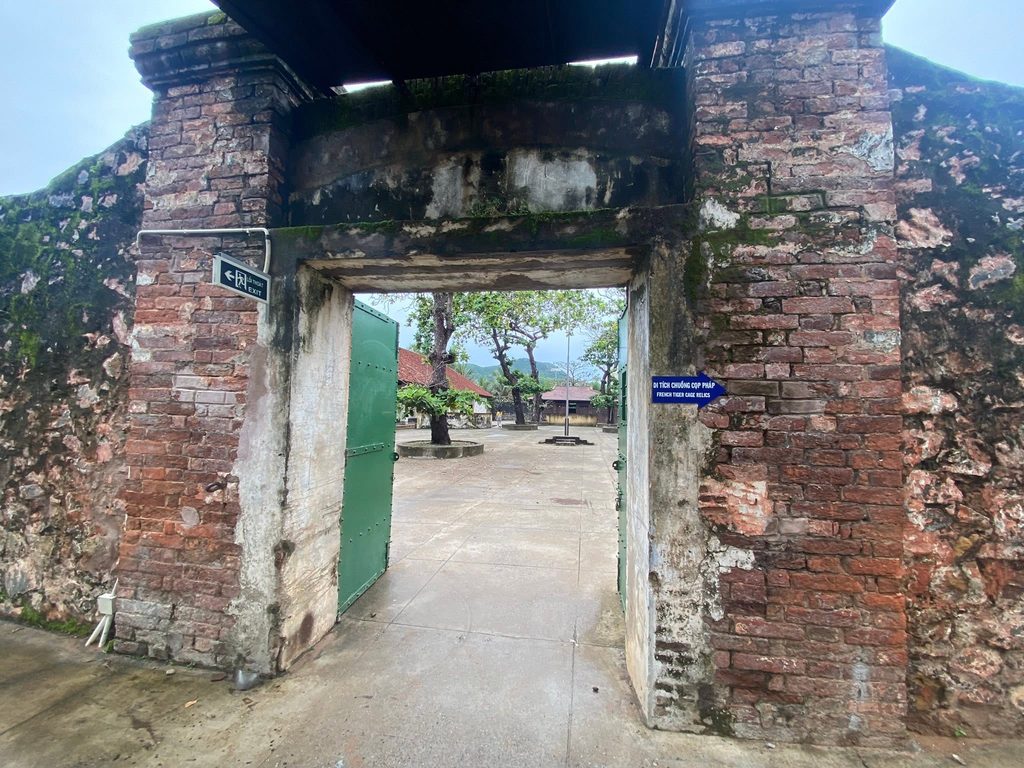
Is Phú Hải the same as the French Tiger Cages?
No. Phú Hải is Banh I, whereas the French Tiger Cages are an isolation complex built in 1940 and associated with the Phú Tường Prison heritage cluster.
How much does a visit to Phú Hải cost?
From 1 October 2026, admission to the Côn Đảo Prison Special National Historical Site is VND 60,000 per person per visit for visitors required to pay the fee.
Is Phú Hải open to visitors?
Phú Hải is included in the visiting programme published by the Côn Đảo National Heritage Conservation Centre. However, because the site has undergone restoration, visitors should check directly which areas are open before arriving.
How long should you spend at Phú Hải?
Allow approximately 45–60 minutes for the main features. Set aside more time for a guided visit or a closer study of the site.
Phú Hải: Preserving the traces of history
More than a century has passed since Banh I’s permanent cell blocks were built. Phú Hải is no longer a detention facility, but its surviving structures continue to help visitors understand Côn Đảo’s history.
From communal and solitary cells to the rice-milling chamber and stone-breaking area, each feature reflects part of prisoners’ lives in different periods.
Alongside the harsh conditions are the stories of patriots and revolutionaries who sustained education, organisation and solidarity while imprisoned.
The establishment of the first communist cell in late 1932 is one of the milestones contributing to Phú Hải’s distinctive historical significance.
For visitors to Côn Đảo, a visit involves more than exploring an old building. It offers an opportunity to encounter human stories, the country’s changing fortunes and the values preserved after the prison system ceased operating.
Phú Hải is an important stop on a journey through Côn Đảo’s history, where surviving architecture continues to tell stories spanning more than a century.
Planning a journey through Côn Đảo’s heritage
Combine Phú Hải with Côn Đảo Museum and Phú Sơn Prison for a clearer understanding of the prison system’s history.
If travelling to Côn Đảo by high-speed ferry, check outbound and return schedules, departure and arrival ports, and weather conditions before booking accommodation.
Con Dao Express provides information on high-speed ferry routes to Côn Đảo, schedules, indicative fares and heritage sites, helping visitors plan their exploration of the island.
See the Côn Đảo Express ferry schedule for details.
Reference sources
- Côn Đảo National Heritage Conservation Centre: Phú Hải Prison Heritage Site (Prison No. 2).
- Vietnam National Museum of History: An Overview of the Côn Đảo Prison System.
- Côn Đảo Tourism Portal: Phú Hải Prison Heritage Site.
- Côn Đảo National Heritage Conservation Centre: Visit Registration.
- Resolution No. 29/2026/NQ-HĐND of the Ho Chi Minh City People’s Council, dated 27 August 2026, effective from 1 October 2026.
- Prime Minister’s Decision No. 548/QĐ-TTg, dated 10 May 2012.
Google Maps: Trại Phú Hải
The map shows the site’s location. Confirm the entrance and visiting hours with the site management before you go.