
Con Dao today is known for its beautiful beaches, tropical forests and peaceful setting amid the open sea. But to fully understand this place, visitors need to look beyond its natural scenery. For 113 years, from 1862 to 1975, Con Dao was a place of imprisonment for generations of Vietnamese people involved in patriotic and revolutionary movements.
Con Dao Museum is one of the best places to begin exploring the island’s history. Located on Nguyen Hue Street in central Con Son, the museum holds more than 2,000 documents, photographs and artifacts, introducing the natural environment, people, prison system, political prisoners’ struggles and Con Dao’s development after 1975.
Unlike the prison camps, where visitors see cells and architectural remains firsthand, Con Dao Museum connects the historic sites into a chronological narrative. Maps, photographs, artifacts and explanatory displays help visitors understand why the prison system was established, who was sent to the island and what prisoners’ lives were like.
As well as preserving memories of the prison regime, the museum introduces Con Dao’s natural environment, culture, residents’ lives and changes in peacetime. This makes it valuable both for visitors interested in history and for those seeking a deeper understanding of the island they are exploring.
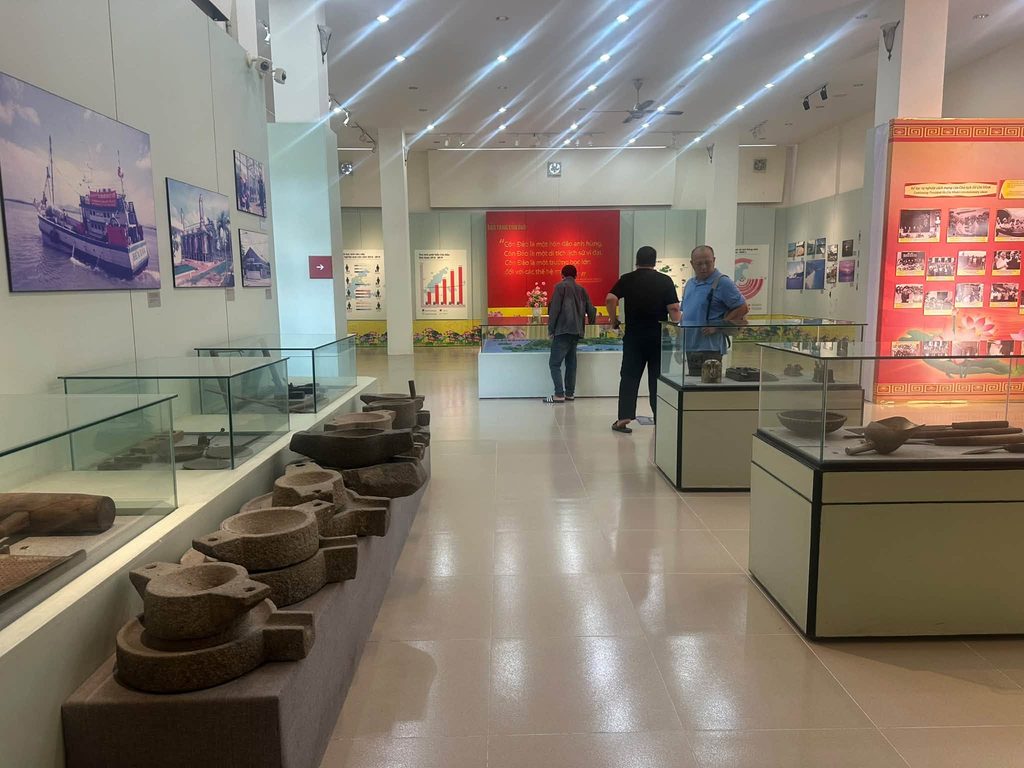
Where is Con Dao Museum?
Con Dao Museum is located at 2 Nguyen Hue Street, Con Dao Special Zone, Ho Chi Minh City, in the central area of Con Son Island.
The building stands near the historic sites of Con Dao Prison, particularly the French Tiger Cages and prison camps that operated under French colonial rule and the Republic of Vietnam administration.
Its location is relatively convenient for hotels, guesthouses and residential areas in the town center. Visitors can arrive by motorbike, taxi or on foot, depending on where they are staying.
From the outside, the museum is a large building with a spacious courtyard, steps leading to the main entrance and a prominent curved roof above the columns across its facade.
The name “Bảo tàng Côn Đảo” appears above the main entrance, making the museum easy to identify.
Trees and landscaping in front create a buffer between the street and the exhibition building inside.
Essential information about Con Dao Museum
- Name: Con Dao Museum.
- Address: 2 Nguyen Hue Street, Con Dao Special Zone, Ho Chi Minh City.
- Construction of the current building began: 6 December 2009.
- Completion date: 10 October 2010.
- Official opening to visitors: 6 September 2013.
- Grounds: More than 2 hectares.
- Built area: Approximately 3,570 m².
- Exhibition area: Approximately 1,700 m².
- Documents and artifacts: More than 2,000 items.
- Exhibition layout: A ceremonial hall and four main themes.
- Role: Collecting, researching, conserving, displaying and presenting Con Dao’s history, culture and people.
The history of Con Dao Museum
The need to preserve heritage after 1975
Before 1975, Con Dao was primarily known as an isolated island associated with a prison system.
After the French colonial authorities established the prison in 1862, detention buildings, administrative facilities and forced-labor stations were progressively built.
For more than a century, Con Dao experienced major upheavals in Vietnamese history. Hundreds of thousands of people were sent there for imprisonment, including political activists, revolutionaries and patriotic Vietnamese citizens.
Following the liberation of Con Dao on 1 May 1975, the prison system ceased operating. Buildings that had served the prison administration were gradually repurposed for historical preservation and research.
Alongside preserving the prison camps and cemeteries, collecting artifacts, documents, photographs and accounts from former prisoners became particularly important.
Not every trace of history can be understood simply by looking at a building.
A cell can reveal prisoners’ living space, but understanding who was held there, the circumstances in which they came to Con Dao and the activities they took part in requires records, photographs, artifacts and other documentary sources.
This need drove the development of historical exhibitions on Con Dao, eventually leading to today’s Con Dao Museum.
6 December 2009: Construction begins on the new museum
Construction of Con Dao Museum began on 6 December 2009, with joint investment by Hanoi and Ba Ria–Vung Tau Province.
It was one of the projects undertaken to mark the 1,000th anniversary of Thang Long–Hanoi.
Building the museum reflected the concern of localities and people across the country for Con Dao, a place connected with the lives and sacrifices of many generations of Vietnamese people.
The project was built in the spirit of “Con Dao with the whole country; the whole country for Con Dao.”
This message expresses the connection between a place once used for isolated exile and the nation’s affection and responsibility to preserve its history.
The museum was intended not only to display the prison regime, but also to introduce Con Dao’s origins, human life and development.
10 October 2010: The building is completed
Following construction, Con Dao Museum was completed on 10 October 2010, coinciding with the grand celebration of the 1,000th anniversary of Thang Long–Hanoi.
The new building enabled more spacious, systematically organized galleries suitable for conserving and displaying a large collection of documents and artifacts.
With grounds covering more than 2 hectares, including approximately 1,700 m² of exhibition space, the museum can organize historical themes in a clear sequence.
Separate spaces also help visitors approach information period by period, rather than as disconnected material.
6 September 2013: The museum officially opens to visitors
Although the building was completed in 2010, Con Dao Museum did not officially open to domestic and international visitors until 6 September 2013.
This date marked the opening of the exhibitions to the public.
Since then, the museum has become an important stop in programs exploring Con Dao’s history for official delegations, school and university students, former political prisoners and tourists.
Exhibitions, guided interpretation, collecting and heritage education have continued and developed over the years.
The architecture and spaces of Con Dao Museum
Con Dao Museum is a modern building, unlike the surviving French colonial architectural monuments in the island’s center.
Its design prioritizes exhibition space, educational activities and the capacity to accommodate multiple visitor groups.
A facade with columns and a curved roof
The museum’s main entrance has large columns supporting a curved roof.
Broad steps lead from the courtyard to the main entrance, creating a recognizable facade.
The architecture is relatively simple, using light-colored walls and large doorways.
The front courtyard provides a gathering space before visits, especially for large school groups or official delegations.
The ceremonial hall
On entering the museum, visitors reach the ceremonial hall, which introduces the exhibition.
This space contains a symbolic artwork expressing the aspiration for freedom, the determination to overcome chains and the pursuit of peace.
Above is a high roof space with natural light, highlighting the central area.
The ceremonial hall provides an introduction before visitors enter the themed galleries.
For first-time visitors to Con Dao, it offers an introduction to the museum’s overall message: remembering history, commemorating those who sacrificed their lives and learning about the island’s development.
The exhibition galleries
The museum’s exhibition space is organized into four main themes:
- Con Dao: Nature and People.
- Con Dao: Hell on Earth.
- Con Dao: A Front Line and a School.
- Con Dao Today.
This arrangement creates a relatively complete narrative.
Visitors begin with the geography, natural environment and human presence on the island. Next comes the period when Con Dao became a place of imprisonment, the struggles within the prison system and, finally, the island’s transformation after 1975.
The museum therefore extends beyond a single wartime period or group of individuals, presenting Con Dao through many layers of history.
Theme 1: Con Dao, Nature and People
This introductory section helps visitors understand Con Dao before exploring its prison period.
An important aspect of this theme is presenting Con Dao as a place with natural and settlement histories, rather than somewhere whose story began only when the French colonial authorities established a detention facility.
The archipelago’s geography and characteristics
Con Dao is an archipelago off the coast of southern Vietnam, consisting of 16 islands of various sizes.
Con Son is the largest island, home to most of the population and today’s administrative and service facilities.
Its isolated position in the open sea has profoundly shaped Con Dao’s history.
On the one hand, it has rich marine and forest ecosystems, with natural scenery distinctive to an island environment.
On the other, its separation from the mainland was one of the reasons the French colonial authorities chose Con Dao as a place of exile and imprisonment.
Maps, photographs and related materials help visitors understand the archipelago’s location and the connection between geography and the development of the prison system.
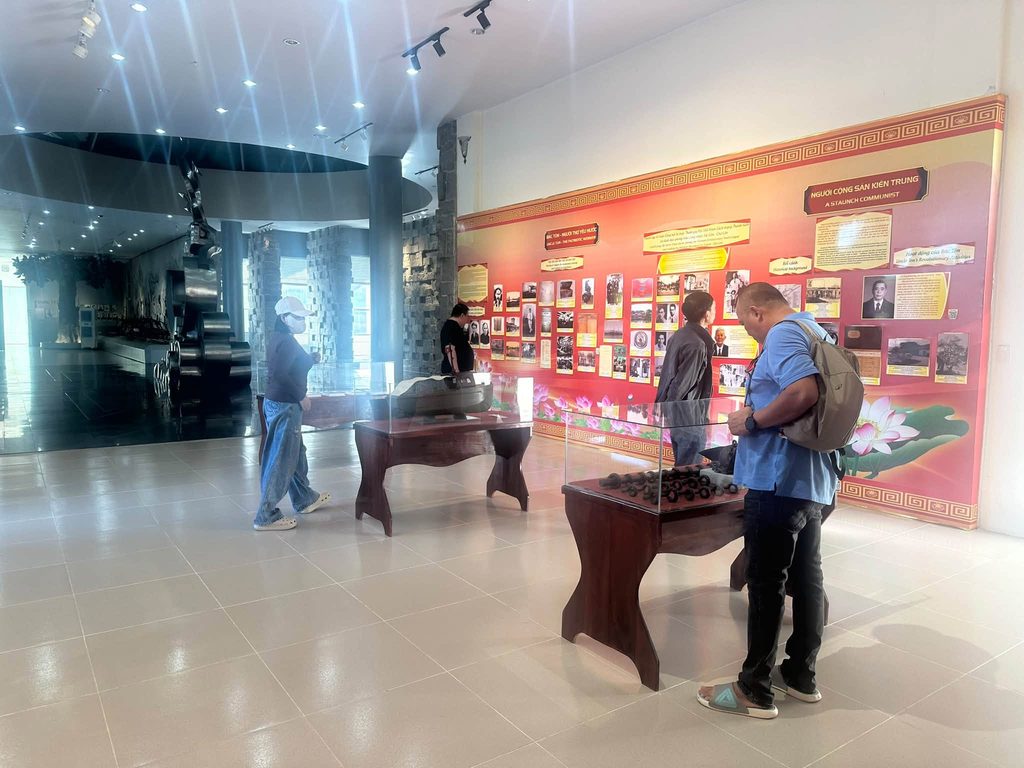
Con Dao’s forests and seas
Con Dao has many types of natural environment, from mountain forests to coastal waters, sandy beaches and coral reefs.
Its waters are also home to many species of conservation importance, including sea turtles.
Materials about nature help visitors recognize the island’s ecological value alongside its widely known historical significance.
This section is also suitable for families and children, linking what they learn at the museum with what they see while exploring Con Dao’s forests and seas.
The people of Con Dao through the ages
The exhibition also presents human presence and life on the island across different historical periods.
Materials on prehistory, protohistory, settlement and daily life offer a broader view of the area’s history.
Photographs, tools and everyday objects also reflect residents’ working, fishing and domestic lives.
Con Dao’s story is not limited to those sent here during the prison period.
The island also has the history of its resident communities, families connected to the sea and generations who helped shape local society.
The first theme thus provides a foundation for understanding Con Dao from both perspectives: its natural conditions and its human presence.
Theme 2: Con Dao, Hell on Earth
After introducing nature and people, the museum takes visitors through the period from 1862 to 1975, when Con Dao became one of the major detention centers under French colonial rule and the administrations that followed.
This is one of the museum’s most important sections.
The establishment of the Con Dao Prison system in 1862
On 1 February 1862, the French colonial authorities issued a decision establishing a prison on Con Dao.
In the years that followed, numerous detention areas and facilities supporting prison operations were built.
Initially, buildings were concentrated near central Con Son. Later, the system expanded to include more prison camps, cells, isolation areas and labor facilities.
Names such as Banh I, Banh II, Banh III, Phu Hai Camp, Phu Son Camp, Phu Tho Camp and Phu Tuong Camp are associated with different stages in the system’s development.
Maps, archival photographs and explanatory displays help visitors identify the relative locations of detention areas and changes in their names over time.
This is particularly helpful because a single building on Con Dao may have had several names throughout its history.
Methods of confinement and prisoner control
Materials on the prison regime show that living conditions for detainees were often extremely harsh.
Prisoners lived in overcrowded cells with inadequate food, clean water and medical care.
Many were also subjected to forced labor, solitary confinement or punishment.
Artifacts such as handcuffs, shackles and equipment used to control prisoners, together with related photographs and records, help visitors picture how the detention regime was organized.
The Tiger Cage areas, in particular, differed in structure from communal cells.
At the French Tiger Cages, iron bars above the cells allowed guards to watch prisoners from elevated walkways.
Other isolation areas were built in later periods, including Phu Binh Camp, commonly known as the American Tiger Cages.
The museum helps visitors understand the basic differences before seeing the surviving buildings firsthand.
Forced labor outside the prison camps
Forced labor is an essential aspect of the history of Con Dao Prison.
Prisoners were compelled to work at numerous facilities outside the camps, including stone quarries, lime kilns, salt production sites and road-building projects.
The Lime Kiln Station was associated with extracting coral and firing it to produce building material.
Ma Thien Lanh Bridge was part of a road and bridge project in the forested mountains, built with prisoner labor and ultimately abandoned unfinished.
The historic Pier 914 is also associated with years of construction under forced-labor conditions.
Photographs and models depicting prisoners’ work help visitors understand that the prison system extended beyond cell walls.
The exploitation of labor also took place along the coast, in forests, at construction sites and at many other locations on the island.
Losses over 113 years
Detention conditions, disease, strenuous labor and punishments caused many prisoners to lose their lives.
Hang Keo Cemetery and Hang Duong Cemetery are places associated with the burial and commemoration of those who died on Con Dao.
At the museum, photographs and records of detainees help visitors understand that behind the prison buildings were individual human lives.
They had hometowns, families, jobs, ideals and their own choices before being sent to the island.
This is an important aspect of approaching history: learning not only about methods of confinement, but also paying attention to people’s circumstances and experiences.
Theme 3: Con Dao, A Front Line and a School
One of Con Dao Museum’s distinctive themes is “A Front Line and a School.”
This name reflects a reality of prison history: despite being imprisoned, many political prisoners found ways to study, maintain organizational activities, exchange knowledge and take part in struggles for better living conditions.
The prison was therefore not only a place of confinement but also a setting for learning and organizing under extraordinary circumstances.
Classes in prison
Without formal classrooms, many knowledgeable prisoners found ways to teach and pass on what they knew to others.
Learning activities could include literacy, history, culture, foreign languages and political knowledge.
Depending on the period and detention conditions, studying often had to take place discreetly, making use of whatever time was available.
For young people arrested before completing their education, this was an opportunity to continue learning.
For experienced revolutionaries, exchanging ideas and teaching also helped maintain connections with their comrades.
These activities explain why the term “school” is used to describe a distinctive aspect of political prisoners’ lives on Con Dao.
Prison newspapers, poetry, literature and cultural activities
Prisoners’ inner lives were also expressed through many forms of creative work.
At Con Dao Museum, materials such as newspapers produced in prison, poetry, prose, drawings, embroidered pictures and handicrafts reflect detainees’ cultural activities.
With paper and pens scarce and constant surveillance, creating or preserving such materials was difficult.
Nevertheless, cultural activities remained important for sustaining morale, sharing emotions and recording prisoners’ experiences.
An embroidered picture or handwritten document may be small in size yet contain considerable information about its creator’s inner life.
These materials deserve time and careful attention during a visit.
Comradeship and sharing
In the harsh prison environment, mutual assistance among prisoners had particular significance.
Stories such as Comrade Vu Van Hieu giving his shirt to Le Duan before his death have become symbols of comradeship during imprisonment.
Alongside well-known stories, there were simpler forms of sharing: helping the sick, setting aside food, passing on knowledge or encouraging one another through periods of punishment.
These actions could not remove the harshness of the prison regime, but they reflect people’s efforts to maintain dignity, affection and responsibility toward one another.
The struggles of political prisoners
Many struggles took place in Con Dao’s prison camps and isolation areas.
Prisoners opposed repression and forced renunciation of political allegiance, fought for better living conditions and sought to protect their organizational activities.
In the late 1960s, the struggle of female political prisoners in the Tiger Cages became one of the events recorded in the prison’s history.
In July 1970, the exposure of conditions in the French Tiger Cages to international public scrutiny marked an important turning point.
Photographs, newspaper articles and records of these events help visitors better understand the history of resistance within the prison environment itself.
The liberation of Con Dao on 1 May 1975
A major milestone in Con Dao’s history was the uprising of political prisoners and the island’s liberation on 1 May 1975.
Following the upheavals of late April 1975, political prisoners on the island organized to take control and bring the detention regime to an end.
This event marked the end of the Con Dao Prison system’s 113-year existence.
Dioramas, photographs and records of the uprising help visitors follow the historical events in relation to the prison camps and the island’s central area.
This section also connects the prison period with Con Dao’s postwar development.
Theme 4: Con Dao Today
After three themes introducing nature, prison history and resistance, the final gallery returns visitors to Con Dao in peacetime.
From an island once associated with imprisonment, Con Dao has developed into a locality with a settled population, economic activity, services and a heritage conservation system.
The “Con Dao Today” theme helps visitors understand this transformation.
Recovery and development after 1975
After the prison system ceased operating, rebuilding life on the island proceeded in several stages.
Investment was gradually made in public services, infrastructure, transport, education and healthcare.
Alongside this came efforts to conserve historic sites that had existed for more than a century.
Con Dao gradually became a place to live, work and study for new generations of residents, alongside families with longstanding ties to the island.
Preserving the historic sites
One of the important tasks after 1975 was preserving the prison camps, cemeteries, offices and forced-labor facilities that had operated within the prison system.
The buildings were researched, documented, restored and opened for historical education.
On 10 May 2012, the Prime Minister issued Decision No. 548/QĐ-TTg, designating the Con Dao Prison Historic Site a Special National Monument.
This designation helped provide a basis for protecting, managing and promoting the historic complex’s heritage value.
Con Dao Museum plays an important role in presenting the historical context of the entire system while conserving documents and artifacts that cannot be displayed at each individual site.
Nature conservation and tourism development
Alongside its historical heritage, Con Dao has important natural assets.
Con Dao National Park was established to protect forest and marine ecosystems, including rare species.
Sea turtle conservation, coral reef protection and preservation of the natural environment form part of the locality’s approach to sustainable development.
Tourism on Con Dao today therefore takes many forms, from visiting historic sites and exploring culture to discovering nature and relaxing on holiday.
Displays about modern Con Dao reveal the island’s transformation while highlighting the need to balance economic development with heritage and environmental conservation.
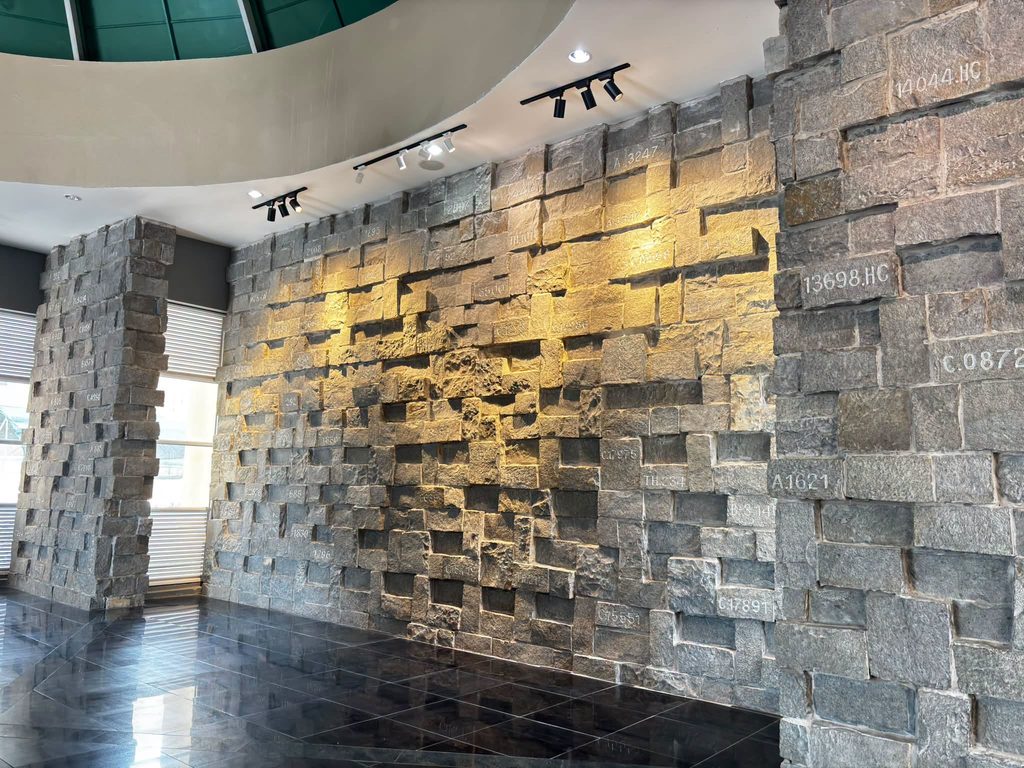
What is the significance of Con Dao Museum’s more than 2,000 documents and artifacts?
One of Con Dao Museum’s outstanding assets is its collection of documents, photographs and artifacts gathered and conserved over many years.
According to its official introduction, the museum holds more than 2,000 documents and artifacts.
This figure indicates the scale of the collection available for research and exhibitions, but does not mean that every artifact is displayed at the same time.
A museum needs exhibition areas and collection storage, while regularly checking the condition of artifacts and adapting displays for specific themes.
Artifacts relating to prisoners’ lives
Everyday objects help visitors understand prisoners’ daily lives.
Seemingly simple objects such as eating utensils, clothing, personal belongings or items made by prisoners can reveal living conditions and deprivation in confinement.
When viewing them, their appearance is not the only important consideration.
Visitors should find out which period an artifact belongs to, who used it, the circumstances in which it was found or preserved, and whether it is an original or a reproduction.
This information helps explain the object’s historical value accurately.
Artifacts relating to the detention system
Some groups of artifacts and photographs illustrate how prison administration was organized.
These may include handcuffs, shackles, equipment used to control prisoners, administrative records or photographs of detention areas.
Combining artifacts with maps and prison camp records helps visitors understand differences between periods.
In particular, some buildings have had several names, so paying attention to when each was used helps avoid confusion.
Mementos and creative works of political prisoners
Paintings, poems, handwritten texts, newspapers produced in prison and handmade objects are valuable sources for understanding prisoners’ inner lives.
They reflect efforts to continue learning, creating and communicating among detainees.
For many former prisoners’ families, these mementos also have personal significance because of their connection to loved ones and unforgettable years.
Historical photographs and records
Alongside artifacts, photographs and written documents help the museum recount events that took place at many different locations.
A photograph may record a building’s appearance before restoration.
A map helps locate the prison camps.
A memoir page or personal record helps explain the life of someone sent to the island.
Combining different sources is essential to building an accurate, multidimensional view grounded in historical context.
Con Dao Museum and prominent historical figures
While exploring the history of Con Dao Prison, visitors will encounter many figures who influenced Vietnam’s patriotic and revolutionary movements.
They include Le Hong Phong, Nguyen An Ninh, Ton Duc Thang, Le Duan, Vo Thi Sau and many other revolutionaries who were imprisoned on Con Dao.
Each had a different life, circumstances of political activity and period of imprisonment.
Learning about these figures through museum materials helps visitors see them as more than monuments or memorial graves.
For Vo Thi Sau, this history also involves the So Co historic site, where she was held before her death on 23 January 1952.
For Le Hong Phong, Con Dao is associated with his final years and his death on 6 September 1942.
The story of Vu Van Hieu and Le Duan illustrates comradeship among prisoners in conditions of deprivation.
In 2026, the museum continued to organize thematic exhibitions. On 7 August 2026, an exhibition on the life and revolutionary career of President Ton Duc Thang opened at Con Dao Museum, offering a deeper introduction to a figure with a special connection to the prison’s history.
Such exhibitions complement the permanent displays and give returning visitors additional subjects to explore.
Why visit Con Dao Museum before the prison sites?
One challenge for first-time visitors to Con Dao is that its historic sites have numerous names and dates.
A prison camp may once have had a French name, later been designated a Lao or Trai, and then received further names in different periods.
For example, Phu Hai Camp was once known as Banh I. Phu Tho Camp was called Banh III. The French Tiger Cages, meanwhile, are associated with the buildings at Phu Tuong Camp.
Without context, visitors may struggle to distinguish the sites or fully understand related events.
The museum helps address this problem.
Understand the historical sequence before seeing the buildings
Maps and documents help visitors picture how the Con Dao Prison system was established, expanded and changed over time.
When visiting the prison camps afterward, this knowledge makes the surviving traces easier to identify.
Understand the differences between detention areas
Communal cells, individual cells, isolation areas and Tiger Cages served different functions.
The museum provides background knowledge before visitors examine the actual structures.
Visitors can therefore not only see a cell or iron bars but also understand how they were used.
Connect historic sites with people
A place may be remembered for its architecture, but its historical value also lies in those who lived, acted or died there.
Through photographs, records and stories in the museum, visitors can connect individuals with prison camps, labor stations or memorial sites.
This is why Con Dao Museum makes a suitable first stop when exploring the island’s history.
Con Dao Museum admission fees in 2026
Under Resolution No. 29/2026/NQ-HĐND dated 27 August 2026 of the Ho Chi Minh City People’s Council, effective from 1 October 2026, admission to the Con Dao Prison Special National Historic Site, including Con Dao Museum, is VND 60,000 per person per visit for visitors required to pay.
This fee applies under the new regulations, replacing the previous rate published in earlier years.
Under the current visiting arrangements, the ticket covers a group of five sites: Con Dao Museum, the Island Governor’s Residence, Phu Hai Camp, the French Tiger Cages and Phu Binh Camp (the American Tiger Cages).
The sites covered by a ticket should be distinguished from their actual opening status. A site included in the ticket may still temporarily close for maintenance, restoration or special activities.
Visitors eligible for free admission
Under Resolution No. 29/2026/NQ-HĐND, the following groups are exempt from admission fees:
- Children.
- School and university students.
- People with particularly severe disabilities.
- People from poor or near-poor households.
Visitors in these groups should bring appropriate documentation for guidance on claiming free admission.
Visitors eligible for a 50% discount
A 50% discount applies to eligible groups under the resolution, including older people, people with severe disabilities, people recognized for meritorious service to the revolution and certain other groups covered by preferential cultural policies.
With the standard fee of VND 60,000, visitors eligible for a 50% reduction pay VND 30,000 per visit.
Specific eligibility conditions are applied in accordance with current law.
How to buy admission tickets
Visitors can contact the service counter at the historic site or use the electronic ticketing channel announced by the managing authority.
Large groups or those requiring a scheduled guided tour should contact the site in advance for advice on meeting times and routes.
Avoid buying tickets through links that do not clearly identify the issuer, particularly when a ticketing page requests personal information or advance payment.
Con Dao Museum opening hours
According to the published visitor information, Con Dao Museum opens daily in two sessions:
- Morning: 7:00–11:30.
- Afternoon: 13:30–17:00.
The museum closes for a break between the two sessions.
Prison camp visits may follow separate schedules, especially guided programs.
Opening arrangements may also change on major holidays, during commemorative events or for special exhibitions.
Visitors should check the latest announcements before planning, particularly if their stay on Con Dao is short.
How much time should you allow for Con Dao Museum?
With its extensive materials and four exhibition themes, Con Dao Museum deserves more than a brief stop of a few minutes.
Visitors wishing to see the galleries relatively thoroughly can allow around 60–90 minutes.
A guided visit or careful reading of the historical displays may take longer.
School and university students or people undertaking detailed research may wish to spend additional time examining the materials.
An easy-to-follow visiting route
Begin in the ceremonial hall, then follow the four exhibition themes in order.
In the nature and people section, pay attention to the geography and settlement history.
In the prison section, focus on dates, camp layouts and changes over time.
In the front line and school section, take time to examine artifacts relating to learning, culture and prisoners’ organized activities.
Finally, the Con Dao Today section connects the historical information you have learned with life on the island today.
Following this sequence gives the visit a clear narrative and helps avoid missing important material.
Suggested historic sites to visit after the museum
After gaining an overall historical picture, visitors can continue exploring the actual buildings of the Con Dao Prison system.
One suggested sequence is Con Dao Museum → French Tiger Cages → Phu Hai Camp → Island Governor’s Residence.
At the French Tiger Cages, visitors can examine the isolation cells with iron bars overhead and the remaining traces of the sun-exposure yards.
Phu Hai Camp is one of the island’s oldest prison camps, offering further insight into the layout of communal cells and living spaces within the prison system.
The Island Governor’s Residence offers a different perspective on the administration, serving as the workplace and residence of those in charge of the prison across different periods.
This route connects three different types of space: a museum providing an overview, prison camps showing detention conditions and administrative offices reflecting how management was organized.
The actual order should be adjusted to visiting sessions, opening status and instructions from the site’s managing authority.
Is Con Dao Museum suitable for children and students?
Con Dao Museum has educational value for many age groups.
For school and university students, it supplements historical knowledge through artifacts, photographs and stories connected with real places.
School groups can learn about nineteenth- and twentieth-century Vietnamese history, prison life, resistance movements and Con Dao’s postwar development.
However, some material about the detention regime and methods of punishment may be emotionally distressing for young children.
Parents and teachers should choose age-appropriate explanations, focusing on historical context and the value of peace.
The sections on nature, marine life, residents’ daily lives and present-day development are also well suited to children.
In recent years, the museum has organized heritage education activities for schoolchildren and preschoolers, showing that its role extends beyond traditional historical visits.
Tips for visiting Con Dao Museum
The museum preserves many historically valuable documents and artifacts. Visitors should follow rules on protecting objects and appropriate conduct in the galleries.
Protecting artifacts and exhibition spaces
Do not touch artifacts, glass cases or displayed documents without permission.
Do not move objects or interfere with models, explanatory panels or structures in the exhibition areas.
If visiting in a group, keep noise down so everyone can hear the commentary and explore the displays.
Photography in the museum
Visitors should check the photography rules in each area.
Some artifacts or documents may have specific restrictions on flash, filming or photography.
When using photographs for commercial purposes, publishing or media, pay attention to image rights and the managing authority’s regulations.
Choosing what to focus on
The museum contains a great deal of material, so there is no need to remember every figure or individual in a single visit.
Visitors can focus on the subjects that interest them most, such as the establishment of the prison, prominent figures or prisoners’ cultural lives.
Subjects you do not have time to explore can be researched later through official documents or introductions to the historic sites.
The historical, cultural and educational value of Con Dao Museum
Preserving memories of the island’s history
Con Dao Museum’s greatest value lies in collecting, conserving and presenting materials relating to many historical periods.
Artifacts and photographs preserve memories of people, events and buildings whose surviving physical traces cannot tell the whole story.
They provide a basis for future generations to study Con Dao’s history using a variety of sources.
Connecting historic sites scattered across the island
The Con Dao Prison historic sites are not concentrated in a single building.
Prison camps, labor facilities, cemeteries and offices occupy different locations.
The museum connects these places through maps, photographs and historical chronology.
This is something an individual historic site can rarely provide in full.
Presenting inner lives and human dignity
Artifacts relating to learning, creative work, solidarity and mutual assistance show that prisoners’ lives were not defined solely by confinement.
Despite deprivation and control, they found ways to sustain cultural activities, pass on knowledge and maintain connections with those around them.
Preserving these stories allows history to be understood through human experience, not only buildings and events.
Connecting history with sustainable development
The Con Dao Today theme shows that heritage conservation needs to be considered alongside social development and nature protection.
Con Dao is both a place of exceptional historical significance and a home for residents and many species of conservation importance.
Responsible tourism needs to respect both these values.
The museum thus helps introduce a broader approach to Con Dao: understanding the past, appreciating the present and caring about the island’s future.
Frequently asked questions about Con Dao Museum
Where is Con Dao Museum?
The museum is at 2 Nguyen Hue Street, in central Con Son Island, Con Dao Special Zone, Ho Chi Minh City.
When was Con Dao Museum built?
Construction of the current museum began on 6 December 2009, was completed on 10 October 2010, and the museum officially opened to visitors on 6 September 2013.
How many artifacts does Con Dao Museum hold?
According to the Con Dao National Monuments Conservation Center, the museum holds more than 2,000 documents and artifacts relating to Con Dao’s history, culture and people.
How many exhibition sections does Con Dao Museum have?
The museum has a ceremonial hall and four main themes: Nature and People, Hell on Earth, A Front Line and a School, and Con Dao Today.
How much is admission to Con Dao Museum in 2026?
From 1 October 2026, admission to the Con Dao Prison Special National Historic Site, including the museum, is VND 60,000 per person per visit for those required to pay.
Are school and university students eligible for free admission?
Yes. Under Resolution No. 29/2026/NQ-HĐND, school and university students are exempt from admission fees.
What time does Con Dao Museum open?
According to its published hours, the museum opens from 7:00 to 11:30 and from 13:30 to 17:00. The schedule may change on special occasions.
How long does a visit to Con Dao Museum take?
Allow around 60–90 minutes to explore the themes relatively thoroughly. A guided visit may take longer.
Should you visit Con Dao Museum before or after the prison camps?
For a first visit to Con Dao, start with the museum to learn the overall history, camp names and major periods. The actual historic sites will then be easier to understand.
Are Con Dao Museum and the Island Governor’s Residence the same place?
No. Con Dao Museum is a modern historical exhibition building, while the Island Governor’s Residence is a historic building that once served the prison administration.
The two places have distinct functions and significance, but both contribute to presenting Con Dao’s history.
Con Dao Museum: A starting point for exploring an island with many layers of history
Before visiting the old cell blocks, isolation areas or historic cemeteries, Con Dao Museum gives visitors an overview of the place they have come to explore.
Here, the island’s history is presented across many periods, from nature and people to the prison era, the struggles of generations of political prisoners and life on Con Dao after 1975.
Each group of artifacts, photographs and documents adds details that a visit to an individual historic site cannot fully explain.
The prison buildings can reveal detention conditions, but the museum helps visitors understand the people who lived there, the activities that took place and how events connect.
At the same time, displays on nature and residents’ lives remind visitors that Con Dao’s story extends beyond imprisonment.
The island also has ecological and cultural values and a community life that continues to develop.
Starting at Con Dao Museum is therefore not only convenient for planning an itinerary, but also a way to explore subsequent destinations with a fuller understanding.
When leaving the museum for Phu Hai Camp, the French Tiger Cages or the Island Governor’s Residence, visitors will see more than old buildings. What they have learned will help them recognize the historical stories behind each wall, cell and surviving trace.
Con Dao Express introduces Con Dao’s historic sites, cultural destinations and scenic attractions, while providing information on high-speed ferry routes, schedules and indicative ticket prices to help visitors prepare their island journey.
Reference sources
- Con Dao National Monuments Conservation Center
- Con Dao Tourism Information Portal
- Con Dao National Monuments Conservation Center: Introduction to the Con Dao Prison historic sites.
- Resolution No. 29/2026/NQ-HĐND dated 27 August 2026 of the Ho Chi Minh City People’s Council, effective from 1 October 2026.
- Con Dao National Monuments Conservation Center: Exhibitions and heritage education activities at Con Dao Museum in 2026.
Google Maps: Bảo tàng Côn Đảo
The map shows the site’s location. Confirm the entrance and visiting hours with the site management before you go.