
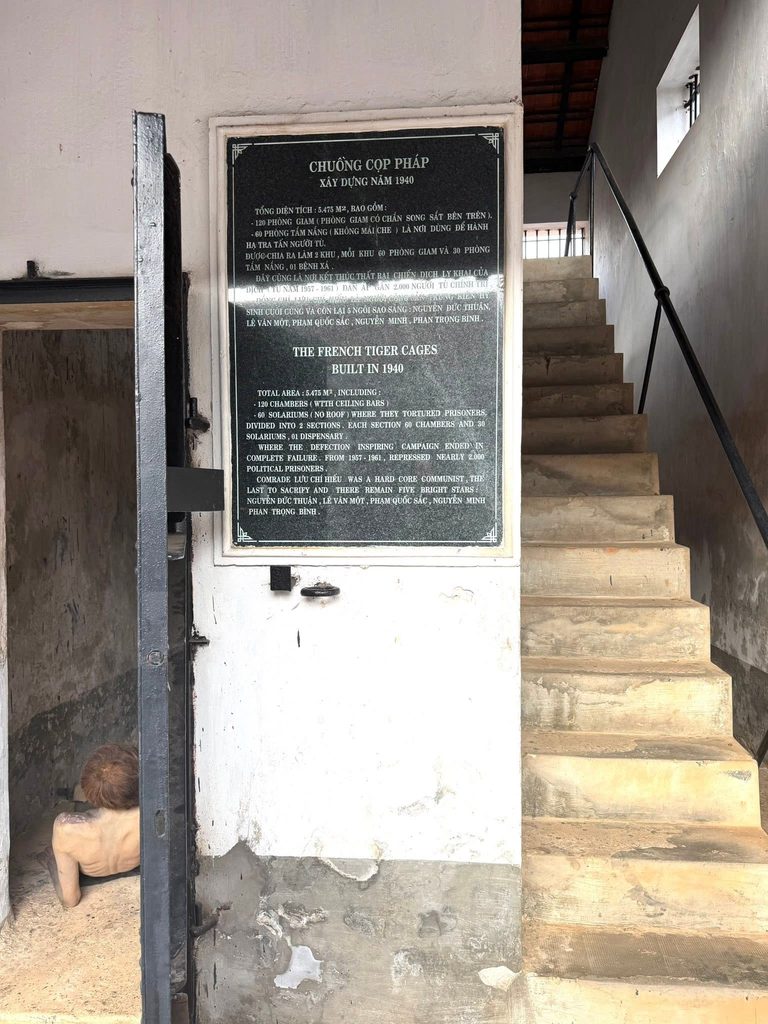
Within the Côn Đảo Prison system, the French Tiger Cages were among the harshest isolation facilities, closely associated with the struggles of generations of political prisoners. Built by the French colonial authorities in 1940, the complex had 120 isolation cells with iron grilles overhead, walkways from which guards could watch the prisoners, and 60 roofless cells once used to punish inmates.
Unlike the communal cell blocks at Phú Hải or Phú Sơn Prison, the French Tiger Cages were designed to isolate and control prisoners in separate spaces. Iron bars over the cells allowed guards to observe inmates from overhead walkways without entering the rooms themselves.
Between 1957 and 1970, the site was used to confine and repress political prisoners, while also witnessing many protests against the prison regime. In July 1970 in particular, photographs and accounts exposing the Tiger Cages appeared in the international press, drawing worldwide attention to conditions in Côn Đảo’s prisons.
Today, the surviving remains of the French Tiger Cages form an important part of the Côn Đảo Prison Special National Heritage Site. A visit offers insight into the structure of an isolation facility, the lives of those held there and the historical events connected with it.
What Are the French Tiger Cages on Côn Đảo?
The French Tiger Cages is the name prisoners gave to a particular isolation compound within the Côn Đảo Prison system. Built under French colonial rule in 1940, it remained in use when the Republic of Vietnam administered the prison.
The name “Tiger Cages” comes from the compound’s architecture. Sturdy iron grilles covered the small cells, resembling the cages used to hold dangerous animals. Walkways above the cells allowed guards to observe and control prisoners.
Historical accounts often discuss the French Tiger Cages alongside Phú Tường Prison, also known as the Banh III Annex or Camp 4. However, the two areas differed in function and architecture.
Phú Tường was a prison camp with cell blocks and supporting buildings, while the French Tiger Cages were an isolation compound built nearby and connected to the camp by a passageway.
The area was also connected with Phú Thọ Prison, or Banh III, another detention facility in the same prison system.
Today, the French Tiger Cages and Phú Tường Prison are often included in the same tour, helping visitors understand the relationship between the structures.
The Establishment of the French Tiger Cages in 1940
The Expansion of the Côn Đảo Prison System
The French colonial authorities established the Côn Đảo Prison system in 1862. Over the following decades, detention facilities were built and expanded to accommodate a growing prison population.
By the early twentieth century, Côn Đảo had developed a prison system comprising several detention compounds known as Banh, together with administrative facilities, buildings associated with prison labour and isolation areas.
The growth of patriotic and labour movements and revolutionary organisations in Vietnam led the colonial authorities to arrest, try and exile increasing numbers of people.
Alongside expanding the communal cells, the colonial authorities built separate areas to isolate prisoners considered capable of organising resistance or opposing the prison regime.
The French Tiger Cages emerged in this context.
In 1940, the isolation compound was built between the buildings of Banh III and the Banh III Annex. This was a period of political upheaval in Indochina, harsh repression of revolutionary movements and a continuing rise in the number of political prisoners sent to Côn Đảo.
An Isolation Compound Designed for Tight Control
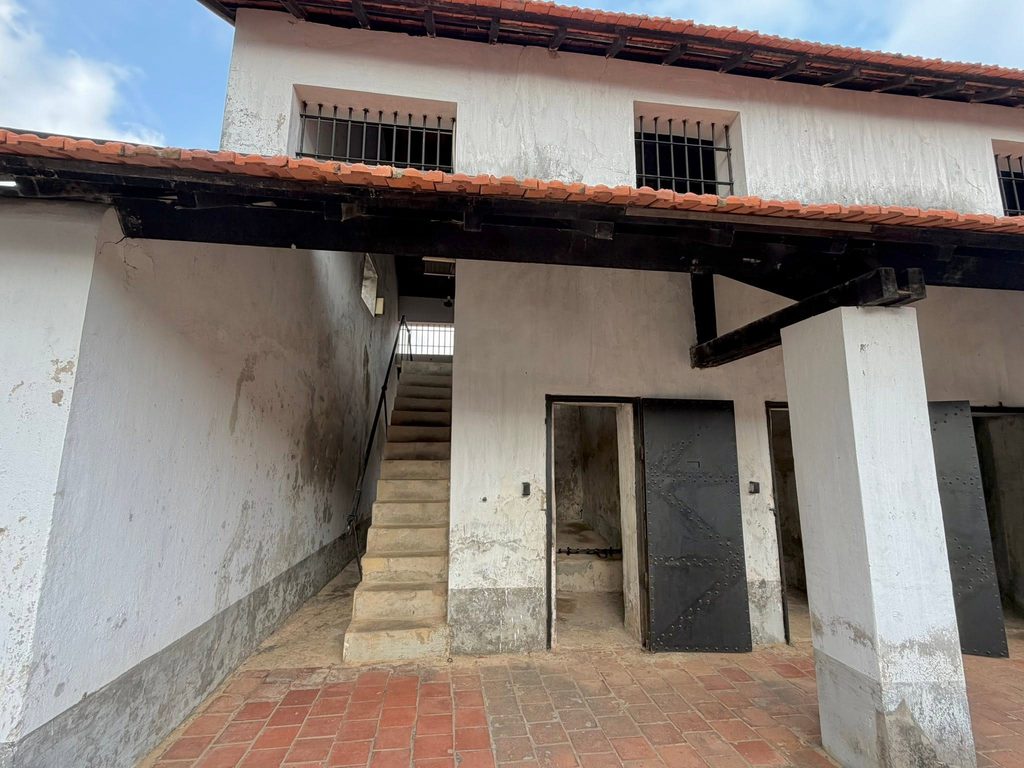
Unlike communal cells, the French Tiger Cages consisted of small, separate rooms with iron grilles overhead.
The distinctive feature of this design was the network of guards’ walkways above the cells.
From the walkways, guards could look down into each room, monitor prisoners’ activities and enforce control without opening the cell doors.
This arrangement reduced prisoners’ opportunities for direct contact with the outside world and limited their ability to organise collective activities.
The architecture thus served not only to confine people but also to keep them under constant surveillance.
These features made the Tiger Cages one of the harshest isolation facilities in Côn Đảo Prison.
The Size and Architecture of the French Tiger Cages
According to the Côn Đảo National Heritage Conservation Centre, the French Tiger Cages cover a total area of approximately 5,477 m².
The complex consists of two main isolation sections, each with 60 cells, making 120 cells in total. There are also 60 roofless cells, commonly called “sunbathing rooms”.
The combination of isolation cells, guards’ walkways and roofless rooms created a detention system structurally different from ordinary prison camps.
Two Isolation Sections with 120 Cells
The French Tiger Cages were arranged in two separate sections, each containing 60 cells.
The cells were built side by side and separated by solid walls.
Instead of the enclosed ceilings found in conventional cells, each room had a sturdy iron grille overhead.
Prisoners were confined below, while guards could walk around and observe them from above.
This design enabled direct surveillance of every cell while restricting contact between prisoners.
Visitors can examine the iron grilles, the arrangement of isolation cells and the overhead walkways to better understand the architecture of the complex.
The Surveillance Walkways Above the Cells
One of the most striking features of the French Tiger Cages is the guards’ walkway above the rooms.
Guards could look down through the iron grilles.
When the prison was operating, this structure was also used to inflict punishment on those held below.
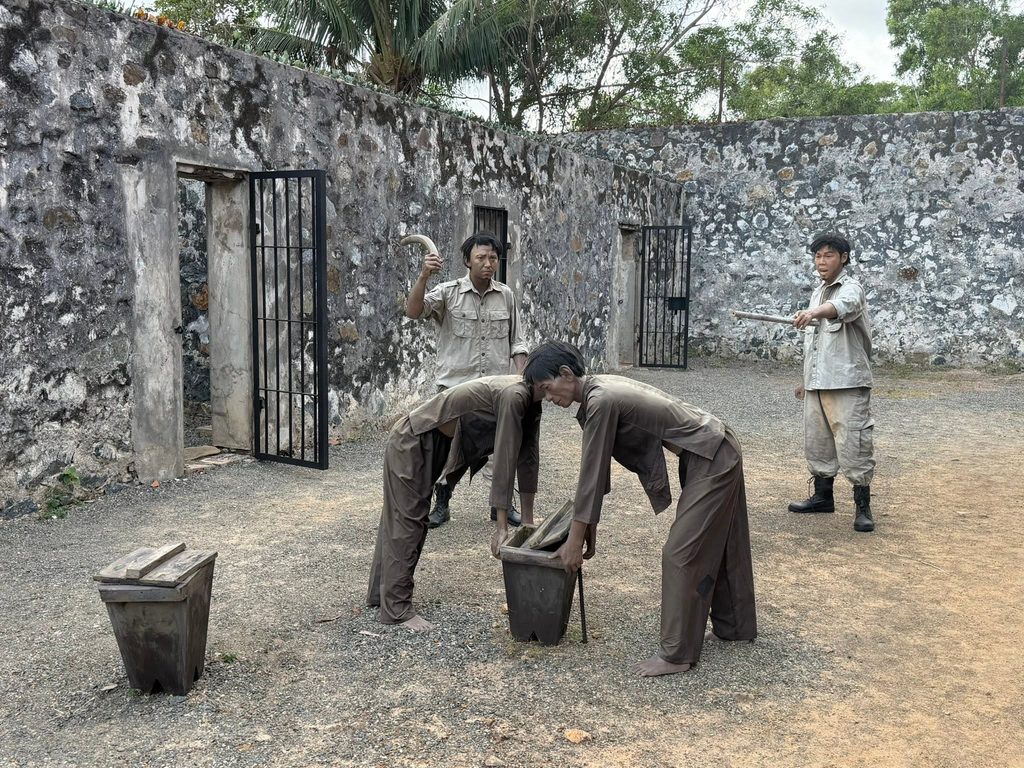
Historical accounts describe prisoners being beaten, prodded with sticks from above or subjected to powdered lime scattered into their cells.
The difference in elevation between guards and prisoners clearly reflects how power was organised within the isolation compound.
Those confined below could not move freely, while guards could watch them from above without direct contact.
Today, this walkway is one of the key surviving features by which visitors can identify the French Tiger Cages.
Sixty Roofless Cells: The “Sunbathing” Area
In addition to the 120 isolation cells, the French Tiger Cages had 60 roofless rooms arranged in four rows of 15.
These rooms are often called “sunbathing rooms”.
Despite what the ordinary meaning of the name might suggest, they were not spaces for rest or health care.
In practice, they were used to punish prisoners by forcing them to endure sun, rain and harsh weather.
Without a roof, inmates were directly exposed to the elements, particularly on very hot days or during heavy rain.
The roofless rooms were also used to beat and torture prisoners.
The name “sunbathing rooms” is therefore ironic, reflecting one of the forms of abuse practised in the isolation compound.
Hidden Passages Between the Prison Camps
Another feature of the French Tiger Cages was the absence of a separate main gate of the kind found at larger prison camps.
According to the Côn Đảo National Heritage Conservation Centre, small passages connected the Tiger Cages with the Banh III Annex, or Phú Tường Prison, and Banh III, or Phú Thọ Prison.
These passages were concealed when the prison learned that unfamiliar visitors were coming to the island.
Placing the isolation compound behind other buildings, with passages that were difficult to identify, made it hard for outsiders to reach it or pinpoint where prisoners were held.
In 1962–1963, Camp 5, later named Phú Phong, was built in front of the Tiger Cages.
The new camp helped screen the isolation compound from view and also had a small passage connecting it to the French Tiger Cages.
This arrangement shows that the compound was a tightly integrated part of the prison system, rather than a wholly separate, independent detention facility.
Conditions in the French Tiger Cages
The French Tiger Cages served as a disciplinary compound for prisoners whom the authorities considered defiant or in need of isolation.
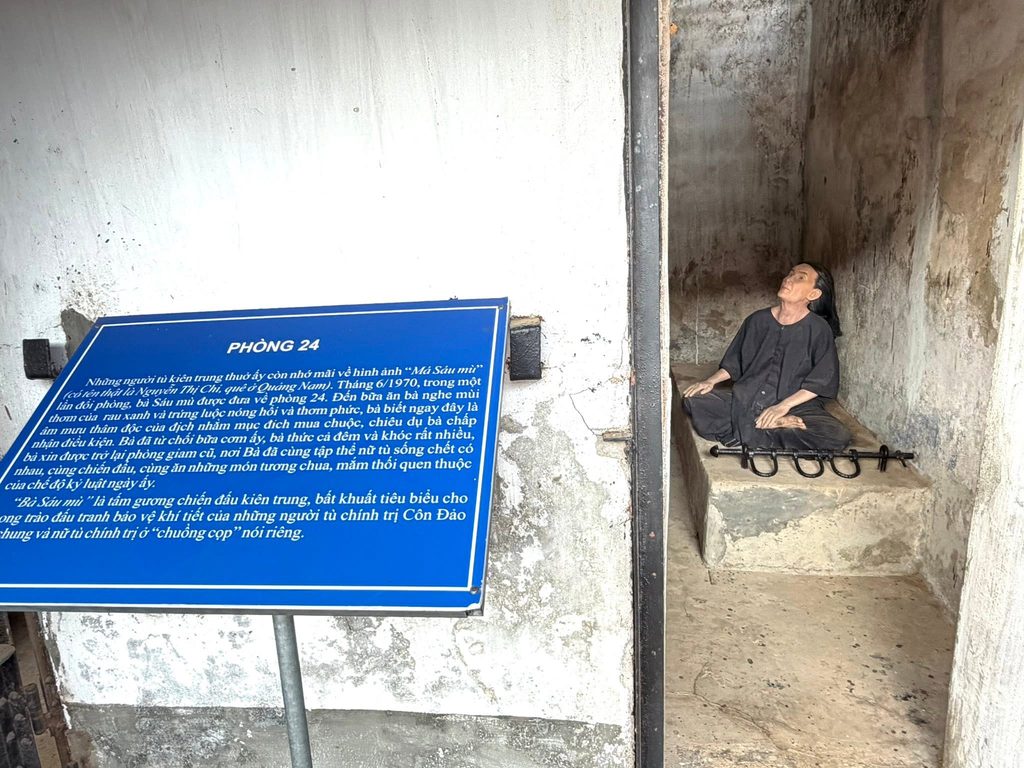
Many were sent there after taking part in protests against prison conditions, refusing coercive demands or being deemed influential over the morale of other prisoners.
Those held there faced various forms of control and punishment, as well as severe shortages in their daily living conditions.
Isolation and Restricted Communication
Unlike communal cells, where several prisoners could share a living space, isolation greatly reduced contact with other people.
Prolonged isolation can have serious effects on prisoners’ mental health.
At the French Tiger Cages, small cells and dividing walls were combined with constant surveillance from above.
This was one means of controlling political prisoners’ activities and limiting their ability to organise collective resistance.
Harsh Living and Sanitary Conditions
Accounts of the Côn Đảo Tiger Cages describe prisoners living with insufficient water, infrequent opportunities to wash and restricted access to hygiene supplies.
During some periods of punishment, inmates were also prevented from disposing of their waste for extended periods.
Such conditions seriously damaged their health, especially among those already weakened by imprisonment, forced labour or torture.
The confined spaces, hot and humid weather and poor sanitation compounded the hardships of prison life.
Punishments Inflicted from Above the Cells
The iron grilles and overhead walkways were used to carry out punishments.
According to former political prisoners and historical records, guards used sticks, poles and powdered lime to repress inmates.
These measures could be inflicted from above, leaving prisoners little opportunity to evade them or protect themselves.
The continued use of such punishments while prisoners were isolated illustrates the severity of the detention regime.
The surviving architecture helps visitors understand how the compound was organised and operated, although it cannot fully convey what prisoners endured.
The French Tiger Cages and Political Prisoners’ Resistance
Besides serving as a detention facility, the French Tiger Cages were the scene of many acts of resistance by political prisoners.
Despite tight control, prisoners sought ways to maintain contact, support one another and oppose the prison authorities’ coercive measures.
Resistance to Forced Renunciation and Flag Salutes
Between 1957 and 1961, many political prisoners on Côn Đảo resisted demands to renounce their organisations and ideals or demonstrate submission to the prison authorities.
In Côn Đảo’s history, these struggles are commonly known as the movements against forced renunciation and compulsory flag salutes.
Participants could be transferred to isolation facilities, including the French Tiger Cages, and subjected to stricter controls.
Despite isolation and punishment, many prisoners remained firm in their convictions.
These years of resistance became an important part of the history of Côn Đảo’s political prisoners.
Cao Văn Ngọc and Lưu Chí Hiếu
Among those associated with resistance in the French Tiger Cages were Cao Văn Ngọc, known as the “Old Man of the Tiger Cages”, and the revolutionary Lưu Chí Hiếu.
Cao Văn Ngọc is remembered as a notable example of sustained resistance in the isolation compound.
Lưu Chí Hiếu had taken part in the revolutionary movement in Sài Gòn–Gia Định before being arrested and sent to Côn Đảo in 1957.
During his imprisonment, he participated in resistance to forced renunciation and the prison authorities’ coercive measures.
His name is associated with the group of political prisoners who maintained determined resistance between 1957 and 1961.
The stories of Cao Văn Ngọc, Lưu Chí Hiếu and their contemporaries illuminate an important aspect of the French Tiger Cages’ history: this was not only a place of confinement, but also a place where political prisoners strove to preserve their organisation and solidarity.
Notable Figures in the Movement Against Forced Renunciation
The Côn Đảo National Heritage Conservation Centre’s introductory materials also name five prominent figures in the movement against forced renunciation: Nguyễn Đức Thuận, Phan Trọng Bình, Phạm Quốc Sắc, Nguyễn Minh and Lê Văn Một.
They are recognised in the history of resistance within the isolation compound, alongside many other prisoners who endured prolonged periods of punishment.
Learning about these people helps visitors understand the French Tiger Cages through the lives and activities of those imprisoned there, rather than solely through the cells and architecture.
Women Political Prisoners’ Resistance in the French Tiger Cages
One particularly notable period in the history of the French Tiger Cages occurred in the late 1960s.
According to the Côn Đảo National Heritage Conservation Centre, in 1969 the Sài Gòn authorities sent 342 women political prisoners and two children to be held in the Tiger Cages.
This was a significant event in the history of the isolation compound.
Especially Harsh Conditions of Confinement
The women prisoners faced inadequate living conditions and severe punishments.
The prison restricted water for washing and hygiene supplies, and used powdered lime as a means of repression.
For women, particularly those in poor health or with specific personal-care needs, the lack of sanitary facilities had serious consequences.
The presence of two children among those sent to the island further underscores the particular nature of this episode of imprisonment.
Protests for Better Living Conditions
Despite the controls imposed on them, women political prisoners repeatedly organised resistance to the detention regime.
Their protests focused on opposing repression, demanding improved living conditions and maintaining solidarity among prisoners.
According to historical accounts of Côn Đảo, from late 1969 to early 1970 the women’s resistance in the Tiger Cages had a major effect on the morale of other groups of political prisoners on the island.
These efforts became an important part of the history of resistance by Côn Đảo prisoners in the late 1960s.
The Exposure of the Côn Đảo Tiger Cages in 1970
July 1970 marked a major turning point in the history of the French Tiger Cages.
After the compound had operated for years out of broad public scrutiny, a group of American visitors gained access and brought its detention conditions to international attention.
The photographs, testimonies and reports from this visit prompted strong reactions in the United States and many other countries.
Former Prisoners’ Accounts
Before the story was widely reported in the international press, former Côn Đảo prisoners had tried to make conditions in the isolation compounds known.
In 1970, five school and university students who had been held in the Tiger Cages were brought back to Sài Gòn.
After returning, they spoke out about detention conditions and the treatment prisoners had endured.
Their accounts helped outside organisations and individuals learn of the Tiger Cage system on Côn Đảo.
The US Congressional Delegation’s Visit to Côn Đảo
In July 1970, US Representatives William R. Anderson and Augustus F. Hawkins visited Côn Đảo to investigate prison conditions.
They were accompanied by Don Luce, an American social activist who had worked in Vietnam, and Tom Harkin, then a congressional aide.
Don Luce knew the location of the concealed isolation compound from directions provided by former prisoners.
During the visit, the group reached the Tiger Cages and witnessed the living conditions of the people held there.
Tom Harkin took photographs of the cells and prisoners.
The material they gathered became important evidence in exposing detention conditions on Côn Đảo.
Photographs Published in LIFE on 17 July 1970
On 17 July 1970, the American magazine LIFE published a photo report on the Côn Sơn Tiger Cages under the title The Tiger Cages of Con Son.
The report appeared on pages 26–29 and used photographs taken by Tom Harkin.
It remains one of the most prominent international press accounts in the history of the Côn Đảo Tiger Cages.
The photographs showed harsh conditions of confinement, the severely weakened health of many prisoners and the unusual structure of the isolation compound.
Publication in a widely read magazine brought detention conditions on Côn Đảo before an international audience.
The episode also raised questions about responsibility for prison administration and the treatment of prisoners during the Vietnam War.
International Public Reaction
After the report appeared, news about the Côn Đảo Tiger Cages continued to be published by media outlets in Vietnam and abroad.
Public debate and reactions put pressure on the Republic of Vietnam authorities over their use of the isolation compound.
According to historical accounts of Côn Đảo, the wave of protest after July 1970 forced the authorities to change how they used the French Tiger Cages and influenced the reorganisation of isolation facilities on the island.
However, it is important to distinguish that exposing the French Tiger Cages did not mean that every isolation facility on Côn Đảo immediately ceased operating.
Other isolation facilities continued to be built and used in the following years.
These included Phú Bình Prison, commonly known as the American Tiger Cages.
How Did the French and American Tiger Cages Differ?
Within the Côn Đảo Prison system, the French and American Tiger Cages were two different isolation facilities built in different periods.
Distinguishing between them helps visitors avoid confusion when reading historical accounts or touring the sites.
The French Tiger Cages
The French colonial authorities built the French Tiger Cages in 1940.
The complex comprised 120 isolation cells divided into two sections, with iron grilles overhead and walkways from which guards could patrol and observe prisoners.
Alongside them were 60 roofless cells, commonly known as sunbathing rooms.
This isolation compound is associated with resistance to forced renunciation and compulsory flag salutes, and with the exposure of the Tiger Cages in 1970.
The American Tiger Cages
The American Tiger Cages is the common name for the system of separate cells at Phú Bình Prison, also known as Camp 7.
The camp was built and completed in 1971, when the Republic of Vietnam administered Côn Đảo.
Phú Bình differed in structure from the French Tiger Cages, with numerous rows of separate cells, low roofs and its own surveillance system.
According to the Côn Đảo National Heritage Conservation Centre, this isolation compound was designed to replace the French Tiger Cage system, which was no longer being used as before.
Phú Bình Prison is also associated with important events in the political prisoners’ uprising to liberate Côn Đảo in early May 1975.
The two Tiger Cage complexes thus reflect different phases in the development of the prison system, while both are important sites for studying imprisonment and resistance on Côn Đảo.
The French Tiger Cages After 1975
After Côn Đảo was liberated on 1 May 1975, the prison system ceased to function as a place of detention.
The camps and related buildings gradually became the focus of conservation, research and historical education.
The surviving remains of the French Tiger Cages are particularly significant because the site attracted international attention and was associated with many acts of resistance by political prisoners.
Conserving the isolation compound preserves distinctive architectural features such as the cells, overhead iron grilles and surveillance walkways.
These surviving features have architectural value and also provide material evidence of a historical period.
Milestones in Heritage Recognition
On 29 April 1979, the Ministry of Culture and Information issued Decision No. 54-VHTT.QĐ, recognising the Côn Đảo Historical and Revolutionary Relic Site as a site of particular national importance.
On 10 May 2012, the Prime Minister issued Decision No. 548/QĐ-TTg, designating the Côn Đảo Prison Historical Site as a Special National Heritage Site.
The French Tiger Cages are one of the component sites within the designated complex.
These decisions provide an important foundation for managing, protecting and promoting the historical value of the site.
What to Examine When Visiting the French Tiger Cages
A notable aspect of visiting the French Tiger Cages is the opportunity to observe architectural features once used for isolation.
Without excessive reconstructions, the structure itself and the history associated with each area can help visitors begin to understand the conditions prisoners faced.
The Overhead Iron Grilles
These are the most recognisable surviving feature of the French Tiger Cages.
The iron bars formed a barrier over the cells while allowing guards to watch from the walkways.
Visitors can examine the arrangement of the grilles and the relationship between the cells to better understand how prisoners were controlled.
The Isolation Cells
The small cells, separated by masonry walls, reflect the method used to isolate prisoners.
When looking inside, pay attention to room dimensions, ventilation, door positions and surviving traces of the control system.
These details help convey living conditions in the compound without relying on exaggerated descriptions.
The Roofless Cells
The sunbathing-room area is an important part of the French Tiger Cage complex.
The absence of roofs helps visitors understand how natural elements such as sun and rain were used as forms of punishment.
When examining this area, distinguish its historical function from the apparently ordinary name “sunbathing rooms”.
The Passages Between Detention Areas
The connections between the French Tiger Cages, Phú Tường Prison and Phú Thọ Prison are another important aspect of the site.
The small passages allowed the authorities to move prisoners between compounds while restricting access from outside.
Understanding how the camps were connected helps visitors see the French Tiger Cages within the wider Côn Đảo Prison system, rather than as a stand-alone building.
The Historical Value of the French Tiger Cages on Côn Đảo
Evidence of the Isolation Regime
The first aspect of the French Tiger Cages’ value lies in the physical remains that have been preserved.
The 120 isolation cells and 60 roofless rooms illustrate the scale and organisation of a detention compound built to exercise tight control over prisoners.
They are an important source for research into prison history, detention architecture and forms of discipline used in the twentieth century.
A Place of Resistance
The French Tiger Cages are also closely associated with political prisoners’ resistance movements.
Resistance to forced renunciation and compulsory flag salutes, the protests of women political prisoners and the lives of many revolutionaries all contribute to the historical meaning of the compound.
These stories help visitors understand that prison history is not simply a history of methods of confinement, but also one of solidarity, choices and human resistance in exceptional circumstances.
A Site Associated with International Press Coverage in 1970
The exposure of the Tiger Cages in July 1970 was a milestone with significance far beyond Côn Đảo.
Photographs and reporting in LIFE, together with accounts from the US congressional delegation, helped turn detention conditions on Côn Sơn into an issue of international public concern.
Once a concealed isolation compound, the Tiger Cages became a place recorded in journalism history and studies of the Vietnam War.
Educational and Commemorative Value
Today, the French Tiger Cages provide a setting for historical learning, education about the past and heritage research.
Through the surviving architecture, historical documents and guided interpretation, visitors can explore a period marked by great loss, but also by the perseverance of prisoners and their efforts to defend their dignity.
Conserving the French Tiger Cages therefore means more than preserving an old structure: it safeguards memories that future generations can study, compare and reflect upon.
Practical Advice for Visiting the French Tiger Cages on Côn Đảo
Where Are the French Tiger Cages?
The French Tiger Cages are within the Phú Tường Prison heritage complex in central Côn Sơn Island, Côn Đảo Special Zone, Ho Chi Minh City.
Visitors can reach the site by motorbike, taxi or car from accommodation in central Côn Sơn.
It is part of the Côn Đảo Prison heritage system and is currently managed and opened to visitors through programmes run by the Côn Đảo National Heritage Conservation Centre.
How Much Time Should You Allow?
Allow approximately 30–60 minutes to explore the French Tiger Cages and the related structures at Phú Tường Prison.
For a guided visit, the duration may vary depending on the programme and group size.
To understand the historical context, consider learning more at Côn Đảo Museum beforehand or joining a guided heritage tour.
Visiting Hours and Registration
According to the visiting schedule published by the Côn Đảo National Heritage Conservation Centre, tour programmes are arranged in the morning from 7:30 to 11:30 and in the afternoon from 14:00 to 17:00.
The French Tiger Cages and Phú Tường Prison are included in the Centre’s heritage tour routes.
However, admission hours, the order of visits and ticketing rules may change according to circumstances or conservation activities.
Before travelling, visitors should check the latest information on the Côn Đảo National Heritage Conservation Centre’s website or call 0254 3830 517.
Visitor Etiquette
The French Tiger Cages are a historical site associated with the suffering of generations of prisoners. Visitors should behave respectfully.
Do not climb on the iron grilles, enter restricted areas without permission or touch structural elements undergoing conservation.
When taking photographs, follow the site’s rules and avoid poses inappropriate to the historical setting.
For school groups or families with children, an introduction to the history of Côn Đảo Prison before the visit can make the experience educational and help visitors understand the exhibits and buildings accurately.
Frequently Asked Questions About the French Tiger Cages on Côn Đảo
When Were the French Tiger Cages Built?
The French Tiger Cages were built in 1940 under French colonial rule and continued to be used when the Republic of Vietnam administered Côn Đảo Prison.
How Many Cells Did the French Tiger Cages Have?
The isolation compound had 120 cells in two sections of 60 each. There were also 60 roofless rooms, commonly called sunbathing rooms.
Why Were They Called Tiger Cages?
Prisoners gave them this name because the overhead iron grilles made the cells resemble cages used to hold dangerous animals.
Are the French Tiger Cages the Same as Phú Tường Prison?
Not exactly. The French Tiger Cages are an isolation compound within a group of buildings directly connected with Phú Tường Prison, or the Banh III Annex. The two sites are often presented together but are not identical in function or architecture.
Are the French and American Tiger Cages the Same?
No. The French Tiger Cages were built in 1940, while the American Tiger Cages is the name given to the isolation system at Phú Bình Prison, completed in 1971. The two complexes differ in construction date, layout and certain architectural features.
What Brought the Côn Đảo Tiger Cages to International Attention?
In July 1970, a US congressional delegation accompanied by Don Luce and Tom Harkin gained access to the isolation compound. Tom Harkin’s photographs appeared in LIFE on 17 July 1970, helping expose conditions there to an international audience.
Are the French Tiger Cages Part of a Special National Heritage Site?
Yes. The French Tiger Cages form part of the Côn Đảo Prison Historical Site, designated a Special National Heritage Site by the Prime Minister under Decision No. 548/QĐ-TTg of 10 May 2012.
The French Tiger Cages: Historical Traces to Preserve
After many decades, the French Tiger Cages on Côn Đảo no longer serve as a place of detention, but the surviving buildings and traces retain particular value for historical research.
The isolation cells, overhead iron grilles, guards’ walkways and roofless rooms show how a detention compound was organised in the mid-twentieth century.
Beyond their architectural value, the French Tiger Cages preserve the memory of those imprisoned there, the resistance of political prisoners and the events of July 1970 that drew worldwide attention to detention conditions on Côn Sơn.
For visitors to Côn Đảo, exploring the French Tiger Cages is not simply a heritage visit but an opportunity to encounter historical evidence that remains in place.
These traces recall a past period while underscoring the importance of preserving heritage, respecting human beings and safeguarding peace.
Con Dao Express introduces Côn Đảo’s historical sites, cultural destinations and scenic attractions, and provides information on high-speed ferry routes, schedules and indicative fares to help visitors plan their island journey.
Sources and Further Reading
Côn Đảo National Heritage Conservation Centre: The French Tiger Cages heritage site and introductions to Phú Tường and Phú Bình Prisons.
Vietnam National Museum of History: An overview of the Côn Đảo Prison system.
LIFE magazine: 17 July 1970 issue, The Tiger Cages of Con Son, pages 26–29.
Côn Đảo National Heritage Conservation Centre: Visitor registration information.
Google Maps: Chuồng cọp Pháp
Google Maps labels this complex “Trại Phú Tường (Chuồng Cọp Pháp)”. Follow the signs on site to reach the French Tiger Cages compound.