
Located in the waters west of Côn Đảo, Hòn Tre Lớn is a small island of unspoiled beauty, with green forests, white sand and a rich marine ecosystem. As well as appealing to nature lovers, it is one of Côn Đảo’s important sea turtle nesting sites and preserves traces of a chapter in the history of Vietnam’s revolutionary struggle.
While Hòn Bảy Cạnh is known for its lighthouse and turtle nesting beaches, and Hòn Cau for its picturesque shore and the legend of the betel leaf and areca nut, Hòn Tre Lớn has a charm of its own: the quiet of a small island, coral reefs beneath clear water and the unassuming daily work of nature conservationists.
A visit to Hòn Tre Lớn offers more than sightseeing and swimming. It also helps visitors understand Côn Đảo’s biodiversity and the efforts to protect its island and marine environment.
Where is Hòn Tre Lớn?
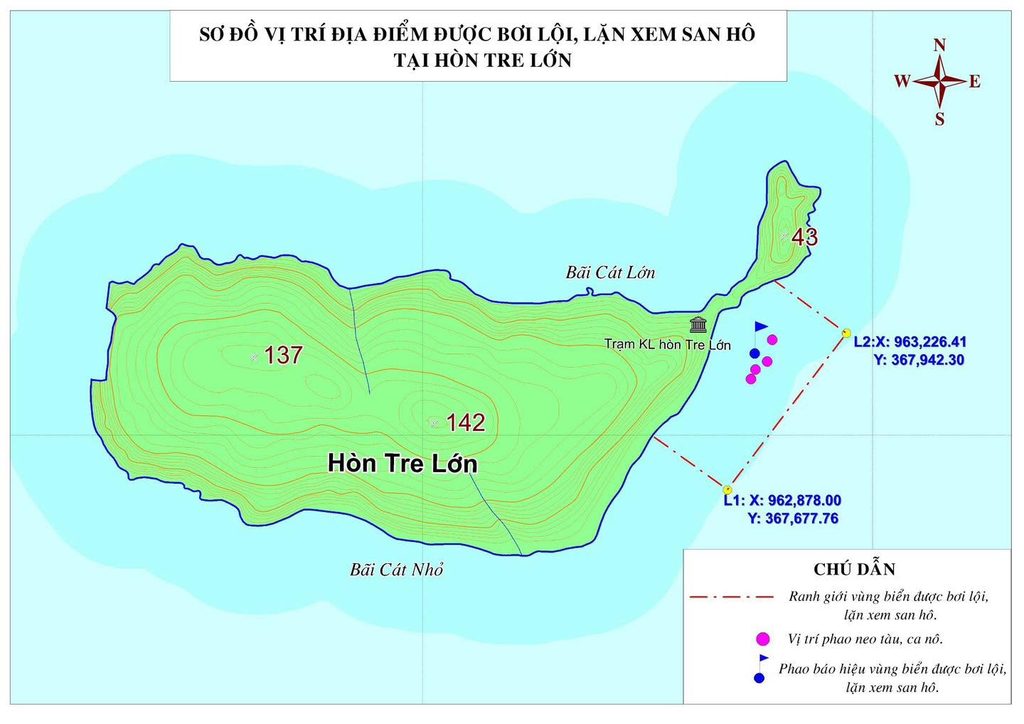
Hòn Tre Lớn, also known as Phú Hòa, belongs to the Côn Đảo archipelago and lies west of Côn Sơn Island. According to Côn Đảo National Park, it covers approximately 77 hectares and is about 5 km from Bến Đầm Port.
It is one of the islands of outstanding ecological value managed by Côn Đảo National Park.
The name Hòn Tre Lớn is thought to come from the dense stands of bamboo that once grew on the island. The Côn Đảo archipelago also includes Hòn Tre Nhỏ and the place name Đầm Tre, both of which recall the presence of this familiar plant.
Seen from above, green forest covers almost the entire island, contrasting with the turquoise sea. From some angles, its shape even resembles a green heart in the ocean.
Hòn Tre Lớn has no bustling urban areas or large resorts. Its simplicity, seclusion and closeness to nature give the island its distinctive appeal.
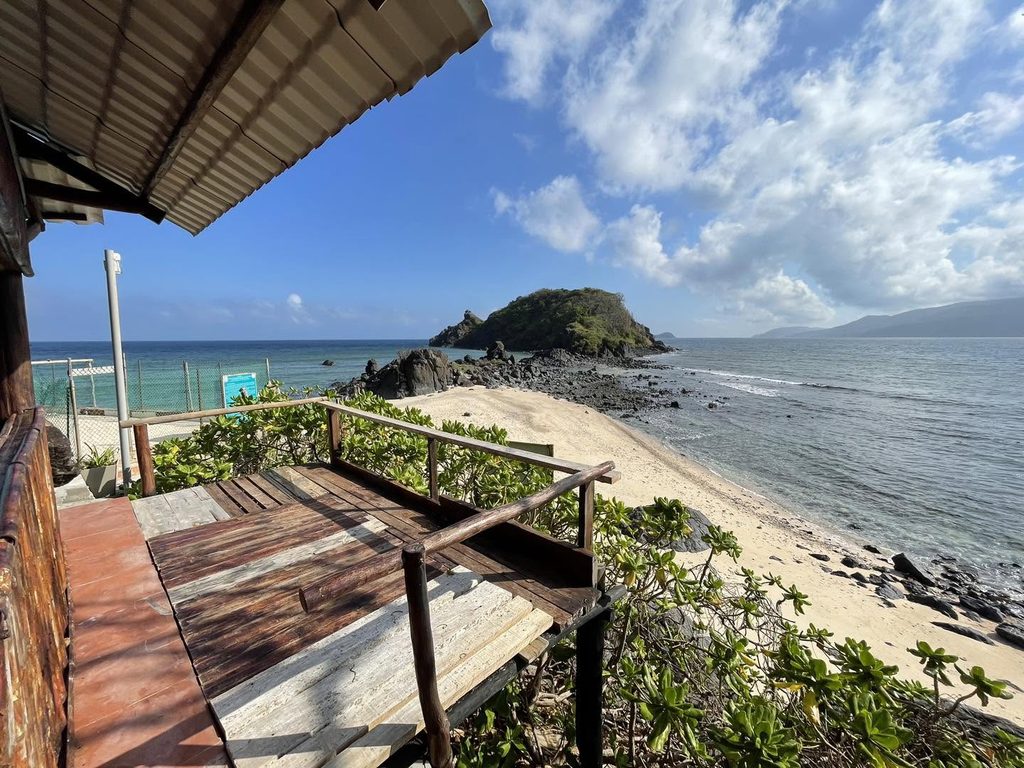
The unspoiled beauty of Hòn Tre Lớn
A small sandy beach among green hillsides
One of Hòn Tre Lớn’s scenic highlights is a small sandy beach tucked between hillsides and coastal rock formations.
The beach has stretches of white sand interspersed with pebbles, rocks and natural coral fragments. Depending on the location and the action of the waves, its contours can change, creating relatively flat areas alongside more rugged sections of shoreline.
On calm days, the water around the island is clear enough to see the seabed in some shallow areas.
The scene feels peaceful and removed from everyday life. Shoreline trees, the sound of waves and greenery stretching from the forest to the sea make this an inviting setting for sightseeing, learning about nature and photography.
However, because Hòn Tre Lớn lies within a conservation area, swimming and visits must take place only at permitted locations and when conditions are safe.
A world of coral beneath clear water
The waters around Hòn Tre Lớn contain rich coral ecosystems that provide habitat for many marine species.
The reefs create varied seabed structures, offering shelter, feeding grounds and breeding sites for many fish, mollusks and other invertebrates.
Côn Đảo National Park’s publications record marine life here including reef fish, giant clams, spider conchs and sea turtles.
The waters around the island are managed with an emphasis on ecological restoration, protecting natural habitats and maintaining biodiversity.
For visitors who enjoy exploring the ocean, swimming and snorkeling over coral in permitted areas can be rewarding experiences.
Beneath the surface, coral formations of different shapes and schools of small fish create a lively underwater world. Yet this beauty is also highly vulnerable to human disturbance.
Visitors must avoid stepping on coral, touching marine animals or removing any coral specimens or living creatures from their natural environment.
Forest ecosystems and remarkable birds on Hòn Tre Lớn
In addition to its marine resources, Hòn Tre Lớn supports forest ecosystems characteristic of tropical islands.
Vegetation characteristic of coastal islands
The island has many plants adapted to sea winds and coastal conditions, notably tropical almond, sea poison tree, tree heliotrope and stands of bamboo.
These plants form a green canopy and ground cover while playing an important role in reducing erosion, protecting the soil and sustaining animal habitats.
Layers of shrubs, trees and woodland create a variety of habitats within a relatively small island area.
The island is also home to black giant squirrels, monitor lizards, pythons, snakes and other wildlife.
A home for distinctive bird species
Many birds have been recorded on Hòn Tre Lớn, including swiftlets, Nicobar pigeons and pied imperial pigeons.
The Nicobar pigeon is particularly striking, with iridescent plumage that shimmers green and purple in natural light.
The pied imperial pigeon is another notable bird in Côn Đảo’s forest ecosystems.
For nature lovers and wildlife photographers, watching these birds in their natural habitat can be a memorable experience.
Wild birds, however, are often sensitive to noise and human presence. Visitors should not approach nests, play sounds to lure birds, feed them or try to capture wildlife for photographs.
Watch from an appropriate distance and follow the instructions of the forest protection staff.
Hòn Tre Lớn: One of Côn Đảo’s most important sea turtle nesting beaches
If one natural feature best represents Hòn Tre Lớn’s importance, it is the island’s role in sea turtle conservation.
According to Côn Đảo National Park, Hòn Tre Lớn’s sandy beach is among the archipelago’s busiest sea turtle nesting areas, ranked second after Cát Lớn Beach on Hòn Bảy Cạnh.
Over successive nesting seasons, large numbers of female turtles have been recorded returning here to nest.
Sea turtle nesting season on Hòn Tre Lớn
Sea turtle nesting season in Côn Đảo generally runs from around April to September, with the peak varying according to natural conditions each year.
After dark, when conditions are suitable, female turtles come ashore from the sea, using their flippers to cross the sand and find a place to dig a nest.
Nesting takes considerable effort. A female must choose ground high enough to reduce the risk of flooding, with sand suitable for digging an egg chamber.
The nesting beach on Hòn Tre Lớn is uneven. Some areas have relatively fine, suitable sand, while others contain pebbles, rocks or coral fragments.
Hard or rocky ground can make it difficult for female turtles to find a suitable nesting spot.
After laying her eggs, the female covers the nest with sand and returns to the sea, leaving the eggs to develop in their natural environment.
The quiet work of sea turtle conservationists
Behind every nesting season is the persistent work of forest rangers and conservation teams.
At conservation stations, staff regularly patrol the beach, track female turtles, record nest locations and assess risks from tides, erosion and other environmental factors.
Nests considered at risk may be moved to a protected hatchery area following specialist procedures.
Throughout incubation, monitoring temperature, moisture and nest condition is important to the hatchlings’ chances of emerging successfully.
When the time is right, hatchlings are helped back to the sea in accordance with conservation procedures.
This work requires patience, responsibility and an understanding of sea turtle biology.
Despite the limited living conditions on the small island, rangers continue protecting the nesting beaches, helping to conserve one of Vietnam’s important sea turtle populations.
Can you watch nesting turtles and release hatchlings on Hòn Tre Lớn?
Visitors can learn about and register for sea turtle conservation experiences run by Côn Đảo National Park or an authorized operator.
Depending on the timing, programs may include learning about sea turtle life cycles, observing conservation work, watching females come ashore to nest or taking part in a hatchling release.
Please note, however, that these are not activities visitors can undertake independently.
Access to nesting beaches, observation times, participant numbers and how activities are organized must all comply with conservation rules.
In particular, do not use lights or camera flash, approach nesting females, or touch eggs or hatchlings without instructions.
Seeing a female turtle lay eggs or watching hatchlings emerge depends on natural events and cannot be guaranteed on every visit.
Visitors interested in these experiences should contact Côn Đảo National Park in advance for schedules and participation requirements.
Historical traces on Hòn Tre Lớn
Alongside its natural beauty, Hòn Tre Lớn is connected with a chapter in the history of the Côn Đảo prison system.
Under French colonial rule, several isolated islands around Côn Sơn were used to detain political prisoners or carry out forced labor.
According to the book Huyền thoại Côn Đảo, the French colonial authorities used Hòn Tre Lớn as a place of exile for political prisoners in 1930–1931, as they did Hòn Cau.
A former place of imprisonment for Lê Duẩn
One significant part of Hòn Tre Lớn’s history concerns Lê Duẩn, who later served as General Secretary of the Central Committee of the Communist Party of Vietnam.
Huyền thoại Côn Đảo records that the French colonial authorities exiled Lê Duẩn to Hòn Tre Lớn, where he was subjected to forced labor for a period.
This account helps demonstrate Hòn Tre Lớn’s historical importance within the wider network of prisons and detention sites on Côn Đảo.
Amid today’s peaceful surroundings, the stories of those exiled here recall a period of great hardship and add depth to an exploration of the island’s historical heritage.
A visit to Hòn Tre Lớn can combine nature exploration with learning about Côn Đảo’s revolutionary history through appropriate publications and guided interpretation.
Things to experience on Hòn Tre Lớn
Swimming and enjoying nature
In favorable weather, Hòn Tre Lớn’s beach offers a quiet setting with clear water and natural surroundings.
Visitors can swim in permitted areas, rest on the sand or admire the coastal rocks.
Snorkeling over coral
The reefs around the island provide habitat for many marine species.
When conditions are suitable and activities are authorized, visitors can go snorkeling with a mask, snorkel and the necessary safety equipment.
Birdwatching and exploring forest ecosystems
Hòn Tre Lớn suits nature lovers who want to learn about island vegetation and observe wild birds.
These activities must follow permitted routes, keep noise to a minimum and avoid disturbing wildlife habitats.
Learning about sea turtle conservation
This is a particularly valuable experience for anyone interested in nature conservation.
Through authorized programs, visitors can learn about the rangers’ work, methods of protecting nests and the challenges facing sea turtles.
Sightseeing and nature photography
Hòn Tre Lớn offers distinctive landscapes of green forest, rocky shores, white sand and blue sea.
With little impact from urban development, the island provides plenty of inspiration for nature photography and landscape exploration.
How to reach Hòn Tre Lớn, Côn Đảo
To visit Hòn Tre Lớn, travelers first need to reach Côn Sơn Island before continuing by boat.
According to Côn Đảo National Park’s ecotourism route information, visitors can travel by boat or speedboat from the Bến Đầm Port area or Ông Đụng Beach, depending on the program.
As the island is managed by the national park, visitors must register with an authorized operator and follow the instructions of the staff in charge.
Do not independently charter a boat to land on the island or organize activities in the conservation area without approval.
How long does a visit to Hòn Tre Lớn take?
According to Côn Đảo National Park’s route information, the trip can take approximately 4–6 hours.
The actual duration depends on the departure point, weather, permitted activities and the operator’s itinerary.
Overnight programs focused on sea turtles or conservation activities require separate registration and approval.
Hòn Tre Lớn is not a place for independent camping or unrestricted overnight stays.
What should you bring?
Visitors should bring suitable outdoor clothing, non-slip footwear, a hat, sunscreen, drinking water and necessary personal items.
Water activities require life jackets and appropriate equipment.
Participants should be in good physical condition, especially if the program includes walking on steep terrain between the ranger station and the beach.
Also, minimize plastic waste, do not collect natural specimens and follow all wildlife protection guidance.
When to visit Hòn Tre Lớn
The best time to visit Hòn Tre Lớn depends on the purpose of the trip and the weather.
For sightseeing, swimming or snorkeling, prioritize days with calm seas, stable weather and good underwater visibility.
If you are interested in learning about sea turtles, the period from around April to September is particularly relevant because it coincides with the annual nesting season.
However, rough seas can still occur during this period and affect boat or speedboat transfers.
Visitors should therefore confirm operating conditions with the responsible organization before departure.
Why is Hòn Tre Lớn worth exploring in Côn Đảo?
Hòn Tre Lớn is not an island for crowded trips centered on commercial entertainment.
Its value lies in its natural beauty, the richness of its ecosystems and its special role in sea turtle conservation.
Within just approximately 77 hectares, the island brings together tropical island forest, habitats for birds and other wildlife, coral reefs and sandy beaches used by nesting sea turtles.
Its historical associations with the detention of political prisoners under French colonial rule add another dimension to the destination.
A visit to Hòn Tre Lớn reveals that Côn Đảo’s beauty lies not only in its clear-water beaches, but also in the life protected through each sea turtle nesting season and the historical stories preserved on its small islands.
Traveling responsibly, respecting the environment and following conservation rules are practical ways to help preserve that beauty for future generations.
References: Côn Đảo National Park Management Board; Huyền thoại Côn Đảo, Vietnam News Agency Publishing House, 2013; Côn Đảo National Park information on sea turtle conservation.