
Located in the northeast of Côn Sơn Island, Đầm Tre Bay is one of Côn Đảo’s distinctive natural attractions. With no rows of beachfront guesthouses or busy tourist facilities, it remains a peaceful place of green hillsides, mangroves, natural rocky shores and clear seawater enclosed by forested mountains.
A visit to Đầm Tre Bay is more than a sightseeing trip. Visitors can explore the forest and marine ecosystems of Côn Đảo National Park, learn about nature conservation, observe marine life and experience a trek through the forest.
During the Sargassum seaweed season in particular, the bay is transformed by golden-brown beds of seaweed spreading beneath the surface, creating an unusual seascape in Côn Đảo.
Where is Đầm Tre Bay?
Đầm Tre Bay lies in the north and northeast of Côn Sơn Island, within the Côn Đảo Special Zone of Ho Chi Minh City. According to the National Park’s visitor information, it is about 3 km from Côn Đảo Airport and lies within the strictly protected zone of Côn Đảo National Park.
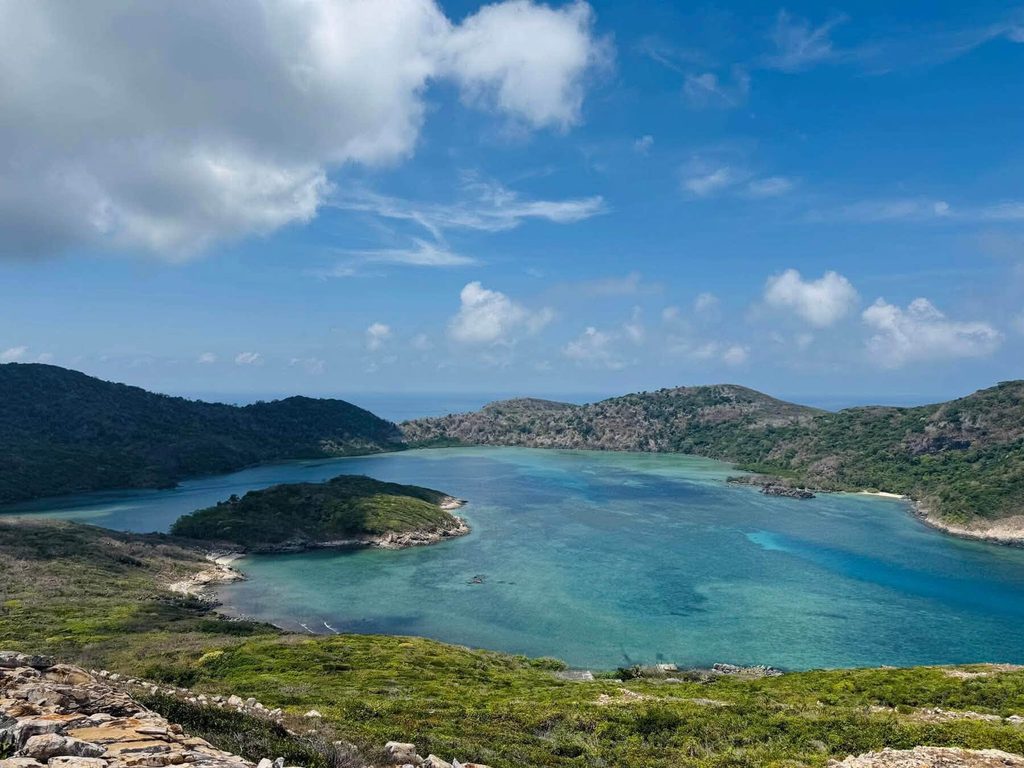
Covering approximately 132 hectares, the bay extends inland and is surrounded by mountain ranges. Its relatively sheltered shape means the water inside is generally less directly exposed to large waves than stretches of coast facing the open sea. However, safety still depends on each day’s weather, wind and tides.
The name Đầm Tre is thought to come from the bamboo that once grew densely on the surrounding hillsides.
The natural landscape combines mountain forests, mangroves, intertidal areas, seagrass meadows and coral reef ecosystems. This diversity makes Đầm Tre valuable not only for its scenery but also for research and biodiversity conservation.
Unlike Đầm Trầu Beach near Côn Đảo Airport, Đầm Tre Bay is not an ordinary recreational beach. Visitors need to register for a visit that complies with National Park regulations before coming.
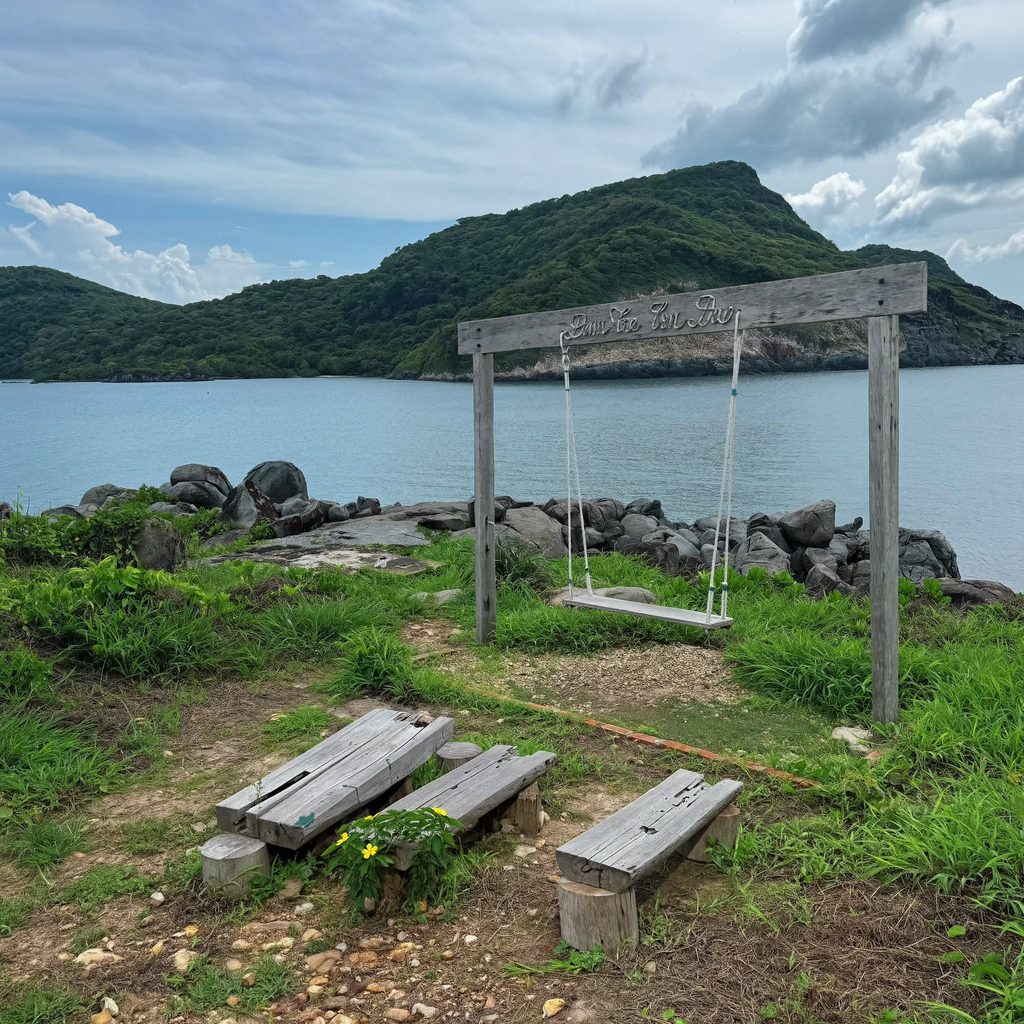
The natural beauty of Đầm Tre Bay
A bay surrounded by forested mountains
The first impression on arriving at Đầm Tre is its relative seclusion.
Green hillsides reach almost to the water’s edge, interspersed with rocky shores and intertidal areas. The water inside the bay changes colour with the light, from pale blue in the shallows to deeper blue in the deeper areas.
With few buildings altering the shoreline, Đầm Tre retains the character of a natural bay.
From suitable viewpoints, visitors can see the mouth of the bay opening onto the sea, while headlands and hillsides shelter the inner waters.
Đầm Tre’s scenery is particularly appealing to those who enjoy nature photography, observing coastal landforms and finding peaceful surroundings.
Mangroves and coastal ecosystems
One of Đầm Tre Bay’s notable natural assets is its mangrove ecosystem.
Plants adapted to saltwater and tidal conditions form green stands along the shore, providing shelter and feeding grounds for many small organisms.
Beneath the canopy and in the shallow water, visitors can learn about the links between forest and marine environments. These areas support small fish, crustaceans and many intertidal organisms.
Mangrove visits are usually organised as part of the National Park’s ecotourism programmes, accompanied by a guide.
Coral reefs and marine life
Đầm Tre Bay also has coral reefs, seagrass meadows and many species typical of tropical seas.
When weather and underwater visibility are favourable, visitors may go snorkelling to observe the marine environment. Guides determine which areas may be accessed to limit impacts on sensitive habitats.
The Đầm Tre area is also known for giant clam conservation. These molluscs have considerable ecological value.
Observe these animals from an appropriate distance. Visitors must not touch, lift or remove any marine life from its natural habitat without permission.
What makes the Sargassum season at Đầm Tre Bay special?
One of the most striking natural phenomena at Đầm Tre Bay is the Sargassum season.
Sargassum is a type of brown seaweed that can form dense underwater beds. It anchors to rocks or other suitable seabed surfaces, with branches reaching upwards and moving with the currents.
At Đầm Tre Bay, Sargassum usually grows most vigorously from around March to June, depending on environmental conditions in each year.
When the seaweed becomes dense, golden-brown patches can be seen from above, contrasting with the blue sea. Underwater, the seaweed canopy provides habitat for juvenile fish, shrimp, crabs and many other small organisms.
Sargassum does more than create attractive scenery. Its beds help sustain habitats, provide shelter and support food chains in the marine ecosystem.
For visitors interested in Sargassum ecosystems or underwater photography, this is a period worth considering when planning a trip to Đầm Tre.
However, seaweed density varies from year to year and with weather and water conditions. The dense beds shown in promotional images cannot be seen at every point in the season.
How to reach Đầm Tre Bay, Côn Đảo
Đầm Tre Bay currently features in Côn Đảo National Park’s ecotourism programmes, with two main ways to reach it: trekking through the forest or travelling by sea.
Because the bay is in a strictly protected zone, visitors must register for an authorised programme and be accompanied by a National Park guide.
Trekking through the forest to Đầm Tre Bay
This option suits people who enjoy trekking and want to discover Côn Đảo’s natural environment.
From central Côn Đảo, visitors travel by road towards Cỏ Ống Airport. Depending on the organised route, the walk may combine coastal stretches, rocky shores and forest trails.
One of the described access routes passes through the Bãi Vông area before continuing deeper into the forest towards the bay.
Along the way, visitors can observe tropical forest trees, vines, ferns and many plants characteristic of the island.
With favourable conditions, squirrels, monkeys, monitor lizards or forest birds may occasionally be spotted. However, wildlife sightings are not guaranteed, and visitors should keep their distance when observing animals.
Walking time depends on the starting point, chosen route, tides and the group’s fitness. Some itineraries involve almost two hours of walking before reaching the bay.
This is not a route to explore independently by following an online map. Visitors must follow a programme organised or authorised by the National Park.
Travelling by boat or speedboat
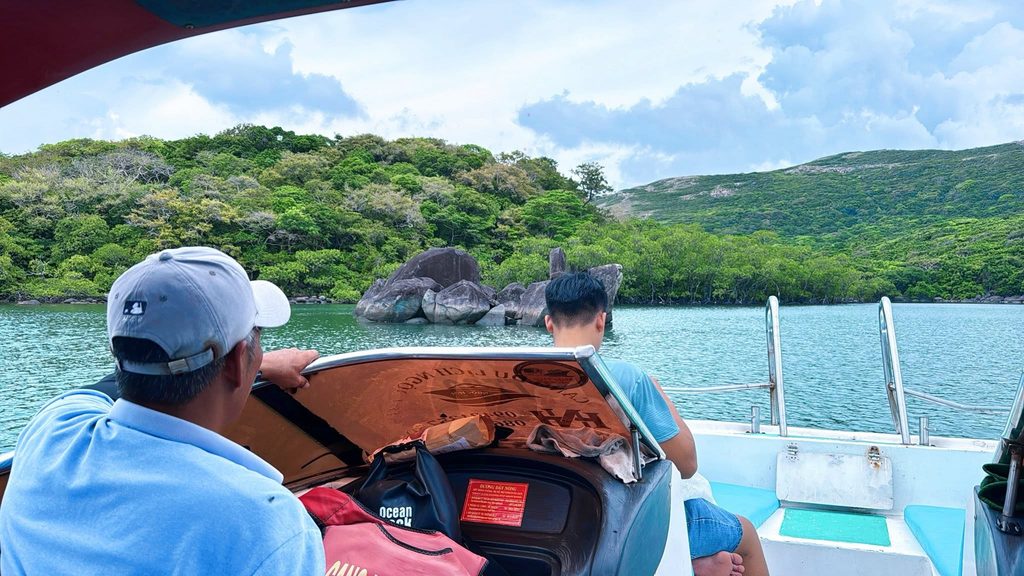
For visitors wishing to approach Đầm Tre from the sea, tours may use a boat or speedboat, subject to actual operating conditions.
The sea journey offers a different view of northeastern Côn Sơn Island.
From the boat, visitors can admire rocky stretches of coast, green hillsides and headlands projecting into the sea. Depending on the itinerary, the journey may pass Cape Lò Vôi, Đất Dốc, Cape Chim Chim and the waters northeast of Côn Đảo.
Boat arrangements, pickup points and departure times must be confirmed with the responsible operator. Do not independently charter a vessel to enter the strictly protected zone without approval.
Things to experience at Đầm Tre Bay
Trekking and nature observation
The walk to Đầm Tre provides an opportunity to experience Côn Đảo’s forest environment.
Rather than simply arriving at a viewpoint and taking photographs, visitors can learn how ecosystems change with the terrain, from mountain forests down to coastal land.
Guides may also introduce local plants, animals and ongoing conservation work in the area.
Kayaking or stand-up paddleboarding
On organised programmes, and when weather permits, kayaking or stand-up paddleboarding is a suitable way to observe the water and coastal scenery.
Moving slowly across the bay allows visitors to appreciate the tranquillity of the natural surroundings and view mangrove areas from the water.
Wear a life jacket, remain within the permitted paddling area and do not enter sensitive conservation zones.
Swimming and snorkelling over coral reefs
Some ecotourism programmes at Đầm Tre include swimming and snorkelling to observe coral.
These activities depend on sea conditions, visibility, participants’ health and the organiser’s instructions.
When snorkelling, avoid standing on reefs, stepping on seabed areas with living organisms or collecting any specimens.
Learning about swiftlet habitats
The Đầm Tre area is also associated with the habitats and nesting sites of swiftlets.
On an authorised visit, visitors can learn about these birds’ way of life and the importance of protecting their natural habitats.
Observation must follow the managing authorities’ regulations, particularly during the breeding season. Do not approach nests without permission or make noise that disturbs the birds.
Nature and landscape photography
Đầm Tre offers many subjects for landscape photography: a curving shoreline, hillsides, green mangroves, clear water and natural rocky shores.
If you can visit during the Sargassum season, the underwater scenery is another interesting subject for photography enthusiasts.
Do not climb dangerous cliffs in search of a camera angle. Drone use and specialist equipment must comply with applicable regulations, with permission obtained where required.
When should you visit Đầm Tre Bay?
Đầm Tre Bay’s beauty changes with the seasons, but conditions are not always suitable for outdoor activities.
Around March to June is generally a period of interest for those wishing to see Sargassum. Each day’s weather determines whether trekking, kayaking, swimming or snorkelling can take place.
Other months may still be suitable for learning about forest and marine ecosystems, depending on the approved operating schedule.
On days with strong winds, heavy rain or rough seas, programmes may be adjusted or suspended for safety.
Check the forecast and contact the organiser before departure rather than choosing your travel dates solely by the tourism season.
A suggested one-day itinerary for Đầm Tre Bay
A visit to Đầm Tre Bay can fill a whole day, allowing time for both forest walking and learning about coastal ecosystems.
Morning: Departure and forest exploration
Meet at the time arranged with the organiser and attend the safety and environmental protection briefing.
Begin the trek along the guided route. Along the way, the group may stop at safe locations to observe forest trees, learn about plants and animals, and take photographs.
Midday: Explore Đầm Tre Bay
Arrive at the bay, take a break and explore the natural scenery.
Depending on the programme, visitors may tour the mangroves, observe marine life or take part in paddling activities.
Meals and rest breaks are arranged according to the booked services, in areas where their use is permitted.
Afternoon: Further activities and return
Join the remaining ecotourism activities if weather conditions are suitable.
The group then collects all rubbish and returns along the instructed route, ensuring the trip ends before dark.
This itinerary is for reference only. The walking route, transport and order of activities may vary according to the National Park’s programme.
Prices and how to register for a visit to Đầm Tre Bay
As part of Côn Đảo National Park, visits to Đầm Tre Bay must comply with nature conservation regulations.
The National Park currently advertises a one-day Đầm Tre Bay Hiking programme, tour code CDP 005, with listed reference prices from VND 720,000 to VND 1,250,000. The actual cost depends on the programme, group size and services confirmed at registration.
Visitors should distinguish between the National Park entrance fee and the price of a programme that includes a guide, transport or other services.
For information and registration, contact:
- Côn Đảo National Park Management Board
- Ecotourism and Environmental Education Department
- Telephone: 0983 830 669
- Website: https://condaopark.com.vn
Ask in advance about the routes currently operating, fitness requirements, included services, fees and the policy on weather-related schedule changes.
Important tips for visiting Đầm Tre Bay
Prepare carefully before visiting to keep the trip safe and minimise impacts on nature.
Clothing and equipment: Wear comfortable clothes and shoes with good grip, and bring a hat, drinking water and sun protection. Insect repellent and a waterproof bag for electronic devices may also be useful.
Forest safety: Do not leave the group, stray from the trail or enter areas not authorised for visits.
Water safety: Swim, snorkel or paddle only within the areas indicated by your guide, using appropriate protective equipment.
Environmental protection: Do not litter. Limit single-use plastics, and do not break branches, collect plants, take coral or catch marine life.
Overnight stays and meals: Do not camp, light fires or organise activities outside the permitted scope without approval. Longer stays require registration and approval from the Management Board in accordance with the regulations.
Đầm Tre Bay is a nature conservation area, so protecting the environment must come before recreation and photography.
Which other places can you visit on the same Côn Đảo trip?
When exploring Côn Đảo, visitors can set aside a full day for Đầm Tre and arrange visits to other places during the rest of their stay.
Đầm Trầu Beach: Near Côn Đảo Airport, this beach is known for its sandy shore and coastal scenery. It can be included in a separate itinerary and should not be confused with Đầm Tre Bay.
Đất Dốc Beach: This coastal area lies along the northeastern route around Côn Sơn Island and offers beautiful mountain and sea views.
The Côn Đảo Prison system: Its prison camps and historic sites help visitors understand a distinctive period in Côn Đảo’s history.
Hàng Dương Cemetery: An important memorial site and the resting place of many revolutionary fighters and patriots.
Bến Đầm Bay: In the southwest of Côn Sơn Island, this bay combines coastal scenery with port operations and maritime transport.
Combining ecotourism sites, beaches and historic landmarks gives visitors a fuller picture of Côn Đảo’s nature and local life.
Getting to Côn Đảo for a visit to Đầm Tre Bay
To reach Đầm Tre Bay, visitors first need to travel to Côn Sơn Island by plane or high-speed ferry.
For travel by sea, ferries to Côn Đảo may depart from mainland ports according to each transport operator’s schedule.
Check sailing schedules, departure and arrival ports, and ticket availability before planning your trip.
After arriving in Côn Đảo, take a taxi, hired car service or other suitable transport to the meeting point for the Đầm Tre Bay programme.
Allow at least one day to explore the bay, with extra time in your plans in case weather affects high-speed ferry services or outdoor activities.
You can find fleet information, sailing schedules, reference fares and booking guidance at Con Dao Express – condaoexpress.com to help plan your journey to Côn Đảo.
Frequently asked questions about Đầm Tre Bay
Are Đầm Tre Bay and Đầm Trầu Beach the same place?
No. They are two different places in the northern part of Côn Sơn Island. Đầm Trầu is a beach near the airport, while Đầm Tre Bay lies in the protected area of Côn Đảo National Park and has its own visitor regulations.
Can you walk to Đầm Tre Bay independently?
Visitors should not enter Đầm Tre Bay independently. It is a strictly protected area, and visits require a National Park guide and must follow an authorised route.
Do you need to know how to swim to visit Đầm Tre Bay?
Not necessarily if you only join walking and sightseeing activities. However, swimming, snorkelling and paddling have their own safety requirements. Tell the organiser about your swimming ability when registering.
Can children visit Đầm Tre Bay?
Participation depends on their age, health, walking ability and the conditions of the specific programme. Families should discuss suitable routes with the organiser.
Can Đầm Tre Bay be visited as a day trip?
Yes. Côn Đảo National Park offers day-trip programmes, usually lasting around 6–8 hours depending on the itinerary and activities.
Can you see Sargassum at Đầm Tre Bay all year round?
No. Sargassum usually grows most strongly from March to June. The actual timing and density vary with natural conditions.
Đầm Tre Bay: a natural corner of Côn Đảo worth protecting
Đầm Tre Bay is not a destination for crowded recreational activities. Its appeal lies in its natural scenery, the diversity of its ecosystems and the experience of discovering a coastal area that retains much of its unspoilt character.
A trip to Đầm Tre also shows that Côn Đảo offers more than beautiful beaches and famous historic sites. Behind its mountain ranges and coastline are important natural areas where conservation work helps protect habitats for many species.
If you enjoy trekking and observing nature, and would like to discover Côn Đảo beyond its familiar sights, Đầm Tre Bay is worth considering for your itinerary.
Con Dao Express helps visitors learn about destinations, choose itineraries and keep up to date with high-speed ferry information for Côn Đảo.
Website: https://condaoexpress.com