
Ngôn ngữEnglish
A return ferry trip to Côn Đảo is easier to organise when you check both the journey to the island and the journey home before booking hotels and transfers. Your choice of return sailing often determines how many nights you can stay.
Remember the road journey to the port, check-in time, collecting baggage and travel from the arrival port to your accommodation. These stages take time even though they are not part of the sea crossing.
Start with the date you need to be home
If you need to return for work or catch a flight, find a suitable ferry back to the mainland first. Then count your hotel nights backwards from that date. Sea conditions can change, so leave a reasonable contingency when the timetable matters.
Choose a port based on your whole journey
Compare Trần Đề and Vũng Tàu using the actual departures on your dates, as well as how you will reach each port. A shorter sea crossing is not always the easier journey if your road transfer is longer.
- By coach: ask whether it drops you at the actual ferry pier or somewhere else.
- By car: allow time for parking, unloading luggage and entering the boarding area.
- For groups: agree on a clear meeting point and someone to check all passengers are present.
- With children or passengers needing assistance: allow extra time and notify the ticket issuer in advance.
Treat each sailing as a separate booking
For both directions, write down the route, sailing date, departure and arrival ports, time, assigned vessel and booking reference. A route may have several vessels or operators. Vessel profiles are useful for learning about the fleet, but they are not proof that a particular vessel is running on your date. Trưng Trắc is presented here mainly on the Phan Thiết–Phú Quý route.
Allow time at the boarding point
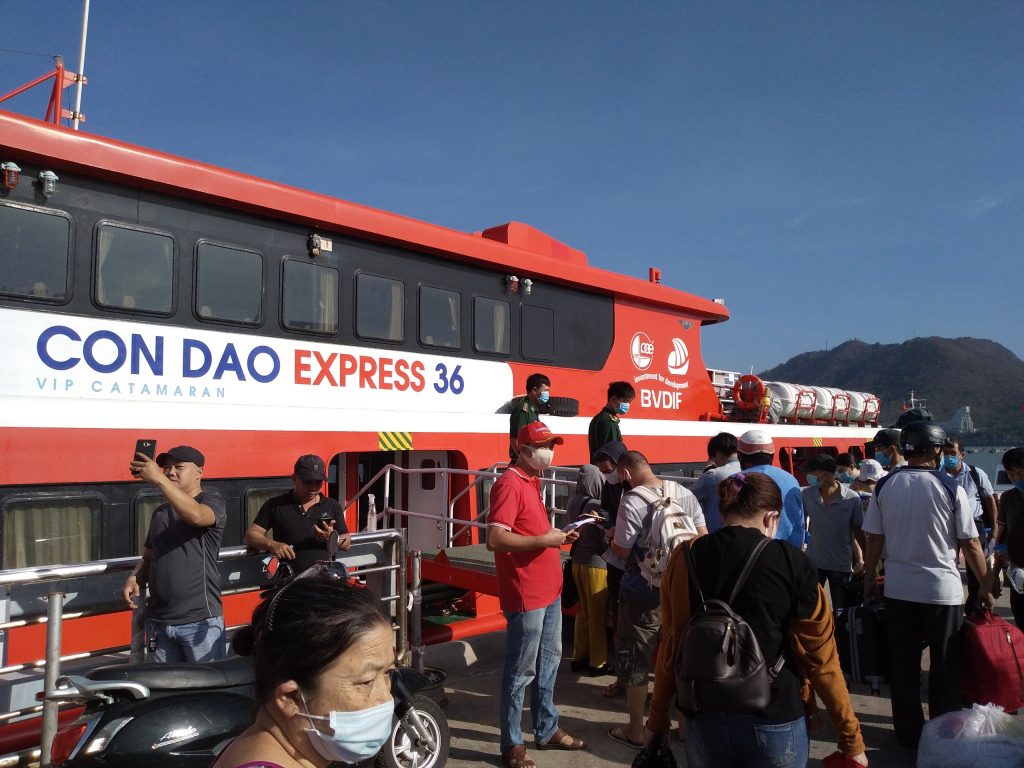
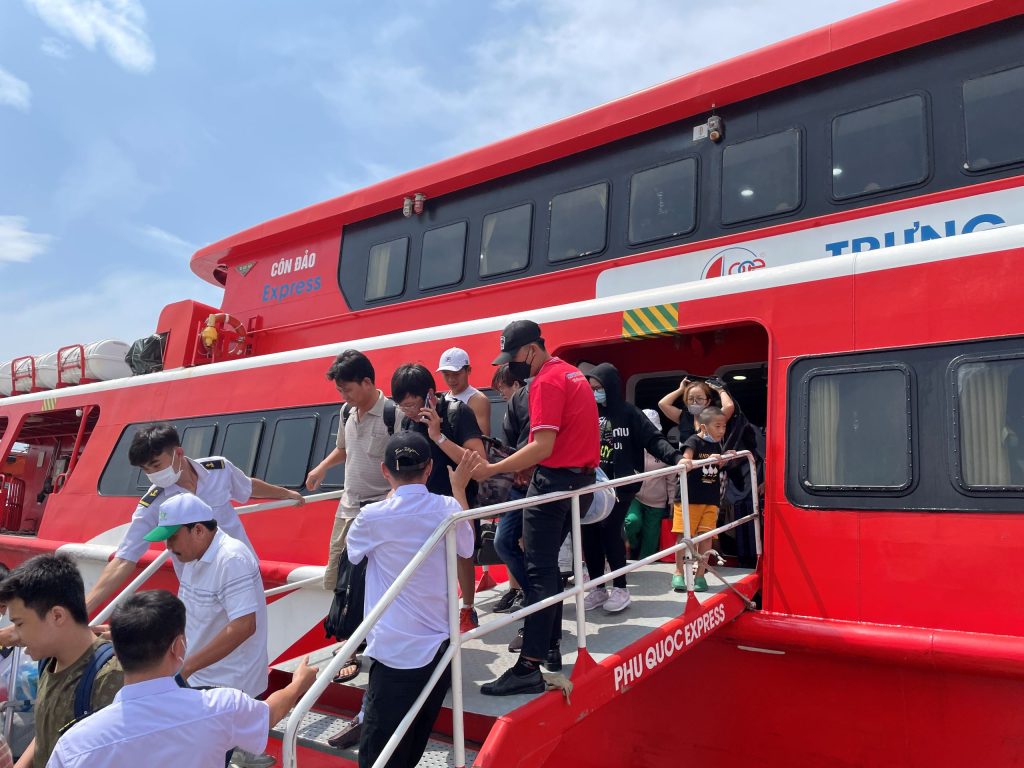
Passengers may need to pass through a terminal and gangway. Follow the reporting time and meeting point on the ticket rather than judging from a photograph. The photographs below show boarding near Côn Đảo Express 36 and, separately, Trưng Trắc, which is associated with the Phan Thiết–Phú Quý route.
Keep one practical itinerary note
Instead of searching through separate messages, store the main information in one note shared with your group:
- Departure from home: transport, pickup point and time.
- Arrival at the mainland port: exact terminal and check-in time.
- Outbound ferry: date, time, vessel and ticket reference.
- On-island transfer: vehicle meeting point, hotel and contact details.
- Return ferry: date, time, vessel, reference and transport back to port.
- Final connection: coach, flight or other transport home.
Put time buffers where transfers happen
The most useful extra time is around changes of transport, such as from a car to the ferry, from the ferry to a pickup vehicle and from the mainland port to a connecting flight. Include baggage collection and time finding the meeting point. There is no single buffer that suits every journey.
Check again before both departures
Once you receive tickets, verify passenger names, identification details, sailing dates, classes and any separate references for each direction. Share the confirmed ports and times with your drivers. Before each leg, read the latest operator notice and reporting instructions.