
When people think of Hòn Bảy Cạnh, Bãi Cát Lớn and trips to watch sea turtles nest often come to mind. But the island also has Bãi Dương, another beach connected with turtle protection and the lives of those working in nature conservation.
Without rows of seaside restaurants or busy resorts, Bãi Dương offers a different way to explore Côn Đảo. Visitors come to enjoy the sea, learn about the ecosystem, and hear the stories behind preserving a sandy beach where sea turtles can return to breed.
Bãi Dương’s appeal goes beyond its scenery. It also offers a glimpse of the work that takes place behind familiar images of tourism in Côn Đảo: nighttime patrols, carefully monitored nests, and mornings when hatchlings begin their journey into the ocean.
Where is Bãi Dương on Hòn Bảy Cạnh?
Bãi Dương lies on the northwestern side of Hòn Bảy Cạnh, in the Côn Đảo archipelago. This island is separate from the main island of Côn Sơn, so visitors need to travel by sea to reach it.
Bãi Dương is managed by Côn Đảo National Park and is associated with nature protection and sea turtle conservation. Access to the beach, visitor activities, and stays on the island must follow the managing authority’s guidance.
Is Bãi Dương the same as Bãi Cát Lớn?
No. Bãi Dương and Bãi Cát Lớn are two different beaches on the same island of Hòn Bảy Cạnh.
Both are associated with sea turtle conservation, but their names should not be used interchangeably. Photographs, landing points, and visitor programs for each beach also need to be identified separately.
When booking a trip advertised as “exploring Hòn Bảy Cạnh,” ask whether the program visits Bãi Dương, Bãi Cát Lớn, or another area. Not every trip to Hòn Bảy Cạnh includes a stop at Bãi Dương.
Understanding this distinction helps you choose the experience you want and avoid misunderstandings when looking at promotional photographs or itineraries.
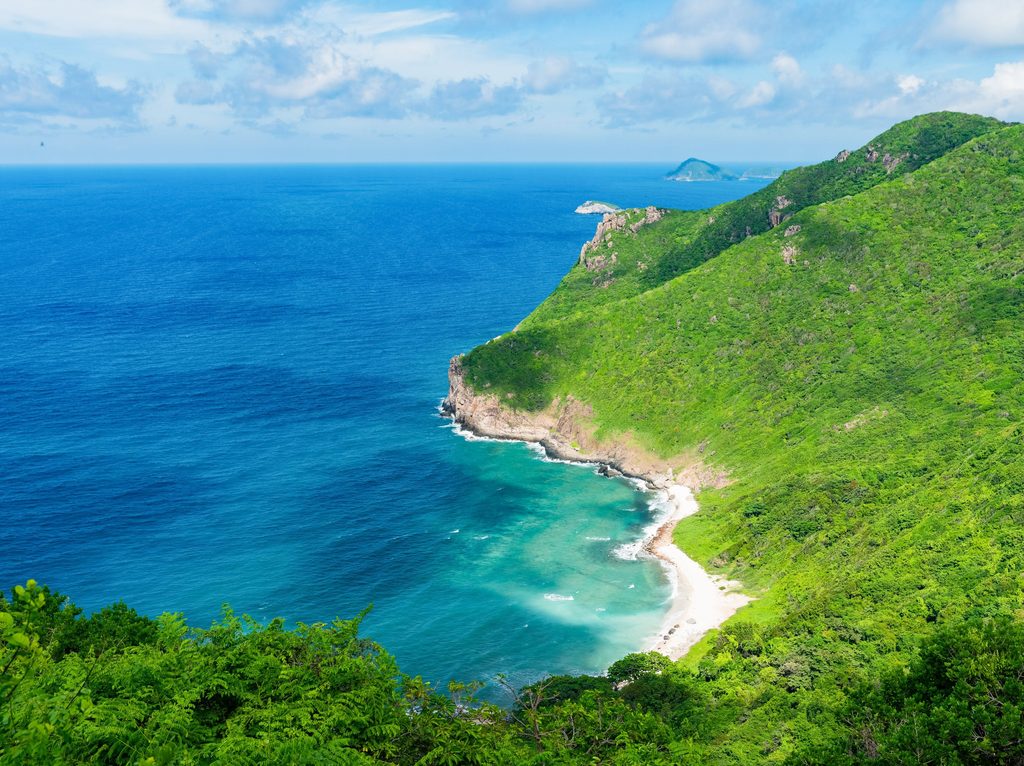
The beauty of Bãi Dương: Forest, sand, and blue sea
A relatively undisturbed natural setting
Bãi Dương combines coastal woodland, sandy beach, and stretches of natural rocky shoreline. In front lies the sea surrounding Hòn Bảy Cạnh; behind it is the island’s vegetation.
The setting is more closely associated with conservation than with conventional leisure services. Rather than expecting a beach with every amenity, visitors should see Bãi Dương as a place to learn about nature.
In favorable weather, the water’s colors, the light, and the shoreline create many beautiful views. A patch of blue sea beside the forest or the marks of waves on the sand can be enough to make visitors want to linger.
Actual conditions, however, change with the weather, tides, and season. Calm seas and clear water seen in photographs cannot be guaranteed on every trip.
A stretch of sand that needs to remain undisturbed
At many tourist beaches, a broad expanse of sand is seen as a place for recreation. At sea turtle nesting beaches, that same sand is also habitat that needs protection.
An apparently empty area may be part of a turtle nesting ground or an area used for monitoring and conservation. Visitors should not enter without permission simply because there are no fences or buildings.
If you are allowed to take a walk, use the designated paths and areas. Do not dig in the sand, push objects into the beach, or arrange belongings where there are signs of turtle nests.
Sometimes the best way to explore is to observe from a respectful distance, allowing the landscape and wildlife to continue undisturbed.
The lives of the people who protect Bãi Dương
Behind the coastal scenery are the lives and work of forest rangers and others involved in conservation at Bãi Dương.
Accounts from volunteers who have stayed here describe island life as requiring careful use of stored freshwater, electricity, and essential supplies. Living conditions are not those of a resort with continuously available services.
Conservation work also extends far beyond the moments when visitors see turtles. It involves regular activities such as beach patrols, monitoring breeding turtles, tending the hatchery, maintaining the environment, and collecting rubbish.
Nights spent working by the sea
When most daytime visits have ended, the work of monitoring sea turtles may only just be beginning.
The people protecting the beach must watch for turtles coming ashore and carry out the appropriate specialist procedures. Some nights involve long waits; at other times, the work is continuous.
For visitors, hearing about these patrol shifts adds depth to the experience. The sight of hatchlings returning to the sea becomes more than an isolated moment: it is the result of many tasks carried out beforehand.
Using electricity and water responsibly
If your program includes a stay on the island, ask in advance about living conditions and what you need to bring.
Do not assume that a conservation site has hotel-style amenities. Preparing appropriately, conserving water, and following shared living arrangements will make the trip easier.
A conversation with your guide may reveal other fascinating details: caring for the beach during the rainy season, recognizing turtle tracks, or dealing with rubbish washed ashore.
These are stories that a landscape photograph alone cannot tell.
Bãi Dương and sea turtle conservation
Bãi Dương is one of the areas in Côn Đảo where sea turtles come ashore to breed. Green sea turtles, known locally as vích, are associated with conservation programs at the national park’s nesting beaches.
For sea turtles, a suitable sandy beach is more than a place to come ashore. It is also a place to build nests, incubate eggs, and begin the life cycle of the next generation.
For this reason, conservation must take priority during visits to Bãi Dương. Rules about light, noise, where to stand, and observation times all matter to the turtles’ breeding activity.
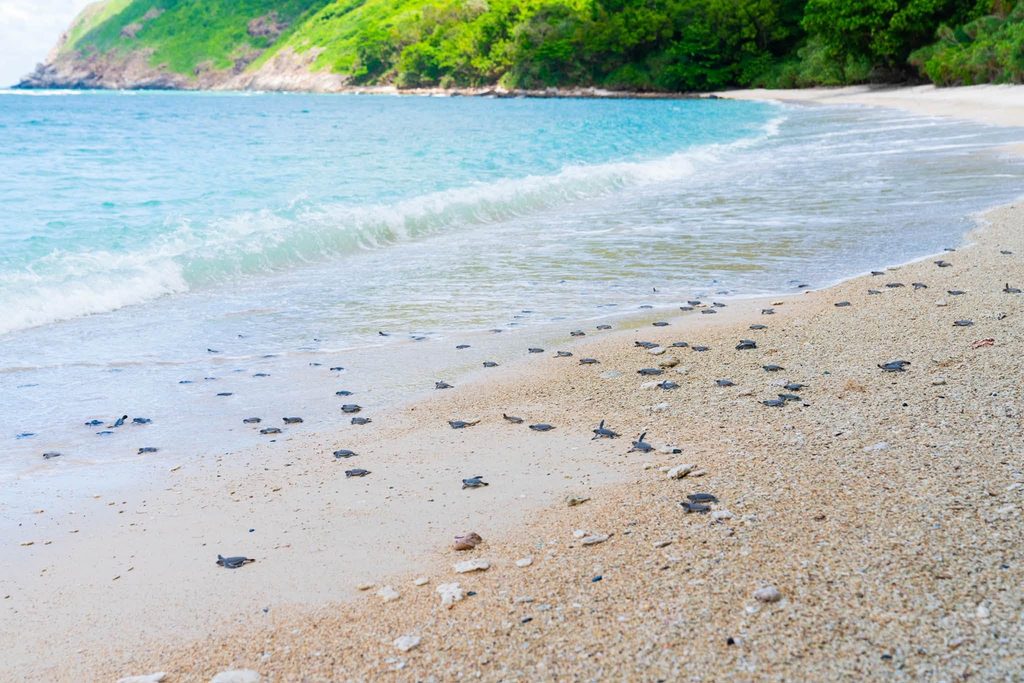
Watching female turtles come ashore to nest
Female turtles usually come onto the beach to breed at night. On organized programs, visitors approach the observation area only when the person in charge determines that conditions are suitable.
Spotting a turtle coming ashore does not always mean visitors can immediately be brought closer. Observation must avoid frightening the turtle, changing its behavior, or causing it to return to the sea before completing the nesting process.
Visitors must remain quiet, stand in the designated positions, and not use lights without permission. Do not use flash photography, touch turtles, or block their movement.
What makes this experience memorable is not getting as close as possible, but having the chance to observe a natural process without disturbing it.
Learning how nests are protected
Through a suitable visitor program, you may learn how staff monitor female turtles, record nests, and protect the incubation and hatching process.
Nests must be handled by trained staff. Visitors must not touch eggs, enter the hatchery, or alter markers on the beach without permission.
Your guide’s explanations will help you understand why nests need monitoring and which factors can affect the development of hatchlings.
Watching hatchlings return to the sea
Hatchling releases depend on when the eggs hatch and the practical conditions for organizing the activity. They cannot be arranged to happen at any time to suit visitors.
When taking part, stay within the designated area, do not obstruct the hatchlings’ path, and do not hold them back for photographs.
Do not pick up, lift, or put hatchlings into the water on your own. Any assistance, if needed, must follow conservation staff’s specialist guidance.
Watching tiny turtles head toward the sea is memorable, but their safety always matters more than a photograph.
Are turtle sightings at Bãi Dương guaranteed?
There is no guarantee that female turtles will appear or that hatchlings will emerge during your visit.
Even during the breeding season, turtle activity depends on nature. Weather, sea conditions, and conservation requirements can also change the program.
Visitors should therefore distinguish between registering for a program to learn about sea turtles and being promised a guaranteed turtle sighting.
A visit still has value when it offers an introduction to conservation work, a chance to observe the landscape, and a better understanding of wildlife habitats.
It is best not to place all your expectations on a single moment and then treat necessary changes to the program as shortcomings of the trip.
How does conservation volunteering differ from visiting Bãi Dương?
Bãi Dương has been included in Côn Đảo National Park’s nature conservation experience programs. However, volunteering is not the same as buying a conventional tour.
A volunteer program may have its own requirements concerning time commitments, health, duties, and living conditions. Participants need to apply according to the organizer’s announcements, rather than arriving at the beach and asking to volunteer on the spot.
A visitor program, by contrast, usually has a more clearly defined duration and range of activities suited to a travel itinerary.
If you hope to become more involved in conservation work, check the recruitment announcement for the current program. Do not assume that last year’s dates or conditions apply to a new trip.
How to reach Bãi Dương on Hòn Bảy Cạnh
Reach Côn Sơn before continuing to Hòn Bảy Cạnh
Visitors first need to reach Côn Đảo, then continue by sea to Hòn Bảy Cạnh as part of the program they have booked.
Distinguish between high-speed ferries from the mainland to Côn Đảo and boats or speedboats used for visiting the smaller islands. These are separate journey legs, with their own schedules and operating conditions.
Avoid booking a Bãi Dương visit too close to your ferry or flight arrival time, as travel times and pickup arrangements may change.
Confirm the correct boarding point and destination
Before the day of your visit, confirm the meeting point, boarding location, and departure schedule with the organizer.
Do not choose a pier yourself and simply wait there. Nor should a generally advertised travel time to Hòn Bảy Cạnh be treated as a guaranteed journey time to Bãi Dương.
Beach access and boarding or disembarking conditions depend on waves, tides, and the actual route. Follow the instructions provided, particularly when traveling with children or older adults.
Does chartering a private speedboat give unrestricted beach access?
Hiring your own transport does not mean you may land without permission, stay on the island independently, or enter turtle breeding areas.
Bãi Dương is managed by Côn Đảo National Park. Visits need to be registered and coordinated with the responsible unit in accordance with the regulations.
When booking, ask for clear confirmation that the program actually visits Bãi Dương, which activities are permitted, and who will guide you at the destination.
When should you visit Bãi Dương?
For those interested in sea turtles, approximately April to October is the period commonly associated with the breeding season in Côn Đảo. However, this is regional seasonal information, not a guarantee that turtles will be present at Bãi Dương on any particular day.
The best time for your visit should be determined by the programs actually available and the weather conditions.
For a daytime visit, choose a manageable itinerary with enough time for travel and rest. For a nighttime turtle-watching program, ask carefully about overnight facilities, waiting times, and the return schedule.
If your stay in Côn Đảo is short, avoid trying to fit too many activities into one day. A well-defined program suited to your fitness is more rewarding than an overcrowded itinerary with no contingency time.
What should you prepare before the trip?
First, ask the organizer what supplies are included and what visitors need to bring themselves.
Consider comfortable clothing, footwear suitable for boarding and disembarking, sun protection, and a protective bag for electronic devices.
If staying overnight, bring personal essentials appropriate to the actual conditions at the destination. Avoid excessive luggage or unnecessary equipment.
Families with young children should discuss the length of the sea journey, mobility requirements at the beach, and the need to remain quiet while observing turtles.
Anyone prone to seasickness or with health concerns should inform the organizer so they can receive advice on choosing a suitable program.
How to visit without harming nature
Keep quiet in turtle breeding areas. Do not shout, play music, or use lighting without permission.
Do not touch turtles, turtle eggs, or marine wildlife. Observe them according to the instructions of the person in charge.
Do not swim, dive, or camp without permission. These activities require separate confirmation and should not be assumed to be included in every visitor program.
Take rubbish to the designated disposal point. Limit single-use plastics and do not leave food scraps or belongings on the beach.
Respect the forest rangers’ working areas. Do not enter specialist facilities freely, use equipment, or interrupt conservation work.
Take photographs responsibly. Do not stage scenes with animals, hold turtles for photographs, or enter restricted areas to find a better angle.
If you find an animal caught in a net, an injured animal, or a dangerous object on the shore, inform your guide rather than intervening without the necessary expertise.
How can Bãi Dương fit into a Côn Đảo itinerary?
Bãi Dương suits visitors who want to spend time learning about nature, rather than simply stopping for photographs.
You could devote the first days of your trip to historical sites and scenery on Côn Sơn, then set aside a separate program to explore Hòn Bảy Cạnh.
If conservation is your main interest, there is no need to add several more islands to the same day. Listening to guidance, observing, and resting are also part of the experience.
For trips to Côn Đảo by sea, check ferry schedules, the arrival port, and onward pickup arrangements before finalizing a smaller-island visit.
Visitors can consult Con Dao Express for ferry routes, schedules, and fares, and explore information about other destinations to build a suitable itinerary.
Frequently asked questions about Bãi Dương on Hòn Bảy Cạnh
Is Bãi Dương the same as Bãi Cát Lớn?
No. They are two different beaches on Hòn Bảy Cạnh. When booking, confirm the program’s exact destination.
Can you reach Bãi Dương by motorbike?
No. Bãi Dương is on Hòn Bảy Cạnh, separate from the main island of Côn Sơn. Visitors need to travel by sea.
Can you visit Bãi Dương freely?
Visitors need to register for a program and follow Côn Đảo National Park’s rules. Do not land at the beach or enter conservation areas without permission.
Can you watch female turtles lay eggs during a daytime visit?
Female turtles usually come ashore to breed at night. A daytime visitor program should not be assumed to include watching turtles lay eggs.
Can visitors hold hatchlings themselves?
Do not pick up, lift, or hold hatchlings for photographs without permission. All activities must follow conservation staff’s instructions.
Can you stay overnight at Bãi Dương?
Stays depend on the programs authorized to operate and the site’s capacity to receive visitors. You must register in advance and may not camp independently.
Is Bãi Dương suitable for children?
Families should discuss age, health, ability to travel by sea, and living conditions with the organizer. Children must be supervised by adults and follow the rules for observing wildlife.
The quiet moments that make Bãi Dương memorable
A beach may stay in your memory because of the color of its water, its shoreline, or a photograph. At Bãi Dương, what remains may instead be the story of a patrol shift, the way its caretakers conserve freshwater, or the reason the whole group must stand still to give sea turtles space.
There is no need to turn the trip into a search for as many experiences as possible. By visiting responsibly, taking time to listen, and leaving no rubbish behind, you already help preserve the qualities that make this place special.
Bãi Dương on Hòn Bảy Cạnh is therefore more than a place to admire the sea. It also helps visitors understand Côn Đảo’s natural world and the sustained work being done to protect it.