
Set amid the blue waters of Côn Đảo, Hòn Cau welcomes visitors with white sandy beaches, leaning coconut palms and crystal-clear water surrounding coral reefs. Alongside its distinctive natural scenery, the island preserves historical traces, stories of revolutionary prisoners and the poignant legend of Trầu and Cau.
Hòn Cau is one of the outstanding ecotourism destinations within Côn Đảo National Park. Visitors can leave everyday life behind for a while, immerse themselves in nature, learn about marine ecosystems, discover stories from the past and enjoy the peaceful beauty of an island that retains much of its unspoiled character.
Where is Hòn Cau?
Hòn Cau, also known as Phú Lệ, is part of the Côn Đảo archipelago, approximately 12 km from Côn Sơn Island. According to research publications on Côn Đảo, it covers about 1.8 km², equivalent to 180 hectares.
One of Hòn Cau’s distinctive features is its natural freshwater supply, something relatively rare on small offshore islands. This helps sustain lush vegetation, including coconut palms, phong ba trees and fruit trees.
Viewed from the sea, Hòn Cau stands out for its forest-covered slopes, pale sandy beaches along the foot of the hills and waters that change from turquoise near the shore to deep blue farther out.
Its secluded, quiet atmosphere suits nature lovers seeking a different side of Côn Đảo from the familiar attractions on the main island.
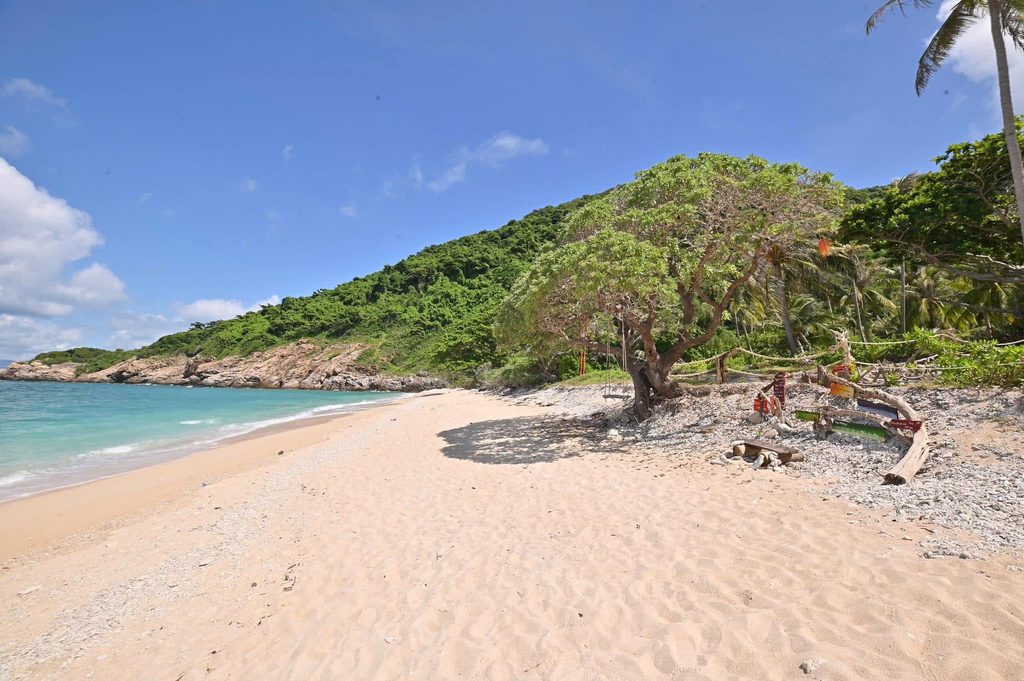
Hòn Cau and traces of an ancient settlement
Less widely known is that, beyond its natural scenery, Hòn Cau also holds considerable archaeological and historical interest.
Archaeological research in Côn Đảo has recorded traces of human settlement on Hòn Cau dating back thousands of years. Stone tools, pottery and other evidence of daily life show that people lived here, used marine resources and maintained connections with communities along the mainland coast.
In local historical accounts, Hòn Cau is also associated with Xóm Bà Thiết, a settlement that existed during the reign of Emperor Gia Long.
Fresh water, relatively fertile soil and the rich fishing grounds around the island provided favorable conditions for its inhabitants.
According to written accounts and oral tradition, Hòn Cau once had a variety of areca palm whose large, pink-skinned, sweet-tasting fruit was popular among people in the Gia Định region. Rows of areca palms, orchards and stories of island life form a distinctive layer of cultural memory here.
Although life on the island has changed, these traces of the past continue to make Hòn Cau a place of discovery, rather than simply a destination for swimming or relaxation.
Hòn Cau in the history of Côn Đảo Prison
Behind Hòn Cau’s peaceful beauty lies a painful chapter of history.
During French colonial rule over Côn Đảo, Hòn Cau was used as an isolated detention and forced-labor site for prisoners, including many patriots and revolutionary activists.
Its separation from the main island made it a convenient place to isolate prisoners. Yet even in those harsh conditions, the detainees maintained their solidarity, continued studying and kept up their struggle.
A former place of imprisonment of Prime Minister Phạm Văn Đồng
One important episode in Hòn Cau’s history concerns the late Prime Minister Phạm Văn Đồng, a leader who made many contributions to Vietnam’s revolutionary history.
According to the biography of Phạm Văn Đồng published by the National Political Publishing House, the French colonial authorities sent him to Côn Đảo in July 1930.
After a period in prison camps on the main island, he and several other political prisoners were transferred to Hòn Cau in late 1930.
While imprisoned here, he and his comrades organized study sessions, shared knowledge, discussed politics and helped one another further their education.
Despite being deprived of their freedom, these revolutionary prisoners turned their imprisonment into an opportunity to strengthen their resolve and deepen their understanding.
These activities left a distinctive mark on the history of the prisoners’ struggle in Côn Đảo.
Today, a visit to Hòn Cau offers more than beautiful island scenery. It also provides an opportunity to learn about a place associated with the revolutionary life of the late Prime Minister Phạm Văn Đồng and many other Vietnamese patriots.
The legend of Trầu and Cau: an island’s tragic love story
Alongside its history, Hòn Cau features in a folk legend linked to the names Hòn Cau, Đầm Trầu Beach and Ông Câu Beach.
According to a story passed down in Côn Đảo, a young man named Trúc Văn Cau and a young woman named Mai Thị Trầu lived in Cỏ Ống village around the end of the eighteenth century.
They grew up together and fell deeply in love. When Trầu became pregnant, Cau returned home to ask his father’s permission to marry her.
But a painful truth was unexpectedly revealed: Trầu and Cau were half-siblings who shared the same father.
Unable to bear this cruel turn of events, the heartbroken Cau left his village and crossed the sea on a raft to a distant island. In one version of the story, he later married another woman and lived on that island for the rest of his life.
Local tradition holds that, after his death, the island where he had lived became known as Hòn Cau.
Meanwhile, Trầu remained in Cỏ Ống village, waiting day and night for her beloved to return. Unable to bear the pain of separation and the gossip surrounding her, she went to a lagoon and ended her life.
In later folk tradition, that place became associated with the name Đầm Trầu Beach, now one of Côn Đảo’s best-known beaches.
Cau’s father, tormented by remorse and shame over the family’s story, is said to have gone to a deserted beach to live in seclusion. The name Ông Câu Beach is also explained through this legend.
The following verses have also been passed down in folk tradition:
Where have you gone, never to return?
Perhaps purple trousers now rest beside a brown shirt.
Whoever goes back, ask Ông Câu for me:
How far is Hòn Cau from Đầu Trầu Beach?
Côn Đảo’s tragic tale of Trầu and Cau reflects how earlier generations explained the origins of place names through love stories, human destinies and communal memory.
Although this is a folk legend rather than a verified historical event, it enriches the cultural life of the islands.
The natural beauty of Hòn Cau, Côn Đảo
Unspoiled beaches and clear blue water
One of Hòn Cau’s attractions is its largely natural coastal scenery.
White sandy beaches nestle at the foot of the hills, backed by lush vegetation and coconut palms reaching toward the sea.
In favorable weather, the water around Hòn Cau can be clear enough to reveal rocks and the contours of the seabed in shallow areas.
With few urban structures, the landscape feels close to nature. The sound of waves, wind through the trees and the stillness of a small island create a distinctive experience.
Visitors can walk along the shore, take photographs, admire the scenery or simply sit in the shade and enjoy the sea air.
Exploring the coral reefs
The waters around Hòn Cau contain coral ecosystems and a wide variety of marine life.
Snorkeling with a mask and snorkel is an activity of interest to many visitors joining marine ecotourism trips here.
When the sea is calm and underwater visibility is good, visitors can observe coral formations, schools of small fish and the natural scenery beneath the surface.
Coral ecosystems are sensitive, however, and easily damaged by direct human contact.
When snorkeling or diving, visitors should keep a suitable distance, avoid stepping on or touching coral and never take marine creatures home as souvenirs.
Coconut groves, fruit trees and lush vegetation
Hòn Cau’s beauty is not limited to the sea: it also has relatively diverse terrestrial vegetation.
Coconut palms, phong ba trees and other greenery shape the island’s distinctive landscape. Some orchards also recall the lives, land clearing and labor of the inhabitants and prisoners once brought here.
Natural fresh water plays an important role in keeping Hòn Cau green.
Exploring the island’s ecosystems offers an opportunity to understand the connections between geology, water supplies, vegetation and human life on an offshore island.
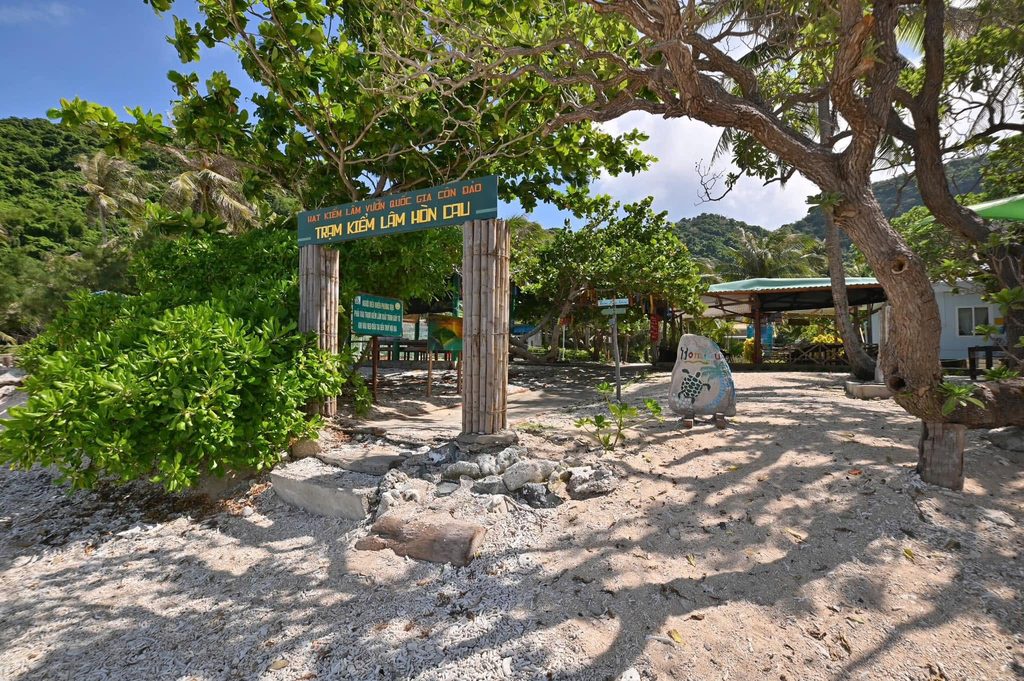
Hòn Cau and sea turtle conservation
Hòn Cau lies within the area managed and protected by Côn Đảo National Park, whose forest and marine ecosystems have significant conservation value.
One of the important activities here is protecting sea turtles, particularly during the breeding season.
Sea turtles generally come ashore on suitable sandy beaches to lay their eggs. In managed areas, forest rangers and conservation staff monitor nesting, protect nests and assist with incubation and hatching when necessary.
Watching nesting turtles and releasing hatchlings
At suitable times, visitors can register for programs organized by Côn Đảo National Park to learn about sea turtle conservation.
Activities may include observing female turtles coming ashore to nest at night and taking part in releasing hatchlings into the sea when eggs have hatched.
These experiences offer an opportunity to learn about sea turtles’ life cycle, the threats they face and efforts to protect the habitat of these rare animals.
Turtle watching must, however, follow strict conservation rules under the guidance of responsible staff.
Visitors must not approach nesting females on their own, dig up nests, use lighting that disturbs turtles or conduct activities outside the permitted scope.
Please note: Turtle watching and hatchling releases depend on the breeding season, natural conditions, visitor capacity and the National Park’s programs. These activities are not included in every visit to Hòn Cau.
What can you experience on a trip to Hòn Cau?
A visit to Hòn Cau can combine several activities, depending on the approved program and conditions at the time.
Visiting historic sites and learning about the past
Visitors can learn about traces of ancient settlement, the history of imprisonment on Hòn Cau and stories connected with the late Prime Minister Phạm Văn Đồng.
This activity suits people interested in Côn Đảo’s history, families with children and groups combining sightseeing with heritage education.
Swimming and snorkeling
When sea conditions are favorable, visitors can swim and explore coral in permitted areas.
Life jackets and appropriate equipment should be used, and the organizer’s instructions must be followed.
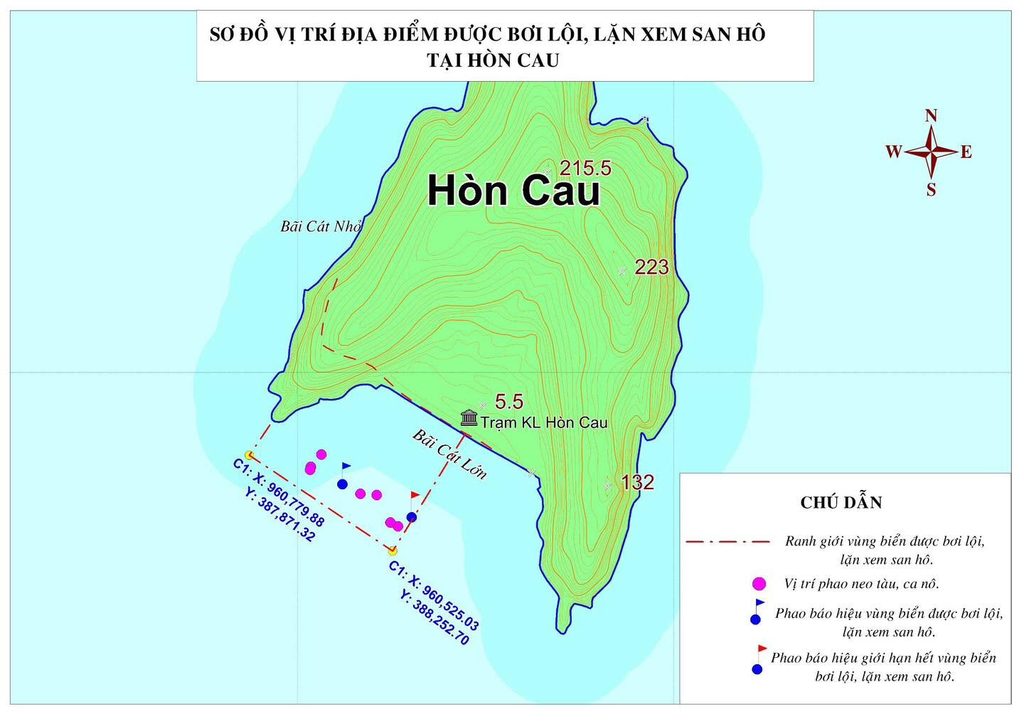
Exploring nature and taking photographs
Beaches, coconut palms, green slopes and clear water provide many appealing settings for photography.
Hòn Cau is particularly suitable for nature photography enthusiasts who want to capture island scenery in peaceful surroundings.
Learning about nature conservation
Through National Park programs, visitors can learn about forest protection, marine resource management, coral protection and sea turtle conservation.
This meaningful experience makes a trip more than a chance to relax: it also helps raise environmental awareness.
A guide to visiting Hòn Cau, Côn Đảo
How do you get to Hòn Cau?
To reach Hòn Cau, visitors first need to arrive on Côn Sơn Island.
From the main island, visitors can join marine ecotourism programs using boats or speedboats operated by qualified providers.
As Hòn Cau is part of Côn Đảo National Park, transporting visitors to the island, visiting conservation areas and organizing activities must comply with the Park’s management regulations.
Visitors should confirm the meeting point, transport, visiting conditions, costs and included services in advance.
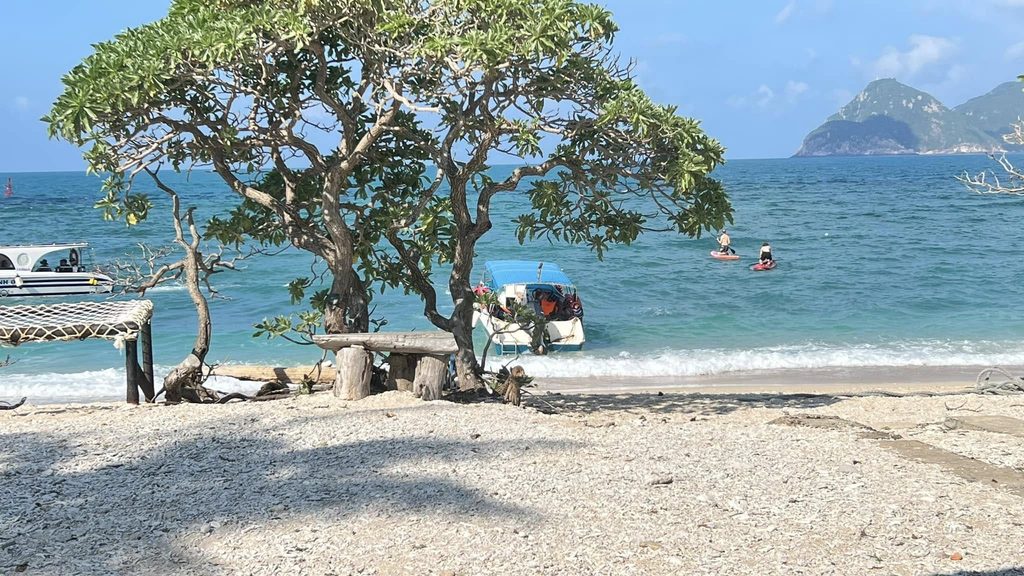
How long does a visit to Hòn Cau take?
A visit to Hòn Cau may last around 6–8 hours, or follow an itinerary adjusted to the conditions at the time.
On a day trip, visitors can combine sightseeing, historical exploration, a look at the island’s vegetation and activities at sea.
Overnight programs require advance registration with an authorized organizer and confirmation of accommodation, capacity, safety arrangements and conservation activities.
Do not camp, stay overnight or organize group activities in protected areas without approval.
What should you bring to Hòn Cau?
Visitors should bring light clothing, suitable footwear, a hat, sunscreen, personal drinking water and other essentials.
Water activities require a life jacket and suitable snorkeling or diving equipment. Non-swimmers and those with little experience should inform the guide in advance.
Limit single-use plastics, take rubbish back to the main island and do not collect plants, catch animals or remove coral without authorization.
Boat and speedboat schedules depend particularly on wind, waves and local management arrangements. Check the latest information before departure.
A suitable time to explore Hòn Cau
The best timing for a visit to Hòn Cau depends mainly on the weather, wind direction and sea conditions.
Calm days with small waves and good underwater visibility are generally more favorable for speedboat trips, swimming and snorkeling.
Visitors interested in sea turtle conservation programs may wish to consider the breeding season, which is generally concentrated in the middle months of the year. However, nesting and hatching follow natural patterns and cannot be guaranteed to fit a fixed schedule.
Discuss arrangements with the organizer and Côn Đảo National Park before making plans.
What makes Hòn Cau a special destination in Côn Đảo?
Hòn Cau’s appeal goes beyond its beautiful beaches and coral reefs beneath clear blue water.
It is also a place of ancient settlement traces, folk tales of Trầu and Cau, memories of imprisoned patriots and ongoing nature conservation work.
In a single trip, visitors can discover the sea’s beauty, learn about history and appreciate the importance of protecting fragile ecosystems.
Hòn Cau is therefore more than a stop for ecotourism enthusiasts. It is part of Côn Đảo’s natural and cultural heritage, where every stretch of sand, row of trees and historical trace suggests a story of its own.
A visit to Hòn Cau is more rewarding when visitors take home not only beautiful photographs, but also a deeper understanding of history and a greater commitment to protecting Côn Đảo’s island environment.
References: Côn Đảo National Park; Côn Đảo Tourism Information Portal; Bà Rịa – Vũng Tàu Museum; “Phạm Văn Đồng – Tiểu sử” (Phạm Văn Đồng: A Biography), National Political Publishing House; research proceedings “Côn Đảo – 150 năm đấu tranh, xây dựng và phát triển” (Côn Đảo: 150 Years of Struggle, Construction and Development).