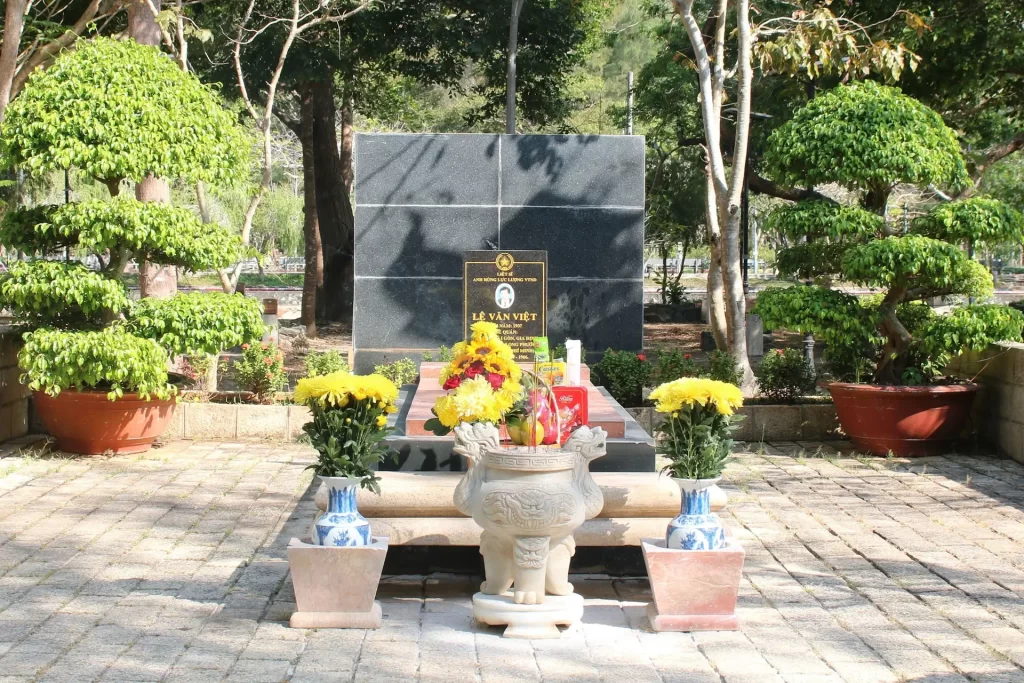
Hero of the People’s Armed Forces Lê Văn Việt (1937–1966), also known as Tư Việt and Nguyễn Văn Hai, was a member of the Saigon–Gia Định urban commando force. He took part in numerous armed operations during the resistance against the United States, notably the attack on the US Embassy in Saigon on 30 March 1965. Arrested, sentenced to death and exiled to Côn Đảo, he later joined his comrades in an unsuccessful escape attempt in October 1966. Following torture and complications from an earlier wound, he died on 30 November 1966, aged just 29.
Lê Văn Việt’s life is connected with two historic places: Saigon, where he served in the urban commando force, and Côn Đảo, where he spent his final months in prison and was laid to rest.
Who was Lê Văn Việt?
Lê Văn Việt was born in 1937 in Long Phước commune, Thủ Đức district, an area now within Long Phước ward, Ho Chi Minh City.
He was commonly known as Tư Việt. When arrested, he gave his name as Nguyễn Văn Hai. Some sources on the Saigon urban commando force also record the alias Ba Thợ Mộc.
Born into a poor farming family with a patriotic tradition, Lê Văn Việt encountered the revolutionary movement early and chose to join the struggle for national liberation.
According to biographical sources, he began revolutionary activities in January 1959. On 3 February 1960, he joined the local armed forces in Thủ Đức.
He became a Party member on 1 October 1962.
During his activities, Lê Văn Việt was assigned various duties, from reconnaissance and gathering information to armed operations in the Saigon–Gia Định area.
His courage, adaptability and sense of responsibility made him one of the fighters remembered in the history of the Saigon urban commando force.
Years with the Saigon urban commando force
In the early 1960s, armed struggle in the Saigon–Gia Định area developed as the war expanded.
Lê Văn Việt operated in Thủ Đức and neighbouring areas. According to historical materials on revolutionaries imprisoned at Côn Đảo, in March 1960 he carried out an attack targeting American advisers in the Tăng Nhơn Phú area.
From December 1962 to December 1963, he attended reconnaissance and commando training, gaining additional knowledge and skills for his assigned missions.
Following training, Lê Văn Việt continued taking part in engagements on the outskirts of Saigon.
In December 1963, he participated in an engagement at Củ Chi. In April 1964, he took part in an attack on the Cầu Xáng outpost in the Hóc Môn area.
These operations took place during a period when revolutionary armed forces conducted numerous attacks on military positions and facilities of the Republic of Vietnam government.
Among the missions in which Lê Văn Việt participated, the 1965 incident at the US Embassy in Saigon became the most frequently cited milestone in his biography.
The attack on the US Embassy on 30 March 1965
On the morning of 30 March 1965, an explosive attack occurred at the US Embassy in the Hàm Nghi Street area of central Saigon.
It was a major incident during the Vietnam War, causing severe damage to the embassy building and numerous casualties, including American personnel and Vietnamese civilians.
According to Vietnamese historical accounts of the Saigon urban commando force, Lê Văn Việt was part of the combat team supporting the attack.
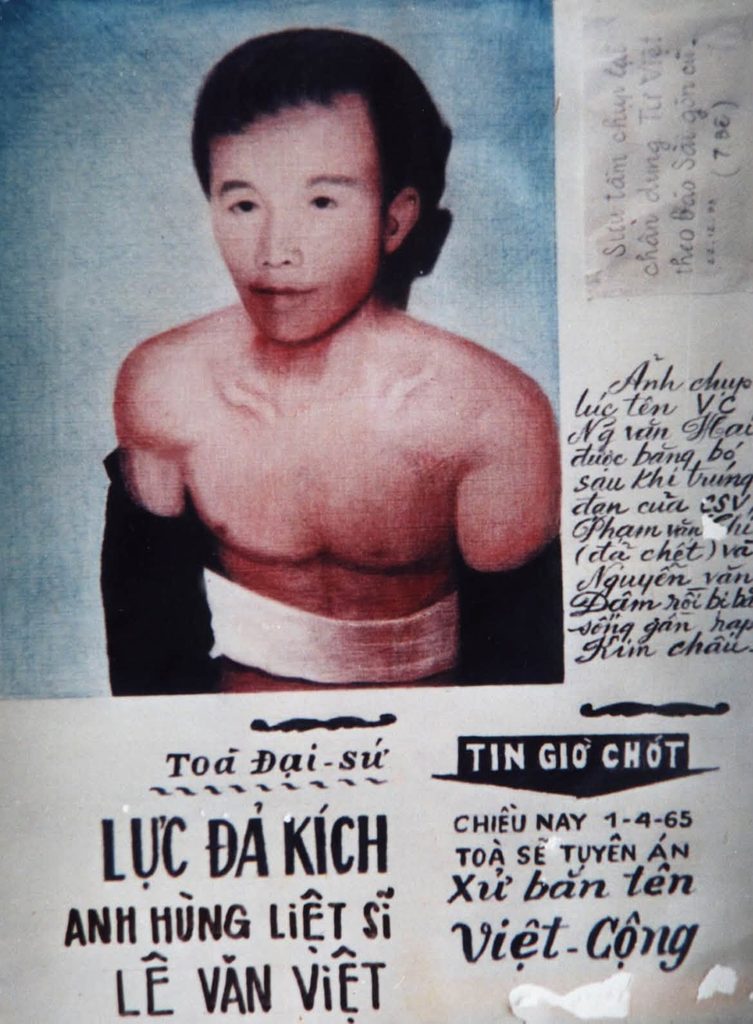
During the fighting, while trying to cover his comrades’ withdrawal, he was shot in the abdomen and seriously wounded.
Despite his severe injury, he continued resisting before becoming exhausted and being captured by security forces.
The attack shocked international public opinion and was documented in both Vietnamese sources and US diplomatic records.
Among those injured was U. Alexis Johnson, then a senior US diplomat in Saigon. According to US diplomatic records, he suffered cuts from broken glass, rather than the serious wounds described in some earlier accounts.
For Lê Văn Việt, 30 March 1965 also marked the end of his direct operations with the urban commando force and the beginning of his imprisonment.
Sentenced to death and exiled to Côn Đảo
After his arrest, Lê Văn Việt was tried under the name Nguyễn Văn Hai.
According to historical accounts, on 1 April 1965 a military court of the Saigon government sentenced him to death.
The sentence prompted reactions from the National Liberation Front of South Vietnam. Sources on the history of struggle at Côn Đảo Prison mention the Front’s warning that it would retaliate if Nguyễn Văn Hai were executed.
Ultimately, the death sentence was not carried out, and Lê Văn Việt was transferred to Côn Đảo Prison.
At that time, the island’s prison system comprised numerous camps and isolation areas, with strict controls over political prisoners, particularly those under sentence of death.
For Lê Văn Việt, being sent to the island meant not only losing his freedom but also facing harsh detention conditions while his abdominal wound had not fully healed.
Even in those circumstances, however, he and his fellow prisoners sought a way to escape and return to the mainland.
The daring escape on the night of 12 October 1966
One of the most remarkable events in Lê Văn Việt’s life was the escape from Côn Đảo Prison on the night of 12 October 1966.
Unlike many earlier escapes, which often began at forced-labour sites outside the prison camps, this attempt was organized within the area holding prisoners sentenced to death.
The three participants were:
- Lê Văn Việt (Nguyễn Văn Hai): A fighter in the Saigon–Gia Định urban commando force.
- Lê Hồng Tư: A political prisoner who had participated in the patriotic school and university student movement.
- Phạm Văn Dẫu: A commando imprisoned at Côn Đảo.
According to commemorative articles published by the Côn Đảo National Relics Conservation Centre, the escape took place from Cell 3 in Banh I, also known as Phú Hải Prison.
On the night of 12 October 1966, the three men escaped from their cell, passed through the prison’s security system and sought places to hide.
Their plan was to find shelter on the island and wait for a suitable opportunity to obtain a vessel and cross the sea to the mainland, where they would resume revolutionary activities.
This was an especially dangerous escape because the men were held under strict security and also had to survive on an isolated island at sea.
Recaptured in the Cỏ Ống area
After leaving the prison, the three men faced numerous difficulties.
Rugged mountain and forest terrain, scarce survival resources and pursuit by prison authorities made finding shelter extremely difficult.
According to sources on the history of struggle at Côn Đảo Prison, Lê Hồng Tư was recaptured after about a day.
Lê Văn Việt and Phạm Văn Dẫu remained in hiding. Around ten days later, they were discovered near Ớt Stream, close to Cỏ Ống and not far from the site of today’s Côn Đảo Airport.
All three were subsequently returned to prison.
The failed escape was followed by interrogations, beatings and harsh punishments for those involved.
According to historical sources, prison authorities strengthened their controls after the incident to prevent similar escapes.
Although unsuccessful, the October 1966 escape became part of the history of struggle among Côn Đảo prisoners, reflecting their longing for freedom even under the harshest conditions.
Lê Văn Việt dies on 30 November 1966
Following his recapture, Lê Văn Việt continued to endure torture and harsh detention conditions.
The abdominal wound sustained in the 1965 Saigon attack developed serious complications, further weakening his health.
On the night of 30 November 1966, Lê Văn Việt died at Côn Đảo Prison, aged just 29.
His short life ended after years of revolutionary activity, fighting in Saigon and the unsuccessful escape attempt at Côn Đảo.
Lê Văn Việt’s death left its mark on the history of the Saigon–Gia Định urban commando force and added another story of the political prisoners’ determination on the island.
Posthumous award of the title of Hero of the People’s Armed Forces
In recognition of Lê Văn Việt’s contributions and sacrifice, on 20 December 1994, President Lê Đức Anh of the Socialist Republic of Vietnam signed the decision posthumously awarding him the title of Hero of the People’s Armed Forces.
This was the State’s recognition of the revolutionary activities and fighting spirit of the urban commando who died at Côn Đảo.
Lê Văn Việt continues to be remembered in historical materials, educational activities about national traditions and commemorative programmes in his home region and on Côn Đảo.
In Ho Chi Minh City, a major road in the Thủ Đức area bears Lê Văn Việt’s name, linking it to his birthplace and early years of activity.
Hero Lê Văn Việt’s grave at Hàng Dương Cemetery
Today, the grave of Hero of the People’s Armed Forces Lê Văn Việt is in Section C of Hàng Dương Cemetery, Côn Đảo.
This is part of the historic cemetery where many revolutionaries and patriots who died during the existence of the prison system are laid to rest.
Visitors to Hàng Dương Cemetery can learn about Lê Văn Việt’s life while visiting his grave and remembering those who remained on the island.
During a visit, remain quiet, dress respectfully and follow the cemetery’s guidance.
Those interested in history can explore Lê Văn Việt’s story more deeply by also visiting Phú Hải Prison and other sites in the Côn Đảo Prison system.
Remembering Hero Lê Văn Việt each 30 November
Each year, 30 November marks the anniversary of Hero Lê Văn Việt’s death.
Over the years, heritage management bodies, government representatives, relatives and people interested in history have held commemorations on Côn Đảo.
Notably, on 30 November 2025, the ceremony marking the 59th anniversary of his death was held in Section C of Hàng Dương Cemetery and at the Côn Đảo Memorial Temple.
The ceremony included incense and flower offerings and a review of the urban commando’s revolutionary life.
Such commemorations help preserve historical memory and introduce later generations to people who died at Côn Đảo.
However, the timing, location and scale of commemorations may vary from year to year. Visitors wishing to attend a specific programme should follow official announcements from the organizers.
Lê Văn Việt’s place in Côn Đảo’s history
More than half a century has passed since Lê Văn Việt’s death, but his life story remains preserved in historical documents, commemorations and the memories of people who took part in the revolutionary movement.
From his birthplace in Thủ Đức to the fighting in Saigon and his imprisonment on Côn Đảo, Lê Văn Việt’s life reflects a turbulent period in Vietnam’s history.
The escape on the night of 12 October 1966, although unsuccessful, remains a notable event in the history of struggle at Côn Đảo Prison.
Hero of the People’s Armed Forces Lê Văn Việt (1937–1966) is among the historical figures whose lives connect both the Saigon urban commando force and Côn Đảo Prison.
Today, his grave at Hàng Dương Cemetery is not only a place to remember a fallen fighter, but also a place preserving a generation’s story of patriotism, comradeship and longing for freedom in the nation’s history.