
Each year on 30 April, Vietnam commemorates the Liberation of the South and National Reunification, marking the historic victory of 30 April 1975, which ended the resistance war against the United States for national salvation and opened an era of a united country. For Côn Đảo, this milestone is also linked to the final days of a prison system that had existed for more than a century and to the island’s liberation on 1 May 1975.
Today, visitors to Côn Đảo during the 30 April and 1 May holiday can discover natural beauty while also learning about a distinctive period of history, remembering those who died and appreciating more deeply the value of independence, freedom and peace.
30 April 1975: A milestone toward national reunification
On 30 April 1975, the Hồ Chí Minh Campaign achieved victory and the Republic of Vietnam government announced its surrender, marking the end of decades of war in Vietnam.
This victory opened a new chapter in the nation’s history and laid the conditions for formal state reunification in 1976.
For generations of Vietnamese people, 30 April is not merely a historical event but a symbol of the longing for peace, independence and reunion.
Each year, commemorative, memorial and educational activities take place in many localities to recall the struggle for independence and honor those who devoted themselves and sacrificed their lives for the country.
Côn Đảo and the historic days of late April 1975
While the mainland received news of victory on 30 April 1975, thousands of political prisoners remained confined in Côn Đảo’s prison system.
From 1862, Côn Đảo had become a place of imprisonment for generations of patriots, revolutionary fighters and people resisting colonial rule, war and oppression.
Over more than 113 years, the Côn Đảo Prison system witnessed countless struggles, acts of resistance and sacrifices by generations of inmates.
News of the mainland victory brought a crucial turning point. Côn Đảo’s political prisoners rose together to take control and end the prison regime.
Côn Đảo was liberated on 1 May 1975, marking the end of the prison system and the beginning of a new era in the islands’ history.
It is therefore important to distinguish the two consecutive historical milestones:
- 30 April 1975: Liberation of the South, associated with the victory of the Hồ Chí Minh Campaign.
- 1 May 1975: Liberation of Côn Đảo, associated with the political prisoners’ uprising to take control and the end of the island’s prison regime.
The two events are closely connected and form an important part of Côn Đảo’s historical memory.
Exploring Côn Đảo’s history during the 30 April holiday
Visitors during the 30 April and 1 May holiday can spend time at historic sites to learn about prisoners’ lives, struggles inside the prisons and the process of liberating the island.
Côn Đảo Museum
Côn Đảo Museum is a suitable starting point for a historical journey.
Documents, photographs and artifacts on display help visitors better understand the islands’ history, the establishment of the prison system, political prisoners’ movements and changes on Côn Đảo after 1975.
The Côn Đảo Prison system
Sites such as Phú Hải, Phú Sơn and Phú Thọ prisons, the French Tiger Cages and the American Tiger Cages are important stops on a journey to understand the past.
The cells, isolation compounds, labor yards and preserved remains give visitors some sense of the harsh conditions generations of prisoners experienced.
In particular, the story of solidarity, struggle and the longing for freedom among Côn Đảo prisoners is deeply meaningful when learning about the island’s liberation on 1 May 1975.
Hàng Dương Cemetery
Hàng Dương Cemetery is the resting place of many revolutionary fighters and patriots who died during imprisonment on Côn Đảo.
It is also associated with notable historical figures including Võ Thị Sáu, Lê Hồng Phong and Nguyễn An Ninh.
During the 30 April and 1 May holiday, visitors can offer incense and remember those who gave their lives for national independence and freedom.
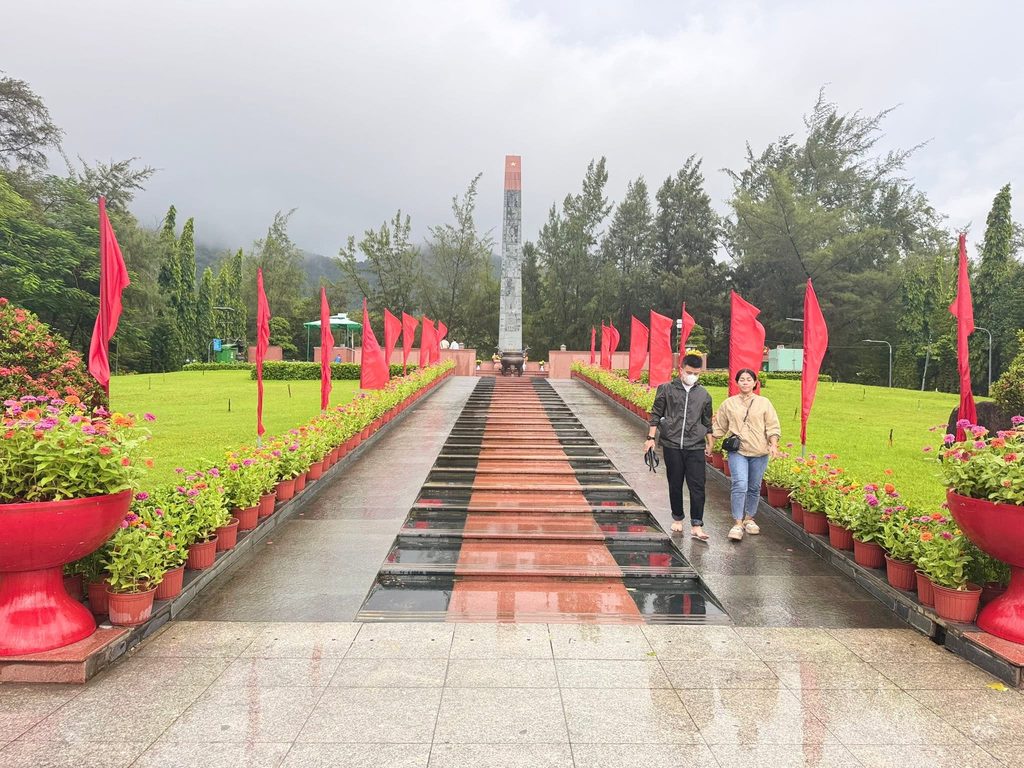
Côn Đảo Memorial Temple
Côn Đảo Memorial Temple is one of the island’s important places of remembrance, where residents and visitors express gratitude to fallen heroes, revolutionary fighters and patriots.
The temple’s solemn setting is suitable for incense offerings, remembrance and learning about historical traditions.
Commemorations of 30 April and 1 May on Côn Đảo
Each year around the anniversaries of the Liberation of the South and the Liberation of Côn Đảo, local authorities may organize cultural, memorial and educational activities.
Activities commonly involve incense-offering ceremonies at cemeteries and temples, meetings with historical witnesses, recollections of revolutionary struggle and cultural programs suited to the commemorations.
On Côn Đảo, meetings with former political prisoners and activities exploring prison history have particular meaning. They help younger generations understand the resilience of those once imprisoned on the island.
However, the scale, timing and location of commemorative activities can change each year. Visitors wishing to attend a particular program should check official local announcements before traveling.
What should you know about visiting during 30 April and 1 May?
The 30 April and 1 May holiday is often a popular time to visit Côn Đảo for sightseeing, relaxation and history.
For a smooth trip, check fast-ferry or flight schedules, book accommodation and arrange transport on the island in advance.
If planning visits to the prisons, cemetery and memorial sites, allow time for guided explanations and reading historical information, and follow the rules at each destination.
At historical places, especially cemeteries and places of worship, dress respectfully, maintain order and show respect for those who have died.
Besides historic sites, the itinerary can include distinctive natural destinations such as Đầm Trầu Beach, Nhát Beach, Mũi Cá Mập and coastal roads.
Combining historical learning with exploring nature makes the journey more complete.
Côn Đảo today: From a land of imprisonment to an island of peace
After liberation on 1 May 1975, Côn Đảo entered a new phase of development. A place once known for a harsh prison system gradually became one of Vietnam’s distinctive destinations for history, culture and ecotourism.
Today, Côn Đảo is known for its beautiful seas and islands, natural forests and valuable historic sites.
But its distinctive character lies in more than scenery. It also lives in the stories of patriotism, sacrifice, resilience and the desire for freedom preserved at every historic site.
Commemorating 30 April and 1 May on Côn Đảo is a chance to look back at history, remember earlier generations and appreciate the peaceful life of today.
A trip during these days need not include too many destinations. Sometimes taking time to learn one historical story, listen to a prison guide or light a memorial incense stick is enough to understand more about independence, reunification and freedom.
That is the profound value Côn Đảo preserves and passes to present and future generations.