
Vu Lan is one of Buddhism’s important observances, associated with the full moon of the seventh lunar month each year. It is a time to remember parents’ care in giving birth and raising their children, honor ancestors and nurture gratitude toward those who have accompanied us through life. On Côn Đảo, the Vu Lan season also offers visitors a chance to seek the peaceful surroundings of Vân Sơn Tự, reflect and reconnect with family.
Amid busy daily life, sometimes a phone call to ask how someone is, a family meal or a sincere thank-you is enough to express love. This is also the simple, familiar message of the Vu Lan season.
What does Vu Lan mean?
Vu Lan, also called the Vu Lan festival of filial gratitude, originates in Buddhist tradition and is associated with the story of the Venerable Maudgalyāyana seeking to save his mother from suffering.
From that story, filial devotion became the heart of the observance, reminding people to remember their parents’ care and live with gratitude.
In Vietnamese cultural life, Vu Lan is also an occasion for descendants to remember grandparents and ancestors, expressing the principle of remembering the source when drinking water.
For those whose parents are still alive, the season recalls the value of being present, showing concern and providing care while the opportunity remains.
For those whose parents have died, it is a time to revisit memories, preserve family affection and continue the good values handed down to them.
Filial gratitude need not be expressed through grand ceremonies or elaborate offerings. Simple everyday actions can be deeply meaningful when they are sincere.
When does Vu Lan take place?
Vu Lan is associated with the 15th day of the seventh lunar month, the annual full moon of that month.
Because it follows the lunar calendar, Vu Lan falls on a different Gregorian date each year.
In Vietnamese Buddhism, Vu Lan activities may take place throughout the seventh lunar month, depending on each temple’s plans and traditions.
Well-known observances include prayers for the well-being of living parents, remembrance of the deceased, sutra chanting, teachings on filial devotion and the rose-pinning ceremony.
However, not every place of worship holds all these rituals or schedules them on the same day.
Anyone intending to attend a particular Vu Lan program should therefore check the venue’s announcement for that year.
A quiet moment during Vu Lan on Côn Đảo
Côn Đảo is often associated with clear blue beaches, natural scenery and historical sites connected with generations of patriots.
Alongside exploring the sea and islands, visitors can take time to discover local culture, beliefs and spiritual spaces.
During the Vu Lan season, a trip to Côn Đảo with parents or relatives can hold special meaning.
There is no need for a crowded itinerary. The trip can simply give family members a chance to share experiences, talk and say the things they rarely have time to express in everyday life.
In those moments, filial gratitude is expressed not only through rituals but also through care and family affection.
Vân Sơn Tự, Núi Một Pagoda and a place for reflection
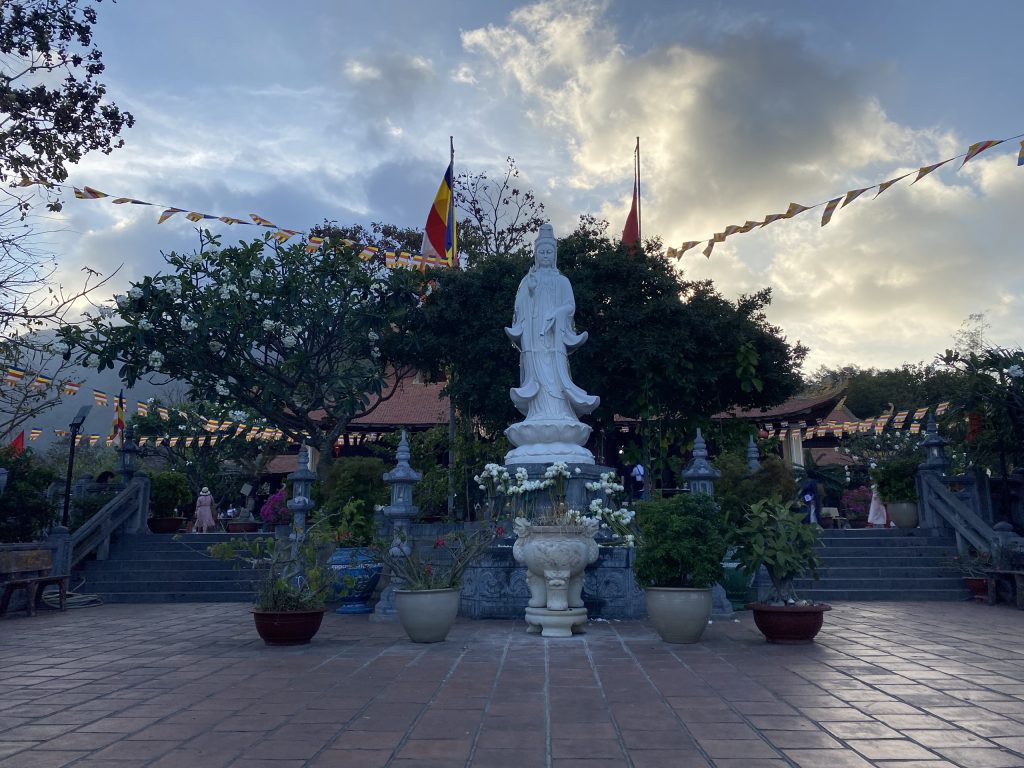
One place visitors can include in a Vu Lan-season journey is Vân Sơn Tự, also known as Núi Một Pagoda.
The pagoda stands on the slopes of Núi Một, offering peaceful surroundings amid Côn Đảo’s natural landscape.
From the grounds, visitors can see part of the town, An Hải lotus lake and the distant sea and islands.
Vân Sơn Tự is a place of Buddhist religious life and a destination for people who come to pay respects to the Buddha, pray for peace and spend quiet moments in reflection.
During Vu Lan, visitors can come to remember their parents’ care, pray for their families and reflect on the values of filial devotion.
When visiting, wear modest, respectful clothing, speak softly, avoid disrupting temple life and follow the instructions at the place of worship.
Offerings of incense, flowers or other items should follow the pagoda’s rules, without placing excessive emphasis on appearance or quantity.
Filial devotion beyond the full moon of the seventh month
Vu Lan invites people to reflect on how they care for their families, but filial devotion should not be confined to a single holiday.
Some very simple actions can easily be overlooked in busy daily life:
- Make time to talk with and listen to parents and grandparents.
- Take the initiative to ask about relatives’ health and share their difficulties.
- Prepare a meal with the family or take a meaningful trip together.
- Remember those who have died by living kindly and preserving family traditions.
- Care for and assist people facing hardship in the community.
These actions need not be reserved for Vu Lan. It is regular care that gives filial gratitude its lasting meaning.
Can visitors attend Vu Lan ceremonies at Vân Sơn Tự?
Visitors wishing to attend Vu Lan rituals at Vân Sơn Tự need to confirm the schedule directly with the pagoda or through its official announcements.
Although the full moon of the seventh lunar month is the traditional observance, specific programs such as chanting times, prayers for the deceased, teachings or other Buddhist activities may change each year.
A pilgrimage group’s itinerary, a tour program or the previous year’s Vu Lan schedule should not be treated as a fixed calendar for later years.
If visiting Côn Đảo at the seventh lunar month’s full moon when no suitable ritual program is available, travelers can still visit during permitted hours, pay respects to the Buddha and enjoy the peaceful atmosphere.
Families traveling with older adults should plan their time sensibly, remember that reaching the pagoda involves steps and avoid an overly busy itinerary.
Vu Lan on Côn Đảo: Appreciating what we have
Everyone has their own way of expressing gratitude to parents and loved ones.
Some return home for a reunion, some make time to care for their parents, while others visit a temple to pray or undertake charitable work.
For families visiting Côn Đảo during Vu Lan, the trip can become a lasting memory as they spend time together learning about culture and history and enjoying the natural scenery.
In the peaceful setting of Vân Sơn Tự, what matters is not only a ritual but also the chance to reflect on the close relationships in our lives.
Vu Lan reminds us that gratitude need not wait for a special occasion. As long as we can care for, listen to and be with our loved ones, every day can be a day of filial gratitude.
References
- Vietnam Buddhist Sangha: Guidance on organizing the Vu Lan season of filial gratitude.
- VOV: Are the full moon of the seventh month and Vu Lan the same?, 15 August 2026.
- Introduction to Vân Sơn Tự, Núi Một Pagoda on Côn Đảo.
Note: This article introduces the general meaning of the Vu Lan season and suggests visiting Vân Sơn Tự. It is not an announcement of a specific Vu Lan ceremony at the pagoda.