
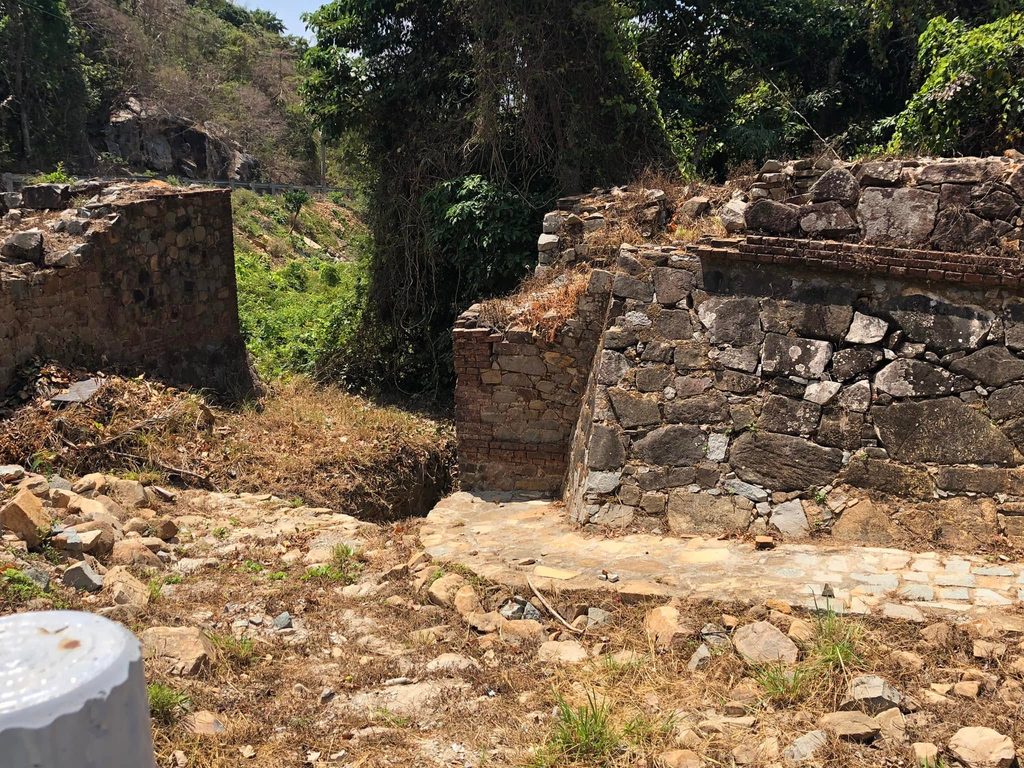
Set among the deep-green mountain slopes of Côn Đảo, Ma Thiên Lãnh Bridge is a distinctive historic site associated with the years of forced labor imposed on prisoners under French colonial rule. Construction began in 1930, but the bridge was never completed. Nearly a century later, only two stone abutments remain in the forested mountains, bearing witness to a period of profound loss.
It is difficult to imagine how, to build a road through this rugged mountain terrain, the colonial authorities forced prisoners to carry stones, fell trees, clear a route and construct a bridge in extremely harsh conditions. According to records and accounts passed down on Côn Đảo, approximately 356 prisoners died while working here. This is an approximate figure remembered by prisoners, not a fully verified death toll.
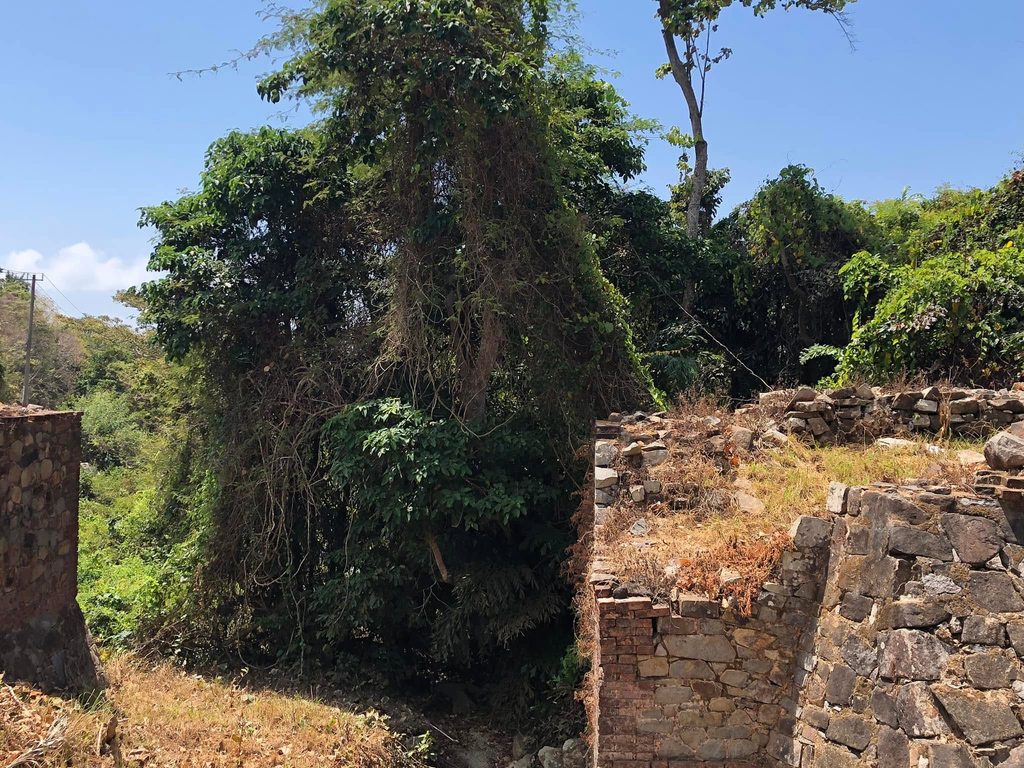
Today, the unfinished abutments still stand amid the tropical forest of the Núi Chúa area, bearing witness to the system of forced labor within the Côn Đảo prison complex.
Beyond its historical significance, Ma Thiên Lãnh Bridge lies close to nature trails in Côn Đảo National Park. Visitors can learn about part of the island’s past in a forested mountain setting very different from the prison camps in the central area.
Where is Ma Thiên Lãnh Bridge on Côn Đảo?
The Ma Thiên Lãnh Bridge historic site stands along a mountainside road in the Núi Chúa area, on Côn Sơn Island, in the Côn Đảo Special Zone of Ho Chi Minh City.
It lies along the route from central Côn Sơn toward Ông Đụng Pass, in an area with several ecotourism trails managed by Côn Đảo National Park.
According to local information, visitors can follow Võ Thị Sáu Street from central Côn Đảo toward the foot of Núi Chúa, then approach the historic site along the mountainside road.
Ma Thiên Lãnh is not a bridge currently used for transport. Construction stopped in 1945, and only architectural remains survive today.
Because the site lies in forested mountain terrain, visitors must follow the managing authority’s directions, opening conditions and safety regulations.
Key facts:
- Site name: Ma Thiên Lãnh Bridge.
- Location: Núi Chúa area, Côn Đảo Special Zone, Ho Chi Minh City.
- Construction began: 1930.
- Construction period: 1930–1945.
- Purpose: Road construction, resource extraction and security control on the island.
- Principal remains: Two stone abutments, each approximately 8 m high according to historical sources.
- Traditionally recorded number of deaths: Approximately 356 prisoners; this is an estimate.
- Condition: Unfinished; construction ceased in 1945.
- Significance: A component site of the Côn Đảo Prison Special National Historic Site.
The history of Ma Thiên Lãnh Bridge
The development of Côn Đảo’s road network
From 1862 onward, after the French colonial authorities established the prison system on Côn Đảo, the island’s infrastructure was gradually built and expanded.
The earliest projects were concentrated in central Côn Sơn, where the prison camps, Island Governor’s Residence, pier and facilities serving the colonial administration were located.
However, to exploit resources and strengthen control across the island, the colonial authorities also organized the construction of roads into the forested mountains.
This was extremely difficult work in Côn Đảo’s landscape of hills, mountains, valleys, steep slopes and dense tropical forest.
Rather than employing paid workers, the prison authorities used prisoners for strenuous tasks such as felling trees, transporting stone, digging earth and building transport infrastructure.
One of these projects was a road from the foot of Núi Chúa through Ông Đụng Pass, toward the western side of the island.
Ma Thiên Lãnh Bridge was built as part of the work to open this route.
1930: Construction of the bridge begins
According to the Côn Đảo National Monuments Conservation Center and the Côn Đảo Tourism Information Portal, construction of Ma Thiên Lãnh Bridge began in 1930.
The construction site was in the Ông Đụng Pass area, where the planned road had to cross steep terrain and hollows between mountain slopes.
To open the route, workers had to clear vegetation, level the roadbed and build structures to cross difficult sections.
One of these structures was a bridge with two stone abutments built on precipitous terrain.
Under the colonial authorities’ plan, the road was intended to connect the central area with locations in western Côn Sơn.
This formed part of a plan to expand resource extraction and control over areas far from the prison center.
However, the project relied primarily on prisoners’ forced labor in difficult terrain and unfavorable weather.
The purposes behind the road project
The construction of Ma Thiên Lãnh Bridge served several objectives of the colonial administration.
The first was to exploit natural resources, particularly timber and stone, for the construction of prison camps, houses, administrative buildings and other structures.
The forests on the slopes of Núi Chúa provided timber and other natural materials, but bringing these resources down to the central area was difficult without suitable roads.
Road construction also gave the prison authorities easier access to areas previously reachable mainly by footpaths.
Another objective was to support security control on the island.
Throughout the history of Côn Đảo Prison, many prisoners attempted to escape by sea or hide in forested mountain areas far from the camps.
Opening roads and establishing checkpoints enabled the colonial authorities to increase patrols and monitor areas that might serve as escape routes.
Some sources also mention defense and observation of important positions on the island as purposes of the project.
Ma Thiên Lãnh Bridge was therefore not built simply for civilian transport. It was part of a plan for resource extraction, defense and control of the Côn Đảo prison system.
Why is it called Ma Thiên Lãnh?
The name Ma Thiên Lãnh was not the official name given to the project by the colonial authorities during construction.
According to the Côn Đảo National Monuments Conservation Center, the prisoners themselves gave this name to the unfinished bridge in the forested mountains.
The name came from a forbidding mountain called Ma Thiên Lãnh in the story Xue Rengui’s Eastern Campaign, which circulated in literature and folktales of Chinese origin.
In the prisoners’ interpretation, the precipitous terrain, difficult climbs and descents, and dangers at the bridge site called that mountain to mind.
The name also carried the weight of the losses prisoners suffered during construction.
Strenuous work, inadequate food, accidents and punishments meant that many did not survive.
The two unfinished abutments thus gradually became known as Ma Thiên Lãnh, a name associated with the memory of those who died while building the road and bridge.
The name should not be understood as evidence of supernatural phenomena or ghost stories.
Above all, it is a historical place-name given by prisoners, reflecting the harsh terrain and suffering under the forced-labor system.
Over the decades, the name Ma Thiên Lãnh remained in use and became the familiar official name used to introduce the historic site.
Forced labor at Ma Thiên Lãnh Bridge
To understand how Ma Thiên Lãnh Bridge was built, the project must be considered in the context of the forced-labor facilities of Côn Đảo Prison.
During French colonial rule, many prisoners were not only incarcerated but also made to work at locations outside the prison camps.
They were forced to quarry stone, gather timber, burn lime, build roads or carry out other work serving the prison administration.
Ma Thiên Lãnh Bridge is a particularly clear example of the harshness of forced labor, as the work took place in mountainous terrain far from the center, with a high risk of accidents.
Clearing forest and opening roads on mountain slopes
Before building the bridge, prisoners had to help cut a road through areas of dense vegetation.
The work involved felling trees, clearing undergrowth, removing obstacles and making paths along steep slopes.
On Côn Đảo, heavy rain can make the ground slippery, while steep sections of road are vulnerable to landslides and falling rocks.
Working in such conditions demanded great physical effort and posed constant dangers.
Historical sources record many cases of prisoners being struck by falling trees, crushed by rocks or injured in other work-related accidents.
Carrying stones across rugged terrain
One of the most strenuous tasks in building the bridge was transporting stone.
The stones used for the abutments had to be brought to a construction site on steep terrain.
With limited mechanized equipment, transport depended heavily on human strength.
Prisoners had to lift, carry or drag heavy materials along narrow paths through the forested mountains.
On slippery ground or steep slopes, movement was very difficult to control.
If workers lost their balance, they could fall, be crushed by stones or endanger others carrying the load with them.
In materials introducing the historic site, accidents involving stones and trees are among the causes mentioned in accounts of prisoners’ deaths at Ma Thiên Lãnh.
Working amid severe deprivation
In addition to the dangers of the terrain, prisoners faced harsh conditions in food provision and daily life.
According to historical sources on Côn Đảo, many performed heavy labor without sufficient food, drinking water or medical care.
Working in forested mountain areas far from the center made supplies and rest even harder to obtain.
Those who were injured or exhausted might not receive adequate care, while pressure to complete the work continued.
Some local sources also mention unsafe stream water used by workers, increasing the risk of illness.
A lack of clean drinking water, inadequate nutrition and overwork were factors that could seriously damage prisoners’ health.
Supervision and punishment by prison guards
The construction of Ma Thiên Lãnh Bridge took place under a system of forced labor, not voluntary employment.
Prisoners had to work under the supervision of guards and those responsible for prison discipline.
According to historical accounts, those who did not meet demands or lacked the strength to continue working could be beaten and coerced.
The combination of rugged terrain, strenuous work and punitive measures made labor conditions here particularly harsh.
This is also why Ma Thiên Lãnh Bridge is regarded as one of the representative surviving traces of forced labor on Côn Đảo.
The account of 356 prisoners who died building the bridge
In the history of Ma Thiên Lãnh Bridge, the number 356 is often mentioned in connection with those who died during construction.
According to the Côn Đảo Tourism Information Portal, approximately 356 prisoners had died by the time only the two abutments had been completed.
However, the source also makes clear that this was an approximate figure estimated from memory by prisoners, not the result of an official statistical count.
Why should the figure of 356 be understood carefully?
Under the French colonial prison system, information about prisoner deaths was not always fully recorded or preserved.
Many died from illness, accidents or overwork, but their names and individual circumstances may not appear in surviving records.
For Ma Thiên Lãnh Bridge, the figure of 356 was passed down through prisoners’ memories and historical accounts.
It helps convey the scale of loss associated with the project, but should not be presented as a statistic supported by a complete list of every person who died.
Clearly identifying the approximate nature of the figure is necessary to respect historical sources and avoid implying certainty without evidence.
The losses behind an unfinished structure
Although the exact number of deaths has not been established, the sources consistently describe extremely harsh working conditions at Ma Thiên Lãnh Bridge.
Prisoners had to clear a road, carry stones and build the bridge on rugged mountain terrain.
They faced accidents, disease and brutal treatment under the forced-labor system.
Meanwhile, construction progressed very slowly.
After many years, the bridge was still unfinished, and when work ended in 1945 only the two abutments had been built.
The contrast between the immense labor, the loss of human life and the unfinished outcome has made Ma Thiên Lãnh Bridge a place of particular significance in Côn Đảo’s history.
The prisoners’ song about Ma Thiên Lãnh Bridge
Ma Thiên Lãnh Bridge is remembered not only through its architectural remains but also in a song passed down among generations of prisoners.
According to the Côn Đảo National Monuments Conservation Center, prisoners composed a song called Ma Thiên Lãnh Bridge to reflect the forced-labor regime and commemorate those who had died.
The song’s content relates to the landscape around the bridge site, prisoners’ losses and opposition to colonial rule.
This is a noteworthy detail: even in confinement and under surveillance, prisoners found ways to express their thoughts and feelings through music.
The song became part of a collective memory, helping preserve the story of the construction project and the people who worked there.
For research into Côn Đảo’s history, such songs, oral accounts and recollections are important supplementary sources alongside administrative records and physical remains.
However, lyrics passed down over generations should be distinguished from historical records that precisely document dates, authorship or the circumstances of composition.
1945: Ma Thiên Lãnh Bridge is abandoned
Construction of Ma Thiên Lãnh Bridge lasted from 1930 to 1945.
During that period, the project remained unfinished despite the enormous amount of prisoner labor used.
When the August Revolution succeeded in 1945, the bridge construction project came to an end.
According to historical sources, only the two abutments had been completed at that point, each approximately 8 m high.
The structure connecting the two abutments to form the bridge deck had not been completed.
Ma Thiên Lãnh therefore never became a complete transport bridge as originally intended.
The abutments were left standing in the forested mountains.
Over the decades, trees and other vegetation grew around the structure, while the stone walls continued to weather.
Today, the two unfinished abutments are the most important surviving traces of this French colonial construction project.
What remains of Ma Thiên Lãnh’s two stone abutments?
Unlike bridges preserved intact, Ma Thiên Lãnh retains only its initial structural elements.
The two stone abutments stand on opposite sides of a hollow, forming the site’s recognizable silhouette.
They were built as load-bearing components for a bridge structure intended to span the gap between the two sides.
However, because construction was never completed, no bridge deck connects them.
Stone walls amid the forested mountains
The surviving architecture is built of stone, forming substantial walls of considerable height.
According to historical sources, each abutment is approximately 8 m high.
From the path, visitors can observe the surfaces of stones stacked and bonded together with construction materials.
After many decades, the surfaces of the abutments show signs of weathering.
Trees, vines and other plants grow around the area, giving the structure the appearance of a forest ruin.
Although no longer in their original condition, the two abutments still convey the scale of the section that was built.
A bridge that was never completed
A distinctive feature of Ma Thiên Lãnh is that the name “bridge” has survived even though the structure never had a completed deck.
Visitors cannot cross between the abutments as they would on a functioning bridge.
The site’s value lies in its unfinished remains and the historical accounts associated with its construction.
That very incompleteness sets Ma Thiên Lãnh apart from many other historic transport structures.
An ordinary bridge is usually remembered for connecting two sides. Ma Thiên Lãnh Bridge is known for what could not be completed and for the deaths of those forced to build it.
The memorial at the site
Alongside the abutments, the historic site includes a commemorative stone marker and a space for remembrance.
These present basic information about the construction process, working conditions and historical significance of Ma Thiên Lãnh Bridge.
Reading the site’s commemorative inscription helps visitors understand the project before examining the architectural remains.
The memorial space also allows local residents and visitors to pay tribute to those who died while performing forced labor.
Ma Thiên Lãnh Bridge in the natural setting of Núi Chúa
One of Ma Thiên Lãnh Bridge’s distinctive features is its location among Côn Đảo’s forested mountains.
Unlike Phú Hải Prison, Phú Sơn Prison or the Island Governor’s Residence in the central area, the Ma Thiên Lãnh site lies along a route through hilly terrain and tropical vegetation.
The surrounding area contains large trees, vines, steep slopes and stretches of green forest.
This landscape helps visitors imagine some of the difficulties prisoners faced when clearing a road and building the structure in the early twentieth century.
However, the landscape today has changed considerably since the bridge was under construction.
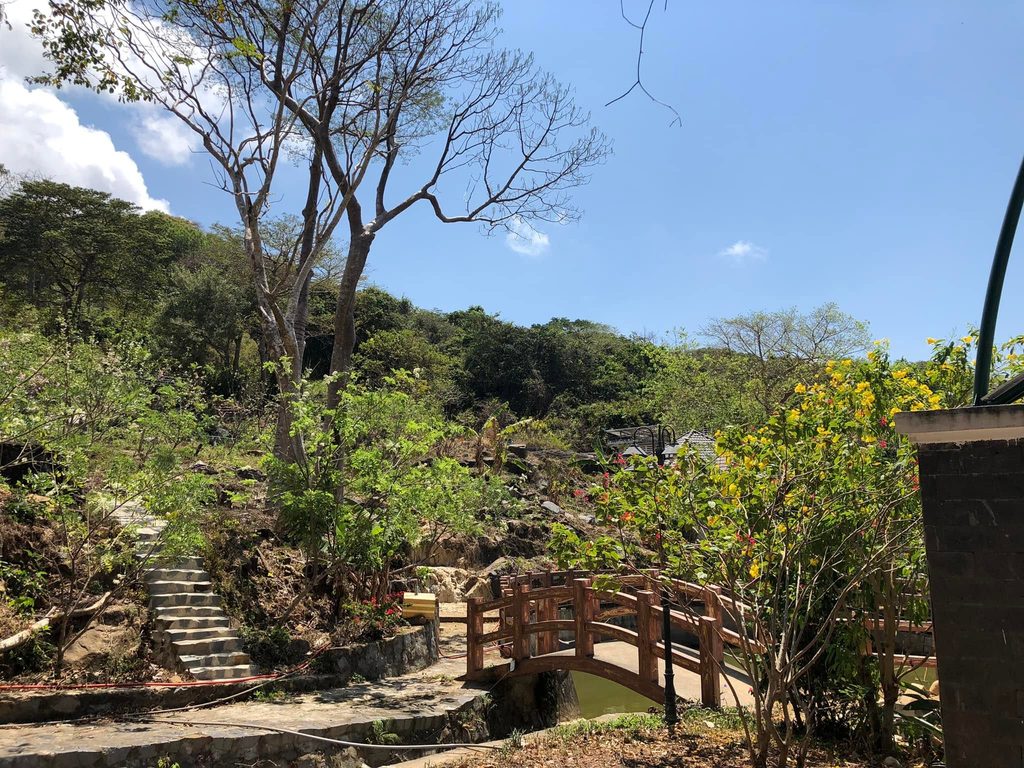
Paths, forest management activities and visitor facilities have been modified over time, so not every present-day trail or piece of infrastructure should be treated as an original remnant of the 1930 project.
A forest area of ecological value
Côn Đảo has diverse tropical forest and marine-island ecosystems, with Côn Đảo National Park playing an important role in nature conservation.
Forest trails around Ma Thiên Lãnh allow visitors to experience the mountain landscape, learn about the natural environment and observe characteristic vegetation.
With its setting in the forested mountains, Ma Thiên Lãnh Bridge is a place where historical interpretation can be combined with nature education.
Nevertheless, the site’s foremost significance remains the history of forced labor and the surviving traces of the project.
Respect for the historic site and protection of the forest environment should take priority during any visit.
The historical significance of Ma Thiên Lãnh Bridge
Evidence of the forced-labor system
Ma Thiên Lãnh Bridge reflects an important aspect of the history of Côn Đảo Prison: the use of prisoner labor to build infrastructure and exploit resources.
Prisoners were not only confined in camps; they were also made to work in places with dangerous natural conditions.
Building a bridge in the forested mountains shows that forced-labor operations extended beyond the central prison area.
A reminder of those who died
The figure of 356 prisoner deaths, passed down through various sources, forms part of the historical memory of Ma Thiên Lãnh Bridge.
Although no complete statistics establish the precise number of deaths, accounts of accidents, illness and brutal treatment remain valuable for understanding the past.
The two unfinished abutments have become a place of remembrance for people whose names may no longer survive in the available records.
Evidence of resource extraction and control on Côn Đảo
Construction of the bridge was linked to the project to open a road through the Núi Chúa area toward the western side of the island.
The project reflects the drive to exploit resources, expand the transport network and strengthen control over areas far from the prison center.
The history of Ma Thiên Lãnh Bridge helps explain how the colonial authorities organized their control of Côn Đảo’s territory, including forested mountain areas outside the prison camps.
Architectural conservation and heritage value
The stone abutments are physical remains of an unfinished transport structure.
Preserving them maintains evidence of building activity and construction techniques in a specific historical context.
For research, the physical remains should be considered alongside historical records, old maps and memoirs to develop a fuller understanding of the project’s purpose and construction process.
Ma Thiên Lãnh Bridge within the Côn Đảo Prison Special National Historic Site
After 1975, as historic sites on Côn Đảo were conserved, Ma Thiên Lãnh Bridge was recognized as one of the island’s places of important historical value.
On 29 April 1979, the Ministry of Culture and Information issued Decision No. 54-VHTT.QĐ, recognizing the Côn Đảo Revolutionary Historic Site as a site of exceptional national importance.
Later, on 10 May 2012, the Prime Minister issued Decision No. 548/QĐ-TTg, designating the Côn Đảo Prison Historic Site as a Special National Historic Site.
Ma Thiên Lãnh Bridge is one of the component sites within the designated complex.
It should be noted that the 2012 decision applies to the entire Côn Đảo Prison Historic Site system, rather than constituting a separate designation for the bridge alone.
Protecting Ma Thiên Lãnh Bridge preserves evidence of forced labor that complements the prison camps, isolation areas and production facilities once operating on the island.
Visiting Ma Thiên Lãnh Bridge on Côn Đảo
Ma Thiên Lãnh Bridge has different terrain from historic sites in the central residential area.
Visitors should therefore check the route, weather and managing authority’s regulations in advance.
How to reach Ma Thiên Lãnh Bridge
From central Côn Sơn, visitors can head toward Võ Thị Sáu Street and the foot of Núi Chúa, then take the mountainside route toward the historic site.
Depending on the starting point and road conditions, it may be possible to travel by vehicle to the access area before continuing on foot to the site.
Because the site is close to Côn Đảo National Park’s ecotourism trail network, visitors should not independently follow paths outside permitted routes.
If planning to go deeper into the forest or combine the visit with trekking, contact Côn Đảo National Park for specific guidance.
The Ma Thiên Lãnh–Sở Rẫy trail has reopened
According to a notice from the Côn Đảo National Park Management Board, the Ma Thiên Lãnh–Sở Rẫy ecotourism trail reopened to visitors on 15 November 2025.
The route had previously been temporarily closed from late 2024 to ensure safety during the project to connect Côn Đảo to the national electricity grid.
After construction was completed and the managing authority assessed safety conditions, the trail was permitted to resume operation.
However, this reopening notice was issued in 2025. Trail access may change with weather, maintenance or forest management requirements.
Visitors should confirm the latest situation before setting out, particularly during the rainy season.
Is there an admission fee?
According to the reopening notice for the Ma Thiên Lãnh–Sở Rẫy trail, organizations, tour operators and visitors must pay the prescribed scenic-site admission fees when using the ecotourism route.
A distinction should be made between visiting the Ma Thiên Lãnh Bridge historic site and taking ecotourism routes managed by Côn Đảo National Park.
Current fees, the areas to which they apply and included services should be confirmed directly with the managing authority at the time of the visit.
When is the best time to visit?
Morning or early afternoon is generally more convenient for observing the remains and traveling along routes with hilly terrain.
Avoid visiting during heavy rain, when the ground and steep steps can become slippery.
In bad weather, some forest routes may temporarily close to visitors for safety.
Choose dry weather where possible, wear shoes with good grip and bring an appropriate supply of drinking water.
Things to keep in mind during a visit
Ma Thiên Lãnh Bridge is a historic site in a natural setting, so visits require attention to both personal safety and protection of the structure.
Do not climb the old abutments or enter high or structurally unsafe areas without authorization.
Do not chip or carve into the stones or interfere with the surviving architectural elements.
Do not take materials from the site as souvenirs.
In the forest, do not litter, pick plants or make excessive noise, and follow the directions of forest rangers or site staff.
These are important principles for preserving the historic site for future generations.
Understanding Ma Thiên Lãnh Bridge alongside other forced-labor sites on Côn Đảo
Ma Thiên Lãnh Bridge is part of a network of structures built with prisoner labor on Côn Đảo.
To understand the history of forced labor more fully, visitors can also read about Sở Lò Vôi, the lime kiln works, and Historic Pier 914.
At Sở Lò Vôi, prisoners were forced to extract coral and burn it into lime for building prisons, roads and other structures on the island.
Historic Pier 914, meanwhile, is associated with the transport of prisoners and materials, as well as the construction of the pier under forced-labor conditions.
What these sites share is the use of prisoner labor to build, exploit and maintain the infrastructure of the Côn Đảo prison system.
However, each location had its own function and historical context.
Ma Thiên Lãnh Bridge is distinguished by its rugged forested mountain setting and unfinished structure.
Sở Lò Vôi illustrates the production of construction materials, while Pier 914 is associated with maritime transport and the arrival of prisoners on the island.
Studying these sites together provides a fuller view of the lives and working conditions of Côn Đảo prisoners across different periods.
Frequently asked questions about Ma Thiên Lãnh Bridge
When was Ma Thiên Lãnh Bridge built?
The French colonial authorities began construction in 1930 as part of a road project through the Núi Chúa area and Ông Đụng Pass.
Where is Ma Thiên Lãnh Bridge?
The historic site lies along a mountainside road in the Núi Chúa area, on Côn Sơn Island, in the Côn Đảo Special Zone of Ho Chi Minh City.
Why is the bridge called Ma Thiên Lãnh?
Prisoners gave it the name Ma Thiên Lãnh after a forbidding mountain in the story Xue Rengui’s Eastern Campaign. The name is also associated with the memory of losses during construction.
Did exactly 356 prisoners die building the bridge?
Historical sources on Côn Đảo commonly record approximately 356 prisoner deaths. However, this is an approximate figure passed down from prisoners’ recollections, not a fully verified statistical total.
How high is Ma Thiên Lãnh Bridge?
According to historical sources, the two unfinished abutments are each approximately 8 m high. This is the height of the abutments, not of a completed bridge.
Was Ma Thiên Lãnh Bridge ever completed?
No. The project was abandoned in 1945, when only the two abutments had been completed. The deck connecting them was never fully built.
Is Ma Thiên Lãnh Bridge part of a Special National Historic Site?
Yes. It is a component site of the Côn Đảo Prison Historic Site, designated a Special National Historic Site under Decision No. 548/QĐ-TTg of 10 May 2012.
Can visitors go to Ma Thiên Lãnh Bridge?
Visits are possible when the managing authority permits access to the area and approach route. The Ma Thiên Lãnh–Sở Rẫy ecotourism trail was announced to reopen on 15 November 2025. Visitors should check current operating conditions before traveling.
Is Ma Thiên Lãnh Bridge a spiritual site?
Ma Thiên Lãnh Bridge is first and foremost a historic site associated with forced labor. The area has a space commemorating those who died, but the name Ma Thiên Lãnh is not evidence of spiritual or supernatural phenomena.
Ma Thiên Lãnh Bridge: an unfinished structure and an enduring memory
Nearly a century has passed since construction of Ma Thiên Lãnh Bridge began. The road into Côn Đảo’s forested mountains has changed in many ways, but the two stone abutments remain important traces of a structure that was never completed.
Amid the green forest, the old stones recall the prisoners who were forced to clear roads, carry materials and build a bridge in extremely harsh conditions.
Unlike prison camps with cells, solitary confinement rooms or administrative buildings, Ma Thiên Lãnh Bridge bears witness to another aspect of Côn Đảo Prison’s history: forced labor outside the detention areas.
The site’s value lies not in a completed transport structure but in what survives, from the two stone abutments to the stories of people who died during construction.
For visitors interested in history, Ma Thiên Lãnh Bridge offers a deeper understanding of Côn Đảo’s past in a setting different from the prison sites in the center.
The abutments never joined the two mountain slopes, but over time they have become an inseparable part of Côn Đảo’s historical memory.
Con Dao Express introduces Côn Đảo’s historic sites, cultural landmarks and natural destinations, while providing information on high-speed ferry routes, timetables and indicative fares to help visitors plan their journey around the island.
Reference sources
- Côn Đảo National Monuments Conservation Center: Ma Thiên Lãnh Bridge Historic Site.
- Côn Đảo Tourism Information Portal: Visiting Ma Thiên Lãnh Bridge Historic Site.
- Legends of Côn Đảo (Huyền thoại Côn Đảo), Thông Tấn Publishing House, 2013, p. 25.
- Côn Đảo National Park Management Board: Notice on reopening the Ma Thiên Lãnh–Sở Rẫy trail, November 2025.
- Prime Minister’s Decision No. 548/QĐ-TTg of 10 May 2012.
Google Maps: Cầu Ma Thiên Lãnh
The map shows the site’s location. Confirm the entrance and visiting hours with the site management before you go.