
For many people, Côn Đảo brings to mind clear blue seas, tree-lined roads and the tranquil beauty of an offshore archipelago. Yet behind this scenery lies a distinctive chapter of Vietnam’s history, preserved in the stone walls, rows of cells, isolation compounds and memorial sites of the Côn Đảo Prison system.
For 113 years, from 1862 to 1975, Côn Đảo was a place of imprisonment and exile for generations of Vietnamese patriots, political prisoners and revolutionary fighters. The surviving sites reveal the harsh conditions of confinement, while also bearing witness to the prisoners’ resistance, solidarity, learning and organizing under exceptionally difficult circumstances.
On 10 May 2012, the Prime Minister designated the Côn Đảo Prison Historical Site a Special National Heritage Site. This recognition encompasses an entire historical complex, including numerous prison camps, isolation compounds, prison administration buildings and places associated with prisoners’ lives and sacrifices.
Today, visitors to Côn Đảo can spend half a day or a full day exploring these historical sites. Each has its own story, but together they offer a fairly comprehensive picture of the island’s past.
Where is Côn Đảo Prison?
The Côn Đảo Prison system is located mainly on Côn Sơn Island, in Côn Đảo Special Zone, Ho Chi Minh City, formerly Côn Đảo District, Bà Rịa – Vũng Tàu Province.
Unlike prisons built within a single compound, Côn Đảo Prison is a complex of structures established during different historical periods.
Prison camps such as Phú Hải, Phú Sơn, Phú Tường and Phú Bình, along with many other historical sites, occupy separate locations, mostly in or near central Côn Đảo.
In addition to the prison camps, the historical complex is associated with Pier 914, the Island Governor’s Residence, forced-labor sites, Hàng Dương Cemetery and numerous memorial sites.
First-time visitors to Côn Đảo should begin at Côn Đảo Museum, 2 Nguyễn Huệ Street, for an overview before exploring individual prison camps in greater depth.
The history of Côn Đảo Prison, from 1862 to 1975
1862–1945: Côn Đảo under French colonial rule
On 1 February 1862, Bonard, Governor of Cochinchina, signed the decision establishing Côn Đảo Prison.
Its isolated offshore location led the French colonial authorities to choose Côn Đảo as a place of exile for convicted prisoners, including many people involved in patriotic and anti-colonial movements.
The distance from the mainland, limited transport and strict controls made communication with the outside world or attempts to return to the mainland extremely difficult.
The first detention facilities were gradually built and later expanded into a system of prison camps, solitary cells, labor facilities and administrative buildings.
During this period, prisoners were not only confined but also forced to perform arduous work such as quarrying stone, constructing buildings, building roads, transporting materials, manufacturing goods and supporting activities on the island.
Many structures were built using prisoners’ forced labor. Their legacy lives on in place names such as Pier 914, Ma Thiên Lãnh Bridge, the Lime Kiln Works and other forced-labor sites.
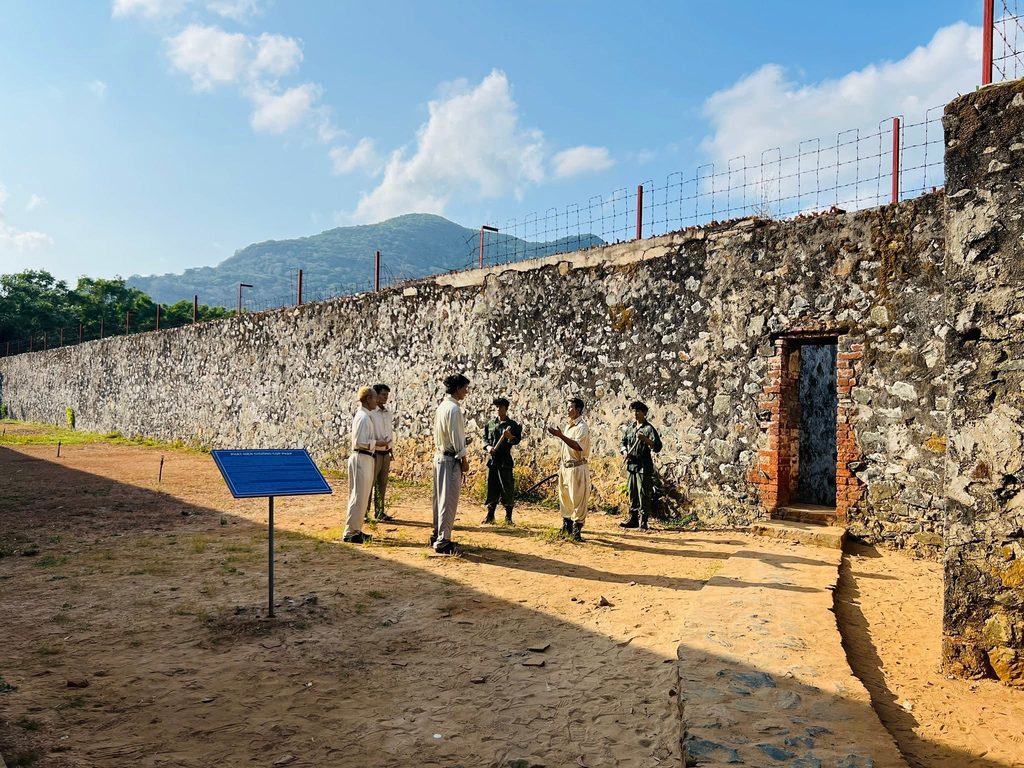
Phú Hải Camp, one of the oldest detention facilities on Côn Đảo, was first built in 1862 and continued to be renovated and expanded in the following decades.
In the early 20th century, the prison system continued to grow with the establishment of Phú Sơn Camp, Phú Thọ Camp and isolation compounds.
In particular, the French Tiger Cages, built in 1940, became one of the most notorious detention areas in the history of Côn Đảo Prison.
1945–1954: Upheaval after the Second World War
Following the August Revolution of 1945, Vietnam underwent major political changes. However, as the Indochina War continued, Côn Đảo remained a place of detention under the French colonial authorities.
During this period, many people involved in the resistance movement, political activities and the struggle for independence were sent to the island.
Living in deprivation, prisoners faced disease, grueling labor and severe forms of punishment.
Nevertheless, learning, mutual support and organized resistance continued in various forms within the prison.
Accounts of Côn Đảo’s prisoners during this period later became an important part of the historical record of Vietnam’s revolutionary movement.
1954–1975: Expansion of the prison system and isolation compounds
After the Geneva Accords of 1954, the Republic of Vietnam authorities continued to use and expand the prison system in the context of the Vietnam War.
Numerous facilities were built or renovated, including communal detention areas, punishment compounds and isolation facilities for political prisoners.
Phú Phong, Phú An, Phú Bình and Phú Hưng camps were established in succession during this period.
In particular, Phú Bình Camp, commonly known as the American-style Tiger Cages, was completed in 1971. Designed with hundreds of small isolation cells, it represented a different model of prisoner control from the Tiger Cages previously built by the French.
Political prisoners continued their resistance during this period. Some protests against the prison regime, living conditions and coercion to declare a political stance became notable events in the prison’s history.
In 1970, information about conditions in the Côn Đảo Tiger Cages became widely known following a visit by foreign representatives and journalists. Photographs, testimonies and related documents attracted international attention.
1 May 1975: The end of the prison system’s operation
Following the events of 30 April 1975 in Saigon, the situation on Côn Đảo changed rapidly.
According to records from the Côn Đảo National Heritage Conservation Center, prisoners at Phú Bình Camp began an uprising to take control at around 1 a.m. on 1 May 1975.
The movement quickly spread to other areas. By that morning, political prisoners had taken control of Côn Đảo.
This event marked the end of the prison system’s operation after 113 years.
Today, 1 May 1975 is commemorated as Côn Đảo Liberation Day, an important milestone in local history.
The scale and structure of the Côn Đảo Prison system
The Côn Đảo Prison system was not built all at once. Its structures were established over several periods, with different functions and arrangements.
According to historical-site information materials, the system at various times included:
- 127 prison cells.
- 42 solitary cells.
- 504 isolation cells, commonly known as tiger cages.
- Numerous forced-labor areas, administrative buildings and facilities supporting prison operations.
These figures reflect the scale of the system across different periods; they do not mean that every structure remains intact or is open to visitors today.
Côn Đảo Prison was also not associated with just one type of confinement. The surviving structures reveal differences between communal cells, isolation cells, punishment compounds, labor areas and facilities used to administer prisoners.
This is another reason to visit several sites rather than end your visit after seeing a single prison camp.
Notable sites within the Côn Đảo Prison system
1. Côn Đảo Museum: The starting point for exploring the island’s history
Côn Đảo Museum is located at 2 Nguyễn Huệ Street, near the town center and the coastal road.
It is a good place to learn the fundamentals of Côn Đảo’s natural environment, people, the development of its prison system and its major historical events.
The museum preserves thousands of documents, photographs and artifacts. Its displays are arranged around major themes, including:
Côn Đảo: Nature and People: An introduction to the island’s natural conditions, geography, residents’ lives and the development of its community.
Côn Đảo: Hell on Earth: An account of the prison system’s history, detention conditions and the forms of labor and punishment prisoners endured.
Côn Đảo: A Front Line and a School: An introduction to political prisoners’ resistance, learning, exchange of knowledge, dissemination of ideas and organizing activities.
Côn Đảo Today: A look at the island’s transformation after 1975, from a place associated with imprisonment and exile into a home for a resident community, heritage conservation and tourism development.
The exhibitions help visitors understand the sequence of events before stepping inside the prison compounds themselves.
Reading the names of prison camps on a map may make it difficult to distinguish their individual roles. Starting at the museum makes it easier to connect dates, people and events.
Suggested visiting time: Around 45–90 minutes, depending on your interest in the documents and artifacts.
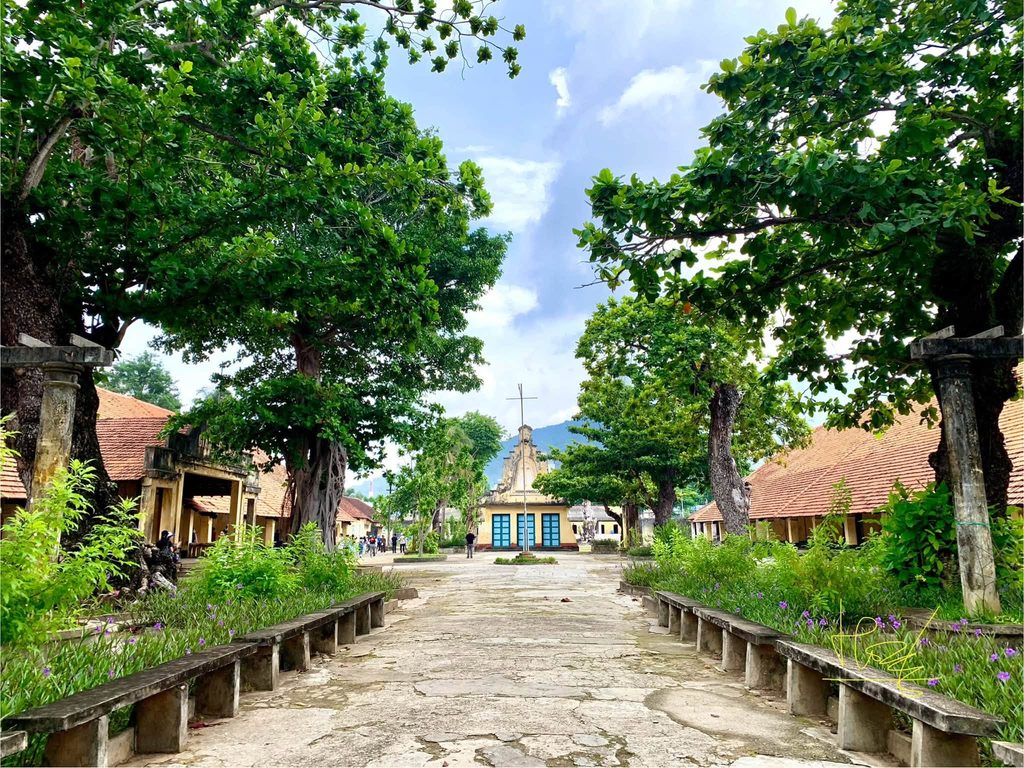
2. Phú Hải Camp: The oldest prison camp in the Côn Đảo Prison system
Phú Hải Camp has been known by several names throughout its history, including Banh I, Lao I, Trại Cộng Hòa and Camp 2.
First built in 1862 and subsequently rebuilt more solidly in 1896, Phú Hải is one of the most representative surviving structures in the prison system.
The camp covers approximately 12,015 m² and includes communal cells, isolation areas and supporting buildings.
According to the site’s records, the camp once had 10 communal cells, one special cell, 20 solitary cells, a rice-grinding chamber and a stone-breaking area.
Notable features of Phú Hải Camp
Communal cells
The thick walls, iron doors and enclosed rooms help visitors imagine the living conditions of large numbers of people confined together.
Displays, reconstructions and information panels explain the layout of the cells, the placement of leg irons and the restrictions on prisoners’ daily lives.
Solitary cells and stone dungeons
These were isolated detention spaces with harsher conditions than the communal cells.
Cramped quarters, limited light and separation from the outside world made these areas instruments of punishment and prisoner control.
The rice-grinding chamber
The rice-grinding chamber is a notable feature in the history of Phú Hải Camp, associated with grueling labor under confinement.
The functions of some areas changed over time; the rice-grinding chamber was at one point converted to another use.
The stone-breaking and forced-labor area
Forced labor was an important part of how the prison system operated. Areas associated with stone breaking, material extraction and construction show that prisoners were not merely confined but also used as a forced workforce.
Why visit Phú Hải Camp?
Phú Hải offers one of the clearest impressions of the basic structure of a large prison camp from the system’s early period.
It is also a useful place to understand how a prison system was organized, from administrative and detention areas to isolation compounds and facilities for daily needs.
As you walk through the rows of cells, take time to observe the actual architecture and read the explanatory information rather than focusing only on the reconstructions.
3. Phú Sơn Camp: Rows of cells and traces of resistance behind bars
Located near Phú Hải Camp, Phú Sơn Camp was formerly known as Banh II, Lao II, Trại Nhân Vị and Camp 3.
Construction began in 1908 and was completed in 1916. The camp covers approximately 13,228 m².
According to site records, the camp comprised 13 communal cells, 14 solitary cells, one dark room and numerous supporting buildings.
A notable feature of Phú Sơn is the organization of its detention spaces, with long rows of cells, courtyards and isolation areas.
The site is associated with generations of political prisoners, including people involved in revolutionary activities and organized resistance within the prison.
Beyond its detention function, Phú Sơn’s story also concerns learning, the exchange of knowledge and the building of solidarity among prisoners.
These activities led many historical accounts to describe Côn Đảo Prison as a distinctive setting for political prisoners’ resistance and education.
When visiting Phú Sơn Camp, pay attention to the isolation area, corridor layout, surveillance positions and information panels about prisoners’ activities.
Phú Sơn and Phú Hải are close to each other and can be visited on the same route.
4. Phú Tường Camp: A detention compound linked to the French Tiger Cages
Phú Tường Camp was also known as Banh III phụ, Lao III phụ, Trại phụ Bác Ái and Camp 4.
Built around 1940–1941, the camp covers nearly 5,900 m² and consists of eight communal cells arranged in two rows, together with supporting facilities.
Phú Tường is directly connected to the French-style Tiger Cages, but an important distinction should be made: Phú Tường Camp and the French Tiger Cages are separate components with their own architectural features and functions.
During certain periods, Phú Tường Camp was used to hold prisoners with health problems or political prisoners undergoing classification and transfer between camps.
This area is also associated with prisoners’ resistance movements, particularly in the late 1950s and during 1969–1970.
Learning about the relationship between Phú Tường, Phú Thọ and the French Tiger Cages helps visitors understand how the camps were connected and operated within a single system.
5. The French Tiger Cages: Côn Đảo Prison’s notorious isolation compound
The French Tiger Cages is the common name for the isolation compound built in 1940, one of the most affecting sites on a visit to Côn Đảo Prison.
The name “Tiger Cages” came from prisoners’ descriptions of the unusually designed isolation cells, where they were controlled within cramped spaces.
According to the Côn Đảo National Heritage Conservation Center, the compound covers approximately 5,477 m² and comprises two sections with a total of 120 isolation cells.
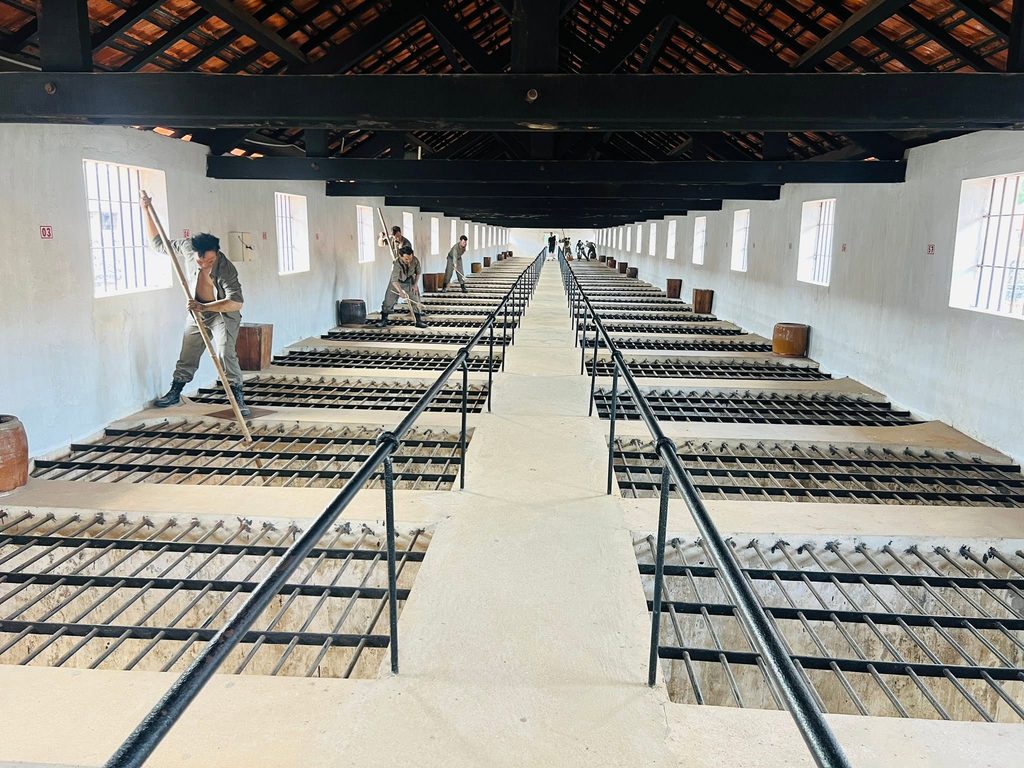
Each cell had iron bars overhead. Guards could walk along elevated walkways to observe and control the prisoners below.
This design differs markedly from the communal cells in camps such as Phú Hải and Phú Sơn.
The structure of the isolation cells
The Tiger Cages were built as small compartments with dividing walls and iron bars overhead.
Prisoners were held in confined spaces, deprived of basic living conditions and constantly controlled from outside.
This architecture severely restricted prisoners’ contact with others, movement and daily activities.
The “sunbathing” cells
Alongside the 120 isolation cells were 60 roofless cells, commonly known as the “sunbathing” cells.
Although the name sounds ordinary, these were in fact part of the punishment system, where prisoners could be exposed to intense sunshine or directly subjected to the weather.
The contrast between the covered isolation cells and the roofless cells helps visitors understand the range of detention and disciplinary methods used.
The events of 1970 and the exposure of the Tiger Cages
In July 1970, a visiting delegation of foreign representatives and journalists gained access to the Côn Đảo Tiger Cages.
The information subsequently published attracted considerable international attention to the conditions of detention there.
This was a notable milestone in the history of Côn Đảo Prison, helping bring the treatment of political prisoners before the public.
Today, the French Tiger Cages are preserved as important historical evidence, allowing visitors to see directly how an isolation compound was once designed and operated.
This area is best visited with a guide to understand the purpose of each feature and the context of the events associated with it.
6. Phú Bình Camp: The American-style Tiger Cages and the liberation of Côn Đảo
Phú Bình Camp, also known as Camp 7 or the American-style Tiger Cages, was built and completed in 1971.
The camp contains hundreds of isolation cells, arranged differently from those of the French Tiger Cages.
According to site records, Phú Bình Camp has 384 isolation cells, organized into eight sections: A, B, C, D, E, F, G and H.
The cells were built side by side in long rows, enclosed by walls, fences and security structures.
Phú Bình’s design reflects changes in the organization of detention during the final period of the Côn Đảo Prison system.
Its small rooms, with low roofs, concrete floors and limited ventilation, once made daily life extremely difficult for those imprisoned there.
How does Phú Bình Camp differ from the French Tiger Cages?
The two isolation compounds were built in different periods and differ in structure.
The French Tiger Cages are distinguished by walkways above the iron bars, where guards could walk and look directly down into the cells.
By contrast, the American-style Tiger Cages at Phú Bình consist of rows of separate, low-roofed cells, without the same overhead surveillance walkways found in the French design.
Both are important evidence of the conditions in which political prisoners were held, but photographs of one should not be used to illustrate the other.
Where the uprising of 1 May 1975 began
Beyond its isolation-cell design, Phú Bình Camp played an important role in the prison system’s final days.
According to records from the heritage management authority, the uprising to liberate Côn Đảo began at Camp 7 at around 1 a.m. on 1 May 1975.
From there, the movement spread, leading to political prisoners taking control of the island that same morning.
Phú Bình Camp therefore recalls not only years of harsh confinement but also the moment when the Côn Đảo Prison system ceased to operate.
7. Phú Thọ Camp and the Chicken Coop Isolation Compound
Phú Thọ Camp, also known as Camp 1, Banh III or Lao III, was built in 1928.
Covering approximately 12,700 m², the camp once included rows of communal cells, isolation areas and facilities for daily needs.
Some structures were subsequently renovated or added.
In particular, Cell 10 was once divided into numerous isolation compartments, which prisoners called the Chicken Coop Isolation Compound.
This is a worthwhile site for visitors who want to understand changes in the organization and classification of prisoners across different historical periods.
8. Phú An Camp and prison camps built in the later period
Phú An Camp, also known as Camp 6, was built around 1967–1968.
According to site records, it had 20 prison cells and eight solitary cells, divided into sections A and B.
In addition to Phú An, the prison system included Phú Phong Camp, Phú Hưng Camp and other structures established during the expansion from the 1960s to the early 1970s.
These buildings show how the Côn Đảo Prison system continually changed in scale, structure and use.
Not all areas are regularly open to visitors. Those interested in less frequently visited camps should check current visiting arrangements and conservation conditions before going.
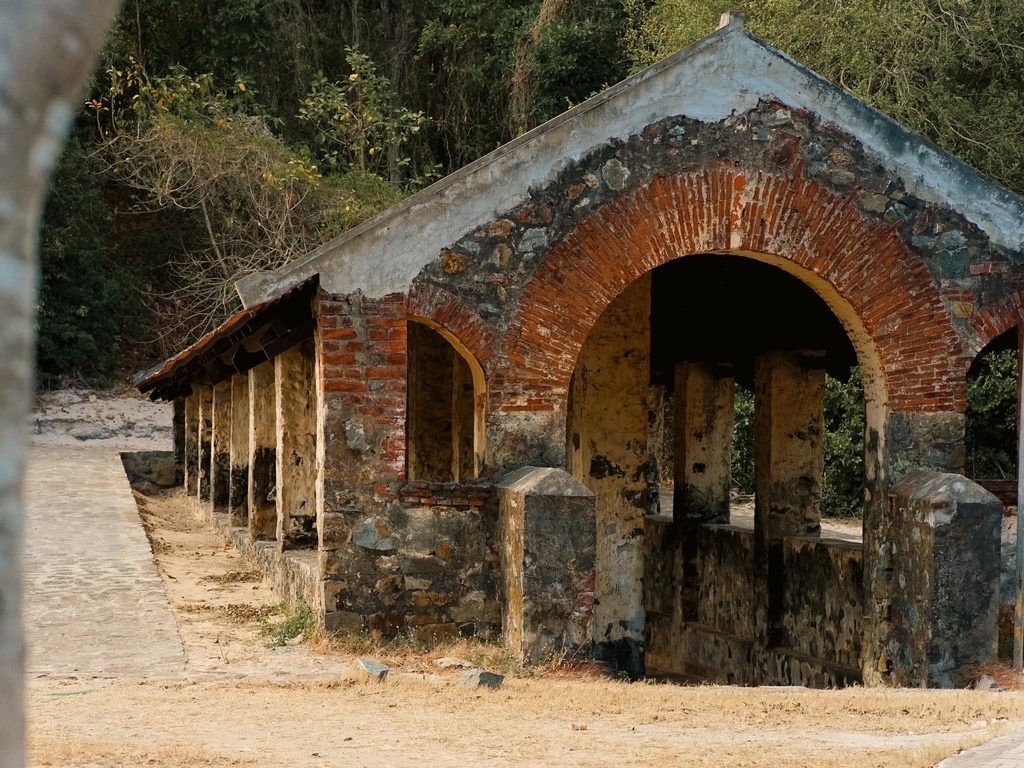
9. The Cow Shed Isolation Compound: From livestock facility to detention site
The Cow Shed compound was originally established to raise livestock and supply food for the prison administration.
Over time, the area was converted and additional detention structures were built.
Historical records document its use to hold prisoners, including women, and its association with severe forms of punishment.
It illustrates how many structures on Côn Đảo changed function over time, from labor and production facilities to components of the prison system.
To understand the Cow Shed compound, it is important to place it in its historical context and consider why a site named for livestock farming became part of the prison heritage complex.
Sites associated with the Côn Đảo Prison system
10. The Island Governor’s Residence: Headquarters of the prison administration
The Island Governor’s Residence, also known as the Island Governor’s Palace, once served as the home and workplace of the head of Côn Đảo’s administration.
According to historical records, it is associated with 53 successive island governors during the prison system’s operation.
Its grounds cover approximately 18,600 m², including the main house, supporting buildings and gardens.
Unlike the cramped and poorly equipped prison cells, the Island Governor’s Residence offers a more spacious architectural setting.
This contrast helps visitors see the hierarchy separating the administrative areas from the places of imprisonment within the same system.
After 1975, the building was used for exhibitions, commemoration and historical conservation.
11. Pier 914: A site associated with forced labor and voyages into exile
Located on Tôn Đức Thắng Street, facing Côn Sơn Bay, Pier 914 is one of Côn Đảo’s most recognizable historical sites.
Construction of the pier began in 1873, and it was subsequently repaired and expanded over several periods.
It once received people brought to Côn Đảo by sea and was also used to transport materials and goods and support the island administration’s activities.
The pier was built through forced labor under harsh conditions, leaving many prisoners injured or dead.
The name 914 has been passed down in memory of prisoners who died while building the pier and associated structures. According to historical materials, this number is symbolic, with different counting methods found in the records.
The pier also witnessed many important historical moments, including the arrival of prisoners and events following Côn Đảo’s liberation.
Today, visitors standing on Pier 914 can look out over the waters of Côn Sơn and toward the island’s center.
The seascape is beautiful, but the structure’s historical meaning should remain central to a visit.
12. Hàng Dương Cemetery: Remembering those who lost their lives on Côn Đảo
Hàng Dương Cemetery is one of the island’s most important memorial sites.
Covering approximately 20 hectares, the cemetery is divided into sections A, B, C and D, associated with different periods of burial, reinterment and restoration.
According to the Côn Đảo National Heritage Conservation Center, the cemetery has 1,922 graves recorded in its restoration files, many of which remain unidentified.
However, not everyone who died during the prison era was buried at Hàng Dương. Côn Đảo also has Hàng Keo Cemetery and other historical burial sites.
Notable graves at Hàng Dương Cemetery
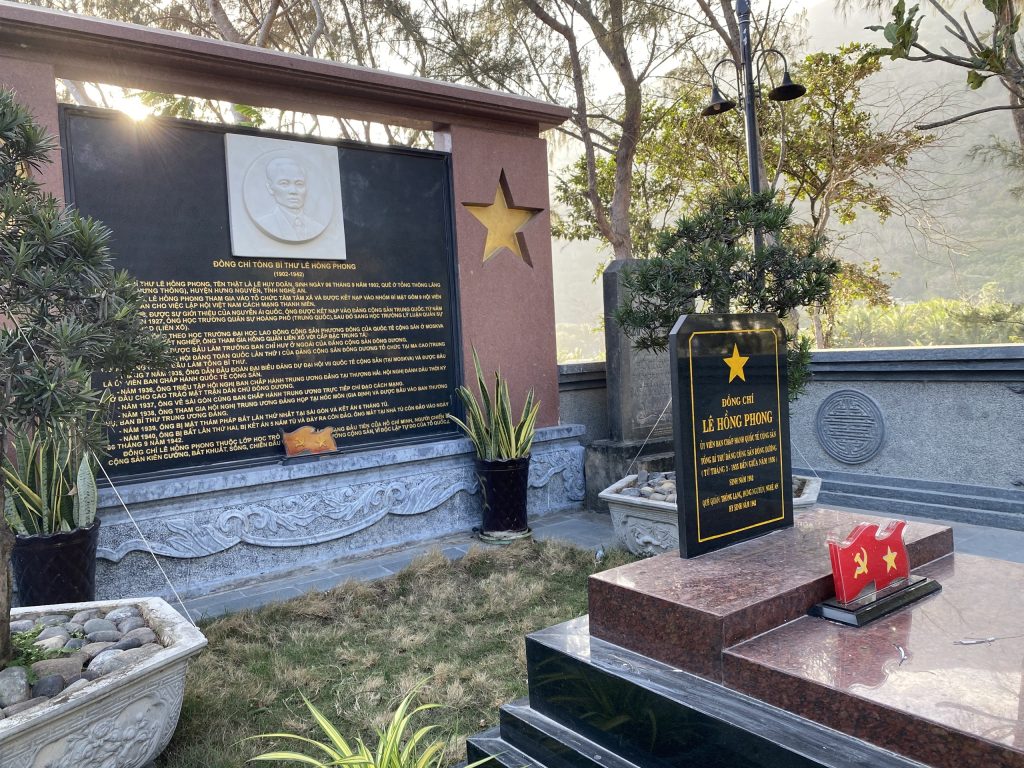
The grave of the late General Secretary Lê Hồng Phong
Located in Section A, the grave of Comrade Lê Hồng Phong is one of the cemetery’s important memorial sites.
He was a revolutionary activist who served as General Secretary of the Indochinese Communist Party and died while imprisoned on Côn Đảo.
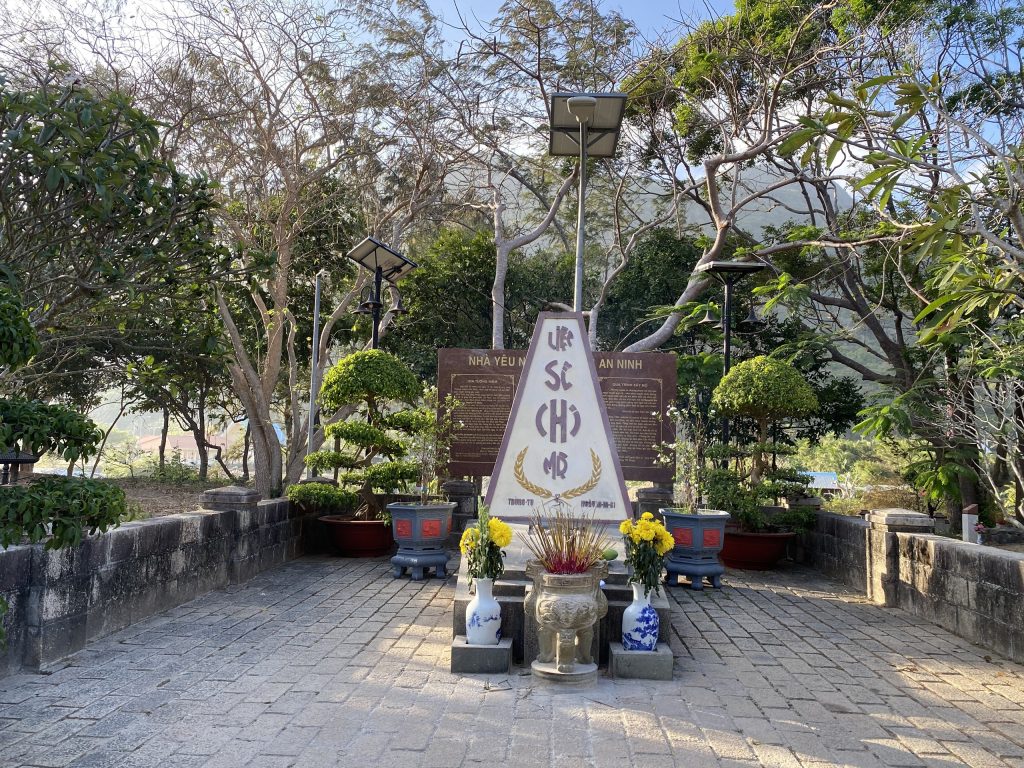
The grave of patriot Nguyễn An Ninh
Also in Section A, Nguyễn An Ninh’s grave commemorates a thinker, journalist and prominent figure in Vietnam’s early 20th-century patriotic movement.
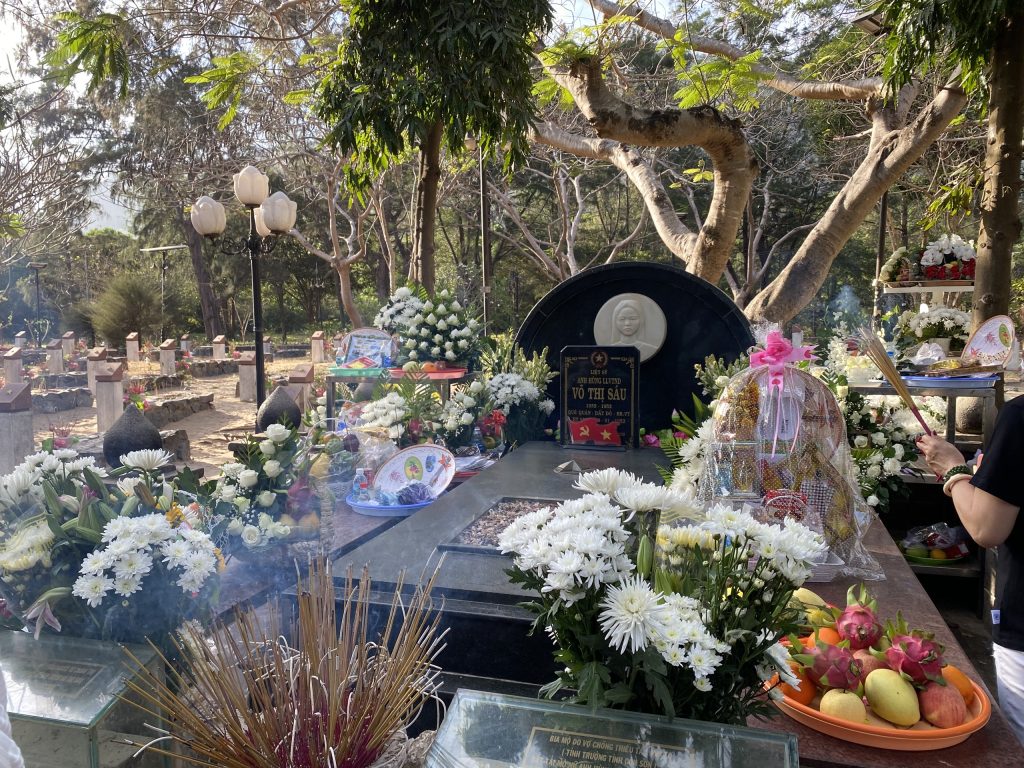
The grave of heroine Võ Thị Sáu
Located in Section B, the grave of Võ Thị Sáu, a Hero of the People’s Armed Forces, is visited by many residents and travelers paying their respects.
Võ Thị Sáu was a female revolutionary fighter who became involved in revolutionary activities at a young age, was sent to Côn Đảo and died in 1952.
Other graves
Alongside well-known figures, Hàng Dương Cemetery is the resting place of many revolutionary fighters, patriots and unidentified prisoners.
Allow enough time during a cemetery visit to learn about its different sections, read the information and show respect for those who have died.
13. Côn Đảo Memorial Temple and Hàng Keo Cemetery
Côn Đảo Memorial Temple commemorates the fallen heroes, revolutionary fighters and patriotic compatriots who lost their lives on Côn Đảo.
It hosts many incense-offering and commemorative activities by visiting delegations, agencies, organizations and local residents.
Hàng Keo Cemetery, meanwhile, is one of the burial grounds established before Hàng Dương and is closely connected to the prison system’s history.
Together, these two sites help complete the story of how those who died on the island are commemorated, remembered and honored through conservation.
14. Ma Thiên Lãnh Bridge and forced-labor sites
Beyond its cells, the history of Côn Đảo Prison is also associated with forced-labor structures and areas.
The French colonial authorities began building Ma Thiên Lãnh Bridge in 1930 on a route through the mountains on the western side of the island.
According to heritage records, many prisoners had to work in rugged terrain under dangerous and deprived conditions. The structure was ultimately never completed.
The surviving remains show that forced labor is inseparable from the history of Côn Đảo Prison.
Other works, including the Lime Kiln Works, Salt Works, Agricultural Works and additional labor sites, once served the prison system’s construction, production and everyday needs.
These sites may be far from the center or have differing access conditions. Visitors seeking a deeper understanding should contact the heritage management authority for appropriate guidance.
Historical figures associated with Côn Đảo Prison
Over more than a century, the Côn Đảo Prison system held generations of Vietnamese people involved in patriotic movements and political activities.
Historical records document the presence of many prominent figures during different periods.
Patriot Phan Châu Trinh
Phan Châu Trinh was a leading figure in Vietnam’s modernization movement and reformist thought in the early 20th century.
He was arrested by the French colonial authorities and exiled to Côn Đảo during his patriotic activities.
Phan Châu Trinh’s experience on Côn Đảo forms part of the history of anti-colonial movements that pursued different paths and ideas.
President Tôn Đức Thắng
Tôn Đức Thắng is one of the historical figures closely associated with the Côn Đảo Prison system.
He was imprisoned here for many years, engaging in political activities, building organizations and supporting prisoners’ resistance movements.
Records of his revolutionary life form an important part of Côn Đảo’s history.
The late General Secretary Lê Hồng Phong
Lê Hồng Phong was a Vietnamese revolutionary leader who was arrested and sent to Côn Đảo for imprisonment.
He died on 6 September 1942 while imprisoned here.
His grave at Hàng Dương Cemetery is a memorial site visited by many groups.
Patriot Nguyễn An Ninh
Nguyễn An Ninh was a journalist, thinker and influential figure in the patriotic movement in Cochinchina in the early 20th century.
He was imprisoned several times by the colonial authorities and died on Côn Đảo in 1943.
Today, his grave at Hàng Dương Cemetery commemorates a patriotic intellectual who made important contributions to Vietnam’s history.
Heroine Võ Thị Sáu
Võ Thị Sáu became involved in revolutionary activities at a very young age.
After her arrest and conviction, she was sent to Côn Đảo and died on 23 January 1952.
Her story has become part of Côn Đảo’s historical memory and commemorative life, particularly in connection with her grave at Hàng Dương Cemetery.
Beyond these figures, the Côn Đảo Prison system is associated with many other revolutionary activists, fighters and prisoners, including Lê Duẩn, Lê Đức Thọ, Phạm Hùng, Cao Văn Ngọc and Lưu Chí Hiếu, as well as many people whose personal details have not been fully preserved.
Understanding the prison’s history means more than remembering famous names; it also means recognizing the endurance and contributions of many ordinary people in extraordinary circumstances.
Life and resistance among Côn Đảo’s prisoners
Conditions of confinement and daily life
The documents, artifacts and structures remaining on Côn Đảo reflect the extreme deprivation in which prisoners lived.
Many had to live in overcrowded cells with inadequate light, air and sanitation.
Grueling labor, malnutrition and disease seriously affected prisoners’ health.
Conditions in the isolation compounds were even harsher because of restricted space and tightly controlled contact with the outside world.
These conditions are presented at Côn Đảo Museum and the prison camps through documents, artifacts, explanatory panels and some reconstructions.
Learning in captivity
Another important aspect of Côn Đảo Prison’s history is the learning and exchange of knowledge among prisoners.
While imprisoned, many still found ways to learn to read and write, read books, study theory and share their experience of activism.
These activities helped sustain morale, pass on knowledge and build bonds among people in the same circumstances.
Resistance inside the prison
Côn Đảo’s prisoners organized various forms of resistance to protest detention conditions, demand improvements in their lives and defend their political views.
Depending on the period, resistance could involve presenting demands, protesting disciplinary practices, hunger strikes or other collective actions.
The history of Côn Đảo Prison is therefore not only the history of detention structures but also a human story of sustaining resolve and community bonds under harsh conditions.
When was Côn Đảo Prison recognized as a Special National Heritage Site?
After 1975, many structures within the prison system were preserved for historical research, education about national traditions and commemorative activities.
On 29 April 1979, the Ministry of Culture and Information issued Decision No. 54/VHTT.QĐ, recognizing the especially important value of the Côn Đảo Revolutionary Historical Site.
On 10 May 2012, the Prime Minister issued Decision No. 548/QĐ-TTg, designating the Côn Đảo Prison Historical Site a Special National Heritage Site.
The designation affirms the complex’s importance to Vietnam’s history and establishes a responsibility to protect its architecture, artifacts, documents and associated spaces.
Today, conservation work extends beyond repairing deteriorating structures to include research, collection, digitization of records, exhibitions and helping visitors engage appropriately with history.
A guide to visiting Côn Đảo Prison
Where should you begin?
For first-time visitors to Côn Đảo, starting at Côn Đảo Museum is a sensible choice.
After exploring the exhibition themes, you can continue to the prison camps near the center.
A fairly comprehensive itinerary might include Côn Đảo Museum, the French Tiger Cages, the Island Governor’s Residence, Phú Hải Camp, Phú Sơn Camp and Phú Bình Camp.
However, your actual route must follow the operating schedule, opening status and programs offered by the heritage management authority.
A half-day itinerary
If you have only around 3–4 hours, prioritize the most representative sites.
Suggested itinerary:
- Côn Đảo Museum: Gain an overview of the history and stages of development of the prison system.
- The French Tiger Cages: Examine the isolation-cell architecture and learn about the historical events associated with it.
- Phú Hải Camp: Visit the communal cells, solitary cells and traces of forced labor.
- Phú Sơn Camp: Learn about the prison system’s expansion and political prisoners’ activities.
If opening times are convenient and enough time remains, you can add Phú Bình Camp or the Island Governor’s Residence.
This is a suggested way to allocate your time, not a fixed tour schedule issued by the management authority.
A full-day history itinerary
Spending a full day visiting the historical sites gives you more time to read documents, listen to guides and understand the context of each place.
Morning:
- Côn Đảo Museum.
- The French Tiger Cages and Phú Tường Camp.
- The Island Governor’s Residence.
- Phú Hải Camp and Phú Sơn Camp.
Afternoon:
- Phú Bình Camp, if open.
- Other historical sites as advised by the management authority.
- Pier 914.
- Hàng Dương Cemetery and Côn Đảo Memorial Temple.
This itinerary suits history enthusiasts, school and university groups, and groups visiting places associated with national history and heritage.
Groups should register in advance for advice on routes and guiding services.
Côn Đảo Prison admission prices
According to the new fees announced in 2026, admission to the Côn Đảo Prison Special National Historical Site is VND 60,000 per person per visit.
The ticket for the main historical complex generally covers the following sites:
- Côn Đảo Museum.
- The Island Governor’s Residence.
- Phú Hải Camp.
- The French Tiger Cages.
- Phú Bình Camp.
Fee exemptions and reductions apply to eligible groups under the regulations. Children, school and university students, and certain groups covered by social policies may qualify for free admission; older adults, people with recognized service to the nation and other eligible groups receive reductions as prescribed.
Visitors should bring documents proving eligibility for exemptions or reductions when needed.
Please note: Ticket prices, ticket coverage and which sites are open may change under regulations or restoration plans. Confirm with the management authority before your visit.
Opening hours and visit registration
Indicative opening hours for Côn Đảo Museum are:
- Morning: 7:00–11:30.
- Afternoon: 13:30–17:00.
For organized visits to the historical complex offered in scheduled sessions, the Côn Đảo National Heritage Conservation Center lists morning departures between 7:30 and 9:00 and afternoon departures between 14:00 and 15:00.
Opening hours may differ between prison camps or be adjusted during restoration and repairs.
Visit registration contact details:
Côn Đảo National Heritage Conservation Center
Address: 2 Nguyễn Huệ Street, Côn Đảo Special Zone, Ho Chi Minh City.
Visit registration telephone: 0254 3830 517.
Contact the center in advance if you would like a guide or are visiting with a large group.
Getting to the Côn Đảo Prison historical sites
From central Côn Đảo
Most of the prominent historical sites are in or near the center of Côn Sơn Island.
Visitors can use motorbikes, taxis, electric vehicles or locally available tourist transport.
Some sites, such as Phú Hải and Phú Sơn camps, are quite close together and can easily be combined in one visit.
To save time and avoid repeated journeys, however, plan your route around location, opening hours and the management authority’s programs.
From Bến Đầm Port
Visitors arriving on Côn Đảo by high-speed ferry usually dock at Bến Đầm Port, approximately 12 km from central Côn Đảo.
After disembarking, you can take a shuttle, taxi or pre-booked transport to the center.
If you arrive around midday, consider resting and arranging your visit for the afternoon or the following morning to avoid reaching the sites during their lunch break.
What time of day is best for a visit?
Mornings are often suitable because the weather is more comfortable and you can plan around the scheduled visiting sessions.
Afternoons are also convenient, particularly for people arriving on Côn Đảo in the morning who need time for transfers and hotel check-in.
Some prison areas are enclosed and can become quite hot. Bring drinking water and wear walking shoes and suitable clothing.
Important guidance for visiting Côn Đảo Prison
Respect the historical setting
Côn Đảo Prison is a complex of memorial and historical education sites, rather than an ordinary leisure attraction.
Keep your voice moderate and avoid joking around or behaving inappropriately in the cells and memorial areas.
Do not interfere with structures or artifacts
The walls, iron doors, cell floors, bars and artifacts all have historical value.
Do not climb on or lean against structures, move artifacts or enter areas cordoned off for conservation.
Photograph respectfully
In areas where photography is allowed, visitors may take photographs to record and share information about the sites.
However, avoid poses that are inappropriate to the historical setting, especially in areas depicting prison conditions or dedicated to remembrance.
Follow any signs restricting filming or photography and any specific instructions from staff.
Visiting with children
Some exhibitions contain images, reconstructions or commentary about harsh prison conditions and violence.
For young children, parents should choose age-appropriate explanations and material.
For older students, a visit can be a valuable historical learning experience when supported by preparation and a guide.
Prioritize clearly sourced information
Côn Đảo’s history is documented through museum collections, heritage records, memoirs, witness accounts and research.
When learning about an event or person, prioritize information from heritage authorities, museums and reliable research sources.
For material that has not been fully verified, distinguish between historical events, witness testimony and stories passed down within the community.
Why explore Côn Đảo Prison during your trip?
Côn Đảo today has many appealing natural attractions, but the prison’s history remains an important part of the island’s identity.
Walking through the rows of cells at Phú Hải or Phú Sơn, or through the Tiger Cages, offers more than a view of old buildings. It is also an opportunity to learn about people’s living conditions and choices during a turbulent historical period.
Places such as Pier 914 and Hàng Dương Cemetery extend a visit beyond detention structures to stories of labor, sacrifice, memory and commemoration.
The greatest value of a visit lies not in how many places you see, but in what you understand and remember after leaving.
Frequently asked questions about Côn Đảo Prison
When was Côn Đảo Prison built?
The French colonial authorities established the prison system on 1 February 1862. Its camps and related structures continued to be built and expanded over several subsequent periods.
How many years did Côn Đảo Prison operate?
The prison system existed for approximately 113 years, from 1862 to 1975, before its detention function ended following the liberation of Côn Đảo.
Is Côn Đảo Prison a single building?
No. It is a complex of prison camps, isolation compounds, administrative buildings, labor sites and memorial sites located in different places across Côn Sơn Island.
Are the French Tiger Cages and American Tiger Cages the same?
No. The French Tiger Cages were built in 1940 and contain 120 isolation cells with iron bars and surveillance walkways overhead. The American-style Tiger Cages at Phú Bình Camp were completed in 1971 and contain 384 isolation cells arranged in a different architectural layout.
Which is the oldest prison camp on Côn Đảo?
Phú Hải Camp, formerly known as Banh I, was first built in 1862 and is one of the oldest camps in the Côn Đảo Prison system.
Can you visit all of Côn Đảo Prison in half a day?
Half a day may be enough to see some of the main sites. However, to explore the museum, prison camps and memorial areas in depth, allow a full day or divide the itinerary into several sessions.
Are guides available at Côn Đảo Prison?
Visitors can contact the heritage management authority for advice on visit registration and guiding services. Advance registration is recommended for tour groups or groups with a particular interest in the history.
How much is admission to Côn Đảo Prison in 2026?
The published standard fee is VND 60,000 per person per visit. Certain groups are eligible for exemptions or reductions under the regulations. Check prices and ticket coverage again before your visit.
Is Hàng Dương Cemetery part of the Côn Đảo Prison historical complex?
Yes. Hàng Dương Cemetery is one of the important historical and memorial sites associated with the prison system. It is the resting place of many revolutionary fighters, patriots and prisoners who died on Côn Đảo.
When was Côn Đảo Prison designated a Special National Heritage Site?
On 10 May 2012, under the Prime Minister’s Decision No. 548/QĐ-TTg.
Côn Đảo Prison: A historical heritage to preserve
Once associated with years of imprisonment and exile, Côn Đảo has become an island region with an increasingly thriving resident community, tourism sector and heritage conservation work.
The surviving cells, stone walls, isolation compounds and memorial structures bear witness to a past era. They help today’s generations learn about the people who lived, resisted and sacrificed their lives on this island.
A visit to Côn Đảo Prison need not be a rushed journey through as many sites as possible. Sometimes, spending longer in an exhibition room, listening to a guide’s account or carefully reading an information panel offers a deeper understanding of history.
For first-time visitors to Côn Đảo, exploring the prison heritage complex is well worth making time for. Alongside its natural beauty, the historical memories preserved here give the archipelago its distinctive cultural depth.
ConDaoExpress.com helps travelers learn about Côn Đảo’s destinations, historical and cultural sites, and sea transport. Before departure, visitors can check ferry schedules, route information and ticket-booking guidance to plan their journey and set aside time to discover the island’s historical heritage.
References
This article was compiled, written and cross-checked using historical materials and heritage information from the following sources:
- Prime Minister’s Decision No. 548/QĐ-TTg of 10 May 2012.
- Vietnam National Museum of History: An overview of the Côn Đảo Prison system.
- Côn Đảo National Heritage Conservation Center: The Special National Heritage Site complex.
- Côn Đảo Tourism Portal: Côn Đảo Prison Historical Site.
- Côn Đảo National Heritage Conservation Center: Visit registration.
Information on ticket prices, visiting schedules and opening status was consulted in November 2026. Visitors should reconfirm before traveling.
Google Maps: Bảo tàng Côn Đảo
The map marks Côn Đảo Museum, the suggested starting point in this article. The prisons and other monuments in the complex are at separate locations; confirm your route with the site management.